The 15 Best Books of 2025
2025
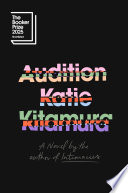
NAMED A BEST BOOK OF THE YEAR BY THE WASHINGTON POST, TIME MAGAZINE, MARIE CLAIRE, BOOK RIOT, ESQUIRE, KIRKUS, PUBLISHERS WEEKLY AND MORE! ONE OF BARACK OBAMA'S FAVORITE BOOKS OF THE YEAR SHORTLISTED FOR THE 2025 BOOKER PRIZE INSTANT NATIONAL BESTSELLER “A tightly wound family drama that reads like a psychological thriller."—NPR “Bold, stark, genre-bending, Audition will haunt your dreams.”—The Boston Globe One woman, the performance of a lifetime. Or two.
Read more
NAMED A BEST BOOK OF THE YEAR BY THE WASHINGTON POST, TIME MAGAZINE, MARIE CLAIRE, BOOK RIOT, ESQUIRE, KIRKUS, PUBLISHERS WEEKLY AND MORE! ONE OF BARACK OBAMA'S FAVORITE BOOKS OF THE YEAR SHORTLISTED FOR THE 2025 BOOKER PRIZE INSTANT NATIONAL BESTSELLER “A tightly wound family drama that reads like a psychological thriller."—NPR “Bold, stark, genre-bending, Audition will haunt your dreams.”—The Boston Globe One woman, the performance of a lifetime. Or two. An exhilarating, destabilizing Möbius strip of a novel that asks whether we ever really know the people we love. Two people meet for lunch in a Manhattan restaurant. She’s an accomplished actress in rehearsals for an upcoming premiere. He’s attractive, troubling, young—young enough to be her son. Who is he to her, and who is she to him? In this compulsively readable, brilliantly constructed novel, two competing narratives unspool, rewriting our understanding of the roles we play every day – partner, parent, creator, muse – and the truths every performance masks, especially from those who think they know us most intimately. Taut and hypnotic, Audition is Katie Kitamura at her virtuosic best.
===
**SHORTLISTED FOR THE BOOKER PRIZE 2025** A GUARDIAN, OBSERVER, FINANCIAL TIMES, BBC, TIME, VOGUE, MARIE CLAIRE, ESQUIRE and ROLLING STONE BOOK TO READ IN 2025 'Slick, sharp, strange and singular . . . You’ll gulp this novel down in one in-breath' SAMANTHA HARVEY, Booker Prize-winning author of Orbital 'A lightning bolt of a novel' FINANCIAL TIMES 'I’m not sure there’s anyone better writing in America today' ALEX PRESTON, Observer One woman, the performance of a lifetime. Or two. An exhilarating, destabilising novel that asks whether we ever really know the people we love Two people meet for lunch in a Manhattan restaurant. She’s an accomplished actress in rehearsals for an upcoming premiere. He’s attractive, troubling, young – young enough to be her son. Who is he to her, and who is she to him? In this compulsively readable, brilliantly constructed novel, two competing narratives unspool, rewriting our understanding of the roles we play every day – partner, parent, creator, muse – and the truths every performance masks, especially from those who think they know us most intimately. Taut and hypnotic, Audition is Katie Kitamura at her virtuosic best.
2025
"Teenaged Istvâan lives with his mother in a quiet apartment complex in Hungary. Shy and new in town, he is a stranger to the social rituals practiced by his classmates and soon becomes isolated, with his neighbor--a married woman close to his mother's age, whom he begrudgingly helps with errands--as his only companion.
Read more
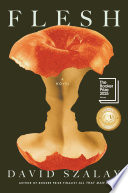
"Teenaged Istvâan lives with his mother in a quiet apartment complex in Hungary. Shy and new in town, he is a stranger to the social rituals practiced by his classmates and soon becomes isolated, with his neighbor--a married woman close to his mother's age, whom he begrudgingly helps with errands--as his only companion. But as these periodical encounters shift into a clandestine relationship that Istvâan himself can barely understand, his life soon spirals out of control, ending in a violent accident thatleaves a man dead. What follows is a rocky trajectory that sees Istvâan emigrate from Hungary to London, where he moves from job to job before finding steady work as a driver for London's billionaire class. At each juncture, his life is affected by the goodwill or self-interest of strangers. Through it all, Istvâan is a calm, detached observer of his own life, and through his eyes we experience a tragic twist on an immigrant "success story," brightened by moments of sensitivity, softness, and Szalay's keen observation"--
===
**WINNER OF THE BOOKER PRIZE 2025** 'A masterpiece, told with virtuosic economy... Pure brilliance from the first to the (devastating) last sentence’ India Knight 'Brilliance on every page' Samantha Harvey 'Spare, visceral, urgent, compelling. This book doesn't f**k around' Gary Stevenson ‘So brilliant and wise on chance, love, sex, money' David Nicholls Through chance, luck and choice, one man’s life takes him from a modest apartment in Hungary to the elite society of London – in this captivating new novel about the forces that make and break our lives Fifteen-year-old István lives with his mother in a quiet apartment complex in Hungary. New to the town and shy, he is unfamiliar with the social rituals at school and soon becomes isolated, with his neighbour – a married woman close to his mother’s age – as his only companion. As these encounters shift into a clandestine relationship, István’s life spirals out of control. Years later, rising through the ranks from the army to the elite circles of London's super-rich, he navigates the twenty-first century's tides of money and power. Torn between love, intimacy, status, and wealth, his newfound riches threaten to undo him completely. ‘How do I get out of a reading slump? This is the book to do that’ Rhianna Dhillon, BBC Radio 4 'A revelatory novel' Sunday Times 'So much searing insight into the way we live now' Observer ‘Refreshing, illuminating and true’ Financial Times 'Compelling and elegant, merciless and poignant' Tessa Hadley 'One of the year’s best novels to date' Daily Mail ‘Utterly engrossing and I read it all in a day’ 5* reader review ‘I was hooked and tried to read this book with any spare moment that I had' 5* reader review A ‘Best Book of 2025’ in the Guardian, Observer, Financial Times, Daily Telegraph and Daily Mail
===
From Booker Prize-winning author David Szalay, comes a propulsive, hypnotic novel about a man who is unravelled by a series of events beyond his grasp. Fifteen-year-old István lives with his mother in a quiet apartment complex in Hungary. New to the town and shy, he is unfamiliar with the social rituals at school and soon becomes isolated, with his neighbour—a married woman close to his mother’s age—as his only companion. These encounters shift into a clandestine relationship that István himself can barely understand, and his life soon spirals out of control. As the years pass, he is carried gradually upwards on the currents of the twenty-first century’s tides of money and power, moving from the army to the company of London’s super-rich, with his own competing impulses for love, intimacy, status and wealth winning him unimaginable riches, until they threaten to undo him completely. Spare and penetrating, Flesh is the finest novel yet by a master of realism, asking profound questions about what drives a life: what makes it worth living, and what breaks it.
2025
Short-listed for the Booker Prize Long-listed for the National Book Award “The first major American novel to be published this year.” —Sam Sacks, The Wall Street Journal “Gorgeous . .
Read more
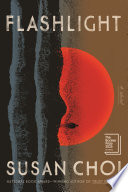
Short-listed for the Booker Prize Long-listed for the National Book Award “The first major American novel to be published this year.” —Sam Sacks, The Wall Street Journal “Gorgeous . . . Almost impossibly heartbreaking.” —Sam Worley, New York Magazine A Must-Read: The New York Times, New York Magazine, Time, The Washington Post, Los Angeles Times, The Boston Globe, Entertainment Weekly, USA Today, The Chicago Review of Books, Forbes, Literary Hub, and Town & Country “A major world writer . . . Choi is in thrilling command.” ―Dwight Garner, The New York Times “Devastating.” —Ron Charles, The Washington Post “Ranks among her best work.” —Hamilton Cain, Los Angeles Times A Dakota Johnson x TeaTime Book Club Pick A novel tracing a father’s disappearance across time, nations, and memory, from the author of Trust Exercise. One summer night, Louisa and her father take a walk on the breakwater. Her father is carrying a flashlight. He cannot swim. Later, Louisa is found on the beach, soaked to the skin, barely alive. Her father is gone. She is ten years old. Louisa is an only child of parents who have severed themselves from the past. Her father, Serk, is Korean, but was born and raised in Japan; he lost touch with his family when they bought into the promises of postwar Pyongyang and relocated to North Korea. Her American mother, Anne, is estranged from her Midwestern family after a reckless adventure in her youth. And then there is Tobias, Anne’s illegitimate son, whose reappearance in their lives will have astonishing consequences. But now it is just Anne and Louisa, Louisa and Anne, adrift and facing the challenges of ordinary life in the wake of great loss. United, separated, and also repelled by their mutual grief, they attempt to move on. But they cannot escape the echoes of that night. What really happened to Louisa’s father? Shifting perspectives across time and character and turning back again and again to that night by the sea, Flashlight chases the shock waves of one family’s catastrophe, even as they are swept up in the invisible currents of history. A monumental new novel from the National Book Award winner Susan Choi, Flashlight spans decades and continents in a spellbinding, heart-gripping investigation of family, loss, memory, and the ways in which we are shaped by what we cannot see.
===
**SHORTLISTED FOR THE BOOKER PRIZE 2025** 'Ferociously smart and full of surprises' Eleanor Catton 'Instantly bewitching' Jennifer Egan 'A rich generational saga that teems with intelligence' Financial Times The astonishing story of one family swept up in the tides of the twentieth century, ranging from post-war Japan to suburban America and the North Korean regime One evening, ten-year-old Louisa and her father take a walk out on the breakwater. They are spending the summer in a coastal Japanese town while her father Serk, a Korean émigré, completes an academic secondment from his American university. When Louisa wakes hours later, she has washed up on the beach and her father is missing, probably drowned. The disappearance of Louisa’s father shatters their small family unit. As Louisa and her American mother Anne return to the US, this traumatic event reverberates across time and space, and the mystery of what really happened to Serk slowly unravels. 'Big, bold and surprising' Guardian ‘Engrossing... Choi is an astute, convincing writer’ Sunday Telegraph 'Susan Choi is a master of rendering relationships with utter particularity' Raven Leilani, author of Luster 'I couldn’t put it down, and once I finished, I couldn’t stop thinking about it' Barbara Demick, author of Nothing to Envy
2025
A New York Times Bestseller • A New York Times, Washington Post, and Associated Press Notable Book • Named a Best Book of the Year by The Los Angeles Times, Vulture, TIME, The Guardian, The New Republic, and LitHub The new novel from Thomas Pynchon, author of Gravity's Rainbow, The Crying of Lot 49, Vineland, and Inherent Vice. “A masterpiece.” —The Telegraph “Bonkers and brilliant fun.” —The Washington Post “Late Pynchon at his finest.
Read more
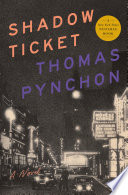
A New York Times Bestseller • A New York Times, Washington Post, and Associated Press Notable Book • Named a Best Book of the Year by The Los Angeles Times, Vulture, TIME, The Guardian, The New Republic, and LitHub The new novel from Thomas Pynchon, author of Gravity's Rainbow, The Crying of Lot 49, Vineland, and Inherent Vice. “A masterpiece.” —The Telegraph “Bonkers and brilliant fun.” —The Washington Post “Late Pynchon at his finest. Dark as a vampire’s pocket, light-fingered as a jewel thief, Shadow Ticket capers across the page with breezy, baggy-pants assurance — and then pauses on its way down the fire escape just long enough to crack your heart open.” —The Los Angeles Times Milwaukee 1932, the Great Depression going full blast, repeal of Prohibition just around the corner, Al Capone in the federal pen, the private investigation business shifting from labor-management relations to the more domestic kind. Hicks McTaggart, a onetime strikebreaker turned private eye, thinks he’s found job security until he gets sent out on what should be a routine case, locating and bringing back the heiress of a Wisconsin cheese fortune who’s taken a mind to go wandering. Before he knows it, he’s been shanghaied onto a transoceanic liner, ending up eventually in Hungary where there’s no shoreline, a language from some other planet, and enough pastry to see any cop well into retirement—and of course no sign of the runaway heiress he’s supposed to be chasing. By the time Hicks catches up with her he will find himself also entangled with Nazis, Soviet agents, British counterspies, swing musicians, practitioners of the paranormal, outlaw motorcyclists, and the troubles that come with each of them, none of which Hicks is qualified, forget about being paid, to deal with. Surrounded by history he has no grasp on and can’t see his way around in or out of, the only bright side for Hicks is it’s the dawn of the Big Band Era and as it happens he’s a pretty good dancer. Whether this will be enough to allow him somehow to Lindy-hop his way back again to Milwaukee and the normal world, which may no longer exist, is another question.
2025
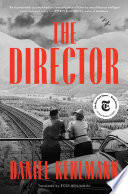
"G.W. Pabst, one of cinema's greatest directors of the 20th century, was filming in France when the Nazis seized power.
Read more
"G.W. Pabst, one of cinema's greatest directors of the 20th century, was filming in France when the Nazis seized power. To escape the horrors of the new and unrecognizable Germany, he fled to Hollywood. But now, under the blinding California sun, the world-famous director suddenly looks like a nobody. Not even Greta Garbo, the Hollywood actress whom he made famous, can help him. When he receives word that his elderly mother is ill, he finds himself back in his homeland of Austria, which is now called Ostmark. Pabst, his wife, and his young son are suddenly confronted with the barbaric nature of the regime. So, when Joseph Goebbels--the minister of propaganda in Berlin--sees the potential for using the European film icon for his directorial genius and makes big promises to Pabst and his family, Pabst must consider Goebbels's thinly veiled order"--
Art, Faith, Sex, and Controversy in the 1980s
2025
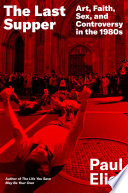
This enthralling group portrait brings to life a moment when popular culture became the site of religious strife—strife that set the stage for some of the most salient political and cultural clashes of our day. Circa 1980, tradition and authority are in the ascendant, both in Catholicism (via Pope John Paul II) and in American civic life (through the Moral Majority and the so-called televangelists).
Read more
This enthralling group portrait brings to life a moment when popular culture became the site of religious strife—strife that set the stage for some of the most salient political and cultural clashes of our day. Circa 1980, tradition and authority are in the ascendant, both in Catholicism (via Pope John Paul II) and in American civic life (through the Moral Majority and the so-called televangelists). But the public is deeply divided on issues of body and soul, devotion and desire. Enter the figures Paul Elie calls “cryptoreligious.” Here is Leonard Cohen writing “Hallelujah” on his knees in a Times Square hotel room; Andy Warhol adapting Leonardo’s The Last Supper in response to the AIDS pandemic; Prince making the cross and altar into “signs o’ the times.” Through Toni Morrison, spirits speak from the grave; Patti Smith and Bruce Springsteen deepen the tent-revival intensity of their work; Wim Wenders offers an angel’s-eye view of Berlin; U2, the Neville Brothers, and Sinéad O’Connor reckon with their Christian roots in music of mystic yearning. And Martin Scorsese overcomes fundamentalist ire to make The Last Temptation of Christ—a struggle that anticipates Salman Rushdie’s struggle with Islam in The Satanic Verses. In Elie’s acclaimed first book, The Life You Save May Be Your Own, Catholic writers ventured out into the wilds of postwar America; in this book, creative figures who were raised religious go to the margins of conventional belief, calling forth controversy. Episodes such as the boycott sparked by Madonna’s “Like a Prayer” video and the tearing-up of Andres Serrano’s Piss Christ in Congress are early skirmishes in the culture wars—but here the creators (not the politicians) are the protagonists, and the work they make speaks to conflicts that remain unsettled. The Last Supper explores the bold and unexpected forms an encounter with belief can take. It traces the beginnings of our postsecular age, in which religion is at once surging and in decline. Through a propulsive narrative, it reveals the crypto-religious imagination as complex, credible, daring, and vividly recognizable.
One Day, Everyone Will Have Always Been Against This
2025
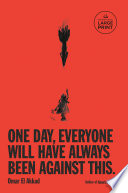
From award-winning novelist and journalist Omar El Akkad comes a powerful reckoning with what it means to live in the heart of an empire that doesn’t consider you fully human. On October 25th, 2023, after just three weeks of the bombardment of Gaza, Omar El Akkad put out a tweet: “One day, when it's safe, when there's no personal downside to calling a thing what it is, when it's too late to hold anyone accountable, everyone will have always been against this.” This tweet was viewed more than ten million times.
Read more
From award-winning novelist and journalist Omar El Akkad comes a powerful reckoning with what it means to live in the heart of an empire that doesn’t consider you fully human. On October 25th, 2023, after just three weeks of the bombardment of Gaza, Omar El Akkad put out a tweet: “One day, when it's safe, when there's no personal downside to calling a thing what it is, when it's too late to hold anyone accountable, everyone will have always been against this.” This tweet was viewed more than ten million times. One Day Everyone Will Have Always Been Against This chronicles the deep fracture that has occurred for Black, brown, Indigenous Americans, as well as the upcoming generation, many of whom had clung to a thread of faith in Western ideals, in the idea that their countries, or the countries of their adoption, actually attempted to live up to the values they espouse. This book is a reckoning with what it means to live in the West, and what it means to live in a world run by a small group of countries—America, the UK, France, and Germany. It will be The Fire Next Time for a generation that understands we're undergoing a shift in the so-called “rules-based order,” a generation that understands the West can no longer be trusted to police and guide the world, or its own cities and campuses. It draws on intimate details of Omar's own story as an emigrant who grew up believing in the Western project, who was catapulted into journalism by the rupture of 9/11. This book is El Akkad's heartsick breakup letter with the West. It is a breakup we are watching all over the United States, on college campuses, on city streets, and the consequences of this rupture will be felt by all of us. His book is for all the people who want something better than what the West has served up. This is the book for our time.
2025
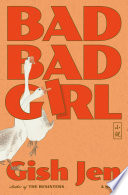
The award-winning author of The Resisters returns with an engrossing, blisteringly funny-sad autobiographical novel tracing a tumultuous mother-daughter relationship. My mother had died, but still I heard her voice.
Read more
The award-winning author of The Resisters returns with an engrossing, blisteringly funny-sad autobiographical novel tracing a tumultuous mother-daughter relationship. My mother had died, but still I heard her voice. . . Gish’s mother, Loo Shu-hsin, is born in 1924 to a wealthy Shanghai family whose girls are expected to restrain themselves. Her beloved nursemaid—far more loving to than her real mother—is torn from her even as she is constantly reprimanded: “Bad bad girl! You don’t know how to talk!” Sent to a modern Catholic school by her progressive father, she receives not only an English name—Agnes—but a first-rate education. To his delight, she excels. But even then he can only sigh, “Too bad. If you were a boy, you could accomplish a lot.” Agnes finds solace in books and, in 1947, announces her intention to pursue a PhD in America. As the Communist revolution looms, she sets sail—never to return. Lonely and adrift in New York, she begins dating Jen Chao-Pe, an engineering student. They do their best to block out the increasingly dire plight of their families back home and successfully establish a new American life: Marriage! A house in the suburbs! A number one son! By the time Gish is born, though, the news from China is proving inescapable; their marriage is foundering; and Agnes, confronted with a strong-willed, outspoken daughter distinctly reminiscent of herself, is repeating the refrain—“Bad bad girl! You don’t know how to talk!”—as she recapitulates the harshness of her own childhood. Spanning continents, generations, and cultures, Bad Bad Girl is a novel only Gish Jen could have written: genre-bending, courageous, wise, and as immensely incisive as it is compassionate.
===
Growing up in 1920s Shanghai, Gish Jen's mother was told every day it was 'no good for a girl be too smart' -a silencing message she attempts to escape yet brings with her to New York. In this riveting portrayal of a Chinese woman desiring emancipation but also control, Gish Jen gives us a heartbreaking mother-daughter relationship, saved by writing.
===
"Gish's mother--Loo Shu-hsin--is born in 1925 to a wealthy Shanghai family where girls are expected to behave and be quiet. Every act of disobedience prompts the same reprimand: "Bad bad girl! You don't know how to talk!" She gets sent to Catholic school, where she is baptized, re-named for St. Agnes, and, unusually for a girl, given an internationally-minded education. Still, her father would say, "Too bad. If you were a boy, you could accomplish a lot." Aggie finds solace in books, reading every night with a flashlight and an English-Chinese dictionary, before announcing her intention to pursue a Ph.D in America. It is 1947, and with the forces of Communist revolution on the horizon, she leaves--never to return. Lonely and adrift in Manhattan, Aggie begins dating Chao-Pei, an engineering student also from Shanghai. While news of their country and their families grows increasingly dire, they set out to make a new life together: marriage, a number one son, a small house in the suburbs. By the time Gish is born, her parents' marriage is unraveling, and her mother, struggling to understand her strong-willed American daughter, is repeating the refrain that punctuated her own childhood: "Bad bad girl! You don't know how to talk!" Bad Bad Girl is a novel about a mother and a daughter forced to reckon with one another across decades of curiosity and ambition, elation and disappointment, intense intimacy and misunderstanding. Spanning continents and generations, this is a rich, heartbreaking portrait of two fierce women locked in a complicated life-long embrace"--
2025
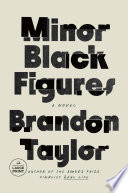
From the Booker Prize finalist and bestselling author: a perceptive novel about a gay Black painter navigating the worlds of art, desire, and creativity A newcomer to New York, Wyeth is a Black painter who grew up in the South and is trying to find his place in the contemporary Manhattan art scene. It's challenging.
Read more
From the Booker Prize finalist and bestselling author: a perceptive novel about a gay Black painter navigating the worlds of art, desire, and creativity A newcomer to New York, Wyeth is a Black painter who grew up in the South and is trying to find his place in the contemporary Manhattan art scene. It's challenging. Gallery shows displaying bad art. Pretentious artists jockeying for attention. The gossip and the backstabbing. While his part-time work for an art restorer is engaging, Wyeth suffers from artist's block with his painting and he is finding it increasingly difficult to spark his creativity. When he meets Keating, a white former seminarian who left the priesthood, Wyeth begins to reconsider how to observe the world, in the process facing questions about the conflicts between Black and white art, the white gaze on the Black body, and the compromises we make - in art and in life. As he did so adeptly in Booker finalist Real Life and the bestselling The Late Americans, Brandon Taylor brings to life in Minor Black Figures a fascinating set of characters, this time in the competitive art world, and the lives they lead with each and on their own. Minor Black Figures is an involving and tender portrait of friendship, creativity, and the connections between them.
===
A bold novel about a black painter caught up in the currents of art, faith, and desire. New York simmers with heat and unrest as Wyeth, a painter, finds himself at an impasse in his own work. After attending a dubious show put on by a collective of careerist artists, he retreats to a bar in the West Village where he meets Keating, a former seminarian. Over the long summer, as the two get to know each another, they talk and argue about God, sex, and art. Meanwhile, at his job working for an art restorer, Wyeth begins to investigate the life and career of a forgotten, minor black artist. His search yields potential answers to questions that Wyeth is only now beginning to ask about what it means to be a black artist making black art amid the mess and beauty of life itself. As he did so brilliantly in the Booker Prize finalist Real Life and the bestselling The Late Americans, Brandon Taylor brings alive a captivating set of characters, this time at work and at play in the competitive art world. Minor Black Figures is a vividly etched portrait, both sweeping and tender, of friendship, creativity, belief, and the deep connections among them.
The Miraculous Life and Mysterious Disappearance of Aimee Semple McPherson
2025
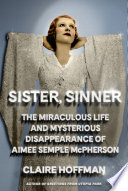
Sister, Sinner chronicles the dramatic rise, disappearance, and near-fall of Aimee Semple McPherson, America’s most famous woman evangelist. On a spring day in 1926, Aimee Semple McPherson wandered into the Pacific Ocean and vanished.
Read more
Sister, Sinner chronicles the dramatic rise, disappearance, and near-fall of Aimee Semple McPherson, America’s most famous woman evangelist. On a spring day in 1926, Aimee Semple McPherson wandered into the Pacific Ocean and vanished. Weeks later she reappeared in the desert, claiming to have been kidnapped. A national media frenzy and months of investigation ensued. Who was this woman? America’s most famous evangelist, McPherson was a sophisticated marketer who used spectacle, storytelling, and the newest technology—including her own radio station—to bring God’s message to the masses. Her innovations brought Pentecostalism into the mainstream, paved the way for televangelists, and shaped the future of American Christianity. Her Angelus Temple in Echo Park, Los Angeles, can be called the first megachurch. Her Foursquare Church continues, with more than eight million faithful around the world. But after her disappearance, as crowds gathered at the water’s edge, people asked: Was McPherson everybody’s saintly sister, or a con-artist sinner? The story of what happened next—sex scandals, religious persecution, legal shenanigans, the seemingly unshakable faith of thousands of followers, and the race to cover it all—runs through the center of Claire Hoffman’s thrilling Sister, Sinner. A riveting journey into the rise of popular religion in America and life in early Hollywood, and told with the flavor of the period's noir mysteries, this is an unforgettable story of an iconic woman, largely overlooked, who changed the world.
2025
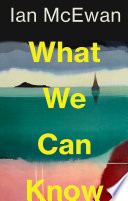
LONGLISTED FOR THE 2026 ANDREW CARNEGIE MEDAL FOR EXCELLENCE IN FICTION • Named a Best Book of 2025 by The Globe and Mail • New York Times • The New Yorker • The Washington Post • NPR • Barnes & Noble • Kirkus • Audible From the Booker prize–winning, bestselling author of Atonement and Saturday, a genre-bending new novel full of secrets and surprises; an immersive exploration, across time and history, of what can ever be truly known. 2014: At a dinner for close friends and colleagues, renowned poet Francis Blundy honors his wife’s birthday by reading aloud a new poem dedicated to her, ‘A Corona for Vivien’.
Read more
LONGLISTED FOR THE 2026 ANDREW CARNEGIE MEDAL FOR EXCELLENCE IN FICTION • Named a Best Book of 2025 by The Globe and Mail • New York Times • The New Yorker • The Washington Post • NPR • Barnes & Noble • Kirkus • Audible From the Booker prize–winning, bestselling author of Atonement and Saturday, a genre-bending new novel full of secrets and surprises; an immersive exploration, across time and history, of what can ever be truly known. 2014: At a dinner for close friends and colleagues, renowned poet Francis Blundy honors his wife’s birthday by reading aloud a new poem dedicated to her, ‘A Corona for Vivien’. Much wine is drunk as the guests listen, and a delicious meal consumed. Little does anyone gathered around the candlelit table know that for generations to come people will speculate about the message of this poem, a copy of which has never been found, and which remains an enduring mystery. 2119: Just over one hundred years in the future, much of the western world has been submerged by rising seas following a catastrophic nuclear accident. Those who survive are haunted by the richness of the world that has been lost. In the water-logged south of what used to be England, Thomas Metcalfe, a lonely scholar and researcher, longs for the early twenty-first century as he chases the ghost of one poem, ‘A Corona for Vivian’. How wild and full of risk their lives were, thinks Thomas, as he pores over the archives of that distant era, captivated by the freedoms and possibilities of human life at its zenith. When he stumbles across a clue that may lead to the elusive poem’s discovery, a story is revealed of entangled loves and a brutal crime that destroy his assumptions about people he thought he knew intimately well. What We Can Know is a masterpiece, a fictional tour de force, a love story about both people and the words they leave behind, a literary detective story which reclaims the present from our sense of looming catastrophe and imagines a future world where all is not quite lost.
===
'One of the finest writers alive' Sunday Times 2014- A great poem is read aloud and never heard again. For generations, people speculate about its message, but no copy has yet been found. 2119- The lowlands of the UK have been submerged by rising seas. Those who survive are haunted by the richness of the world that has been lost. Tom Metcalfe, a scholar at the University of the South Downs, part of Britain's remaining archipelagos, pores over the archives of the early twenty-first century, captivated by the freedoms and possibilities of human life at its zenith. When he stumbles across a clue that may lead to the great lost poem, revelations of entangled love and a brutal crime emerge, destroying his assumptions about a story he thought he knew intimately. A quest, a literary thriller and a love story, What We Can Know is a masterpiece that reclaims the present from our sense of looming catastrophe, and imagines a future world where all is not quite lost. 'A true master' Daily Telegraph 'McEwan is one of the most accomplished craftsmen of plot and prose' New York Times
Crime and Bloodlust in the Time of Serial Killers
2025
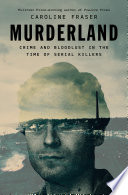
A National Bestseller “Scorching, seductive . .
Read more
A National Bestseller “Scorching, seductive . . . A superb and disturbing vivisection of our darkest urges.” —Los Angeles Times “This is about as highbrow as true crime gets.” —Vulture “Fraser has outdone herself, and just about everyone else in the true-crime genre, with Murderland.” —Esquire From the Pulitzer Prize–winning author of Prairie Fires comes a terrifying true-crime history of serial killers in the Pacific Northwest and beyond—a gripping investigation of how a new strain of psychopath emerged out of a toxic landscape of deadly industrial violence Caroline Fraser grew up in the shadow of Ted Bundy, the most notorious serial murderer of women in American history, surrounded by his hunting grounds and mountain body dumps, in the brooding landscape of the Pacific Northwest. But in the 1970s and ’80s, Bundy was just one perpetrator amid an uncanny explosion of serial rape and murder across the region. Why so many? Why so weirdly and nightmarishly gruesome? Why the senseless rise and then sudden fall of an epidemic of serial killing? As Murderland indelibly maps the lives and careers of Bundy and his infamous peers in mayhem—the Green River Killer, the I-5 Killer, the Night Stalker, the Hillside Strangler, even Charles Manson—Fraser’s Northwestern death trip begins to uncover a deeper mystery and an overlapping pattern of environmental destruction. At ground zero in Ted Bundy’s Tacoma stood one of the most poisonous lead, copper, and arsenic smelters in the world, but it was hardly unique in the West. As Fraser’s investigation inexorably proceeds, evidence mounts that the plumes of these smelters not only sickened and blighted millions of lives but also warped young minds, including some who grew up to become serial killers. A propulsive nonfiction thriller, Murderland transcends true-crime voyeurism and noir mythology, taking readers on a profound quest into the dark heart of the real American berserk.
2023
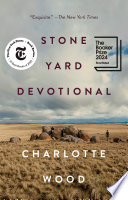
A NEW YORK TIMES TOP TEN BOOK OF THE YEAR A WASHINGTON POST TOP TEN BOOK OF THE YEAR A LOS ANGELES TIMES TOP FIFTEEN BOOK OF THE YEAR Shortlisted for the 2024 Booker Prize, a novel about forgiveness, grief, and what it means to be good, from the award-winning author of The Weekend. “Stone Yard Devotional is as extraordinary as you’ve heard.” —The Washington Post “An exquisite, wrenching novel of leaving your life behind.” —New York Times Book Review "Meditative (but by no means uneventful)." —New York Times "Riveting prose about how humans beat back despair."—Los Angeles Times Burnt out and in need of retreat, a middle-aged woman leaves Sydney to return to the place she grew up, taking refuge in a small religious community hidden away on the stark plains of rural Australia.
Read more
A NEW YORK TIMES TOP TEN BOOK OF THE YEAR A WASHINGTON POST TOP TEN BOOK OF THE YEAR A LOS ANGELES TIMES TOP FIFTEEN BOOK OF THE YEAR Shortlisted for the 2024 Booker Prize, a novel about forgiveness, grief, and what it means to be good, from the award-winning author of The Weekend. “Stone Yard Devotional is as extraordinary as you’ve heard.” —The Washington Post “An exquisite, wrenching novel of leaving your life behind.” —New York Times Book Review "Meditative (but by no means uneventful)." —New York Times "Riveting prose about how humans beat back despair."—Los Angeles Times Burnt out and in need of retreat, a middle-aged woman leaves Sydney to return to the place she grew up, taking refuge in a small religious community hidden away on the stark plains of rural Australia. She doesn't believe in God, or know what prayer is, and finds herself living this strange, reclusive existence almost by accident. But disquiet interrupts this secluded life with three visitations. First comes a terrible mouse plague, each day signaling a new battle against the rising infestation. Second is the return of the skeletal remains of a sister who disappeared decades before, presumed murdered. And finally, a troubling visitor plunges the narrator further back into her past. Meditative, moving, and finely observed, Stone Yard Devotional is a seminal novel from a writer of rare power, exploring what it means to retreat from the world, the true nature of forgiveness, and the sustained effect of grief on the human soul.
===
The new Booker-longlisted novel by Charlotte Wood, the Stella Prize-winning author of The Natural Way of Things and The Weekend. A fearless exploration of forgiveness, grief and the complicated beauty of female friendship.[Bokinfo].
===
A deeply moving novel about forgiveness, grief, and what it means to be 'good', from the award-winning author of The Natural Way of Things and The Weekend. SHORTLISTED FOR THE BOOKER PRIZE SHORTLISTED FOR THE PRIME MINISTER'S LITERARY AWARD SHORTLISTED FOR THE VICTORIAN PREMIER'S LITERARY AWARD SHORTLISTED FOR THE AGE BOOK OF THE YEAR SHORTLISTED FOR THE ABIA AWARD FOR LITERARY FICTION SHORTLISTED FOR THE BARBARA JEFFERIS AWARD LONGLISTED FOR THE MILES FRANKLIN LITERARY AWARD BOOK OF THE YEAR, SYDNEY MORNING HERALD BOOK OF THE YEAR, ABC A woman abandons her city life and marriage to return to the place of her childhood, holing up in a small religious community hidden away on the stark plains of the Monaro. She does not believe in God, doesn't know what prayer is, and finds herself living this strange, reclusive life almost by accident. As she gradually adjusts to the rhythms of monastic life, she finds herself turning again and again to thoughts of her mother, whose early death she can't forget. Disquiet interrupts this secluded life with three visitations. First comes a terrible mouse plague, each day signalling a new battle against the rising infestation. Second is the return of the skeletal remains of a sister who left the community decades before to minister to deprived women in Thailand - then disappeared, presumed murdered. Finally, a troubling visitor to the monastery pulls the narrator further back into her past. With each of these disturbing arrivals, the woman faces some deep questions. Can a person be truly good? What is forgiveness? Is loss of hope a moral failure? And can the business of grief ever really be finished? A meditative and deeply moving novel from one of Australia's most acclaimed and best loved writers. 'Extraordinary ... a stunning work of fiction from a major writer who keeps getting better' THE AUSTRALIAN 'Remarkable ... I'm still trying to figure out how she pulled it off. The best thing she's done' TIM WINTON, author of The Shepherd's Hut 'I have rarely been so absorbed by a novel ... A powerful, generous book' GUARDIAN 'It extends and deepens Wood's already remarkable achievements as a novelist in powerful and often profound ways' THE SATURDAY PAPER 'A beautiful, mature work that does not flinch from life' SUNDAY TIMES 'A book about what it means to be good: simply and with great humility, it asks the big questions, leaving the reader feeling kinder, more brave, enlarged' ANNE ENRIGHT, author of The Wren, The Wren 'Beautiful, strange and otherworldly' PAULA HAWKINS, bestselling author of A Slow Fire Burning 'Both profound and addictively entertaining. I loved it' CLARE CHAMBERS, bestselling author of Small Pleasures 'No words can quite convey how much I loved this book' KAREN JOY FOWLER, author of Booth 'Wood joins the ranks of writers such as Nora Ephron, Penelope Lively and Elizabeth Strout.' THE GUARDIAN UK