The 10 Best Books of 2025
2025
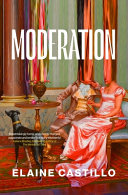
Girlie, a thirty-something Filipinx-American, works a day job at a social-media moderation centre, flagging and removing the very worst that makes it on to the internet. She's good at it, too - dispassionate, unflinching, maybe because she learned by necessity to cauterise all her emotions when she was still a kid - so it's no surprise to anyone when the social-media company for which she works offers her a big pay rise and an office to start moderating its new venture: virtual-reality theme parks, stunning simulations of civilizations long-since dead.
Crime and Bloodlust in the Time of Serial Killers
2025
A National Bestseller “Scorching, seductive . .
Read more
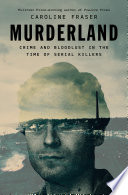
A National Bestseller “Scorching, seductive . . . A superb and disturbing vivisection of our darkest urges.” —Los Angeles Times “This is about as highbrow as true crime gets.” —Vulture “Fraser has outdone herself, and just about everyone else in the true-crime genre, with Murderland.” —Esquire From the Pulitzer Prize–winning author of Prairie Fires comes a terrifying true-crime history of serial killers in the Pacific Northwest and beyond—a gripping investigation of how a new strain of psychopath emerged out of a toxic landscape of deadly industrial violence Caroline Fraser grew up in the shadow of Ted Bundy, the most notorious serial murderer of women in American history, surrounded by his hunting grounds and mountain body dumps, in the brooding landscape of the Pacific Northwest. But in the 1970s and ’80s, Bundy was just one perpetrator amid an uncanny explosion of serial rape and murder across the region. Why so many? Why so weirdly and nightmarishly gruesome? Why the senseless rise and then sudden fall of an epidemic of serial killing? As Murderland indelibly maps the lives and careers of Bundy and his infamous peers in mayhem—the Green River Killer, the I-5 Killer, the Night Stalker, the Hillside Strangler, even Charles Manson—Fraser’s Northwestern death trip begins to uncover a deeper mystery and an overlapping pattern of environmental destruction. At ground zero in Ted Bundy’s Tacoma stood one of the most poisonous lead, copper, and arsenic smelters in the world, but it was hardly unique in the West. As Fraser’s investigation inexorably proceeds, evidence mounts that the plumes of these smelters not only sickened and blighted millions of lives but also warped young minds, including some who grew up to become serial killers. A propulsive nonfiction thriller, Murderland transcends true-crime voyeurism and noir mythology, taking readers on a profound quest into the dark heart of the real American berserk.
2025
Longlisted for The Center for Fiction's 2025 First Novel Prize “Deliciously observed, ferociously strange . .
Read more
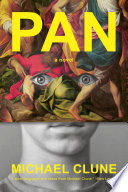
Longlisted for The Center for Fiction's 2025 First Novel Prize “Deliciously observed, ferociously strange . . . Reading his experience of these raptures is invigorating and often hilarious . . . Like a great painter, Clune can show us the mind, the world, with just a few well-placed verbs.” —Kaveh Akbar, The New York Times Book Review “With prose as strange as it is hypnotizing, Pan will leave you breathless and wanting for more.” —Harper’s Bazaar “Pan is remarkable for the honesty of its treatment of both mental illness and adolescence . . . when we close the book, we find ourselves in a larger world.” —The Guardian A strange and brilliant teenager's first panic attacks lead him down the rabbit hole in this wild, highly anticipated debut novel from one of our most distinctive literary minds Nicholas is fifteen when he forgets how to breathe. He had plenty of reason to feel unstable already: He’s been living with his dad in the bleak Chicago suburbs since his Russian-born mom kicked him out. Then one day in geometry class, Nicholas suddenly realizes that his hands are objects. The doctor says it’s just panic, but Nicholas suspects that his real problem might not be a psychiatric one: maybe the Greek god Pan is trapped inside his body. As his paradigm for his own consciousness crumbles, Nicholas; his best friend, Ty; and his maybe-girlfriend, Sarah, hunt for answers why—in Oscar Wilde and in Charles Baudelaire, in rock and roll and in Bach, and in the mysterious, drugged-out Barn, where their classmate Tod’s charismatic older brother Ian leads the high schoolers in rituals that might end up breaking more than just the law. Thrilling, cerebral, and startlingly funny, Pan is a new masterpiece of the coming-of-age genre by Guggenheim fellow and literary scholar Michael Clune, whose memoir of heroin addiction, White Out—named one of The New Yorker’s best books of the year—earned him a cult readership. Now, in Pan, the great novel of our age of anxiety, Clune drops us inside the human psyche, where we risk discovering that the forces controlling our inner lives could be more alien than we want to let ourselves believe.
===
'There is no other writer like him' MAGGIE NELSON 'I steal language and ideas from Michael Clune' BEN LERNER A strange and brilliant teenager's first panic attacks lead him down the rabbit hole in this wild, highly anticipated debut novel from one of our most distinctive literary minds Nicholas is fifteen when he forgets how to breathe. He already has plenty of reasons to feel unstable: he's been living with his dad in the bleak Chicago suburbs since his mum kicked him. Then one day in geometry class, Nicholas suddenly realises that his hands are objects. The doctor says it's just panic, but Nicholas suspects that his real problem might not be a psychiatric one: maybe the Greek god Pan is trapped inside his body. As his paradigm for his own consciousness crumbles, Nicholas, his best friend, Ty, and his maybe-girlfriend, Sarah, hunt for answers why - in Oscar Wilde and in Charles Baudelaire, in rock 'n' roll and in Bach, and in the mysterious, drugged-out barn where their classmate Tod's charismatic older brother Ian leads the high schoolers in rituals that might end up breaking more than just the law. Thrilling, cerebral and startlingly funny, Pan is a new masterpiece of the coming-of-age genre by Guggenheim fellow and literary scholar Michael Clune, whose memoir of heroin addiction, White Out - named one of the New Yorker's best books of the year - earned him a cult readership. Now, in Pan, the great novel of our age of anxiety, Clune drops us inside the human psyche, where we risk discovering that the forces controlling our inner lives could be more alien than we want to let ourselves believe.
A History of Sex and Christianity
2025
A groundbreaking history of sexual emotion, sexual activity, gender relations, marriage and the family--and how Christianity has interacted with this panorama of human concerns Few matters produce more public interest and public anxiety than sex and religion. Much of the political contention and division in societies across the world centres on sexual topics, and one-third of the global population is Christian in background or outlook.
Read more
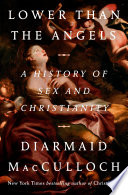
A groundbreaking history of sexual emotion, sexual activity, gender relations, marriage and the family--and how Christianity has interacted with this panorama of human concerns Few matters produce more public interest and public anxiety than sex and religion. Much of the political contention and division in societies across the world centres on sexual topics, and one-third of the global population is Christian in background or outlook. The issue goes to the heart of present-day religion. This book seeks to calm fears and encourage understanding through telling a three-thousand-year-long tale of Christians encountering sex, gender, and the family. The message of Lower than the Angels is simple, necessary and timely: to pay attention to the complexity and contradictions in the history of Christianity. The reader can decide from the story told here whether there is a single Christian theology of sex, or many contending voices in a symphony that is not at all complete. Oxford’s Emeritus Professor of the History of the Church introduces an epic of ordinary and extraordinary Christians trying to make sense of themselves and of humanity’s deepest desires, fears and hopes.
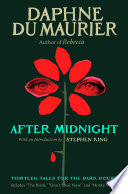
Thirteen Tales for the Dark Hours
2025
From Daphne du Maurier, “a writer of fearless originality” (The Guardian), comes a collection of her thirteen most mesmerizing tales—including iconic stories such as “The Birds” and “Don’t Look Now”—with an introduction by Stephen King. Daphne du Maurier is best known for Rebecca, “one of the most influential novels of the 20th century” (Sarah Waters) and basis for Alfred Hitchcock’s iconic film adaptation.
Read more
From Daphne du Maurier, “a writer of fearless originality” (The Guardian), comes a collection of her thirteen most mesmerizing tales—including iconic stories such as “The Birds” and “Don’t Look Now”—with an introduction by Stephen King. Daphne du Maurier is best known for Rebecca, “one of the most influential novels of the 20th century” (Sarah Waters) and basis for Alfred Hitchcock’s iconic film adaptation. More than thirty-five years after her death, du Maurier is celebrated for her gothic genius and stunning psychological insight by authors such as Ottessa Moshfegh, Maggie O’Farrell, Lucy Foley, Gillian Flynn, Jennifer Egan, and countless others, including Stephen King and Joe Hill. After Midnight brings together some of du Maurier’s darkest, most haunting stories, ranging from sophisticated literary thriller to twisted love story. Alongside classics such as “The Birds” and “Don’t Look Now,”—both of which inspired unforgettable films—are gems such as “Monte Verità,” a masterpiece about obsession, mysticism, and tragic love, and “The Alibi,” a chilling tale of an ordinary man’s descent into lies, manipulation, and sinister fantasies that edge dangerously close to reality. In “The Blue Lenses,” a woman recovering from eye surgery finds she now perceives those around her as having animal heads corresponding to their true natures. “Not After Midnight” follows a schoolteacher on holiday in Crete who finds a foreboding message from the chalet’s previous occupant who drowned while swimming at night. In “The Breakthrough,” a scientist conducts experiments to harness the power of death, blurring the line between genius and madness. Each story in this collection exemplifies du Maurier’s exquisite writing and singular insight into human frailty, jealousy, and the macabre. She “makes worlds in which people and even houses are mysterious and mutable; haunted rooms in which disembodied spirits dance at absolute liberty” (Olivia Laing, author of Crudo). Daphne du Maurier is mistress of the sleight of hand and slow-burning menace, often imitated and rarely surpassed. Stories include: -“The Blue Lenses” -“Don’t Look Now” -“The Alibi” -“The Apple Tree” -“The Birds” -“Monte Verita” -“The Pool” -“The Doll” -“Ganymede” -“Leading Lady” -“Not After Midnight” -“Split Second” -“The Breakthrough”
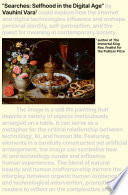
Selfhood in the Digital Age
2025
From the author of The Immortal King Rao, finalist for the Pulitzer Prize, a personal exploration of how technology companies have both fulfilled and exploited the human desire for understanding and connection A Most Anticipated Book from The New York Times and more! • One of Esquire’s Best Books of the Year (So Far) • One of Vanity Fair's Best Books to Kick Off Your Summer Reading • A Belletrist Book Club Pick "I cannot imagine a better guide through the infuriating, labyrinthine underworld of technology than Vauhini Vara."—Carmen Maria Machado, author of In the Dream House “Smart, funny, honest.”—The New Yorker • "Seamless blend of personal narrative and systemic critique."—The Atlantic • "Beautifully written and profoundly researched." —Kirkus • "At once genre-defying and gripping.”—The Washington Post When it was released to the public in November 2022, ChatGPT awakened the world to a secretive project: teaching AI-powered machines to write. Its creators had a sweeping ambition—to build machines that not only could communicate but also could do all kinds of other activities, and better than humans ever could.
Read more
From the author of The Immortal King Rao, finalist for the Pulitzer Prize, a personal exploration of how technology companies have both fulfilled and exploited the human desire for understanding and connection A Most Anticipated Book from The New York Times and more! • One of Esquire’s Best Books of the Year (So Far) • One of Vanity Fair's Best Books to Kick Off Your Summer Reading • A Belletrist Book Club Pick "I cannot imagine a better guide through the infuriating, labyrinthine underworld of technology than Vauhini Vara."—Carmen Maria Machado, author of In the Dream House “Smart, funny, honest.”—The New Yorker • "Seamless blend of personal narrative and systemic critique."—The Atlantic • "Beautifully written and profoundly researched." —Kirkus • "At once genre-defying and gripping.”—The Washington Post When it was released to the public in November 2022, ChatGPT awakened the world to a secretive project: teaching AI-powered machines to write. Its creators had a sweeping ambition—to build machines that not only could communicate but also could do all kinds of other activities, and better than humans ever could. But was this goal actually achievable? And if reached, would it lead to our liberation or our subjugation? Vauhini Vara, an award-winning tech journalist and editor, had long been grappling with these questions. In 2021, she asked a predecessor of ChatGPT to write about her sister’s death, resulting in an essay that was both more moving and more disturbing than she could have imagined. It quickly went viral. The experience, revealing both the power and the danger of corporate-owned technologies, forced Vara to interrogate how these technologies have influenced her understanding of herself and the world around her—from discovering online chat rooms as a preteen to using social media as The Wall Street Journal’s first Facebook reporter to asking ChatGPT for writing advice—while compelling her to add to the trove of human-created material exploited for corporate financial gain. Interspersed throughout this investigation are her own Google searches, Amazon reviews, and the other raw material of internet life—including the viral AI experiment that started it all. Searches illuminates how technological capitalism is both shaping and exploiting human existence while proposing that by harnessing the collective creativity that makes humans unique, we might imagine a freer, more empowered relationship with our machines and, ultimately, with one another.
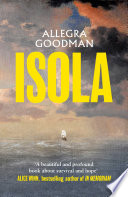
2025
A REESE’S BOOK CLUB PICK The New York Times ‘Best Books of the Year (So Far)' A young woman and her lover are marooned on an island in a deeply moving novel of love, faith and survival, for readers of Jessie Burton’s The Miniaturist and Anthony Doerr’s All The Light We Cannot See ‘This made me cry on an airplane but it was worth it! A luscious, rich and moving novel, a beautiful, careful and profound book about survival and hope’ Alice Winn, bestselling author of In Memoriam ‘An extraordinary book that reads like a thriller, written with the care of the most delicate psychological and historical fiction’ Vogue ‘Best Books of 2025’ ‘A shocking story, made all the more stunning by the fact that it has its roots in true history’ Jodi Picoult, author of My Sister's Keeper In sixteenth-century France, as the heiress to an aristocratic fortune, Marguerite is destined for a life of privilege. Then she is orphaned, and her enigmatic and volatile guardian squanders her inheritance and insists she accompany him on an expedition to the new French colonies of North America.
Read more
A REESE’S BOOK CLUB PICK The New York Times ‘Best Books of the Year (So Far)' A young woman and her lover are marooned on an island in a deeply moving novel of love, faith and survival, for readers of Jessie Burton’s The Miniaturist and Anthony Doerr’s All The Light We Cannot See ‘This made me cry on an airplane but it was worth it! A luscious, rich and moving novel, a beautiful, careful and profound book about survival and hope’ Alice Winn, bestselling author of In Memoriam ‘An extraordinary book that reads like a thriller, written with the care of the most delicate psychological and historical fiction’ Vogue ‘Best Books of 2025’ ‘A shocking story, made all the more stunning by the fact that it has its roots in true history’ Jodi Picoult, author of My Sister's Keeper In sixteenth-century France, as the heiress to an aristocratic fortune, Marguerite is destined for a life of privilege. Then she is orphaned, and her enigmatic and volatile guardian squanders her inheritance and insists she accompany him on an expedition to the new French colonies of North America. Isolated and afraid, Marguerite befriends her guardian’s servant and the two develop an intense attraction. But when their relationship is discovered, they are brutally punished, abandoned on a small island with no hope for rescue. From a childhood dressed in gowns with laced pearls in her hair, Marguerite finds herself at the mercy of nature. As the weather turns, blanketing the island in ice, she discovers a faith she had never before needed… Inspired by the real life of a sixteenth-century heroine, Isola tells the timeless story of a woman fighting for survival.
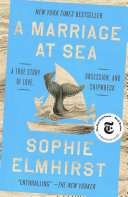
A True Story of Love, Obsession, and Shipwreck
2025
THE RUNAWAY NEW YORK TIMES BESTSELLER & ONE OF BARACK OBAMA’S FAVORITE BOOKS OF 2025 A NEW YORK TIMES TOP 10 BOOK OF 2025 ALSO NAMED A BEST BOOK OF 2025 BY NPR, VOGUE, TIME MAGAZINE, THE NEW YORKER, AND MORE “This is nonfiction that reads like fiction – the best kind. Elmhirst’s retelling is a triumph, second only to the seemingly impossible feat of Maurice and Maralyn themselves.
Read more
THE RUNAWAY NEW YORK TIMES BESTSELLER & ONE OF BARACK OBAMA’S FAVORITE BOOKS OF 2025 A NEW YORK TIMES TOP 10 BOOK OF 2025 ALSO NAMED A BEST BOOK OF 2025 BY NPR, VOGUE, TIME MAGAZINE, THE NEW YORKER, AND MORE “This is nonfiction that reads like fiction – the best kind. Elmhirst’s retelling is a triumph, second only to the seemingly impossible feat of Maurice and Maralyn themselves. You won’t be able to put it down.” – USA Today “Remarkable… I found myself, alternately, holding my breath as I read at top speed, wandering rooms in search of someone to read aloud to, and placing the book facedown, arrested by quiet statements that left me reeling with their depth.” – The New York Times “Such an emotionally vivid portrait of a couple in isolation that I was shocked it wasn’t fiction. How could a writer get so deeply into the minds of two real people in such extraordinary circumstances? … So brilliantly depicted.” – Elle “A beautiful meditation on endurance, codependence, and the power of love. A dazzling book.” – Patrick Radden Keefe “An enthralling, engrossing story of survival and the resilience of the human spirit.” —Bill Bryson An instant New York Times bestseller, this is the electrifying true story of a young couple shipwrecked at sea: a mind-blowing tale of obsession, survival, and partnership stretched to its limits. Maurice and Maralyn make an odd couple. He’s a loner, awkward and obsessive; she’s charismatic and ambitious. But they share a horror of wasting their lives. And they dream – as we all dream – of running away from it all. What if they quit their jobs, sold their house, bought a boat, and sailed away? Most of us begin and end with the daydream. But in June 1972, Maurice and Maralyn set sail. For nearly a year all went well, until deep in the Pacific, a breaching whale knocked a hole in their boat and it sank beneath the waves. What ensues is a jaw-dropping fight to survive in the wild ocean, with little hope of rescue. Alone together for months in a tiny rubber raft, starving and exhausted, Maurice and Maralyn have to find not only ways to stay alive but ways to get along, as their inner demons emerge and their marriage is put to the greatest of tests. Although they could run away from the world, they can’t run away from themselves. Taut, propulsive, and dazzling, A Marriage at Sea pairs an adrenaline-fueled high seas adventure with a gutting love story that asks why we love difficult people, and who we become under the most extreme conditions imaginable.
2025
NEW YORK TIMES BESTSELLER FINALIST FOR THE ANDREW CARNEGIE MEDAL FOR EXCELLENCE IN FICTION LONGLISTED FOR THE NATIONAL BOOK AWARD “[Han Kang’s] intense poetic prose . .
Read more
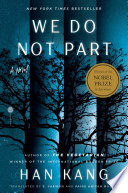
NEW YORK TIMES BESTSELLER FINALIST FOR THE ANDREW CARNEGIE MEDAL FOR EXCELLENCE IN FICTION LONGLISTED FOR THE NATIONAL BOOK AWARD “[Han Kang’s] intense poetic prose . . . confronts historical traumas and exposes the fragility of human life.”—The Nobel Committee for Literature, in the citation for the Nobel Prize Han Kang’s most revelatory book since The Vegetarian—and her first published in English since winning the Nobel Prize—We Do Not Part tells the story of a friendship between two women while powerfully reckoning with a hidden chapter in Korean history. A BEST BOOK OF THE YEAR: TIME, KIRKUS REVIEWS, BOOK RIOT, CHICAGO PUBLIC LIBRARY • ONE OF BOOKPAGE’S TEN BEST BOOKS OF THE YEAR “[A] masterpiece.”—The Boston Globe “A haunting exploration of friendship amid historical trauma.”—Time “A novel that is both disquieting and entrancing.”—The Economist One winter morning in Seoul, Kyungha receives an urgent message from her friend Inseon to visit her at the hospital. Inseon has injured herself in an accident, and she begs Kyungha to return to Jeju Island, where she lives, to save her beloved pet—a white bird called Ama. A snowstorm hits the island when Kyungha arrives. She must reach Inseon’s house at all costs, but the icy wind and squalls slow her down as night begins to fall. She wonders if she will arrive in time to save the animal—or even survive the terrible cold that envelops her with every step. Lost in a world of snow, she doesn’t yet suspect the vertiginous plunge into darkness that awaits her at her friend’s house. Blurring the boundaries between dream and reality, We Do Not Part powerfully brings to light the lost voices of the past to save them from oblivion. Both a hymn to an enduring friendship and an argument for remembering, it is the story of profound love in the face of unspeakable pain—and a celebration of life, however fragile it might be.
A Memoir
2024
NEW YORK TIMES NOTABLE BOOK • NEW YORK TIMES BESTSELLER • FINALIST FOR THE 2025 WOMEN'S PRIZE • A fascinating meditation on freedom, trust, loss, and our relationship with the natural world, explored through the story of one woman’s unlikely friendship with a wild hare. A BEST BOOK OF THE YEAR: The Washington Post, The Wall Street Journal, NPR, TIME, The Boston Globe, The Economist, Scientific American, Slate “Moving.
Read more
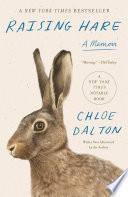
NEW YORK TIMES NOTABLE BOOK • NEW YORK TIMES BESTSELLER • FINALIST FOR THE 2025 WOMEN'S PRIZE • A fascinating meditation on freedom, trust, loss, and our relationship with the natural world, explored through the story of one woman’s unlikely friendship with a wild hare. A BEST BOOK OF THE YEAR: The Washington Post, The Wall Street Journal, NPR, TIME, The Boston Globe, The Economist, Scientific American, Slate “Moving. . . . Impart[s] valuable lessons about slowing down and the beauty in the unexpected.”—USA Today “A perfect testimony to the transformative power of love.”—Margaret Renkl, author of The Comfort of Crows Imagine you could hold a baby hare and bottle-feed it. Imagine that it lived under your roof and bounded around your bedroom at night, drumming on the duvet cover when it wanted your attention. Imagine that, more than two years later, it still ran in from the fields when you called it and slept in your house for hours on end. For political advisor and speechwriter Chloe Dalton, who spent lockdown deep in the English countryside, far away from her usual busy London life, this became her unexpected reality. In February 2021, Dalton stumbles upon a newborn hare—a leveret—that had been chased by a dog. Fearing for its life, she brings it home, only to discover how difficult it is to rear a wild hare, most of whom perish in captivity from either shock or starvation. Through trial and error, she learns to feed and care for the leveret with every intention of returning it to the wilderness. Instead, it becomes her constant companion, wandering the fields and woods at night and returning to Dalton’s house by day. Though Dalton feared that the hare would be preyed upon by foxes, weasels, feral cats, raptors, or even people, she never tried to restrict it to the house. Each time the hare leaves, Chloe knows she may never see it again. Yet she also understands that to confine it would be its own kind of death. Raising Hare chronicles their journey together while also taking a deep dive into the lives and nature of hares, and the way they have been viewed historically in art, literature, and folklore. We witness firsthand the joy at this extraordinary relationship between human and animal, which serves as a reminder that the best things, and most beautiful experiences, arise when we least expect them.
===
THE INSTANT SUNDAY TIMES AND NEW YORK TIMES BESTSELLER WINNER OF THE WAINWRIGHT PRIZE FOR NATURE WRITING WINNER OF BOOKS ARE MY BAG READERS AWARD SHORTLISTED FOR THE WOMEN'S PRIZE FOR NON-FICTION, HATCHARDS AND BIOGRAPHERS' CLUB FIRST BIOGRAPHY PRIZE A BOOK OF THE YEAR FOR THE HAY FESTIVAL, SUNDAY TIMES, THE TIMES, FINANCIAL TIMES, SPECTATOR, ECONOMIST AND iNEWS 'A beautiful book' - ANGELINA JOLIE 'I will be recommending this to everyone' - MATT HAIG 'Quietly profound, beautifully written, Hare is now lodged in my heart' - TRACY CHEVALIER __ Imagine you could hold a baby hare and bottle-feed it. Imagine that it lived under your roof and lolloped around your bedroom at night, drumming on the duvet cover when it wanted your attention. Imagine that, over two years later, it still ran in from the fields when you called it and snoozed in your house for hours on end. This happened to me. When lockdown led busy professional Chloe to leave the city and return to the countryside of her childhood, she never expected to find herself custodian of a newly born hare. Yet when she finds the creature, endangered, alone and no bigger than her palm, she is compelled to give it a chance at survival. Raising Hare chronicles their journey together and the challenges of caring for the leveret and preparing for its return to the wild. We witness an extraordinary relationship between human and animal, rekindling our sense of awe towards nature and wildlife. This improbable bond of trust serves to remind us that the most remarkable experiences, inspiring the most hope, often arise when we least expect them.