The Year 2025 in Ten Books
The Story of a Genocide
The New Era of Uprisings
2019
Award winning poet Joshua Clover theorises the riot as the form of the coming insurrection Baltimore. Ferguson.
Read more
Award winning poet Joshua Clover theorises the riot as the form of the coming insurrection Baltimore. Ferguson. Tottenham. Clichy-sous-Bois. Oakland. Ours has become an “age of riots” as the struggle of people versus state and capital has taken to the streets. Award-winning poet and scholar Joshua Clover offers a new understanding of this present moment and its history. Rioting was the central form of protest in the seventeenth and eighteenth centuries, and was supplanted by the strike in the early nineteenth century. It returned to prominence in the 1970s, profoundly changed along with the coordinates of race and class. From early wage demands to recent social justice campaigns pursued through occupations and blockades, Clover connects these protests to the upheavals of a sclerotic economy in a state of moral collapse. Historical events such as the global economic crisis of 1973 and the decline of organized labor, viewed from the perspective of vast social transformations, are the proper context for understanding these eruptions of discontent. As social unrest against an unsustainable order continues to grow, this valuable history will help guide future antagonists in their struggles toward a revolutionary horizon.

Inside Southeast Asia's Cybercrime Compounds
2025
A probing investigation of Southeast Asia’s online scam industry – told through the voices of survivors Running the gamut from the infamous ‘pig butchering’ romance con to sophisticated online extortion and investment fraud, Southeast Asia has emerged as the global hub for cybercrime. Based on years of field research, Scam takes an in-depth look at the history and inner dynamics of the region’s online scam industry.
Read more
A probing investigation of Southeast Asia’s online scam industry – told through the voices of survivors Running the gamut from the infamous ‘pig butchering’ romance con to sophisticated online extortion and investment fraud, Southeast Asia has emerged as the global hub for cybercrime. Based on years of field research, Scam takes an in-depth look at the history and inner dynamics of the region’s online scam industry. Revealed are the appalling working conditions — akin to modern slavery — in the hundreds of prisonlike compounds that have mushroomed throughout multiple countries. The result is a shocking exposé of victims forced to be perpetrators, a tragic modern tale.
===
"Buku ini mengungkap dunia gelap industri penipuan daring di Asia Tenggara—dari Kamboja, Filipina, Myanmar, hingga Laos—yang beroperasi dengan modus perbudakan modern. Ribuan orang dijebak melalui iklan kerja palsu, diperdagangkan, dan dipaksa menjadi pelaku penipuan online berskala industri. Dengan riset mendalam, kesaksian penyintas, serta analisis tajam, Scam menunjukkan bagaimana kapitalisme kriminal, perdagangan manusia, dan teknologi berpadu dalam menciptakan salah satu krisis kemanusiaan terbesar di era digital. Sebuah bacaan penting bagi siapa pun yang ingin memahami sisi tergelap globalisasi dan kejahatan transnasional masa kini."-- publisher.
A Global History of Workersâ Fight for Municipal Socialism
2023
Winner of the International Labor History Association (ILHA) 2023 Book of the Year Award for labor history For more than a century, municipal socialism has fired the imaginations of workers fighting to make cities livable and democratic. At every turn propertied elites challenged their right to govern.
Read more
Winner of the International Labor History Association (ILHA) 2023 Book of the Year Award for labor history For more than a century, municipal socialism has fired the imaginations of workers fighting to make cities livable and democratic. At every turn propertied elites challenged their right to govern. Prominent US labor historian, Shelton Stromquist, offers the first global account of the origins of this new trans-local socialist politics. He explains how and why cities after 1890 became crucibles for municipal socialism. Drawing on the colorful stories of local activists and their social-democratic movements in cities as diverse as Broken Hill, Christchurch, Malm, Bradford, Stuttgart, Vienna, and Hamilton, OH, the book shows how this new urban politics arose. Long governed by propertied elites, cities in the nineteenth century were transformed by mass migration and industrialization that tore apart their physical and social fabric. Amidst massive strikes and faced with epidemic disease, fouled streets, unsafe water, decrepit housing, and with little economic security and few public amenities, urban workers invented a local politics that promised to democratize cities they might themselves govern and reclaim the wealth they created. This new politics challenged the class power of urban elites as well as the centralizing tendencies of national social-democratic movements. Municipal socialist ideas have continued to inspire activists in their fight for the right of cities to govern themselves.
===
How workers fought for municipal socialism to make cities around the globe livable and democratic - and what the lessons are for today Winner of the International Labor History Association (ILHA) 2023 Book of the Year Award for labor history For more than a century, municipal socialism has fired the imaginations of workers fighting to make cities livable and democratic. At every turn propertied elites challenged their right to govern. Prominent US labor historian, Shelton Stromquist, offers the first global account of the origins of this new trans-local socialist politics. He explains how and why cities after 1890 became crucibles for municipal socialism. Drawing on the colorful stories of local activists and their social-democratic movements in cities as diverse as Broken Hill, Christchurch, Malmö, Bradford, Stuttgart, Vienna, and Hamilton, OH, the book shows how this new urban politics arose. Long governed by propertied elites, cities in the nineteenth century were transformed by mass migration and industrialization that tore apart their physical and social fabric. Amidst massive strikes and faced with epidemic disease, fouled streets, unsafe water, decrepit housing, and with little economic security and few public amenities, urban workers invented a local politics that promised to democratize cities they might themselves govern and reclaim the wealth they created. This new politics challenged the class power of urban elites as well as the centralizing tendencies of national social-democratic movements. Municipal socialist ideas have continued to inspire activists in their fight for the right of cities to govern themselves.
The Return of the Left
2025
Your Party sees leading figures make the case for Britain’s major new political project, laying out the challenges ahead and how to surmount them. Oliver Eagleton interviews Zarah Sultana MP; Leanne Mohamad, who came within 500 votes of unseating Labour’s Wes Streeting at the last general election; Stop the War co-founder Andrew Murray; Our Bloc author James Schneider; Andrew Feinstein, who took on Keir Starmer in Holborn and St Pancras in 2024; and former Corbyn speechwriter Alex Nunns.
Read more
Your Party sees leading figures make the case for Britain’s major new political project, laying out the challenges ahead and how to surmount them. Oliver Eagleton interviews Zarah Sultana MP; Leanne Mohamad, who came within 500 votes of unseating Labour’s Wes Streeting at the last general election; Stop the War co-founder Andrew Murray; Our Bloc author James Schneider; Andrew Feinstein, who took on Keir Starmer in Holborn and St Pancras in 2024; and former Corbyn speechwriter Alex Nunns. Delineated in these pages is a left-wing programme opposed to austerity, inequality and war, an agenda fit to oppose both authoritarian centrists and the hard right. The discussion addresses the need to balance parliamentary politics with social movements, short-term aims with long-term ambitions, and centralised structures with grassroots participation. In his introduction, Eagleton lays bare the abject failure of Starmer’s Labour government, explaining why a new socialist party is not only possible but urgently needed. Over 750,000 people have registered to support Your Party. This book is essential reading on the new insurgent force at Westminster and beyond.
===
Your Party sees leading figures make the case for Britain's major new political project, laying out the challenges ahead and how to surmount them. Oliver Eagleton interviews Zarah Sultana MP; Leanne Mohamad, who came within 500 votes of unseating Labour's Wes Streeting at the last general election; Stop the War co-founder Andrew Murray; Our Bloc author James Schneider; Andrew Feinstein, who took on Keir Starmer in Holborn and St Pancras in 2024; and former Corbyn speechwriter Alex Nunns. Delineated in these pages is a left-wing programme opposed to austerity, inequality and war, an agenda fit to oppose both authoritarian centrists and the hard right. The discussion addresses the need to balance parliamentary politics with social movements, short-term aims with long-term ambitions, and centralised structures with grassroots participation. In his introduction, Eagleton lays bare the abject failure of Starmer's Labour government, explaining why a new socialist party is not only possible but urgently needed. Over 750,000 people have registered to support Your Party. This book is essential reading on the new insurgent force at Westminster and beyond.

The Age of Impotence and the Horizon of Possibility
2017
We live in an age of impotence. Stuck between global war and global finance, between identity and capital, we seem to be incapable of producing the radical change that is so desperately needed.
Read more
We live in an age of impotence. Stuck between global war and global finance, between identity and capital, we seem to be incapable of producing the radical change that is so desperately needed. Is there still a way to disentangle ourselves from a global order that shapes our politics as well as our imagination? In his most systematic book to date, renowned Italian theorist Franco Berardi tackles this question through a solid yet visionary analysis of the three fundamental concepts of Possibility, Potency, and Power. Characterizing Possibility as the content, Potency as the energy, and Power as the form, Berardi suggests that the road to emancipation unravels from the awareness that the field of the possible is only limited, and not created, by the power structures that implement it. Other futures and other worlds are always already inscribed within the present, despite power's attempt at keeping them invisible. Overcoming any temptation of giving in to despair or nostalgia, Berardi proposes the notion of 'futurability' as a way to remind us that even within the darkness of our current crisis lies dormant the horizon of possibility.
Cybernetic Circulation Complex
Big Tech and Planetary Crisis
2025
An anti-capitalist guide to breaking the power of Big Tech Big Tech firms dominate the global economy. But what value do they actually produce? In this brilliant survey of global tech economy, Nick Dyer-Witheford and Alessandra Mularoni argue that the role of firms like Amazon and Google, Palantir and Uber, is in the automation of circulation.
Read more
An anti-capitalist guide to breaking the power of Big Tech Big Tech firms dominate the global economy. But what value do they actually produce? In this brilliant survey of global tech economy, Nick Dyer-Witheford and Alessandra Mularoni argue that the role of firms like Amazon and Google, Palantir and Uber, is in the automation of circulation. By applying digital technologies to processes of market exchange—everything from advertising and shopping, to logistics and financial services—Big Tech aims to subject these activities to the level of control and predictability that capital has secured in industrial production. But there is a way out of the multiple crises that Big Tech has helped precipitate. If we are to break their grip on the global economy then it’ll take more than just antitrust legislation or reducing individual time online. By understanding the central role Big Tech plays in contemporary capitalism, Dyer-Witheford and Mularoni argue that what is required instead is a new, ambitious and comprehensive program of democratic collective planning that can move us beyond capitalism. Cybernetic Circulation Complex offers not only a compelling analysis of the power of Big Tech and their role in our current global crises, but a roadmap for a new form of life: biocommunism, a digital degrowth that can help us steer between the double boundaries of ecological sustainability and equitable social development.

How the World Surrendered to Climate Breakdown
2024
The world is on the cusp of one and a half degrees of warming - just the rise it has committed itself to avoiding. Heat at such levels would be intolerable.
Read more
The world is on the cusp of one and a half degrees of warming - just the rise it has committed itself to avoiding. Heat at such levels would be intolerable. Even before one and a half, seasons of climate disaster have struck with ever more devastating force, and yet a notion has taken hold that the cause is now lost: the intolerable has become unavoidable. The limit will be overshot - perhaps two degrees as well - and the best we can do is cool down the Earth at some later point, towards the end of the century, by means of technologies not yet proven. How did this happen? How could the idea of overshoot gain such traction? What forces are driving us into a climate that people - particularly poor people in the global South - won't be able to cope with? In Overshoot: How the World Surrendered to Climate Breakdown, Andreas Malm and Wim Carton present a history of the present phase of the crisis, likely to extend decades into the future, as the fossil fuel industry swims in the largest profits ever made. Money continues to flow into the construction of pipelines, platforms, terminals, mines - assets that will have to be destroyed for the planet to remain liveable. Too much heat has become officially acceptable because such revolutionary destruction is not. But should the rest of us abide by that priority? Unflinchingly critical of business-as-usual and the calls for surrender to it, sweeping in scope, stirring and sobering, Overshoot lays out the stakes for the climate struggle in the years ahead.
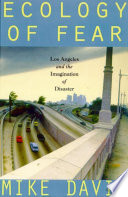
Los Angeles and the Imagination of Disaster
1998
In a gripping reconnaissance into the urban future, a provocative interpreter of the American metropolis unravels the secret history of disaster, real and imaginary, in Southern California and shows how these tragedies could have been avoided. 30 photos.

How the Bipartisan War on Immigrants Explains Politics as We Know It
2020
American history told from the vantage of immigration politics It is often said that with the election of Donald Trump nativism was raised from the dead. After all, here was a president who organized his campaign around a rhetoric of unvarnished racism and xenophobia.
Read more
American history told from the vantage of immigration politics It is often said that with the election of Donald Trump nativism was raised from the dead. After all, here was a president who organized his campaign around a rhetoric of unvarnished racism and xenophobia. Among his first acts on taking office was to block foreign nationals from seven predominantly Muslim countries from entering the United States. But although his actions may often seem unprecedented, they are not as unusual as many people believe. This story doesn’t begin with Trump. For decades, Republicans and Democrats alike have employed xenophobic ideas and policies, declaring time and again that “illegal immigration” is a threat to the nation’s security, wellbeing, and future. The profound forces of all-American nativism have, in fact, been pushing politics so far to the right over the last forty years that, for many people, Trump began to look reasonable. As Daniel Denvir argues, issues as diverse as austerity economics, free trade, mass incarceration, the drug war, the contours of the post 9/11 security state, and, yes, Donald Trump and the Alt-Right movement are united by the ideology of nativism, which binds together assorted anxieties and concerns into a ruthless political project. All-American Nativism provides a powerful and impressively researched account of the long but often forgotten history that gave us Donald Trump.