The Best Nonfiction of 2025
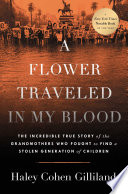
The Incredible True Story of the Grandmothers Who Fought to Find a Stolen Generation of Children
2025
"The epic, true story of the Abuelas de Plaza de Mayo, grandmothers who fought to find their stolen grandchildren during Argentina's brutal dictatorship"--Provided by publisher. === NATIONAL BESTSELLER • A NEW YORK TIMES NOTABLE BOOK OF 2025 • THE WASHINGTON POST’S 5 BEST NONFICTION BOOKS OF 2025 • THE ATLANTIC’S 10 BEST BOOKS OF 2025 • THE NEW YORK PUBLIC LIBRARY'S BEST BOOKS OF 2025 • TIME MAGAZINE’S BEST BOOKS OF 2025 • NPR’S BEST BOOKS OF 2025 “[An] astonishing story…Powerful…Harrowing…Absorbing and lucid…You would have to harden your heart to be unmoved by the Abuelas’ quest.” —Jennifer Szalai, The New York Times Book Review (front-cover review) “Inspiring…A triumphant saga of ordinary people doing extraordinary things in the face of pure malevolence.” —Hampton Sides • “Enthralling…Written with the nail-biting verve of a thriller.” —Publishers Weekly (starred review) • “Extraordinary...A harrowing and timely reminder of what happens when democracy succumbs to despotism.” —Adam Higginbotham • “[A] cinematically detailed, deeply researched narrative.” —The Washington Post • “Piercing, emotional...Will resonate for generations.” —Kirkus Reviews (starred review) A remarkable new talent in narrative nonfiction delivers the epic true story of a group of courageous grandmothers who fought to find their grandchildren who were stolen.
Read more
"The epic, true story of the Abuelas de Plaza de Mayo, grandmothers who fought to find their stolen grandchildren during Argentina's brutal dictatorship"--Provided by publisher.
===
NATIONAL BESTSELLER • A NEW YORK TIMES NOTABLE BOOK OF 2025 • THE WASHINGTON POST’S 5 BEST NONFICTION BOOKS OF 2025 • THE ATLANTIC’S 10 BEST BOOKS OF 2025 • THE NEW YORK PUBLIC LIBRARY'S BEST BOOKS OF 2025 • TIME MAGAZINE’S BEST BOOKS OF 2025 • NPR’S BEST BOOKS OF 2025 “[An] astonishing story…Powerful…Harrowing…Absorbing and lucid…You would have to harden your heart to be unmoved by the Abuelas’ quest.” —Jennifer Szalai, The New York Times Book Review (front-cover review) “Inspiring…A triumphant saga of ordinary people doing extraordinary things in the face of pure malevolence.” —Hampton Sides • “Enthralling…Written with the nail-biting verve of a thriller.” —Publishers Weekly (starred review) • “Extraordinary...A harrowing and timely reminder of what happens when democracy succumbs to despotism.” —Adam Higginbotham • “[A] cinematically detailed, deeply researched narrative.” —The Washington Post • “Piercing, emotional...Will resonate for generations.” —Kirkus Reviews (starred review) A remarkable new talent in narrative nonfiction delivers the epic true story of a group of courageous grandmothers who fought to find their grandchildren who were stolen. In the early hours of March 24, 1976, the streets of Buenos Aires rumble with tanks as soldiers seize the presidential palace and topple Argentina’s leader. The country is now under the control of a military junta, with army chief Jorge Rafael Videla at the helm. With quiet support from the United States and tacit approval from much of Argentina’s people, who are tired of constant bombings and gunfights, the junta swiftly launches the National Reorganization Process or El Proceso—a bland name masking their ruthless campaign to crush the political left and instill the country with “Western, Christian” values. The junta holds power until 1983 and decimates a generation. One of the military’s most diabolical acts is kidnapping hundreds of pregnant women. After giving birth in captivity, the women are “disappeared,” and their babies secretly given to other families—many of them headed by police or military officers. For mothers of pregnant daughters and daughters-in-law, the source of their grief is twofold—the disappearances of their children, and the theft of their grandchildren. A group of fierce grandmothers forms the Abuelas de Plaza de Mayo, dedicated to finding the stolen infants and seeking justice from a nation that betrayed them. At a time when speaking out could mean death, the Abuelas confront military officers and launch protests to reach international diplomats and journalists. They become detectives, adopting disguises to observe suspected grandchildren, and even work alongside a renowned American scientist to pioneer groundbreaking genetic tests. A Flower Traveled in My Blood is the rarest of nonfiction that reads like a novel and puts your heart in your throat. It is the product of years of extensive archival research and meticulous, original reporting. It marks the arrival of a blazing new talent in narrative journalism. In these pages, a regime tries to terrorize a country, but love prevails. The grandmothers’ stunning stories reveal new truths about memory, identity, and family.
2025
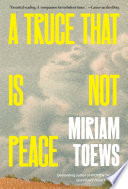
"Revelatory." --New York Times Book Review "Essential reading. A companion for turbulent times." --Laura van den Berg "Nothing short of a masterpiece.” --The San Francisco Chronicle Named a Must-Read Book of the Summer by The Los Angeles Times, People Magazine, and Town & Country Internationally bestselling author Miriam Toews' memoir of the will to write--a work of disobedient memory, humor, and exquisite craft set against a content-hungry, prose-stuffed society.
Read more
"Revelatory." --New York Times Book Review "Essential reading. A companion for turbulent times." --Laura van den Berg "Nothing short of a masterpiece.” --The San Francisco Chronicle Named a Must-Read Book of the Summer by The Los Angeles Times, People Magazine, and Town & Country Internationally bestselling author Miriam Toews' memoir of the will to write--a work of disobedient memory, humor, and exquisite craft set against a content-hungry, prose-stuffed society.
===
In this breathtaking memoir of stunning emotional force and electrifying honesty, one of Canada's most iconic writers tells her own story for the first time. “Why do you write?” the organizer of a literary event in Mexico City asks Miriam Toews. Each attempt at an answer from Toews—all unsatisfactory to the organizer—surfaces new layers of grief, guilt, and futility connected to her sister’s suicide more than fifteen years ago. She has been keeping up, she realizes, an internal correspondence with her beloved sibling, attempting to fill a silence she can barely comprehend. As Toews turns to face that silence, we come to see that the question “why I write” is as impossible to answer as deciding whether to live life as a comedy or a tragedy. A masterwork of non-fiction, A Truce That Is Not Peace explores the uneasy pact every creative person makes with memory. Wildly original yet intimately, powerfully precise; momentous, hilarious, wrenching, and joyful—this is Miriam Toews at her dazzling best, remaking her personal world and inventing a brilliant literary form to hold it.
A Love Story
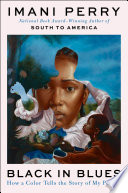
How a Color Tells the Story of My People
2025
A “vast, multifaceted and enchanting” (Minneapolis Star-Tribune) meditation on the color blue and its fascinating role in Black history and culture, from National Book Award winner Imani Perry, “the most important interpreter of Black life in our time” (Eddie S. Glaude, Jr.) Throughout history, the concept of Blackness has been remarkably intertwined with another color: blue.
Read more
A “vast, multifaceted and enchanting” (Minneapolis Star-Tribune) meditation on the color blue and its fascinating role in Black history and culture, from National Book Award winner Imani Perry, “the most important interpreter of Black life in our time” (Eddie S. Glaude, Jr.) Throughout history, the concept of Blackness has been remarkably intertwined with another color: blue. In daily life, it is evoked in countless ways. Blue skies and blue water offer hope for that which lies beyond the current conditions. But blue is also the color of deep melancholy and heartache, echoing Louis Armstrong’s question, “What did I do to be so Black and blue?” In this book, celebrated author Imani Perry uses the world’s favorite color as a springboard for a riveting emotional, cultural, and spiritual journey—an examination of race and Blackness that transcends politics or ideology. Perry traces both blue and Blackness from their earliest roots to their many embodiments of contemporary culture, drawing deeply from her own life as well as art and history: The dyed indigo cloths of West Africa that were traded for human life in the 16th century. The mixture of awe and aversion in the old-fashioned characterization of dark-skinned people as “Blue Black.” The fundamentally American art form of blues music, sitting at the crossroads of pain and pleasure. The blue flowers Perry plants to honor a loved one gone too soon. Poignant, spellbinding, and utterly original, Black in Blues is a brilliant new work that could only have come from the mind of one of our greatest writers and thinkers. Attuned to the harrowing and the sublime aspects of the human experience, it is every bit as vivid, rich, and striking as blue itself.
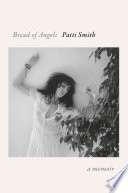
A Memoir
2025
A radiant new memoir from beloved artist and writer Patti Smith, author of the National Book Award winner Just Kids God whispers through a crease in the wallpaper, writes Patti Smith in this indelible account of her life as an artist. A post–World War II childhood unfolds in a condemned housing complex described in Dickensian detail: consumptive children, vanishing neighbors, an infested rat house, and a beguiling book of Irish fairy tales.
Read more
A radiant new memoir from beloved artist and writer Patti Smith, author of the National Book Award winner Just Kids God whispers through a crease in the wallpaper, writes Patti Smith in this indelible account of her life as an artist. A post–World War II childhood unfolds in a condemned housing complex described in Dickensian detail: consumptive children, vanishing neighbors, an infested rat house, and a beguiling book of Irish fairy tales. We enter the child’s world of the imagination where Smith, the captain of her loyal and beloved sibling army, vanquishes bullies, communes with the king of tortoises, and searches for sacred silver pennies. The most intimate of Smith’s memoirs, Bread of Angels takes us through her teenage years when the first glimmers of art and romance take hold. Arthur Rimbaud and Bob Dylan emerge as creative heroes and role models as Smith starts to write poetry, then lyrics, merging both into the iconic recordings and songs such as Horses and Easter, “Dancing Barefoot” and “Because the Night.” She leaves it all behind to marry her one true love, Fred “Sonic” Smith, with whom she creates a life of devotion and adventure on a canal in St. Clair Shores, Michigan, with ancient willows and fulsome pear trees. She builds a room of her own, furnished with a pillow of Moroccan silk, a Persian cup, inkwell and fountain pen. The couple spend nights in their landlocked Chris-Craft studying nautical maps and charting new adventures as they start their family. As Smith suffers profound losses, grief and gratitude are braided through years of caring for her children, rebuilding her life, and, finally, writing again—the one constant on a path driven by artistic freedom and the power of the imagination to transform the mundane into the beautiful, the commonplace into the magical, and pain into hope. In the final pages, we meet Patti Smith on the road again, the vagabond who travels to commune with herself, who lives to write and writes to live.
===
'Smith's eye for life's everyday transcendence rarely fails her' Sunday Times, 'Books of the Year' 'A triumph' Joseph O'Connor, Irish Times, 'Books of the Year' 'Quietly sacred, utterly beautiful' Service95 A radiant new memoir from beloved artist and writer Patti Smith, author of the National Book Award Winner Just Kids. God whispers through a crease in the wallpaper, writes Patti Smith in this indelible account of her life as an artist. A post-Second World War childhood unfolds in a condemned housing complex described in Dickensian detail: consumptive children, vanishing neighbours, an infested rat house, and a beguiling book of Irish fairytales. We enter the child's world of the imagination where Smith, the captain of her loyal and beloved sibling army, vanquishes bullies, communes with the king of tortoises and searches for sacred silver pennies. The most intimate of Smith's memoirs, Bread of Angels takes us through her teenage years where the first glimmers of art and romance take hold. Arthur Rimbaud and Bob Dylan emerge as creative heroes and role models as Patti starts to write poetry, then lyrics, merging both into the iconic songs and recordings such as Horses and Easter, 'Dancing Barefoot' and 'Because the Night'. She leaves it all behind to marry her one true love, Fred Sonic Smith, with whom she creates a life of devotion and adventure on a canal in St. Clair Shores, Michigan with ancient willows and fulsome pear trees. She builds a room of her own, furnished with a pillow of Moroccan silk, a Persian cup, inkwell and fountain pen. The couple spend nights in their landlocked Chris-Craft studying nautical maps and charting new adventures as they start their family. As Smith suffers profound losses, grief and gratitude are braided through years of caring for her children, rebuilding her life and, finally, writing again -- the one constant in a life driven by artistic freedom and the power of the imagination to transform the mundane into the beautiful, the commonplace into the magical, and pain into hope. In the final pages, we meet Patti on the road again, the vagabond who travels to commune with herself, who lives to write and writes to live.
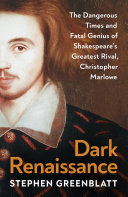
The Dangerous Times and Fatal Genius of Shakespeare's Greatest Rival
2025
Poor boy. Dark star.
Read more
Poor boy. Dark star. Spy. Transgressor. Genius. This is the thrilling and subversive life story of Christopher Marlowe – Shakespeare’s inspiration and rival, who helped to bring England out of the cultural darkness and into the light. ’Sparkling, addictive reading' MAGGIE O'FARRELL 'Brilliant' JAMES SHAPIRO 'As evocative as any novel' PHILIPPA GREGORY 'An unforgettable literary biographical tour de force' INDEPENDENT In brutally repressive Elizabethan England, artists are frightened; foreigners are suspect; popular entertainment largely consists of coarse spectacles, animal fights, and hangings. Into this crude world comes an ambitious cobbler’s son from Canterbury with an uncanny ear for Latin poetry – which to him is a secret portal to beauty, visionary imagination, transgressive desire, and dangerous scepticism. What Christopher Marlowe finds on the other side of that door, and what he does with it, brings about a spectacular explosion of English literature, language, and culture, enabling the success of many others, including his contemporary and collaborator William Shakespeare. By the time of his murder in a Deptford tavern in 1593, the 29-year-old Marlowe will be the most celebrated dramatist of his time. Stephen Greenblatt grippingly reconstructs the involvement with the queen’s spy service that shaped Marlowe’s brief, troubling life and helped fashion his masterpieces. Along the way we discover how the people Marlowe knew, and the transformations they wrought, gave birth to the economic, scientific, and cultural power of the modern world – involving Faustian bargains with which we reckon still. Dark Renaissance is a scintillating life of a writer whose blazing talent catapulted England from cultural backwater to crucible of creativity.
===
The Pulitzer Prize-winning author of Will in the World reveals the daring and subversive life of Christopher Marlowe--Shakespeare's contemporary, inspiration, and rival.
===
Poor boy. Spy. Transgressor. Genius. In repressive Elizabethan England, artists are frightened into dull conventionality; foreigners are suspect; popular entertainment largely consists of coarse spectacles, animal fights, and hangings. Into this crude world of government censorship and religious authoritarianism comes an ambitious cobbler’s son from Canterbury with a daring desire to be known—and an uncanny ear for Latin poetry. A torment for most schoolboys, yet for a few, like Christopher Marlowe, a secret portal to beauty, visionary imagination, transgressive desire, and dangerous skepticism. What Marlowe seizes in his rare opportunity for a classical education, and what he does with it, brings about a spectacular explosion of English literature, language, and culture. His astonishing literary success will, in turn, nourish the talent of a collaborator and rival, William Shakespeare. Dark Renaissance illuminates both Marlowe’s times and the origins and significance of his work—from his erotic translations of Ovid to his portrayal of unfettered ambition in a triumphant Tamburlaine to Doctor Faustus, his unforgettable masterpiece about making a pact with the devil in exchange for knowledge. Introducing us to Marlowe’s transgressive genius in the form of a thrilling page-turner, Stephen Greenblatt brings a penetrating understanding of the literary work to reveal the inner world of the author, bringing to life a homosexual atheist who was tormented by his own compromises, who refused to toe the party line, and who was murdered just when he had found love. Meanwhile, he explores how the people Marlowe knew, and the transformations they wrought, gave birth to the economic, scientific, and cultural power of the modern world including Faustian bargains with which we reckon still.
The History and Persistence of Our Deadliest Infection
2025
Instant #1 New York Times bestseller! • #1 Washington Post bestseller! • #1 Indie Bestseller! • USA Today Bestseller! John Green, acclaimed author and passionate advocate for global healthcare reform, tells a deeply human story illuminating the fight against the world’s deadliest infectious disease. “The real magic of Green’s writing is the deeply considerate, human touch that goes into every word.” –The Associated Press ″Told with the intelligence, wit, and tragedy that have become hallmarks of the author’s work....
Read more
Instant #1 New York Times bestseller! • #1 Washington Post bestseller! • #1 Indie Bestseller! • USA Today Bestseller! John Green, acclaimed author and passionate advocate for global healthcare reform, tells a deeply human story illuminating the fight against the world’s deadliest infectious disease. “The real magic of Green’s writing is the deeply considerate, human touch that goes into every word.” –The Associated Press ″Told with the intelligence, wit, and tragedy that have become hallmarks of the author’s work.... This is the story of us.” –Slate “Earnest and empathetic.” –The New York Times Tuberculosis has been entwined with humanity for millennia. Once romanticized as a malady of poets, today tuberculosis is seen as a disease of poverty that walks the trails of injustice and inequity we blazed for it. In 2019, author John Green met Henry Reider, a young tuberculosis patient at Lakka Government Hospital in Sierra Leone. John became fast friends with Henry, a boy with spindly legs and a big, goofy smile. In the years since that first visit to Lakka, Green has become a vocal advocate for increased access to treatment and wider awareness of the healthcare inequities that allow this curable, preventable infectious disease to also be the deadliest, killing over a million people every year. In Everything Is Tuberculosis, John tells Henry’s story, woven through with the scientific and social histories of how tuberculosis has shaped our world—and how our choices will shape the future of tuberculosis.
Glitz, Glam, and a Damn Good Time
How Mamie Fish, Queen of the Gilded Age, Partied Her Way to Power
2025
From the author of Madame Restell and Get Well Soon, a biography of Mamie Fish that explores how women used parties and social gatherings to gain power and prestige. Marion Graves Anthon Fish, known by the nicknames “Mamie” and “The Fun-Maker,” threw the most epic parties in American history.
Read more
From the author of Madame Restell and Get Well Soon, a biography of Mamie Fish that explores how women used parties and social gatherings to gain power and prestige. Marion Graves Anthon Fish, known by the nicknames “Mamie” and “The Fun-Maker,” threw the most epic parties in American history. This Gilded Age icon brought it all: lavish decor; A-list invitees; booze; pranks; and large animal guest stars. If you were a member of New York high society in the Peak Age of Innocence Era, you simply had to be on Mamie Fish’s guest list. Mamie Fish understood that people didn’t just need the formality of prior generations — they needed wit and whimsy. Make no mistake, however: Mamie Fish’s story is about so much more than partying. In Glitz, Glam, and a Damn Good Time, readers will learn all about how Fish and her friends shaped the line of history, exerting their influence on business, politics, family relationships, and social change through elaborate social gatherings. In a time when women couldn’t even own property, let alone run for office, if women wanted any of the things men got outside the home—glory, money, attention, social networking, leadership roles—they had to do it by throwing a decadent soiree or chairing a cotillion. To ensure people would hear and remember what she had to say, Mamie Fish lived her whole life at Volume 10, becoming famous not by playing the part of a saintly helpmeet, but by letting her demanding, bitchy, hilarious, dramatic freak flag fly. It's time to let modern readers in on the fun, the fabulousness, and the absolute ferocity that is Ms. Stuyvesant Fish—and her inimitable legacy.
2025
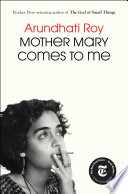
Named One of the New York Times Book Review's Top Ten Books of 2025 Finalist for the Kirkus Prize A raw and deeply moving memoir from the legendary author of The God of Small Things and The Ministry of Utmost Happiness that traces her complex relationship with her mother, Mary Roy, a fierce and formidable force who shaped Arundhati’s life both as a woman and a writer. Mother Mary Comes to Me, Arundhati Roy’s first work of memoir, is a soaring account, both intimate and inspirational, of how the author became the person and the writer she is, shaped by circumstance, but above all by her complex relationship to the extraordinary, singular mother she describes as “my shelter and my storm.” “Heart-smashed” by her mother Mary’s death in September 2022 yet puzzled and “more than a little ashamed” by the intensity of her response, Roy began to write, to make sense of her feelings about the mother she ran from at age eighteen, “not because I didn’t love her, but in order to be able to continue to love her.” And so begins this astonishing, sometimes disturbing, and surprisingly funny memoir of the author’s journey from her childhood in Kerala, India, where her single mother founded a school, to the writing of her prizewinning novels and essays, through today.
Read more
Named One of the New York Times Book Review's Top Ten Books of 2025 Finalist for the Kirkus Prize A raw and deeply moving memoir from the legendary author of The God of Small Things and The Ministry of Utmost Happiness that traces her complex relationship with her mother, Mary Roy, a fierce and formidable force who shaped Arundhati’s life both as a woman and a writer. Mother Mary Comes to Me, Arundhati Roy’s first work of memoir, is a soaring account, both intimate and inspirational, of how the author became the person and the writer she is, shaped by circumstance, but above all by her complex relationship to the extraordinary, singular mother she describes as “my shelter and my storm.” “Heart-smashed” by her mother Mary’s death in September 2022 yet puzzled and “more than a little ashamed” by the intensity of her response, Roy began to write, to make sense of her feelings about the mother she ran from at age eighteen, “not because I didn’t love her, but in order to be able to continue to love her.” And so begins this astonishing, sometimes disturbing, and surprisingly funny memoir of the author’s journey from her childhood in Kerala, India, where her single mother founded a school, to the writing of her prizewinning novels and essays, through today. With the scale, sweep, and depth of her novels, The God of Small Things and The Ministry of Utmost Happiness, and the passion, political clarity, and warmth of her essays, Mother Mary Comes to Me is an ode to freedom, a tribute to thorny love and savage grace—a memoir like no other.
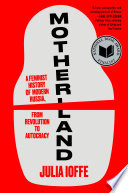
A Feminist History of Modern Russia, from Revolution to Autocracy
2025
FINALIST FOR THE NATIONAL BOOK AWARD Acclaimed journalist Julia Ioffe tells the story of modern Russia through the history of its women, from revolution to utopia to autocracy. In 1990, seven-year-old Julia Ioffe and her family fled the Soviet Union.
Read more
FINALIST FOR THE NATIONAL BOOK AWARD Acclaimed journalist Julia Ioffe tells the story of modern Russia through the history of its women, from revolution to utopia to autocracy. In 1990, seven-year-old Julia Ioffe and her family fled the Soviet Union. Nearly twenty years later, Ioffe returned to Moscow—only to discover just how much Russian society had changed while she had been living in America. The Soviet women she had known growing up—doctors, engineers, scientists—seemed to have been replaced by women desperate to marry rich and become stay-at-home moms. How had Russia gone from portraying itself as the vanguard of world feminism to becoming a bastion of conservative Christian values? In Motherland, Ioffe turns modern Russian history on its head, telling it exclusively through the stories of its women. From her own physician great-grandmothers to Lenin’s lover, a feminist revolutionary; from the hundreds of thousands of Soviet girls who fought in World War II to the millions of single mothers who rebuilt and repopulated a devastated country; from the members of Pussy Riot to Yulia Navalnaya, the wife of opposition leader Alexey Navalny, Ioffe chronicles one of the most audacious social experiments in history and documents how it failed the very women it was meant to liberate—and how that failure paved the way for the revanche of Vladimir Putin. Part memoir, part journalistic exploration, part history, Motherland paints a portrait of modern Russia through the women who shaped it. With deep emotion, Ioffe reveals what it means to live through the cataclysms of revolution, war, idealism, and heartbreak—and how the story of Russia today is inextricably tied to the sacrifices of its women.
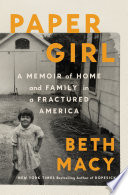
A Memoir of Home and Family in a Fractured America
2025
An Instant National Bestseller! "There couldn’t be a timelier book . .
Read more
An Instant National Bestseller! "There couldn’t be a timelier book . . . searingly poignant, essential . . . Macy follows closely in the footsteps of . . . Barbara Ehrenreich and Tracy Kidder, combining memoir with reportage, a raft of sobering statistics and, most uniquely in our era, a willingness to engage in uncomfortable conversations." —The Washington Post From one of our most acclaimed chroniclers of the forces eroding America’s social fabric, her most personal and powerful work: a reckoning with the changes that have rocked her own beloved small Ohio hometown Urbana, Ohio, was not a utopia when Beth Macy grew up there in the ’70s and ’80s—certainly not for her family. Her dad was known as the town drunk, which hurt, as did their poverty. But Urbana had a healthy economy and thriving schools, and Macy had middle-class schoolmates whose families became her role models. Though she left for college on a Pell Grant and then a faraway career in journalism, she still clung gratefully to the place that had helped raise her. But as Macy’s mother’s health declined in 2020, she couldn’t shake the feeling that her town had dramatically hardened. Macy had grown up as the paper girl, delivering the local newspaper, which was the community’s civic glue. Now she found scant local news and precious little civic glue. Yes, much of the work that once supported the middle class had gone away, but that didn’t begin to cover the forces turning Urbana into a poorer and angrier place. Absenteeism soared in the schools and in the workplace as a mental health crisis gripped the small city. Some of her old friends now embraced conspiracies. In nearby Springfield, Macy watched as her ex-boyfriend—once the most liberal person she knew—became a lead voice of opposition against the Haitian immigrants, parroting false talking points throughout the 2024 presidential campaign. This was not an assignment Beth Macy had ever imagined taking on, but after her mother’s death, she decided to figure out what happened to Urbana in the forty years since she’d left. The result is an astonishing book that, by taking us into the heart of one place, brings into focus our most urgent set of national issues. Paper Girl is a gift of courage, empathy, and insight. Beth Macy has turned to face the darkness in her family and community, people she loves wholeheartedly, even the ones she sometimes struggles to like. And in facing the truth—in person, with respect—she has found sparks of human dignity that she has used to light a signal fire of warning but also of hope.
===
"There couldn’t be a timelier book . . . searingly poignant, essential . . . Macy follows closely in the footsteps of . . . Barbara Ehrenreich and Tracy Kidder, combining memoir with reportage, a raft of sobering statistics and, most uniquely in our era, a willingness to engage in uncomfortable conversations." —The Washington Post From one of our most acclaimed chroniclers of the forces eroding America’s social fabric, her most personal and powerful work: a reckoning with the changes that have rocked her own beloved small Ohio hometown Urbana, Ohio, was not a utopia when Beth Macy grew up there in the ’70s and ’80s—certainly not for her family. Her dad was known as the town drunk, which hurt, as did their poverty. But Urbana had a healthy economy and thriving schools, and Macy had middle-class schoolmates whose families became her role models. Though she left for college on a Pell Grant and then a faraway career in journalism, she still clung gratefully to the place that had helped raise her. But as Macy’s mother’s health declined in 2020, she couldn’t shake the feeling that her town had dramatically hardened. Macy had grown up as the paper girl, delivering the local newspaper, which was the community’s civic glue. Now she found scant local news and precious little civic glue. Yes, much of the work that once supported the middle class had gone away, but that didn’t begin to cover the forces turning Urbana into a poorer and angrier place. Absenteeism soared in the schools and in the workplace as a mental health crisis gripped the small city. Some of her old friends now embraced conspiracies. In nearby Springfield, Macy watched as her ex-boyfriend—once the most liberal person she knew—became a lead voice of opposition against the Haitian immigrants, parroting false talking points throughout the 2024 presidential campaign. This was not an assignment Beth Macy had ever imagined taking on, but after her mother’s death, she decided to figure out what happened to Urbana in the forty years since she’d left. The result is an astonishing book that, by taking us into the heart of one place, brings into focus our most urgent set of national issues. Paper Girl is a gift of courage, empathy, and insight. Beth Macy has turned to face the darkness in her family and community, people she loves wholeheartedly, even the ones she sometimes struggles to like. And in facing the truth—in person, with respect—she has found sparks of human dignity that she has used to light a signal fire of warning but also of hope.
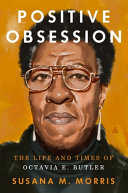
The Life and Times of Octavia E. Butler
2025
A magnificent cultural biography that charts the life of one of our greatest writers, situating her alongside the key historical and social moments that shaped her work. As the first Black woman to consistently write and publish in the field of science fiction, Octavia Butler was a trailblazer.
Read more
A magnificent cultural biography that charts the life of one of our greatest writers, situating her alongside the key historical and social moments that shaped her work. As the first Black woman to consistently write and publish in the field of science fiction, Octavia Butler was a trailblazer. With her deft pen, she created stories speculating the devolution of the American empire, using it as an apt metaphor for the best and worst of humanity--our innovation and ingenuity, our naked greed and ambition, our propensity for violence and hierarchy. Her fiction charts the rise and fall of the American project--the nation's transformation from a provincial backwater to a capitalist juggernaut--made possible by chattel slavery--to a bloated imperialist superpower on the verge of implosion. In this outstanding work, Susana M. Morris places Butler's story firmly within the cultural, social, and historical context that shaped her life: the Civil Rights Movement, Black Power, women's liberation, queer rights, Reaganomics. Morris reveals how these influences profoundly impacted Butler's personal and intellectual trajectory and shaped the ideas central to her writing. Her cautionary tales warn us about succumbing to fascism, gender-based violence, and climate chaos while offering alternate paradigms to religion, family, and understanding our relationships to ourselves. Butler envisioned futures with Black women at the center, raising our awareness of how those who are often dismissed have the knowledge to shift the landscape of our world. But her characters are no magical martyrs, they are tough, flawed, intelligent, and complicated, a reflection of Butler's stories. Morris explains what drove Butler: She wrote because she felt she must. "Who was I anyway? Why should anyone pay attention to what I had to say? Did I have anything to say? I was writing science fiction and fantasy, for God's sake. At that time nearly all professional science-fiction writers were white men. As much as I loved science fiction and fantasy, what was I doing? Well, whatever it was, I couldn't stop. Positive obsession is about not being able to stop just because you're afraid and full of doubts. Positive obsession is dangerous. It's about not being able to stop at all."
===
A magnificent cultural biography that charts the life of one of our greatest writers, situating her alongside the key historical and social moments that shaped her work. As the first Black woman to consistently write and publish in the field of science fiction, Octavia Butler was a trailblazer. With her deft pen, she created stories speculating the devolution of the American empire, using it as an apt metaphor for the best and worst of humanity—our innovation and ingenuity, our naked greed and ambition, our propensity for violence and hierarchy. Her fiction charts the rise and fall of the American project—the nation’s transformation from a provincial backwater to a capitalist juggernaut—made possible by chattel slavery—to a bloated imperialist superpower on the verge of implosion. In this outstanding work, Susana M. Morris places Butler’s story firmly within the cultural, social, and historical context that shaped her life: the Civil Rights Movement, Black Power, women’s liberation, queer rights, Reaganomics. Morris reveals how these influences profoundly impacted Butler’s personal and intellectual trajectory and shaped the ideas central to her writing. Her cautionary tales warn us about succumbing to fascism, gender-based violence, and climate chaos while offering alternate paradigms to religion, family, and understanding our relationships to ourselves. Butler envisioned futures with Black women at the center, raising our awareness of how those who are often dismissed have the knowledge to shift the landscape of our world. But her characters are no magical martyrs, they are tough, flawed, intelligent, and complicated, a reflection of Butler’s stories. Morris explains what drove Butler: She wrote because she felt she must. “Who was I anyway? Why should anyone pay attention to what I had to say? Did I have anything to say? I was writing science fiction and fantasy, for God’s sake. At that time nearly all professional science-fiction writers were white men. As much as I loved science fiction and fantasy, what was I doing? Well, whatever it was, I couldn’t stop. Positive obsession is about not being able to stop just because you’re afraid and full of doubts. Positive obsession is dangerous. It’s about not being able to stop at all.”
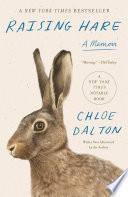
A Memoir
2024
NEW YORK TIMES NOTABLE BOOK • NEW YORK TIMES BESTSELLER • FINALIST FOR THE 2025 WOMEN'S PRIZE • A fascinating meditation on freedom, trust, loss, and our relationship with the natural world, explored through the story of one woman’s unlikely friendship with a wild hare. A BEST BOOK OF THE YEAR: The Washington Post, The Wall Street Journal, NPR, TIME, The Boston Globe, The Economist, Scientific American, Slate “Moving.
Read more
NEW YORK TIMES NOTABLE BOOK • NEW YORK TIMES BESTSELLER • FINALIST FOR THE 2025 WOMEN'S PRIZE • A fascinating meditation on freedom, trust, loss, and our relationship with the natural world, explored through the story of one woman’s unlikely friendship with a wild hare. A BEST BOOK OF THE YEAR: The Washington Post, The Wall Street Journal, NPR, TIME, The Boston Globe, The Economist, Scientific American, Slate “Moving. . . . Impart[s] valuable lessons about slowing down and the beauty in the unexpected.”—USA Today “A perfect testimony to the transformative power of love.”—Margaret Renkl, author of The Comfort of Crows Imagine you could hold a baby hare and bottle-feed it. Imagine that it lived under your roof and bounded around your bedroom at night, drumming on the duvet cover when it wanted your attention. Imagine that, more than two years later, it still ran in from the fields when you called it and slept in your house for hours on end. For political advisor and speechwriter Chloe Dalton, who spent lockdown deep in the English countryside, far away from her usual busy London life, this became her unexpected reality. In February 2021, Dalton stumbles upon a newborn hare—a leveret—that had been chased by a dog. Fearing for its life, she brings it home, only to discover how difficult it is to rear a wild hare, most of whom perish in captivity from either shock or starvation. Through trial and error, she learns to feed and care for the leveret with every intention of returning it to the wilderness. Instead, it becomes her constant companion, wandering the fields and woods at night and returning to Dalton’s house by day. Though Dalton feared that the hare would be preyed upon by foxes, weasels, feral cats, raptors, or even people, she never tried to restrict it to the house. Each time the hare leaves, Chloe knows she may never see it again. Yet she also understands that to confine it would be its own kind of death. Raising Hare chronicles their journey together while also taking a deep dive into the lives and nature of hares, and the way they have been viewed historically in art, literature, and folklore. We witness firsthand the joy at this extraordinary relationship between human and animal, which serves as a reminder that the best things, and most beautiful experiences, arise when we least expect them.
===
THE INSTANT SUNDAY TIMES AND NEW YORK TIMES BESTSELLER WINNER OF THE WAINWRIGHT PRIZE FOR NATURE WRITING WINNER OF BOOKS ARE MY BAG READERS AWARD SHORTLISTED FOR THE WOMEN'S PRIZE FOR NON-FICTION, HATCHARDS AND BIOGRAPHERS' CLUB FIRST BIOGRAPHY PRIZE A BOOK OF THE YEAR FOR THE HAY FESTIVAL, SUNDAY TIMES, THE TIMES, FINANCIAL TIMES, SPECTATOR, ECONOMIST AND iNEWS 'A beautiful book' - ANGELINA JOLIE 'I will be recommending this to everyone' - MATT HAIG 'Quietly profound, beautifully written, Hare is now lodged in my heart' - TRACY CHEVALIER __ Imagine you could hold a baby hare and bottle-feed it. Imagine that it lived under your roof and lolloped around your bedroom at night, drumming on the duvet cover when it wanted your attention. Imagine that, over two years later, it still ran in from the fields when you called it and snoozed in your house for hours on end. This happened to me. When lockdown led busy professional Chloe to leave the city and return to the countryside of her childhood, she never expected to find herself custodian of a newly born hare. Yet when she finds the creature, endangered, alone and no bigger than her palm, she is compelled to give it a chance at survival. Raising Hare chronicles their journey together and the challenges of caring for the leveret and preparing for its return to the wild. We witness an extraordinary relationship between human and animal, rekindling our sense of awe towards nature and wildlife. This improbable bond of trust serves to remind us that the most remarkable experiences, inspiring the most hope, often arise when we least expect them.
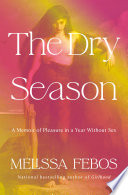
A Memoir of Pleasure in a Year Without Sex
2025
From Melissa Febos, the national bestselling author of Girlhood, comes an examination of the solitude, freedoms, and feminist heroes she discovered during a year of celibacy and a wise and transformative look at relationships and self-knowledge. “Only Melissa Febos could convince us of the ecstasy of abstinence.
Read more
From Melissa Febos, the national bestselling author of Girlhood, comes an examination of the solitude, freedoms, and feminist heroes she discovered during a year of celibacy and a wise and transformative look at relationships and self-knowledge. “Only Melissa Febos could convince us of the ecstasy of abstinence. She never fails in her candor and precision.”—Katherine May, author of Wintering In the wake of a catastrophic two-year relationship, Melissa Febos decided to take a break: For three months she would abstain from dating, relationships, and sex. Her friends were amused. Did she really think three months was a long time? But to Febos, it was. Ever since her teens, she had been in one relationship after another with men and women. As she puts it, she could trace a “daisy chain of romances” from her adolescence to her midthirties. Finally, she would carve out time to focus on herself and examine the patterns that had produced her midlife disaster. Over those first few months, she gleaned insights into her past and awoke to the joys of being single. She decided to extend her celibacy, not knowing it would become the most fulfilling and sensual year of her life. No longer defined by her romantic pursuits, she learned to relish the delights of solitude, the thrill of living on her own terms, the distinct pleasures unmediated by lovers, and the freedom to pursue her ideals without distraction or guilt. Bringing her own experiences into conversation with those of women throughout history—from eleventh-century mystic Hildegard von Bingen, Virginia Woolf, and Octavia Butler to the Shakers and Sappho—Febos situates her story within a newfound lineage of role models who unapologetically pursued their ambitions and ideals. By abstaining from all forms of romantic entanglement, Febos began to see her life and her self-worth in a radical, new way. Her year of divestment transformed her relationships with friends and peers, her spirituality, her creative practice, and, most of all, her relationship to herself. Blending intimate personal narrative and incisive cultural criticism, The Dry Season tells a story that’s as much about celibacy as its inverse: pleasure, desire, fulfillment. Infused with fearless honesty and keen intellect, it’s the memoir of a woman learning to live at the center of her own story, and a much-needed catalyst for a new conversation around sex and love.
===
'Compelling' OBSERVER'Bold' NEW YORK TIMES'Refreshing' SUNDAY TIMESEver since her teens, Melissa had been in one relationship or another until, in the wake of a disastrous break-up, she vowed to a period of celibacy. She had no idea that this year would become the most fulfilling and sensual of her life.The Dry Season is a memoir of Melissa's year of celibacy, and a profound exploration of independence, sexuality and deep self-knowledge.
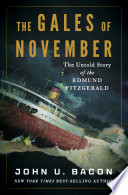
The Untold Story of the Edmund Fitzgerald
2025
"A work of spectral beauty destined to be a classic. Readers of Sebastian Junger’s The Perfect Storm, Erik Larsen’s Dead Wake, and Nathaniel Philbrick’s In the Heart of the Sea will love this deeply reported tale." —Hampton Sides, New York Times best-selling author of The Wide Wide Sea and In the Kingdom of Ice “The Untold Story of the Edmund Fitzgerald’ has been told and retold by authors and bards.
Read more
"A work of spectral beauty destined to be a classic. Readers of Sebastian Junger’s The Perfect Storm, Erik Larsen’s Dead Wake, and Nathaniel Philbrick’s In the Heart of the Sea will love this deeply reported tale." —Hampton Sides, New York Times best-selling author of The Wide Wide Sea and In the Kingdom of Ice “The Untold Story of the Edmund Fitzgerald’ has been told and retold by authors and bards. But never has it been told better than by Mr. Bacon in this colorful and compelling book.... Dead men tell no tales, but their loved ones do. Mr. Bacon tracked them down and listened.” —John J. Miller, Wall Street Journal On the fiftieth anniversary of the Edmund Fitzgerald’s sinking, the bestselling author of The Great Halifax Explosion tells the definitive story of the “Mighty Fitz.” For three decades following World War II, the Great Lakes overtook Europe as the epicenter of global economic strength. The region was the beating heart of the world economy, possessing all the power and prestige Silicon Valley does today. And no ship represented the apex of the American Century better than the 729-foot-long Edmund Fitzgerald—the biggest, best, and most profitable ship on the Lakes. But on November 10, 1975, as the “storm of the century” threw 100 mile-per-hour winds and 50-foot waves on Lake Superior, the Mighty Fitz found itself at the worst possible place, at the worst possible time. When she sank, she took all 29 men onboard down with her, leaving the tragedy shrouded in mystery for a half century. In The Gales of November, award-winning journalist John U. Bacon presents the definitive account of the disaster, drawing on more than 100 interviews with the families, friends, and former crewmates of those lost. Bacon explores the vital role Great Lakes shipping played in America’s economic boom, the uncommon lives the sailors led, the sinking’s most likely causes, and the heartbreaking aftermath for those left behind—"the wives, the sons, and the daughters,” as Gordon Lightfoot sang in his unforgettable ballad. Focused on those directly affected by the tragedy, The Gales of November is both an emotional tribute to the lives lost and a propulsive, page-turning narrative history of America’s most-mourned maritime disaster.
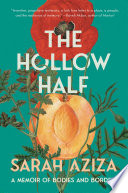
A Memoir of Bodies and Borders
2025
Finalist for the Palestine Book Awards A brush with death. An ancestral haunting.
Read more
Finalist for the Palestine Book Awards A brush with death. An ancestral haunting. A century of family secrets. Sarah Aziza’s searing, genre-bending memoir traces three generations of diasporic Palestinians from Gaza to the Midwest to New York City—and back “You were dead, Sarah, you were dead.” In October 2019, Sarah Aziza, daughter and granddaughter of Gazan refugees, is narrowly saved after being hospitalized for an eating disorder. The doctors revive her body, but it is no simple thing to return to the land of the living. Aziza’s crisis is a rupture that brings both her ancestral and personal past into vivid presence. The hauntings begin in the hospital cafeteria, when a mysterious incident summons the familiar voice of her deceased Palestinian grandmother. In the months following, as she responds to a series of ghostly dreams, Aziza unearths family secrets that reveal the ways her own trauma and anorexia echo generations of violent Palestinian displacement and erasure—and how her fight to recover builds on a century of defiant survival and love. As she moves towards this legacy, Aziza learns to resist the forces of colonization, denial, and patriarchy both within and outside her. Weaving timelines, languages, geographies, and genres, The Hollow Half probes the contradictions and contingencies that create “nation” and “history.” Blazing with honesty, urgency, and poetry, this stunning debut memoir is a fearless call to imagine both the self and the world anew.
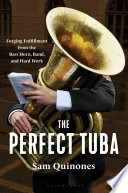
Forging Fulfillment from the Bass Horn, Band, and Hard Work
2025
From National Book Critics Circle Award-winning author Sam Quinones, the story of a demanding instrument, the determined people who play it, and the hope they offer a fractured nation.
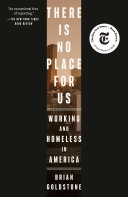
Working and Homeless in America
2026
ONE OF THE NEW YORK TIMES AND THE ATLANTIC’S TEN BEST BOOKS OF THE YEAR • ONE OF BARACK OBAMA’S FAVORITE BOOKS OF THE YEAR • Through the “revelatory and gut-wrenching” (Associated Press) stories of five Atlanta families, this landmark work of journalism exposes a new and troubling trend—the dramatic rise of the working homeless in cities across America. “An exceptional feat of reporting, full of an immediacy that calls to mind Adrian Nicole LeBlanc’s Random Family and Matthew Desmond’s Evicted.”—The New York Times Book Review (Editors’ Choice) FINALIST FOR THE ANDREW CARNEGIE MEDAL • A BEST BOOK OF THE YEAR: NPR, The Washington Post, Atlanta Journal-Constitution, Elle, New America, BookPage, Shelf Awareness The working homeless.
Read more
ONE OF THE NEW YORK TIMES AND THE ATLANTIC’S TEN BEST BOOKS OF THE YEAR • ONE OF BARACK OBAMA’S FAVORITE BOOKS OF THE YEAR • Through the “revelatory and gut-wrenching” (Associated Press) stories of five Atlanta families, this landmark work of journalism exposes a new and troubling trend—the dramatic rise of the working homeless in cities across America. “An exceptional feat of reporting, full of an immediacy that calls to mind Adrian Nicole LeBlanc’s Random Family and Matthew Desmond’s Evicted.”—The New York Times Book Review (Editors’ Choice) FINALIST FOR THE ANDREW CARNEGIE MEDAL • A BEST BOOK OF THE YEAR: NPR, The Washington Post, Atlanta Journal-Constitution, Elle, New America, BookPage, Shelf Awareness The working homeless. In a country where hard work and determination are supposed to lead to success, there is something scandalous about this phrase. But skyrocketing rents, low wages, and a lack of tenant rights have produced a startling phenomenon: People with full-time jobs cannot keep a roof over their head, especially in America’s booming cities, where rapid growth is leading to catastrophic displacement. These families are being forced into homelessness not by a failing economy but a thriving one. In this gripping and deeply reported book, Brian Goldstone plunges readers into the lives of five Atlanta families struggling to remain housed in a gentrifying, increasingly unequal city. Maurice and Natalia make a fresh start in the country’s “Black Mecca” after being priced out of DC. Kara dreams of starting her own cleaning business while mopping floors at a public hospital. Britt scores a coveted housing voucher. Michelle is in school to become a social worker. Celeste toils at her warehouse job while undergoing treatment for ovarian cancer. Each of them aspires to provide a decent life for their children—and each of them, one by one, joins the ranks of the nation’s working homeless. Through intimate, novelistic portraits, Goldstone reveals the human cost of this crisis, following parents and their kids as they go to sleep in cars, or in squalid extended-stay hotel rooms, and head out to their jobs and schools the next morning. These are the nation’s hidden homeless—omitted from official statistics, and proof that overflowing shelters and street encampments are only the most visible manifestation of a far more pervasive problem. By turns heartbreaking and urgent, There Is No Place for Us illuminates the true magnitude, causes, and consequences of the new American homelessness—and shows that it won’t be solved until housing is treated as a fundamental human right.
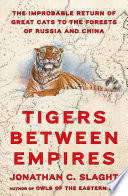
The Improbable Return of Great Cats to the Forests of Russia and China
2025
A Best Book of the Year: Scientific American, The Minneapolis Star Tribune, Mother Jones, CounterPunch, BookPage A Chicago Tribune Most-Anticipated Book of the Season “Epic . .
Read more
A Best Book of the Year: Scientific American, The Minneapolis Star Tribune, Mother Jones, CounterPunch, BookPage A Chicago Tribune Most-Anticipated Book of the Season “Epic . . . Slaght again shines his scientific-yet-soulful spotline on one of the world’s most amazing creatures . . . [A] fascinating survival-revival tale.” —Michiela Thuman, The Minnesota Star Tribune The thrilling saga of the great Amur tiger and the scientists who came together, across the world, to save it. The forests of northeast Asia are home to a marvelous range of animals—fish owls and brown bears, musk deer and moose, wolves and raccoon dogs, leopards and tigers. But by the final years of the Cold War, only a few hundred tigers stepped quietly through the snow of the Amur River basin. Soon, the Soviet Union fell, bringing catastrophe; without the careful oversight of a central authority, poaching and logging took a fast, astonishing toll on an already vulnerable species. Just as these changes arrived, scientists came together to found the Siberian Tiger Project. Led by Dale Miquelle, a moose researcher, and Zhenya Smirnov, a mouse biologist, the team captured and released more than 114 tigers over three decades. They witnessed mating rituals and fights, hunting and feeding, the ceding and taking of territory, the creation of families. Within these pages, characters—both feline and human—come fully alive as we travel with them through the quiet and changing forests of Amur. We travel across time, too, as the fate of the species has been shaped by the history and politics of empires—such as the Qing dynasty’s Willow Palisade, which once slowed human settlement, or the later introduction of roads through Russian reserves. The Siberian Tiger Project became the longest-running tiger research initiative; its work continues to guide conservationists today. Jonathan C. Slaght’s Tigers Between Empires is the thrilling saga of the great Amur tiger and the scientists who came together, across the world, to save it.
===
The remarkable conservation story of one of the world's most iconic animals Deep in the snowy forests of Northeast Asia roams the majestic and revered Amur tigers, more popularly known as 'The Siberian Tiger'. But in the final years of the Cold War, only a few hundred of these graceful animals remained in their home of the Amur River basin. As the Soviet Union fell, catastrophe arrived, with poaching and logging taking a fast, astonishing toll on an already vulnerable species. Taking us on a journey through remote frozen landscapes, globally renowned conservationist Jonathan Slaght charts the incredible story of how Russian scientists and American conservationists came together to save these magnificent, solitary creatures. He retraces their steps to show how this dedicated, fearless coalition laid the foundations of new tiger research across Asia, transforming public opinion around tigers from something to be feared and hunted, to creatures we must protect. Today, tigers occupy 7% of the lands they did 100 years ago, disappearing in the wild from Bali to Iran. In the ongoing global crisis of species destruction, Slaght shows us that the revival of the Amur tiger can bring us hope for the future: a model for how to live alongside, and revive, the natural world.
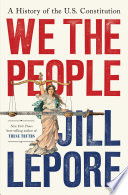
A History of the U.S. Constitution
2025
ONE OF PRESIDENT BARACK OBAMA'S FAVORITE BOOKS OF 2025 NEW YORK TIMES BESTSELLER A NEW YORK TIMES NOTABLE BOOK OF THE YEAR Named one of the Best Books of the Year by the Washington Post, New Yorker, Smithsonian, Bookpage, and the Chicago Public Library Longlisted for the 2025 Andrew Carnegie Medal for Excellence in Nonfiction "[Lepore's] 15th book, We the People, a history of the U.S. Constitution, may be her best yet, a capacious work that lands at the right moment, like a life buoy, as our ship of state takes on water." —Hamilton Cain, Los Angeles Times From the best-selling author of These Truths comes We the People, a stunning new history of the U.S.
Read more
ONE OF PRESIDENT BARACK OBAMA'S FAVORITE BOOKS OF 2025 NEW YORK TIMES BESTSELLER A NEW YORK TIMES NOTABLE BOOK OF THE YEAR Named one of the Best Books of the Year by the Washington Post, New Yorker, Smithsonian, Bookpage, and the Chicago Public Library Longlisted for the 2025 Andrew Carnegie Medal for Excellence in Nonfiction "[Lepore's] 15th book, We the People, a history of the U.S. Constitution, may be her best yet, a capacious work that lands at the right moment, like a life buoy, as our ship of state takes on water." —Hamilton Cain, Los Angeles Times From the best-selling author of These Truths comes We the People, a stunning new history of the U.S. Constitution, for a troubling new era. The U.S. Constitution is among the oldest constitutions in the world but also one of the most difficult to amend. Jill Lepore, Harvard professor of history and law, explains why in We the People, the most original history of the Constitution in decades—and an essential companion to her landmark history of the United States, These Truths. Published on the occasion of the 250th anniversary of the nation’s founding—the anniversary, too, of the first state constitutions—We the People offers a wholly new history of the Constitution. “One of the Constitution’s founding purposes was to prevent change,” Lepore writes. “Another was to allow for change without violence.” Relying on the extraordinary database she has assembled at the Amendments Project, Lepore recounts centuries of attempts, mostly by ordinary Americans, to realize the promise of the Constitution. Yet nearly all those efforts have failed. Although nearly twelve thousand amendments have been introduced in Congress since 1789, and thousands more have been proposed outside its doors, only twenty-seven have ever been ratified. More troubling, the Constitution has not been meaningfully amended since 1971. Without recourse to amendment, she argues, the risk of political violence rises. So does the risk of constitutional change by presidential or judicial fiat. Challenging both the Supreme Court’s monopoly on constitutional interpretation and the flawed theory of “originalism,” Lepore contends in this “gripping and unfamiliar story of our own past” that the philosophy of amendment is foundational to American constitutionalism. The framers never intended for the Constitution to be preserved, like a butterfly, under glass, Lepore argues, but expected that future generations would be forever tinkering with it, hoping to mend America by amending its Constitution through an orderly deliberative and democratic process. Lepore’s remarkable history seeks, too, to rekindle a sense of constitutional possibility. Congressman Jamie Raskin writes that Lepore “has thrown us a lifeline, a way of seeing the Constitution neither as an authoritarian straitjacket nor a foolproof magic amulet but as the arena of fierce, logical, passionate, and often deadly struggle for a more perfect union.” At a time when the Constitution’s vulnerability is all too evident, and the risk of political violence all too real, We the People, with its shimmering prose and pioneering research, hints at the prospects for a better constitutional future, an amended America.
===
THE INSTANT NEW YORK TIMES BESTSELLER On the 250th anniversary of America's founding - a landmark history of the US Constitution for a troubling new era. The US Constitution is among the oldest constitutions in the world - and one of the most difficult to amend. Although nearly twelve thousand amendments have been proposed since 1789, only twenty-seven have ever been ratified. Tellingly, the Constitution has not been meaningfully amended since 1971. Without amendment, the risk of political violence rises. So does the risk of constitutional change by presidential power. Leading Harvard historian Jill Lepore captures the stories of generations of ordinary people who have attempted everything from abolishing the Electoral College to guaranteeing environmental rights, hoping to mend their nation. Recounting the history of America through centuries of efforts to realize the promise of the Constitution, we witness how nearly all those bids have failed. We the People is the sweeping account of a struggle, arguing that the Constitution was never intended to be preserved, but was expected to be gradually altered. At a time when the risk of political violence is all too real, it hints at the prospects for a better, amended America.