Best Nonfiction of 2025
A Memoir in Essays
2025
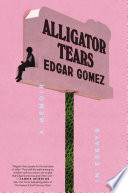
A darkly comic memoir-in-essays about the scam of the American Dream and doing whatever it takes to survive in the Sunshine State—from the award-winning author of High-Risk Homosexual “Relatable, funny and deeply heartfelt, this memoir is one not to miss.”—Today “Edgar Gomez is a young writer of deep talent and enormous grace.” —James McBride, New York Times bestselling author of The Heaven & Earth Grocery Store A MOST ANTICIPATED BOOK OF THE YEAR: Today, The Millions, Paste In Florida, one of the first things you’re taught as a child is that if you’re ever chased by a wild alligator, the only way to save yourself is to run away in zigzags. It’s a lesson on survival that has guided much of Edgar Gomez’s life.
Read more
A darkly comic memoir-in-essays about the scam of the American Dream and doing whatever it takes to survive in the Sunshine State—from the award-winning author of High-Risk Homosexual “Relatable, funny and deeply heartfelt, this memoir is one not to miss.”—Today “Edgar Gomez is a young writer of deep talent and enormous grace.” —James McBride, New York Times bestselling author of The Heaven & Earth Grocery Store A MOST ANTICIPATED BOOK OF THE YEAR: Today, The Millions, Paste In Florida, one of the first things you’re taught as a child is that if you’re ever chased by a wild alligator, the only way to save yourself is to run away in zigzags. It’s a lesson on survival that has guided much of Edgar Gomez’s life. Like the night his mother had a stroke while he and his brother stood frozen at the foot of her bed, afraid she’d be angry if they called for an ambulance they couldn’t afford. Gomez escaped into his mind, where he could tell himself nothing was wrong with his family. Zig. Or years later, as a broke college student, he got on his knees to put sandals on tourists’ smelly, swollen feet for minimum wage at the Flip Flop Shop. After clocking out, his crew of working-class, queer, Latinx friends changed out of their uniforms in the passenger seats of each other’s cars, speeding toward the relief they found at Pulse nightclub in Orlando. Zag. From committing a little bankruptcy fraud for the money for veneers to those days he paid his phone bill by giving massages to closeted men on vacation, back when he and his friends would Venmo each other the same emergency twenty dollars over and over. Zig. Zag. Gomez survived this way as long as his legs would carry him. Alligator Tears is a fiercely defiant memoir-in-essays charting Gomez’s quest to claw his family out of poverty by any means necessary and exposing the archetype of the humble poor person for what it is: a scam that insists we remain quiet and servile while we wait for a prize that will always be out of reach. For those chasing the American Dream and those jaded by it, Gomez’s unforgettable story is a testament to finding love, purpose, and community on your own terms, smiling with all your fake teeth.
A Memoir of Pleasure in a Year Without Sex
2025
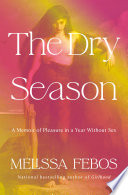
From Melissa Febos, the national bestselling author of Girlhood, comes an examination of the solitude, freedoms, and feminist heroes she discovered during a year of celibacy and a wise and transformative look at relationships and self-knowledge. “Only Melissa Febos could convince us of the ecstasy of abstinence.
Read more
From Melissa Febos, the national bestselling author of Girlhood, comes an examination of the solitude, freedoms, and feminist heroes she discovered during a year of celibacy and a wise and transformative look at relationships and self-knowledge. “Only Melissa Febos could convince us of the ecstasy of abstinence. She never fails in her candor and precision.”—Katherine May, author of Wintering In the wake of a catastrophic two-year relationship, Melissa Febos decided to take a break: For three months she would abstain from dating, relationships, and sex. Her friends were amused. Did she really think three months was a long time? But to Febos, it was. Ever since her teens, she had been in one relationship after another with men and women. As she puts it, she could trace a “daisy chain of romances” from her adolescence to her midthirties. Finally, she would carve out time to focus on herself and examine the patterns that had produced her midlife disaster. Over those first few months, she gleaned insights into her past and awoke to the joys of being single. She decided to extend her celibacy, not knowing it would become the most fulfilling and sensual year of her life. No longer defined by her romantic pursuits, she learned to relish the delights of solitude, the thrill of living on her own terms, the distinct pleasures unmediated by lovers, and the freedom to pursue her ideals without distraction or guilt. Bringing her own experiences into conversation with those of women throughout history—from eleventh-century mystic Hildegard von Bingen, Virginia Woolf, and Octavia Butler to the Shakers and Sappho—Febos situates her story within a newfound lineage of role models who unapologetically pursued their ambitions and ideals. By abstaining from all forms of romantic entanglement, Febos began to see her life and her self-worth in a radical, new way. Her year of divestment transformed her relationships with friends and peers, her spirituality, her creative practice, and, most of all, her relationship to herself. Blending intimate personal narrative and incisive cultural criticism, The Dry Season tells a story that’s as much about celibacy as its inverse: pleasure, desire, fulfillment. Infused with fearless honesty and keen intellect, it’s the memoir of a woman learning to live at the center of her own story, and a much-needed catalyst for a new conversation around sex and love.
===
'Compelling' OBSERVER'Bold' NEW YORK TIMES'Refreshing' SUNDAY TIMESEver since her teens, Melissa had been in one relationship or another until, in the wake of a disastrous break-up, she vowed to a period of celibacy. She had no idea that this year would become the most fulfilling and sensual of her life.The Dry Season is a memoir of Melissa's year of celibacy, and a profound exploration of independence, sexuality and deep self-knowledge.
I Want to Burn This Place Down
Essays
2025
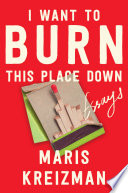
A TIME Must-Read of 2025 A debut essay collection by the inimitable cultural critic Maris Kreizman—an introspective, searing account of the life experiences that have pushed this former “good Democrat” even further to the political left At the heart of this funny, acerbic, and bravely honest book of essays is Maris Kreizman, a former rule follower and ambition monster who once believed the following truths to be self-evident: that working very hard would lead to admission to a good college, which would lead to a good job at a good company, which would then lead to personal fulfillment and a sense of purpose, along with adequate health care and eventual home ownership and plenty of money waiting in a retirement account. Like any good Democrat and feminist, she believed that if she just worked hard and played by the rules, she was guaranteed a safe and comfortable life.
Read more
A TIME Must-Read of 2025 A debut essay collection by the inimitable cultural critic Maris Kreizman—an introspective, searing account of the life experiences that have pushed this former “good Democrat” even further to the political left At the heart of this funny, acerbic, and bravely honest book of essays is Maris Kreizman, a former rule follower and ambition monster who once believed the following truths to be self-evident: that working very hard would lead to admission to a good college, which would lead to a good job at a good company, which would then lead to personal fulfillment and a sense of purpose, along with adequate health care and eventual home ownership and plenty of money waiting in a retirement account. Like any good Democrat and feminist, she believed that if she just worked hard and played by the rules, she was guaranteed a safe and comfortable life. Now in her forties, the only thing Maris Kreizman knows for sure is that she no longer has faith in American institutions or any of their hollow promises. Now she knows that the rules are meant to serve some folks better than others; and, actually, they serve no one all that well—not even Kreizman. Disturbed by the depth and scope of the liberal myths in which she once so fervently believed, Kreizman takes readers on an intimate journey that revisits some of her most profound revelations, demonstrating that it’s never too late to become radicalized. With Kreizman’s signature wit and blunt self-reflection, and more than a little transformative rage, I Want to Burn This Place Down is a book for anyone who wishes they could go back in time to give their younger selves the real truth about the fractured country they have inherited—and the encouragement to rebuild something better in its place.
Essays on Horror, Survival, and Love
2025
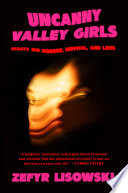
A Literary Hub Most Anticipated Book of the Year • An Autostraddle Most Anticipated October Read • A BookRiot Most Anticipated Queer Book of the Year "In these extraordinary essays, Lisowski reads the entrails of her life like a witch and invites you along for the ride. How could you say no?" —Carmen Maria Machado From Lambda Award-winning poet Zefyr Lisowski, a sharply personal and expansive memoir-in-essays dedicated to the strange and absurd beauty of horror films, exploring the complications of gender, the insidiousness of class ascension, and the latent violence hidden in our own uncanny reflections.
Read more
A Literary Hub Most Anticipated Book of the Year • An Autostraddle Most Anticipated October Read • A BookRiot Most Anticipated Queer Book of the Year "In these extraordinary essays, Lisowski reads the entrails of her life like a witch and invites you along for the ride. How could you say no?" —Carmen Maria Machado From Lambda Award-winning poet Zefyr Lisowski, a sharply personal and expansive memoir-in-essays dedicated to the strange and absurd beauty of horror films, exploring the complications of gender, the insidiousness of class ascension, and the latent violence hidden in our own uncanny reflections. This is how it worked: first I loved them, and then I loved myself. At twenty-seven, poet Zefyr Lisowski found herself in the place she feared most: a locked psych ward. While inside, she turned to horror movies—her deepest, most constant comfort. Rather than disturb, scary movies have always provided solace and connection for Lisowski, as they do many others—offering a vision of a world filled equally with beauty and pain, and a reason to reach out to others and hold them tight. After all, as Lisowski argues, what terrifies us most about these movies is our own uncanny reflection—and at the root of that fear, a desperate desire to love and be loved. In these wide-ranging essays, Lisowski weaves theory and memoir into nuanced critiques of films such as The Texas Chain Saw Massacre and Saint Maud. From fears about sickness and disability, to trans narratives and the predator/victim complex, to the struggle to live in a world that wants you dead, she explores horror’s reciprocal impact on our culture and—by extension—our lives. Through it all, Lisowski lays bare her own complex biography—spanning from a trans childhood in the South to the sweaty dancefloors of Brooklyn—and the family, friends, and lovers that have bloomed with her into the present. Deeply felt, blood-spattered, and brimming with care and wonder, Uncanny Valley Girls thrusts this seasoned poet to centerstage.
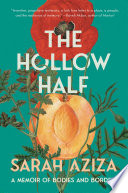
A Memoir of Bodies and Borders
2025
Finalist for the Palestine Book Awards A brush with death. An ancestral haunting.
Read more
Finalist for the Palestine Book Awards A brush with death. An ancestral haunting. A century of family secrets. Sarah Aziza’s searing, genre-bending memoir traces three generations of diasporic Palestinians from Gaza to the Midwest to New York City—and back “You were dead, Sarah, you were dead.” In October 2019, Sarah Aziza, daughter and granddaughter of Gazan refugees, is narrowly saved after being hospitalized for an eating disorder. The doctors revive her body, but it is no simple thing to return to the land of the living. Aziza’s crisis is a rupture that brings both her ancestral and personal past into vivid presence. The hauntings begin in the hospital cafeteria, when a mysterious incident summons the familiar voice of her deceased Palestinian grandmother. In the months following, as she responds to a series of ghostly dreams, Aziza unearths family secrets that reveal the ways her own trauma and anorexia echo generations of violent Palestinian displacement and erasure—and how her fight to recover builds on a century of defiant survival and love. As she moves towards this legacy, Aziza learns to resist the forces of colonization, denial, and patriarchy both within and outside her. Weaving timelines, languages, geographies, and genres, The Hollow Half probes the contradictions and contingencies that create “nation” and “history.” Blazing with honesty, urgency, and poetry, this stunning debut memoir is a fearless call to imagine both the self and the world anew.
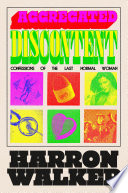
Confessions of the Last Normal Woman
2025
A searing journey through the highs and lows of twenty-first century womanhood from an award-winning journalist beloved for her unflinchingly honest and often comedic appraisals of pop culture, identity, and disillusionment “A delicious reading experience—like hearing your smartest friend eviscerate the worst person you know.”—Sabrina Imbler, author of How Far the Light Reaches “Such a brilliant writer, with so many surprising moves.”—Torrey Peters, author of Detransition, Baby After a brief fling with corporate stability in her twenty-something cis era, Harron Walker has transitioned into a terminally single freelancer and part-time shopgirl. She's in the throes of her second adolescence and its requisite daily spirals.
Read more
A searing journey through the highs and lows of twenty-first century womanhood from an award-winning journalist beloved for her unflinchingly honest and often comedic appraisals of pop culture, identity, and disillusionment “A delicious reading experience—like hearing your smartest friend eviscerate the worst person you know.”—Sabrina Imbler, author of How Far the Light Reaches “Such a brilliant writer, with so many surprising moves.”—Torrey Peters, author of Detransition, Baby After a brief fling with corporate stability in her twenty-something cis era, Harron Walker has transitioned into a terminally single freelancer and part-time shopgirl. She's in the throes of her second adolescence and its requisite daily spirals. She wants it all, otherwise known as: basic human rights, a stable job with good pay and healthcare benefits, someone to love, the ability to feel safe and secure, the pursuit of satisfaction and maybe even contentment. And when she starts to acquire those things—well, as The Monkey's Paw famously asked, "What could go wrong?" In sixteen wholly original essays that blend memoir, cultural criticism, investigative journalism, and a dash of fanfiction, Walker places her own experiences within the larger context of the pressing and underdiscussed aspects of contemporary American womanhood that make up daily life. She recounts an attempt to eviscerate a corporation's attempt at pinkwashing their way into bath bomb sales while simultaneously confronting her “pick me” impulse to do so. She interrogates her relationship to labor, from the irony of working in a transphobic workplace in order to cover gender-affirming surgery to the cruel specter of the girlboss that none of us ever think we'll become. She explores the allure and violence of assimilating into white womanhood in all its hegemonic glory, exposes the ways in which the truth of trans women's reproductive healthcare is erased in favor of reactionary narratives, and considers how our agency is stripped from us—by governments, employers, partners, and ourselves—purely on account of our bodies. With razor-sharp, biting prose that’s as uncompromising as it is playful, Walker grapples with questions of love, sex, fertility, labor, embodiment, community, autonomy, and body fluids from her particular vantagepoint: often at the margins, conditionally at the center.
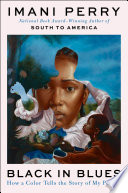
How a Color Tells the Story of My People
2025
A “vast, multifaceted and enchanting” (Minneapolis Star-Tribune) meditation on the color blue and its fascinating role in Black history and culture, from National Book Award winner Imani Perry, “the most important interpreter of Black life in our time” (Eddie S. Glaude, Jr.) Throughout history, the concept of Blackness has been remarkably intertwined with another color: blue.
Read more
A “vast, multifaceted and enchanting” (Minneapolis Star-Tribune) meditation on the color blue and its fascinating role in Black history and culture, from National Book Award winner Imani Perry, “the most important interpreter of Black life in our time” (Eddie S. Glaude, Jr.) Throughout history, the concept of Blackness has been remarkably intertwined with another color: blue. In daily life, it is evoked in countless ways. Blue skies and blue water offer hope for that which lies beyond the current conditions. But blue is also the color of deep melancholy and heartache, echoing Louis Armstrong’s question, “What did I do to be so Black and blue?” In this book, celebrated author Imani Perry uses the world’s favorite color as a springboard for a riveting emotional, cultural, and spiritual journey—an examination of race and Blackness that transcends politics or ideology. Perry traces both blue and Blackness from their earliest roots to their many embodiments of contemporary culture, drawing deeply from her own life as well as art and history: The dyed indigo cloths of West Africa that were traded for human life in the 16th century. The mixture of awe and aversion in the old-fashioned characterization of dark-skinned people as “Blue Black.” The fundamentally American art form of blues music, sitting at the crossroads of pain and pleasure. The blue flowers Perry plants to honor a loved one gone too soon. Poignant, spellbinding, and utterly original, Black in Blues is a brilliant new work that could only have come from the mind of one of our greatest writers and thinkers. Attuned to the harrowing and the sublime aspects of the human experience, it is every bit as vivid, rich, and striking as blue itself.
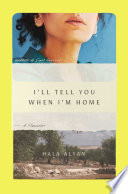
A Memoir
2025
The rich and deeply personal debut memoir by award-winning Palestinian American poet and novelist Hala Alyan, whose experience of motherhood via surrogacy forces her to reckon with her own past, and the legacy of her family’s exile and displacement, all in the name of a new future. After a decade of yearning for parenthood, years marked by miscarriage after miscarriage, Hala Alyan makes the decision to use a surrogate.
Read more
The rich and deeply personal debut memoir by award-winning Palestinian American poet and novelist Hala Alyan, whose experience of motherhood via surrogacy forces her to reckon with her own past, and the legacy of her family’s exile and displacement, all in the name of a new future. After a decade of yearning for parenthood, years marked by miscarriage after miscarriage, Hala Alyan makes the decision to use a surrogate. In this charged time, she turns to the archetype of the waiting woman—the Scheherazade who tells stories to ensure another dawn—to confront her own narratives of motherhood, love, and inheritance. As her baby grows in the body of another woman, in another country, Hala finds her own life unraveling—a husband who wants to leave; the cost of past traumas and addictions threatening to resurface; the city of her youth, Beirut, on the brink of crisis. She turns to family stories and communal myths: of grandmothers mapping their lives through Palestine, Kuwait, Syria, Lebanon; of eradicated villages and invading armies; of places of refuge that proved only temporary; of men that left and women that stayed; of the contradictions of her own Midwestern childhood, and adolescence in various Arab cities. Meanwhile, as the baby grows from the size of a poppyseed to a grain of rice, then a lime, and beyond, Hala gathers the stories that are her legacy, setting down the ones that confine, holding close those that liberate. It is emotionally charged, painstaking work, but now the stakes are higher: how to honor ancestors and future generations alike in the midst of displacement? How to impart love for those who are no longer here, for places one can no longer touch? A stunningly lyrical and brutally honest quest for motherhood, selfhood, and peoplehood, I’ll Tell You When I’m Home is a powerful story of unraveling and becoming, of destruction and redemption, and of homelands lost and recreated.
2025
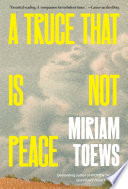
"Revelatory." --New York Times Book Review "Essential reading. A companion for turbulent times." --Laura van den Berg "Nothing short of a masterpiece.” --The San Francisco Chronicle Named a Must-Read Book of the Summer by The Los Angeles Times, People Magazine, and Town & Country Internationally bestselling author Miriam Toews' memoir of the will to write--a work of disobedient memory, humor, and exquisite craft set against a content-hungry, prose-stuffed society.
Read more
"Revelatory." --New York Times Book Review "Essential reading. A companion for turbulent times." --Laura van den Berg "Nothing short of a masterpiece.” --The San Francisco Chronicle Named a Must-Read Book of the Summer by The Los Angeles Times, People Magazine, and Town & Country Internationally bestselling author Miriam Toews' memoir of the will to write--a work of disobedient memory, humor, and exquisite craft set against a content-hungry, prose-stuffed society.
===
In this breathtaking memoir of stunning emotional force and electrifying honesty, one of Canada's most iconic writers tells her own story for the first time. “Why do you write?” the organizer of a literary event in Mexico City asks Miriam Toews. Each attempt at an answer from Toews—all unsatisfactory to the organizer—surfaces new layers of grief, guilt, and futility connected to her sister’s suicide more than fifteen years ago. She has been keeping up, she realizes, an internal correspondence with her beloved sibling, attempting to fill a silence she can barely comprehend. As Toews turns to face that silence, we come to see that the question “why I write” is as impossible to answer as deciding whether to live life as a comedy or a tragedy. A masterwork of non-fiction, A Truce That Is Not Peace explores the uneasy pact every creative person makes with memory. Wildly original yet intimately, powerfully precise; momentous, hilarious, wrenching, and joyful—this is Miriam Toews at her dazzling best, remaking her personal world and inventing a brilliant literary form to hold it.
A Metamorphosis
2025
In this wondrously unusual memoir, a woman retreats into her shell in the aftermath of her divorce, and must choose between the pleasures and the perils of a closed-up life—a transformation fable from an acclaimed 5 Under 35 National Book Foundation honoree. “A marvel and a delight .
Read more
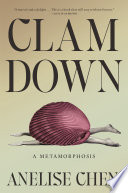
In this wondrously unusual memoir, a woman retreats into her shell in the aftermath of her divorce, and must choose between the pleasures and the perils of a closed-up life—a transformation fable from an acclaimed 5 Under 35 National Book Foundation honoree. “A marvel and a delight . . . This is a book that will stay with me forever.”—Leslie Jamison, author of Splinters We’ve all heard the story about waking up as a cockroach—but what if a crisis turned you into a clam? After the dissolution of her marriage, a writer is transformed into a “clam” via typo after her mother keeps texting her to “clam down.” The funny if unhelpful command forces her to ask what it means to “clam down”—to retreat, hide, close up, and stay silent. Idiomatically, we are said to “clam up” when we can’t speak, and to “come out of our shell” when we reemerge, transformed. In order to understand her path, the clam digs into examples of others who have embraced lives of reclusiveness and extremity. Finally, she confronts her own “clam genealogy” to interview her dad, who disappeared for a decade to write a mysterious accounting software called Shell Computing. By excavating his past to better understand his decisions, she learns not only how to forgive him but also how to move on from her own wounds of abandonment and insecurity. Using a genre-defying structure and written in novelistic prose that draws from art, literature, and natural history, Anelise Chen unfolds a complex story of interspecies connectedness, in which humans learn lessons of adaptation and survival from their mollusk kin. While it makes sense in certain situations to retreat behind fortified walls, the choice to do so also exacts a price. What is the price of building up walls? How can one take them back down when they are no longer necessary?
A Speculative Memoir
2025
In Caroline Hagood' s GOBLIN MODE: A SPECULATIVE MEMOIR, the protagonist, who is and is not Caroline Hagood, takes a surreal odyssey through humor, horror, and plague-time Brooklyn. In a supercharged three-day stretch, she navigates a city full of flashers and parrots who talk to her on subways, makes an ominous visit to a bioluminescent bay in Fajardo, Puerto Rico at Christmastime, mothers two spirited children in an apartment that' s probably haunted, and lives in a world that may or may not be about to shut down.
Read more
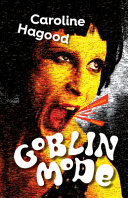
In Caroline Hagood' s GOBLIN MODE: A SPECULATIVE MEMOIR, the protagonist, who is and is not Caroline Hagood, takes a surreal odyssey through humor, horror, and plague-time Brooklyn. In a supercharged three-day stretch, she navigates a city full of flashers and parrots who talk to her on subways, makes an ominous visit to a bioluminescent bay in Fajardo, Puerto Rico at Christmastime, mothers two spirited children in an apartment that' s probably haunted, and lives in a world that may or may not be about to shut down. This state of goblin mode that she inhabits is metaphorical, said to have taken root since Covid and all the other sociopolitical unrest. But it' s also very real, in the form of an actual goblin that has been following her around since childhood, daring her to live more fiercely...
A Memoir in Four Floods
2025
“Jennifer Kabat’s Nightshining sifts a riveting exposé of the Cold War technocratic fantasy-state through lyrical family memoir. Her superb investigation calls to mind those of Rebecca Solnit and Errol Morris, among others.”—Jonathan Lethem A propulsive, layered examination of the conflict between the course of nature and human legacies of resistance and control.
Read more
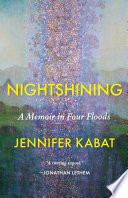
“Jennifer Kabat’s Nightshining sifts a riveting exposé of the Cold War technocratic fantasy-state through lyrical family memoir. Her superb investigation calls to mind those of Rebecca Solnit and Errol Morris, among others.”—Jonathan Lethem A propulsive, layered examination of the conflict between the course of nature and human legacies of resistance and control. Floods, geoengineering, climate crisis. Her first year in Margaretville, New York, Jennifer Kabat wakes to a rain-swollen stream and her basement flooding. As she delves into the region’s fraught environmental history, it becomes clear that this is far from the first—and hardly the worst—disaster in the region. Tracing connections across time, she uncovers Cold War weather experiments, betrayals of the Mohawk Nation, and an unlikely cast of characters, including Kurt Vonnegut’s older brother, Bernard—all reflected through grief brought on by her father’s recent passing. Inquisitive and experimental, Nightshining uses place as a palimpsest of history. With lyrical incision, Kabat mirrors her own life experience and the essence of being human—the cosmos thrumming in our bodies, connecting readers to the land around us and time before us.
Selfhood in the Digital Age
2025
From the author of The Immortal King Rao, finalist for the Pulitzer Prize, a personal exploration of how technology companies have both fulfilled and exploited the human desire for understanding and connection A Most Anticipated Book from The New York Times and more! • One of Esquire’s Best Books of the Year (So Far) • One of Vanity Fair's Best Books to Kick Off Your Summer Reading • A Belletrist Book Club Pick "I cannot imagine a better guide through the infuriating, labyrinthine underworld of technology than Vauhini Vara."—Carmen Maria Machado, author of In the Dream House “Smart, funny, honest.”—The New Yorker • "Seamless blend of personal narrative and systemic critique."—The Atlantic • "Beautifully written and profoundly researched." —Kirkus • "At once genre-defying and gripping.”—The Washington Post When it was released to the public in November 2022, ChatGPT awakened the world to a secretive project: teaching AI-powered machines to write. Its creators had a sweeping ambition—to build machines that not only could communicate but also could do all kinds of other activities, and better than humans ever could.
Read more
From the author of The Immortal King Rao, finalist for the Pulitzer Prize, a personal exploration of how technology companies have both fulfilled and exploited the human desire for understanding and connection A Most Anticipated Book from The New York Times and more! • One of Esquire’s Best Books of the Year (So Far) • One of Vanity Fair's Best Books to Kick Off Your Summer Reading • A Belletrist Book Club Pick "I cannot imagine a better guide through the infuriating, labyrinthine underworld of technology than Vauhini Vara."—Carmen Maria Machado, author of In the Dream House “Smart, funny, honest.”—The New Yorker • "Seamless blend of personal narrative and systemic critique."—The Atlantic • "Beautifully written and profoundly researched." —Kirkus • "At once genre-defying and gripping.”—The Washington Post When it was released to the public in November 2022, ChatGPT awakened the world to a secretive project: teaching AI-powered machines to write. Its creators had a sweeping ambition—to build machines that not only could communicate but also could do all kinds of other activities, and better than humans ever could. But was this goal actually achievable? And if reached, would it lead to our liberation or our subjugation? Vauhini Vara, an award-winning tech journalist and editor, had long been grappling with these questions. In 2021, she asked a predecessor of ChatGPT to write about her sister’s death, resulting in an essay that was both more moving and more disturbing than she could have imagined. It quickly went viral. The experience, revealing both the power and the danger of corporate-owned technologies, forced Vara to interrogate how these technologies have influenced her understanding of herself and the world around her—from discovering online chat rooms as a preteen to using social media as The Wall Street Journal’s first Facebook reporter to asking ChatGPT for writing advice—while compelling her to add to the trove of human-created material exploited for corporate financial gain. Interspersed throughout this investigation are her own Google searches, Amazon reviews, and the other raw material of internet life—including the viral AI experiment that started it all. Searches illuminates how technological capitalism is both shaping and exploiting human existence while proposing that by harnessing the collective creativity that makes humans unique, we might imagine a freer, more empowered relationship with our machines and, ultimately, with one another.
A Memoir
2025
“Unspeakably compelling.”―Ed Park “A Silent Treatment confronts both the complexity of family and the quandary of capturing a family’s shapeshifting and perplexing love, their truthful and devoted love, in the amber of memoir.” ―Megha Majumdar She did it to my dad, though. They used the silent treatment on each other, she explained, because they didn't want to say something they'd regret.
Read more
“Unspeakably compelling.”―Ed Park “A Silent Treatment confronts both the complexity of family and the quandary of capturing a family’s shapeshifting and perplexing love, their truthful and devoted love, in the amber of memoir.” ―Megha Majumdar She did it to my dad, though. They used the silent treatment on each other, she explained, because they didn't want to say something they'd regret. What does she want to say now that she'd regret? Jeannie Vanasco’s mother starts using the silent treatment not long after moving into the renovated apartment within Jeannie’s home. The silences begin at any perceived slight. Her shortest period of silence lasts two weeks. Her longest, six months. As Vanasco guides us through her mother’s childhood, their shared past, and the devastating silence of their present, she paints a layered, complicated portrait of a mother and daughter looking, failing, and―in big and small ways―succeeding to understand each other. In the margins of her research, at her kitchen table with her partner, in phone calls to friends, and in delightful hey google queries, Vanasco explores the loneliness and isolation of silence as punishment, both in her own life and beyond it, and confronts her greatest fear: that her mother will never speak to her again. From the acclaimed author of Things We Didn’t Talk About When I Was a Girl and The Glass Eye, Jeannie Vanasco’s A Silent Treatment is a searingly honest and lasting testament to the power of all things left unsaid.
Essays
2025
A bold, provocative collection of essays on one of the most urgent questions of our time: What is authority when everyone has an opinion on everything? Since her canonical 2017 essay “On Liking Women,” the Pulitzer Prize–winning critic Andrea Long Chu has established herself as a public intellectual straight out of the 1960s. With devastating wit and polemical clarity, she defies the imperative to leave politics out of art, instead modeling how the left might brave the culture wars without throwing in with the cynics and doomsayers.
Read more
A bold, provocative collection of essays on one of the most urgent questions of our time: What is authority when everyone has an opinion on everything? Since her canonical 2017 essay “On Liking Women,” the Pulitzer Prize–winning critic Andrea Long Chu has established herself as a public intellectual straight out of the 1960s. With devastating wit and polemical clarity, she defies the imperative to leave politics out of art, instead modeling how the left might brave the culture wars without throwing in with the cynics and doomsayers. Authority brings together Chu’s critical work across a wide range of media—novels, television, theater, video games—as well as an acclaimed tetralogy of literary essays first published in n+1. Chu places The Phantom of the Opera within a centuries-old conflict between music and drama; questions the enduring habit of reading Octavia Butler’s science fiction as a parable of slavery; and charges fellow critics like Maggie Nelson and Zadie Smith with a complacent humanism. Criticism today is having a crisis of authority—but so says every generation of critics. In two magisterial new essays, Chu offers a revised intellectual history of this perennial crisis, tracing the surprisingly political contours of criticism from its origins in the Enlightenment to our present age of social media. Rather than succumbing to an endless cycle of trumped-up emergencies, Authority makes a compelling case for how to do criticism in light of the genuine crises, from authoritarianism to genocide, that confront us today.
===
This highly anticipated book by the Pulitzer Prize winning critic Andrea Long Chu asks one of the most urgent questions of our time: what is authority when everyone has an opinion on everything? 'Her writing is razor-sharp, personal, and vociferous in its proclamations, but it’s also fun – it’s got bite' New Statesman 'Fun reading' Guardian 'A galaxy-brain-level thinker' Torrey Peters 'One of the most charismatic and original thinkers at work today' Brandon Taylor 'Thrilling... Authority reminds us we haven't yet felt all there is to feel' Kaveh Akbar 'A pure joy to read' Claire Dederer Since her canonical 2017 essay ‘On Liking Women’, the Pulitzer Prize–winning critic Andrea Long Chu has established herself as one of the most provocative, funny, brilliant and stylish critics at work today. With devastating wit and polemical clarity, she defies the imperative to leave politics out of art, instead modeling how the left might brave the culture wars without throwing in with the cynics and doomsayers. Authority brings together Chu’s critical work across a wide range of media—novels, television, theater, video games—as well as an acclaimed tetralogy of literary essays first published in n+1. As a critic, Chu places The Phantom of the Opera within a centuries-old conflict between music and drama; questions the enduring habit of reading Octavia Butler’s science fiction as a parable of slavery; teases out the ideology behind Hillary Clinton’s (fictional) sex life; and charges fellow critics like Maggie Nelson and Zadie Smith with a complacent humanism. The unifying theme of the book is authority and taste in literature, art, culture and politics: how do we decide what's good, and how do we convince others that our judgement is correct?
A Bestiary in Essays
2025
Amie Souza Reilly bought an old house in the suburbs. She had just gotten remarried and was looking forward to a new start with her new husband and her six-year-old son.
Read more
Amie Souza Reilly bought an old house in the suburbs. She had just gotten remarried and was looking forward to a new start with her new husband and her six-year-old son. But immediately after moving in, the next-door neighbors began a crusade to push them out. The two brothers followed her, peered in her windows, stood in her yard, trapped her inside her car. As they broke boundary after suburban boundary, she found herself implicated in their violence. Human/Animal merges personal narrative and cultural criticism to unleash the complicated relationship between instinct and action, violence and regret. This bestiary-in-essays wrestles American colonialism, horror films, feminism, and gender studies to confront the intrusive neighbors the author could not. Ultimately, this book asks larger questions about proximity, care, and the line between human and animal. Illustrated with the author’s own sketches, Human/Animal: A Bestiary in Essays grapples not only with Reilly’s place in her neighborhood, but with America’s past and current political climate.
Essays
2025
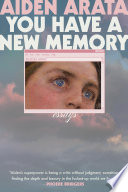
An open-hearted interrogation of our digital selves, braiding cultural criticism, memoir, and narrative musings into an exploration of identity, girlhood, media, tech, nature and "finding the depth and beauty in the fucked-up world we live in" from a writer, artist, and influencer (Phoebe Bridgers). YOU HAVE A NEW MEMORY is a deeply human inventory of the digital sphere, a searing analysis of the present and a prescient assessment of the future.
Read more
An open-hearted interrogation of our digital selves, braiding cultural criticism, memoir, and narrative musings into an exploration of identity, girlhood, media, tech, nature and "finding the depth and beauty in the fucked-up world we live in" from a writer, artist, and influencer (Phoebe Bridgers). YOU HAVE A NEW MEMORY is a deeply human inventory of the digital sphere, a searing analysis of the present and a prescient assessment of the future. In her highly anticipated debut, Aiden Arata brings us raw reportage from the liminal space between online and offline worlds, illuminating how we got here and where to go next. With high-res, cosmic vision and razor-sharp wit, this kaleidoscopic collection of essays artfully explores what it means to exist on the internet. Arata exposes influencer grifts from the perspective of a grifter, digs into the alluring aesthetic numbness of stay-at-home girlfriend content creators, and interrogates our online fetishization of doom to grapple with the real-world apocalypse. Arata is the wry, unexpected voice we need to navigate existing simultaneously as creators, consumers, and products in our increasingly braver and newer world.
The Gayest Love Story Ever Told
2025
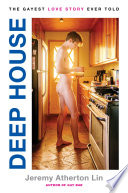
Queerty's Spring 2025 LGBTQ+ Books Roundup From the National Book Critics Circle Award-winning author of Gay Bar comes a rule-breaking, sweat-soaked, genre-busting story of outlaw love. It’s 1996, and Jeremy Atherton Lin has met the boy of his dreams — a mumbling, starry-eyed Brit — just as, amid a media frenzy, US Congress prepares the Defense of Marriage Act, denying same-sex couples federal rights including immigration.
Read more
Queerty's Spring 2025 LGBTQ+ Books Roundup From the National Book Critics Circle Award-winning author of Gay Bar comes a rule-breaking, sweat-soaked, genre-busting story of outlaw love. It’s 1996, and Jeremy Atherton Lin has met the boy of his dreams — a mumbling, starry-eyed Brit — just as, amid a media frenzy, US Congress prepares the Defense of Marriage Act, denying same-sex couples federal rights including immigration. The pair steals away to remote forests and vast deserts, London fashion shows and Berlin sex clubs, dinner parties, back alleys, East Village hotel rooms, and San Francisco dives. Finding no other way to stay together, they shack up illicitly among unlikely allies in a “city of refuge.” With Atherton Lin’s inimitable blend of tenderness and wicked humor, Deep House moves through the couple’s string of rented apartments while unlocking doors to a lineage of gay men who have come before — smuggling a foreign partner through national checkpoints or going public to stand up for the right to get down in the privacy of their own homes. They include hapless criminals, sexpot bartenders, friars, pirates, government workers who subverted the system, activists who went all the way to the Supreme Court, and the celebrated artist Felix Gonzalez-Torres. Following Gay Bar — called “a rich tapestry” by Vanity Fair and “an absolute tour de force” by Maggie Nelson — Deep House juxtaposes whispered disclosures of undocumented domesticity with courtroom drama and political stunts to explore myriad forms of intimacy while questioning the mechanisms that legitimize love. Deep House is at once a historical kaleidoscope and the innermost tale of two boyfriends who made a home in the shadows of a turbulent civil rights battle.
The Story of a Genocide
A Trinidadian Memoir
2025
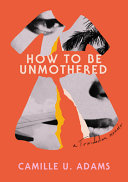
Mapping the fault lines between mother and child (humanity's first and supposedly strongest bond), and with a poet's homeric vision of her native Trinidad, Camille U. Adams weaves the Caribbean island's history of colonial violence with her own family's legacy of abandonment.
Read more
Mapping the fault lines between mother and child (humanity's first and supposedly strongest bond), and with a poet's homeric vision of her native Trinidad, Camille U. Adams weaves the Caribbean island's history of colonial violence with her own family's legacy of abandonment. For generations, the women of Camille U. Adams' family have left their daughters. Some follow the siren call of rum, the centuries-old vice which alighted on Trinidad's shores from European ships. Others flee the behind-closed-doors beatings of husbands, fathers, and brothers, rushing into any arms that offer refuge. Some simply disappear, their passage marked by unkept promises and open wounds. As a young girl, Adams finds solace in Trinidad's whispering fever grass, sweet ixora flowers, and the cradling branches of the rose mango tree--all of their roots connecting her to the land's long memory. But where flora gives way to the rank pavement of Covigne Road, gunshots echo and men amass in the doorways of derelict garages, their mouths and hands promising violation. Home offers no safety: just an explosive father, cowed sisters, and a mother whose only reprieve is control. Cloying, suffocating, the maternal embrace threatens to blot out all else. Is it better to be choked, or not to be held at all? Tormented by her mother's presence and haunted by her absence, Camille U. Adams' dazzling debut is a breathtaking account of survival and self-determination, reimagining the meaning of escape, its cost, and what comes after.
2025
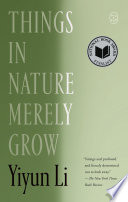
Finalist for the National Book Award for Nonfiction Finalist for the PEN/Jean Stein Book Award Short-listed for the Andrew Carnegie Medal for Excellence in Nonfiction Long-listed for the National Book Critics Circle Award for Autobiography One of the New York Times Notable Books of the Year Yiyun Li’s remarkable, defiant work of radical acceptance as she considers the loss of her son James. “There is no good way to say this,” Yiyun Li writes at the beginning of this book.
Read more
Finalist for the National Book Award for Nonfiction Finalist for the PEN/Jean Stein Book Award Short-listed for the Andrew Carnegie Medal for Excellence in Nonfiction Long-listed for the National Book Critics Circle Award for Autobiography One of the New York Times Notable Books of the Year Yiyun Li’s remarkable, defiant work of radical acceptance as she considers the loss of her son James. “There is no good way to say this,” Yiyun Li writes at the beginning of this book. “There is no good way to state these facts, which must be acknowledged . . . My husband and I had two children and lost them both: Vincent in 2017, at sixteen, James in 2024, at nineteen. Both chose suicide, and both died not far from home.” There is no good way to say this—because words fall short. It takes only an instant for death to become fact, “a single point in a time line.” Living now on this single point, Li turns to thinking and reasoning and searching for words that might hold a place for James. Li does what she can: doing “things that work,” including not just writing but gardening, reading Camus and Wittgenstein, learning the piano, and living thinkingly alongside death. This is a book for James, but it is not a book about grieving or mourning. As Li writes, “The verb that does not die is ‘to be.’ Vincent was and is and will always be Vincent. James was and is and will always be James. We were and are and will always be their parents. There is no now and then, now and later; only now and now and now and now.” Things in Nature Merely Grow is a testament to Li’s indomitable spirit.
2025
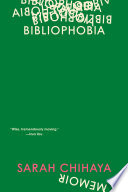
“A wise, tremendously moving exploration of what it means to seek companionship and understanding, in books and in life.”—Hua Hsu, author of Stay True “Stirring and sparkling.”—The Washington Post A PUBLISHERS WEEKLY AND ELECTRIC LIT BEST BOOK OF THE YEAR • ONE OF THE BEST BOOKS OF THE MONTH: Time, Los Angeles Times, Cosmopolitan Books can seduce you. They can, Sarah Chihaya believes, annihilate, reveal, and provoke you.
Read more
“A wise, tremendously moving exploration of what it means to seek companionship and understanding, in books and in life.”—Hua Hsu, author of Stay True “Stirring and sparkling.”—The Washington Post A PUBLISHERS WEEKLY AND ELECTRIC LIT BEST BOOK OF THE YEAR • ONE OF THE BEST BOOKS OF THE MONTH: Time, Los Angeles Times, Cosmopolitan Books can seduce you. They can, Sarah Chihaya believes, annihilate, reveal, and provoke you. And anyone incurably obsessed with books understands this kind of unsettling literary encounter. Sarah calls books that have this effect “Life Ruiners”. Her Life Ruiner, Toni Morrison’s The Bluest Eye, became a talisman for her in high school when its electrifying treatment of race exposed Sarah’s deepest feelings about being Japanese American in a predominantly white suburb of Cleveland. But Sarah had always lived through her books, seeking escape, self-definition, and rules for living. She built her life around reading, wrote criticism, and taught literature at an Ivy League University. Then she was hospitalized for a nervous breakdown, and the world became an unreadable blank page. In the aftermath, she was faced with a question. Could we ever truly rewrite the stories that govern our lives? Bibliophobia is an alternately searing and darkly humorous story of breakdown and survival told through books. Delving into texts such as Anne of Green Gables, Possession, A Tale for the Time Being, The Last Samurai, Chihaya interrogates her cultural identity, her relationship with depression, and the intoxicating, sometimes painful, ways books push back on those who love them.
An Oral History of Trans, Nonbinary, Genderqueer, and Two-Spirit People of Color
2025
From the acclaimed novelist, a first-of-its-kind, deeply personal, and moving oral history of a generation of trans and gender nonconforming elders of color--from leading activists to artists to ordinary citizens--who tell their own stories of breathtaking courage, cultural innovations, and acts of resistance. So Many Stars knits together the voices of trans, nonbinary, genderqueer, and two-spirit elders of color as they share authentic, intimate accounts of how they created space for themselves and their communities in the world.
Read more
From the acclaimed novelist, a first-of-its-kind, deeply personal, and moving oral history of a generation of trans and gender nonconforming elders of color--from leading activists to artists to ordinary citizens--who tell their own stories of breathtaking courage, cultural innovations, and acts of resistance. So Many Stars knits together the voices of trans, nonbinary, genderqueer, and two-spirit elders of color as they share authentic, intimate accounts of how they created space for themselves and their communities in the world. This singular project collects the testimonies of twenty elders, each a glimmering thread in a luminous tapestry, preserving their words for future generations--who can more fully exist in the world today because of these very trailblazers. De Robertis creates a collective coming-of-age story based on hundreds of hours of interviews, offering rare snapshots of ordinary life: kids growing up, navigating family issues and finding community, coming out and changing how they identify over the years, building movements and weathering the AIDS crisis, and sharing wisdom for future generations. Often narrating experiences that took place before they had the array of language that exists today to self-identify beyond the gender binary, this generation lived through remarkable changes in American culture, shaped American culture, and yet rarely takes center stage in the history books. Their stories feel particularly urgent in the current political moment, but also remind readers that their experiences are not new, and that young trans and nonbinary people today belong to a long lineage. The anecdotes in these pages are riveting, joyful, heartbreaking, full of personality and wisdom, and artfully woven together into one immersive narrative. In De Robertis's words, So Many Stars shares "behind-the-scenes tales of what it meant--and still means--to create an authentic life, against the odds."
===
From the acclaimed novelist, a first-of-its-kind, deeply personal, and moving oral history of a generation of trans and gender nonconforming elders of color—from leading activists to artists to ordinary citizens—who tell their own stories of breathtaking courage, cultural innovations, and acts of resistance. So Many Stars knits together the voices of trans, nonbinary, genderqueer, and two-spirit elders of color as they share authentic, intimate accounts of how they created space for themselves and their communities in the world. This singular project collects the testimonies of twenty elders, each a glimmering thread in a luminous tapestry, preserving their words for future generations—who can more fully exist in the world today because of these very trailblazers. De Robertis creates a collective coming-of-age story based on hundreds of hours of interviews, offering rare snapshots of ordinary life: kids growing up, navigating family issues and finding community, coming out and changing how they identify over the years, building movements and weathering the AIDS crisis, and sharing wisdom for future generations. Often narrating experiences that took place before they had the array of language that exists today to self-identify beyond the gender binary, this generation lived through remarkable changes in American culture, shaped American culture, and yet rarely takes center stage in the history books. Their stories feel particularly urgent in the current political moment, but also remind readers that their experiences are not new, and that young trans and nonbinary people today belong to a long lineage. The anecdotes in these pages are riveting, joyful, heartbreaking, full of personality and wisdom, and artfully woven together into one immersive narrative. In De Robertis’s words, So Many Stars shares “behind-the-scenes tales of what it meant—and still means—to create an authentic life, against the odds.”
Somebody Is Walking on Your Grave
My Cemetery Journeys
2025
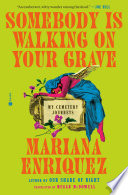
An enchanting, highly personal tour of some of the most iconic cemeteries of the world—part travelogue, part memoir, part “excursions through death,” by the author of Our Share of Night and “queen of horror” (Los Angeles Times) “Not a travelogue so much as a grave-a-logue, Somebody is Walking on Your Grave is an exuberant, witty wander among the dead. You could not have a better friend to take you by the hand and lead you for a long traipse among tilting tombstones, dank crypts, and chilling history.”—Joe Hill “Enriquez knows cemeteries are the repositories of life’s pain and beauty.
Read more
An enchanting, highly personal tour of some of the most iconic cemeteries of the world—part travelogue, part memoir, part “excursions through death,” by the author of Our Share of Night and “queen of horror” (Los Angeles Times) “Not a travelogue so much as a grave-a-logue, Somebody is Walking on Your Grave is an exuberant, witty wander among the dead. You could not have a better friend to take you by the hand and lead you for a long traipse among tilting tombstones, dank crypts, and chilling history.”—Joe Hill “Enriquez knows cemeteries are the repositories of life’s pain and beauty. I felt more alive as I read.”—Caitlin Doughty, New York Times bestselling author of Smoke Gets in Your Eyes: And Other Lessons from the Crematory “A perfect book for almost anyone.”—The Washington Post “An immersive testament to [Enriquez’s] genius.”—Los Angeles Times “An eccentric and enlightening peek into how memorialization happens across the world.”—Publishers Weekly, starred review “Fascinating . . . Enriquez hides a celebration of life in a book about death.”—Booklist, starred review One of Publishers Weekly’s Top 10 New Releases of the Fall • A Most Anticipated Book of the Fall: Chicago Tribune, Los Angeles Times, Literary Hub, Ms. Magazine, Bustle, Book Riot, Publishers Lunch Cemeteries have great stories and sometimes I steal some for my books. Mariana Enriquez—called by The New York Times a “sorceress of horror”—has been fascinated by the haunting beauty of cemeteries since she was a teenager. She has visited them frequently, a goth flaneur taking notes on her aesthetic obsession as she walks among the headstones, “where dying seems much more interesting than being alive.” But when the body of a friend’s mother who was disappeared during Argentina’s military dictatorship was found in a common grave, Enriquez began to examine more deeply the complex meanings of cemeteries and where our bodies come to rest. In this rich book of essays—“excursions through death,” she calls them—Enriquez travels through North and South America, Europe and Australia, visiting Paris’s catacombs, Prague’s Old Jewish Cemetery, New Orleans’s aboveground mausoleums, Buenos Aires’s opulent Recoleta, and more. Enriquez investigates each cemetery’s history and architecture, its saints and ghosts, its caretakers and visitors, and, of course, its dead. Weaving personal stories with reportage, interviews, myths, hauntology, and more, Somebody Is Walking on Your Grave is memoir channeled through Enriquez’s passion for cemeteries, revealing as much about her own life and unique sensibility as the graveyards and tombstones she tours. Fascinating, spooky, and unlike anything else, Enriquez’s first work of nonfiction, translated by the award-winning Megan McDowell, is as original and memorable as the stories and novels for which she’s become so beloved and admired.
A Memoir
2025
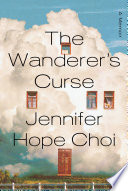
One of Condé Nast Traveler's Best Books of Spring One of Garden & Gun's Best Books of Summer One of Electric Literature’s Most Anticipated Books of 2025 A Korean mother runs off to Alaska, sparking a greater season of wandering. Could her daughter be destined for the same? When Jennifer Hope Choi first stumbled upon the “curse” known as yeokmasal—an allegedly inheritable affliction causing one to roam farther and farther from home—she immediately consulted her mother.
Read more
One of Condé Nast Traveler's Best Books of Spring One of Garden & Gun's Best Books of Summer One of Electric Literature’s Most Anticipated Books of 2025 A Korean mother runs off to Alaska, sparking a greater season of wandering. Could her daughter be destined for the same? When Jennifer Hope Choi first stumbled upon the “curse” known as yeokmasal—an allegedly inheritable affliction causing one to roam farther and farther from home—she immediately consulted her mother. “Oh yeah,” Umma quipped. “I have that.” Technically this wasn’t a revelation. Since 2007, the no-nonsense open-heart surgery nurse had moved suddenly from the Golden State to the Last Frontier, shuttling over the next decade through seven states. For much of her adulthood, Choi had fancied herself nothing like her immigrant mother, late-blooming vagabond spirit and all—until life in Brooklyn imploded, spurring her to relocate to South Carolina and reckon with startling truths. Artmaking had left her in debt, single, and jobless. Questions hovered, gathering ragged like fractus clouds: Was it time to give up writing? Would she ever have a place of her own to call home? Or was she doomed to bunk up with Umma in the Deep South indefinitely? This probing memoir follows Choi through her many former homes, from a crumbling Chinatown tenement to a haunted museum in Georgia. Connections emerge, between her curious trajectory and idiosyncratic Korean identity narratives: a mystical Korean dog breed, pro golfers, modern Korean cults, the four pillars of destiny, and Korean American art. One question lingers throughout her search: What might be gained from living in residence with uncertainty? Told with whip-smart sensibility, The Wanderer’s Curse is an electric mother-daughter story, exploring ideas of belonging, self-determination, and possibility, leaving readers to wonder what we take with us generation to generation, what we wish we could leave behind, and how we move on.