The Best Books of 2025
A Love Story
2025
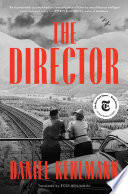
"G.W. Pabst, one of cinema's greatest directors of the 20th century, was filming in France when the Nazis seized power.
Read more
"G.W. Pabst, one of cinema's greatest directors of the 20th century, was filming in France when the Nazis seized power. To escape the horrors of the new and unrecognizable Germany, he fled to Hollywood. But now, under the blinding California sun, the world-famous director suddenly looks like a nobody. Not even Greta Garbo, the Hollywood actress whom he made famous, can help him. When he receives word that his elderly mother is ill, he finds himself back in his homeland of Austria, which is now called Ostmark. Pabst, his wife, and his young son are suddenly confronted with the barbaric nature of the regime. So, when Joseph Goebbels--the minister of propaganda in Berlin--sees the potential for using the European film icon for his directorial genius and makes big promises to Pabst and his family, Pabst must consider Goebbels's thinly veiled order"--
The Incredible True Story of the Grandmothers Who Fought to Find a Stolen Generation of Children
2025
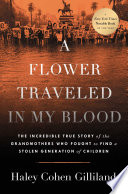
"The epic, true story of the Abuelas de Plaza de Mayo, grandmothers who fought to find their stolen grandchildren during Argentina's brutal dictatorship"--Provided by publisher. === NATIONAL BESTSELLER • A NEW YORK TIMES NOTABLE BOOK OF 2025 • THE WASHINGTON POST’S 5 BEST NONFICTION BOOKS OF 2025 • THE ATLANTIC’S 10 BEST BOOKS OF 2025 • THE NEW YORK PUBLIC LIBRARY'S BEST BOOKS OF 2025 • TIME MAGAZINE’S BEST BOOKS OF 2025 • NPR’S BEST BOOKS OF 2025 “[An] astonishing story…Powerful…Harrowing…Absorbing and lucid…You would have to harden your heart to be unmoved by the Abuelas’ quest.” —Jennifer Szalai, The New York Times Book Review (front-cover review) “Inspiring…A triumphant saga of ordinary people doing extraordinary things in the face of pure malevolence.” —Hampton Sides • “Enthralling…Written with the nail-biting verve of a thriller.” —Publishers Weekly (starred review) • “Extraordinary...A harrowing and timely reminder of what happens when democracy succumbs to despotism.” —Adam Higginbotham • “[A] cinematically detailed, deeply researched narrative.” —The Washington Post • “Piercing, emotional...Will resonate for generations.” —Kirkus Reviews (starred review) A remarkable new talent in narrative nonfiction delivers the epic true story of a group of courageous grandmothers who fought to find their grandchildren who were stolen.
Read more
"The epic, true story of the Abuelas de Plaza de Mayo, grandmothers who fought to find their stolen grandchildren during Argentina's brutal dictatorship"--Provided by publisher.
===
NATIONAL BESTSELLER • A NEW YORK TIMES NOTABLE BOOK OF 2025 • THE WASHINGTON POST’S 5 BEST NONFICTION BOOKS OF 2025 • THE ATLANTIC’S 10 BEST BOOKS OF 2025 • THE NEW YORK PUBLIC LIBRARY'S BEST BOOKS OF 2025 • TIME MAGAZINE’S BEST BOOKS OF 2025 • NPR’S BEST BOOKS OF 2025 “[An] astonishing story…Powerful…Harrowing…Absorbing and lucid…You would have to harden your heart to be unmoved by the Abuelas’ quest.” —Jennifer Szalai, The New York Times Book Review (front-cover review) “Inspiring…A triumphant saga of ordinary people doing extraordinary things in the face of pure malevolence.” —Hampton Sides • “Enthralling…Written with the nail-biting verve of a thriller.” —Publishers Weekly (starred review) • “Extraordinary...A harrowing and timely reminder of what happens when democracy succumbs to despotism.” —Adam Higginbotham • “[A] cinematically detailed, deeply researched narrative.” —The Washington Post • “Piercing, emotional...Will resonate for generations.” —Kirkus Reviews (starred review) A remarkable new talent in narrative nonfiction delivers the epic true story of a group of courageous grandmothers who fought to find their grandchildren who were stolen. In the early hours of March 24, 1976, the streets of Buenos Aires rumble with tanks as soldiers seize the presidential palace and topple Argentina’s leader. The country is now under the control of a military junta, with army chief Jorge Rafael Videla at the helm. With quiet support from the United States and tacit approval from much of Argentina’s people, who are tired of constant bombings and gunfights, the junta swiftly launches the National Reorganization Process or El Proceso—a bland name masking their ruthless campaign to crush the political left and instill the country with “Western, Christian” values. The junta holds power until 1983 and decimates a generation. One of the military’s most diabolical acts is kidnapping hundreds of pregnant women. After giving birth in captivity, the women are “disappeared,” and their babies secretly given to other families—many of them headed by police or military officers. For mothers of pregnant daughters and daughters-in-law, the source of their grief is twofold—the disappearances of their children, and the theft of their grandchildren. A group of fierce grandmothers forms the Abuelas de Plaza de Mayo, dedicated to finding the stolen infants and seeking justice from a nation that betrayed them. At a time when speaking out could mean death, the Abuelas confront military officers and launch protests to reach international diplomats and journalists. They become detectives, adopting disguises to observe suspected grandchildren, and even work alongside a renowned American scientist to pioneer groundbreaking genetic tests. A Flower Traveled in My Blood is the rarest of nonfiction that reads like a novel and puts your heart in your throat. It is the product of years of extensive archival research and meticulous, original reporting. It marks the arrival of a blazing new talent in narrative journalism. In these pages, a regime tries to terrorize a country, but love prevails. The grandmothers’ stunning stories reveal new truths about memory, identity, and family.
2025
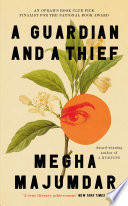
OPRAH'S BOOK CLUB PICK TIME MUST-READ BOOK SHORTLISTED FOR THE NATIONAL BOOK AWARD FOR FICTION FINALIST FOR THE KIRKUS PRIZE ‘An indictment of this moment and a timeless parable about the lengths we go to for love and self-preservation, written in exuberant prose - this is a novel that will burrow its way into your soul and remain there forever’ Tahmima Anam Megha Majumdar’s electrifying new novel, following her acclaimed New York Times Bestseller A Burning—longlisted for the National Book Award—is set in a near-future Kolkata, India, ravaged by climate change and food scarcity, in which two families seeking to protect their children must battle each other—a piercing and propulsive tour de force. In a near-future Kolkata beset by flooding and famine, Ma, her two-year-old daughter Mishti, and her elderly father Dadu are just days from leaving the collapsing city behind to join Ma’s husband in Ann Arbor, Michigan.
Read more
OPRAH'S BOOK CLUB PICK TIME MUST-READ BOOK SHORTLISTED FOR THE NATIONAL BOOK AWARD FOR FICTION FINALIST FOR THE KIRKUS PRIZE ‘An indictment of this moment and a timeless parable about the lengths we go to for love and self-preservation, written in exuberant prose - this is a novel that will burrow its way into your soul and remain there forever’ Tahmima Anam Megha Majumdar’s electrifying new novel, following her acclaimed New York Times Bestseller A Burning—longlisted for the National Book Award—is set in a near-future Kolkata, India, ravaged by climate change and food scarcity, in which two families seeking to protect their children must battle each other—a piercing and propulsive tour de force. In a near-future Kolkata beset by flooding and famine, Ma, her two-year-old daughter Mishti, and her elderly father Dadu are just days from leaving the collapsing city behind to join Ma’s husband in Ann Arbor, Michigan. After procuring long-awaited visas from the consulate, they pack their bags for the flight to America. But in the morning they awaken to discover that Ma’s purse, with all the treasured immigration documents within it, has been stolen. Set over the course of one week, A Guardian and a Thief tells two stories: the story of Ma’s frantic search for the thief while keeping hunger at bay during a worsening food shortage; and the story of Boomba, the thief, whose desperation to care for his family drives him to commit a series of escalating crimes whose consequences he cannot fathom. With stunning control and command, Megha Majumdar paints a kaleidoscopic portrait of two families, each operating from a place of ferocious love and undefeated hope, each discovering how far they will go to secure their children’s future as they stave off encroaching catastrophe. A masterful new work from one of the most exciting voices of her generation. ‘A true literary achievement… Majumdar creates a tense and deeply compassionate portrait of desperation, fear and the combined selflessness and selfishness of parenthood… Detail is the strongest thing in A Guardian and a Thief. It conveys the nuances of not only love but also wisdom… a true joy to read.’ New York Times
===
A Simon & Schuster eBook. Simon & Schuster has a great book for every reader.
The Iranian RevolutionâA Story of Hubris, Delusion and Catastrophic Miscalculation
2025
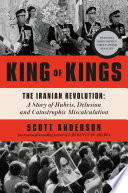
Finalist for the 2025 National Book Critics Circle Award for Nonfiction • A New York Times Notable Book of the Year • Named a Best Book of 2025 by Wall Street Journal, The Atlantic, and Globe and Mail From the author of the acclaimed international bestseller Lawrence in Arabia, a stunningly revelatory narrative history of one of the most momentous events in modern times and the dawn of the age of religious nationalism. On November 16th, 1977, at a state dinner in the White House, President Jimmy Carter toasted Shah Mohammad Reza Pahlavi, King of Kings, Light of the Aryans, Shadow of God on Earth, praising his “enlightened leadership” and extolling Iran as “a stabilizing influence in that part of the world.” Iran had the world’s fifth largest army and was awash in billions of dollars in oil revenues.
Read more
Finalist for the 2025 National Book Critics Circle Award for Nonfiction • A New York Times Notable Book of the Year • Named a Best Book of 2025 by Wall Street Journal, The Atlantic, and Globe and Mail From the author of the acclaimed international bestseller Lawrence in Arabia, a stunningly revelatory narrative history of one of the most momentous events in modern times and the dawn of the age of religious nationalism. On November 16th, 1977, at a state dinner in the White House, President Jimmy Carter toasted Shah Mohammad Reza Pahlavi, King of Kings, Light of the Aryans, Shadow of God on Earth, praising his “enlightened leadership” and extolling Iran as “a stabilizing influence in that part of the world.” Iran had the world’s fifth largest army and was awash in billions of dollars in oil revenues. Construction cranes dotted the skyline of its booming capital, Tehran. The regime’s feared secret police force SAVAK had crushed communist opposition, and the Shah had bought off the conservative Muslim clergy inside the country. He seemed invulnerable, and invaluable to the United States as an ally in the Cold War. Fourteen months later the Shah fled Iran into exile, forced from the throne by a volcanic religious revolution led by a fiery cleric named Ayatollah Khomeini. How could the United States (and other Western allies), which had one of the largest CIA stations in the world and thousands of military personnel in Iran, have been so blind? The spellbinding story Scott Anderson weaves is one of a dictator oblivious to the disdain of his subjects and a superpower blundering into disaster. The Shah emerges as a fascinating, Shakespearean character – a wannabe Richard III unaware of the depth of dissent to his rule, indecisive like Hamlet when action was called for, and at the end Lear-like as he raged against his fate. The Americans made terrible decisions at almost every juncture, from a secret pact designed by Kissinger and Nixon, to dismissing reports from the one diplomat who saw how hated the Shah was by the Iranian people (unlike almost all his colleagues, he spoke Farsi), to Jimmy Carter allowing the Shah to come to America for medical treatment, which set off the hostage crisis which forever damaged American influence in the world. Scott Anderson tells this astonishing tale with the narrative brio, mordant wit, and keen analysis that made his bestselling Lawrence in Arabia one of the key texts in understanding the modern Middle East. Based on voluminous research and dozens of interviews, King of Kings is driven by penetrating portraits of the people involved – the Iranian-American doctor who convinced American officials Khomeini was a moderate; the American teacher who learned of Khomeini’s influence long before the cleric was even mentioned in official reports; the Shah’s court minister who kept a detailed diary of all their interactions; the Shah’s wife Farah who still mourns her lost kingdom; the hypocritical and misguided Jimmy Carter; and the implacable Khomeini who outmaneuvered his foes at every turn. The Iranian Revolution, Anderson convincingly argues, was as world-shattering an event as the French and Russian revolutions. In the Middle East, in India, in Southeast Asia, in Europe, and the United States, the hatred of economically-marginalized, religiously-fervent masses for a wealthy secular elite has led to violence and upheaval – and Iran was the template. King of Kings is a bravura work of history, and a warning.
2025
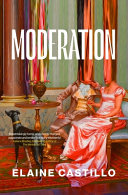
Girlie, a thirty-something Filipinx-American, works a day job at a social-media moderation centre, flagging and removing the very worst that makes it on to the internet. She's good at it, too - dispassionate, unflinching, maybe because she learned by necessity to cauterise all her emotions when she was still a kid - so it's no surprise to anyone when the social-media company for which she works offers her a big pay rise and an office to start moderating its new venture: virtual-reality theme parks, stunning simulations of civilizations long-since dead.
2025
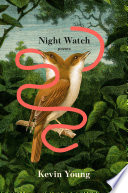
From the award-winning poet at the height of his career, a book of personal and American experiences, both beautiful and troubling, touching on the generative cycle of loss and renewal Following on his exquisite Stones, Kevin Young’s new collection, written over the span of sixteen years, shapes stories of loss and legacy, inspired in part by other lives. After starting in the bayous of his family's Louisiana, Young journeys to further states of mind in “All Souls,” evoking “The whale / who finds the shore / & our poor prayers.” Another central sequence, “The Two-Headed Nightingale,” is spoken by Millie-Christine McCoy, the famous conjoined African American “Carolina Twins.” Born into enslavement, stolen, and then displayed by P.
Read more
From the award-winning poet at the height of his career, a book of personal and American experiences, both beautiful and troubling, touching on the generative cycle of loss and renewal Following on his exquisite Stones, Kevin Young’s new collection, written over the span of sixteen years, shapes stories of loss and legacy, inspired in part by other lives. After starting in the bayous of his family's Louisiana, Young journeys to further states of mind in “All Souls,” evoking “The whale / who finds the shore / & our poor prayers.” Another central sequence, “The Two-Headed Nightingale,” is spoken by Millie-Christine McCoy, the famous conjoined African American “Carolina Twins.” Born into enslavement, stolen, and then displayed by P. T. Barnum and others, the twins later toured the world as free women, their alto and soprano voices harmonizing their own way. Young’s poem explores their evolving philosophical selfhood and pluralities: “As one we sang, /we spake— / She was the body / I the soul / Without one / Perishes the whole.” In “Darkling,” a cycle of poems inspired by Dante’s Divine Comedy, Young expands and embroiders the circles of Hell, drawing a cosmology of both loneliness and accompaniment, where “the dead don’t know / what to do / with themselves.” Young writes of grief and hope as familiar yet surprising states: “It’s like a language, / loss—,” he writes, “learnt only / by living—there—.” Evoking the history of poetry, from the darkling thrush to the darkling plain, Young is defiant and playful on the way through purgatory to a kind of paradise. When he goes, he warns, “don't dare sing Amazing Grace”—that “National / Anthem of Suffering.” Instead, he suggests, “When I Fly Away, / Don't dare hold no vigil . . . Just burn the whole / Town on down.” This collection will stand as one of Young’s best—his voice shaping sorrow with music, wisdom, heartache, and wit.
===
'One of the most important poets of his generation' Washington Post A richly evocative and moving collection about African American identity and history, this is an ode to home places and the dearly departed, and to what of them - of us - poetry can save. In bellowing declarations of suffering and whispered prayers of faith, Night Watch speaks to an inner history which is compelling and authentic and deeply American, rippling with timely and devastating truths about the insidious nature of the American nation. 'Keeping up with him is like trying to keep up with Bob Dylan or Prince in their primes' New York Times
Working and Homeless in America
2026
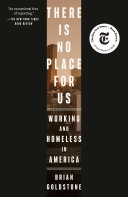
ONE OF THE NEW YORK TIMES AND THE ATLANTIC’S TEN BEST BOOKS OF THE YEAR • ONE OF BARACK OBAMA’S FAVORITE BOOKS OF THE YEAR • Through the “revelatory and gut-wrenching” (Associated Press) stories of five Atlanta families, this landmark work of journalism exposes a new and troubling trend—the dramatic rise of the working homeless in cities across America. “An exceptional feat of reporting, full of an immediacy that calls to mind Adrian Nicole LeBlanc’s Random Family and Matthew Desmond’s Evicted.”—The New York Times Book Review (Editors’ Choice) FINALIST FOR THE ANDREW CARNEGIE MEDAL • A BEST BOOK OF THE YEAR: NPR, The Washington Post, Atlanta Journal-Constitution, Elle, New America, BookPage, Shelf Awareness The working homeless.
Read more
ONE OF THE NEW YORK TIMES AND THE ATLANTIC’S TEN BEST BOOKS OF THE YEAR • ONE OF BARACK OBAMA’S FAVORITE BOOKS OF THE YEAR • Through the “revelatory and gut-wrenching” (Associated Press) stories of five Atlanta families, this landmark work of journalism exposes a new and troubling trend—the dramatic rise of the working homeless in cities across America. “An exceptional feat of reporting, full of an immediacy that calls to mind Adrian Nicole LeBlanc’s Random Family and Matthew Desmond’s Evicted.”—The New York Times Book Review (Editors’ Choice) FINALIST FOR THE ANDREW CARNEGIE MEDAL • A BEST BOOK OF THE YEAR: NPR, The Washington Post, Atlanta Journal-Constitution, Elle, New America, BookPage, Shelf Awareness The working homeless. In a country where hard work and determination are supposed to lead to success, there is something scandalous about this phrase. But skyrocketing rents, low wages, and a lack of tenant rights have produced a startling phenomenon: People with full-time jobs cannot keep a roof over their head, especially in America’s booming cities, where rapid growth is leading to catastrophic displacement. These families are being forced into homelessness not by a failing economy but a thriving one. In this gripping and deeply reported book, Brian Goldstone plunges readers into the lives of five Atlanta families struggling to remain housed in a gentrifying, increasingly unequal city. Maurice and Natalia make a fresh start in the country’s “Black Mecca” after being priced out of DC. Kara dreams of starting her own cleaning business while mopping floors at a public hospital. Britt scores a coveted housing voucher. Michelle is in school to become a social worker. Celeste toils at her warehouse job while undergoing treatment for ovarian cancer. Each of them aspires to provide a decent life for their children—and each of them, one by one, joins the ranks of the nation’s working homeless. Through intimate, novelistic portraits, Goldstone reveals the human cost of this crisis, following parents and their kids as they go to sleep in cars, or in squalid extended-stay hotel rooms, and head out to their jobs and schools the next morning. These are the nation’s hidden homeless—omitted from official statistics, and proof that overflowing shelters and street encampments are only the most visible manifestation of a far more pervasive problem. By turns heartbreaking and urgent, There Is No Place for Us illuminates the true magnitude, causes, and consequences of the new American homelessness—and shows that it won’t be solved until housing is treated as a fundamental human right.
2025
NEW YORK TIMES BESTSELLER FINALIST FOR THE ANDREW CARNEGIE MEDAL FOR EXCELLENCE IN FICTION LONGLISTED FOR THE NATIONAL BOOK AWARD “[Han Kang’s] intense poetic prose . .
Read more
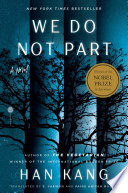
NEW YORK TIMES BESTSELLER FINALIST FOR THE ANDREW CARNEGIE MEDAL FOR EXCELLENCE IN FICTION LONGLISTED FOR THE NATIONAL BOOK AWARD “[Han Kang’s] intense poetic prose . . . confronts historical traumas and exposes the fragility of human life.”—The Nobel Committee for Literature, in the citation for the Nobel Prize Han Kang’s most revelatory book since The Vegetarian—and her first published in English since winning the Nobel Prize—We Do Not Part tells the story of a friendship between two women while powerfully reckoning with a hidden chapter in Korean history. A BEST BOOK OF THE YEAR: TIME, KIRKUS REVIEWS, BOOK RIOT, CHICAGO PUBLIC LIBRARY • ONE OF BOOKPAGE’S TEN BEST BOOKS OF THE YEAR “[A] masterpiece.”—The Boston Globe “A haunting exploration of friendship amid historical trauma.”—Time “A novel that is both disquieting and entrancing.”—The Economist One winter morning in Seoul, Kyungha receives an urgent message from her friend Inseon to visit her at the hospital. Inseon has injured herself in an accident, and she begs Kyungha to return to Jeju Island, where she lives, to save her beloved pet—a white bird called Ama. A snowstorm hits the island when Kyungha arrives. She must reach Inseon’s house at all costs, but the icy wind and squalls slow her down as night begins to fall. She wonders if she will arrive in time to save the animal—or even survive the terrible cold that envelops her with every step. Lost in a world of snow, she doesn’t yet suspect the vertiginous plunge into darkness that awaits her at her friend’s house. Blurring the boundaries between dream and reality, We Do Not Part powerfully brings to light the lost voices of the past to save them from oblivion. Both a hymn to an enduring friendship and an argument for remembering, it is the story of profound love in the face of unspeakable pain—and a celebration of life, however fragile it might be.
2025
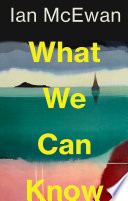
LONGLISTED FOR THE 2026 ANDREW CARNEGIE MEDAL FOR EXCELLENCE IN FICTION • Named a Best Book of 2025 by The Globe and Mail • New York Times • The New Yorker • The Washington Post • NPR • Barnes & Noble • Kirkus • Audible From the Booker prize–winning, bestselling author of Atonement and Saturday, a genre-bending new novel full of secrets and surprises; an immersive exploration, across time and history, of what can ever be truly known. 2014: At a dinner for close friends and colleagues, renowned poet Francis Blundy honors his wife’s birthday by reading aloud a new poem dedicated to her, ‘A Corona for Vivien’.
Read more
LONGLISTED FOR THE 2026 ANDREW CARNEGIE MEDAL FOR EXCELLENCE IN FICTION • Named a Best Book of 2025 by The Globe and Mail • New York Times • The New Yorker • The Washington Post • NPR • Barnes & Noble • Kirkus • Audible From the Booker prize–winning, bestselling author of Atonement and Saturday, a genre-bending new novel full of secrets and surprises; an immersive exploration, across time and history, of what can ever be truly known. 2014: At a dinner for close friends and colleagues, renowned poet Francis Blundy honors his wife’s birthday by reading aloud a new poem dedicated to her, ‘A Corona for Vivien’. Much wine is drunk as the guests listen, and a delicious meal consumed. Little does anyone gathered around the candlelit table know that for generations to come people will speculate about the message of this poem, a copy of which has never been found, and which remains an enduring mystery. 2119: Just over one hundred years in the future, much of the western world has been submerged by rising seas following a catastrophic nuclear accident. Those who survive are haunted by the richness of the world that has been lost. In the water-logged south of what used to be England, Thomas Metcalfe, a lonely scholar and researcher, longs for the early twenty-first century as he chases the ghost of one poem, ‘A Corona for Vivian’. How wild and full of risk their lives were, thinks Thomas, as he pores over the archives of that distant era, captivated by the freedoms and possibilities of human life at its zenith. When he stumbles across a clue that may lead to the elusive poem’s discovery, a story is revealed of entangled loves and a brutal crime that destroy his assumptions about people he thought he knew intimately well. What We Can Know is a masterpiece, a fictional tour de force, a love story about both people and the words they leave behind, a literary detective story which reclaims the present from our sense of looming catastrophe and imagines a future world where all is not quite lost.
===
'One of the finest writers alive' Sunday Times 2014- A great poem is read aloud and never heard again. For generations, people speculate about its message, but no copy has yet been found. 2119- The lowlands of the UK have been submerged by rising seas. Those who survive are haunted by the richness of the world that has been lost. Tom Metcalfe, a scholar at the University of the South Downs, part of Britain's remaining archipelagos, pores over the archives of the early twenty-first century, captivated by the freedoms and possibilities of human life at its zenith. When he stumbles across a clue that may lead to the great lost poem, revelations of entangled love and a brutal crime emerge, destroying his assumptions about a story he thought he knew intimately. A quest, a literary thriller and a love story, What We Can Know is a masterpiece that reclaims the present from our sense of looming catastrophe, and imagines a future world where all is not quite lost. 'A true master' Daily Telegraph 'McEwan is one of the most accomplished craftsmen of plot and prose' New York Times