The 10 Best Books of 2025
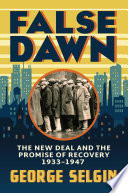
The New Deal and the Promise of Recovery, 1933â1947
2025
A definitive history of the United States’ recovery from the Great Depression—and the New Deal's true part in it. FDR’s New Deal has long enjoyed a special place in American history and policy—both because it redefined the government’s fundamental responsibilities and because Roosevelt’s “bold experimentation” represented a type of policymaking many would like to see repeated.
Read more
A definitive history of the United States’ recovery from the Great Depression—and the New Deal's true part in it. FDR’s New Deal has long enjoyed a special place in American history and policy—both because it redefined the government’s fundamental responsibilities and because Roosevelt’s “bold experimentation” represented a type of policymaking many would like to see repeated. But “the thing about bold experiments,” economist George Selgin reminds us, “is that they often fail.” In False Dawn Selgin draws on both contemporary sources and numerous studies by economic historians to show that, although steps taken during the Roosevelt administration’s first days raised hopes of a speedy recovery from the Great Depression, instead of fulfilling those hopes, subsequent New Deal policies proved so counterproductive that over seventeen percent of American workers—more than the peak unemployment rate during the COVID-19 crisis—were still either unemployed or on work relief six years later. By distinguishing the New Deal’s successes from its failures, and explaining how the U.S. finally managed to lay the specter of mass unemployment to rest, Selgin draws salient lessons for dealing with future recessions.
How Our Politics Failed Us
2025
"An examination of the ways in which Covid policies, and the scientific debate which surrounded it, were politicized. In response to the Covid pandemic, public and private resources were expended on a vast scale-truly the equivalent of wartime.
Read more
"An examination of the ways in which Covid policies, and the scientific debate which surrounded it, were politicized. In response to the Covid pandemic, public and private resources were expended on a vast scale-truly the equivalent of wartime. 2020 saw the greatest mobilization of emergency powers in human history: people around the world were confined to their homes, not allowed to attend religious services, see family living outside their households, or even take extended solitary walks outdoors. A few weeks after the first society-wide lockdowns in China and Italy, 3.9 billion people were living under some form of quarantine-half the world's population. In the aftermath of the pandemic, political theorist Stephen Macedo and political scientist Frances Lee argue in this book that there is an urgent need to ask hard questions about the effectiveness and impact of these policies, especially as new studies about them emerge. Was it worth it? Did we do the right thing? Did we debate and deliberate adequately? Did scientists, public health officials, and others sometimes mislead the public or "economize" on the truth in presenting "the science"? Insofar as complexities were simplified, was this just effective public health messaging? If truths were trimmed, could this be justified as "noble lies" in the public interest? Can what seemed expedient in the short run be justified in the long run? And what should we learn about our successes and failures for the next pandemic or, for that matter, any other policy crisis in which it is necessary to rely upon scientific expertise? The book examines how public deliberation fared under Covid, providing a retrospective assessment of policy responses to the pandemic. Macedo and Lee evaluate the performance under pressure of the central truth-seeking institutions of liberal democracy: science, journalism, and universities broadly"--
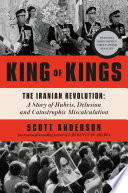
The Iranian RevolutionâA Story of Hubris, Delusion and Catastrophic Miscalculation
2025
Finalist for the 2025 National Book Critics Circle Award for Nonfiction • A New York Times Notable Book of the Year • Named a Best Book of 2025 by Wall Street Journal, The Atlantic, and Globe and Mail From the author of the acclaimed international bestseller Lawrence in Arabia, a stunningly revelatory narrative history of one of the most momentous events in modern times and the dawn of the age of religious nationalism. On November 16th, 1977, at a state dinner in the White House, President Jimmy Carter toasted Shah Mohammad Reza Pahlavi, King of Kings, Light of the Aryans, Shadow of God on Earth, praising his “enlightened leadership” and extolling Iran as “a stabilizing influence in that part of the world.” Iran had the world’s fifth largest army and was awash in billions of dollars in oil revenues.
Read more
Finalist for the 2025 National Book Critics Circle Award for Nonfiction • A New York Times Notable Book of the Year • Named a Best Book of 2025 by Wall Street Journal, The Atlantic, and Globe and Mail From the author of the acclaimed international bestseller Lawrence in Arabia, a stunningly revelatory narrative history of one of the most momentous events in modern times and the dawn of the age of religious nationalism. On November 16th, 1977, at a state dinner in the White House, President Jimmy Carter toasted Shah Mohammad Reza Pahlavi, King of Kings, Light of the Aryans, Shadow of God on Earth, praising his “enlightened leadership” and extolling Iran as “a stabilizing influence in that part of the world.” Iran had the world’s fifth largest army and was awash in billions of dollars in oil revenues. Construction cranes dotted the skyline of its booming capital, Tehran. The regime’s feared secret police force SAVAK had crushed communist opposition, and the Shah had bought off the conservative Muslim clergy inside the country. He seemed invulnerable, and invaluable to the United States as an ally in the Cold War. Fourteen months later the Shah fled Iran into exile, forced from the throne by a volcanic religious revolution led by a fiery cleric named Ayatollah Khomeini. How could the United States (and other Western allies), which had one of the largest CIA stations in the world and thousands of military personnel in Iran, have been so blind? The spellbinding story Scott Anderson weaves is one of a dictator oblivious to the disdain of his subjects and a superpower blundering into disaster. The Shah emerges as a fascinating, Shakespearean character – a wannabe Richard III unaware of the depth of dissent to his rule, indecisive like Hamlet when action was called for, and at the end Lear-like as he raged against his fate. The Americans made terrible decisions at almost every juncture, from a secret pact designed by Kissinger and Nixon, to dismissing reports from the one diplomat who saw how hated the Shah was by the Iranian people (unlike almost all his colleagues, he spoke Farsi), to Jimmy Carter allowing the Shah to come to America for medical treatment, which set off the hostage crisis which forever damaged American influence in the world. Scott Anderson tells this astonishing tale with the narrative brio, mordant wit, and keen analysis that made his bestselling Lawrence in Arabia one of the key texts in understanding the modern Middle East. Based on voluminous research and dozens of interviews, King of Kings is driven by penetrating portraits of the people involved – the Iranian-American doctor who convinced American officials Khomeini was a moderate; the American teacher who learned of Khomeini’s influence long before the cleric was even mentioned in official reports; the Shah’s court minister who kept a detailed diary of all their interactions; the Shah’s wife Farah who still mourns her lost kingdom; the hypocritical and misguided Jimmy Carter; and the implacable Khomeini who outmaneuvered his foes at every turn. The Iranian Revolution, Anderson convincingly argues, was as world-shattering an event as the French and Russian revolutions. In the Middle East, in India, in Southeast Asia, in Europe, and the United States, the hatred of economically-marginalized, religiously-fervent masses for a wealthy secular elite has led to violence and upheaval – and Iran was the template. King of Kings is a bravura work of history, and a warning.
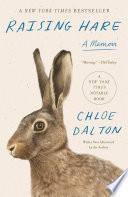
A Memoir
2024
NEW YORK TIMES NOTABLE BOOK • NEW YORK TIMES BESTSELLER • FINALIST FOR THE 2025 WOMEN'S PRIZE • A fascinating meditation on freedom, trust, loss, and our relationship with the natural world, explored through the story of one woman’s unlikely friendship with a wild hare. A BEST BOOK OF THE YEAR: The Washington Post, The Wall Street Journal, NPR, TIME, The Boston Globe, The Economist, Scientific American, Slate “Moving.
Read more
NEW YORK TIMES NOTABLE BOOK • NEW YORK TIMES BESTSELLER • FINALIST FOR THE 2025 WOMEN'S PRIZE • A fascinating meditation on freedom, trust, loss, and our relationship with the natural world, explored through the story of one woman’s unlikely friendship with a wild hare. A BEST BOOK OF THE YEAR: The Washington Post, The Wall Street Journal, NPR, TIME, The Boston Globe, The Economist, Scientific American, Slate “Moving. . . . Impart[s] valuable lessons about slowing down and the beauty in the unexpected.”—USA Today “A perfect testimony to the transformative power of love.”—Margaret Renkl, author of The Comfort of Crows Imagine you could hold a baby hare and bottle-feed it. Imagine that it lived under your roof and bounded around your bedroom at night, drumming on the duvet cover when it wanted your attention. Imagine that, more than two years later, it still ran in from the fields when you called it and slept in your house for hours on end. For political advisor and speechwriter Chloe Dalton, who spent lockdown deep in the English countryside, far away from her usual busy London life, this became her unexpected reality. In February 2021, Dalton stumbles upon a newborn hare—a leveret—that had been chased by a dog. Fearing for its life, she brings it home, only to discover how difficult it is to rear a wild hare, most of whom perish in captivity from either shock or starvation. Through trial and error, she learns to feed and care for the leveret with every intention of returning it to the wilderness. Instead, it becomes her constant companion, wandering the fields and woods at night and returning to Dalton’s house by day. Though Dalton feared that the hare would be preyed upon by foxes, weasels, feral cats, raptors, or even people, she never tried to restrict it to the house. Each time the hare leaves, Chloe knows she may never see it again. Yet she also understands that to confine it would be its own kind of death. Raising Hare chronicles their journey together while also taking a deep dive into the lives and nature of hares, and the way they have been viewed historically in art, literature, and folklore. We witness firsthand the joy at this extraordinary relationship between human and animal, which serves as a reminder that the best things, and most beautiful experiences, arise when we least expect them.
===
THE INSTANT SUNDAY TIMES AND NEW YORK TIMES BESTSELLER WINNER OF THE WAINWRIGHT PRIZE FOR NATURE WRITING WINNER OF BOOKS ARE MY BAG READERS AWARD SHORTLISTED FOR THE WOMEN'S PRIZE FOR NON-FICTION, HATCHARDS AND BIOGRAPHERS' CLUB FIRST BIOGRAPHY PRIZE A BOOK OF THE YEAR FOR THE HAY FESTIVAL, SUNDAY TIMES, THE TIMES, FINANCIAL TIMES, SPECTATOR, ECONOMIST AND iNEWS 'A beautiful book' - ANGELINA JOLIE 'I will be recommending this to everyone' - MATT HAIG 'Quietly profound, beautifully written, Hare is now lodged in my heart' - TRACY CHEVALIER __ Imagine you could hold a baby hare and bottle-feed it. Imagine that it lived under your roof and lolloped around your bedroom at night, drumming on the duvet cover when it wanted your attention. Imagine that, over two years later, it still ran in from the fields when you called it and snoozed in your house for hours on end. This happened to me. When lockdown led busy professional Chloe to leave the city and return to the countryside of her childhood, she never expected to find herself custodian of a newly born hare. Yet when she finds the creature, endangered, alone and no bigger than her palm, she is compelled to give it a chance at survival. Raising Hare chronicles their journey together and the challenges of caring for the leveret and preparing for its return to the wild. We witness an extraordinary relationship between human and animal, rekindling our sense of awe towards nature and wildlife. This improbable bond of trust serves to remind us that the most remarkable experiences, inspiring the most hope, often arise when we least expect them.
2025
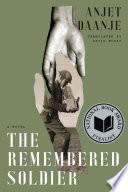
FINALIST for the 2025 NATIONAL BOOK AWARD for TRANSLATED LITERATURE "Superb . .
Read more
FINALIST for the 2025 NATIONAL BOOK AWARD for TRANSLATED LITERATURE "Superb . . . In its dangerous admixture of truth and reassembled reality, 'The Remembered Soldier' develops an unforgettable picture of marital love."—Sam Sacks in The Wall Street Journal An extraordinary love story and a captivating novel about the power of memory and imagination: Flanders 1922. After serving as a soldier in the Great War, Noon Merckem has lost his memory and lives in a psychiatric asylum. Countless women, responding to a newspaper ad, visit him there in the hope of finding their spouse who vanished in battle. One day a woman, Julienne, appears and recognizes Noon as her husband, the photographer Amand Coppens, and takes him home against medical advice. But their miraculous reunion doesn’t turn out the way that Julienne wants her envious friends to believe. Only gradually do the two grow close, and Amand’s biography is pieced together on the basis of Julienne’s stories about him. But how can he be certain that she’s telling the truth? In The Remembered Soldier, Anjet Daanje immerses us in the psyche of a war-traumatized man who has lost his identity. When Amand comes to doubt Julienne’s word, the reader is caught up in a riveting spiral of confusion that only the greatest of literature can achieve. Reading group guide to The Remembered Soldier is available for download free of charge at newvesselpress.com.
2025
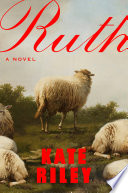
“Irresistibly smart and funny.” —Jenny Offill, author of Weather and Dept. of Speculation “The serenely weird testament of an unintentional heroine in an intentional community, and an act of novelistic grace that deserves not only cult status but its own religion.” —Joshua Cohen, author of the Pulitzer Prize–winning The Netanyahus In this mesmerizing and profound novel, the arc of a woman's life in a devout, insular community challenges our deepest assumptions about what infuses life with meaning.
Read more
“Irresistibly smart and funny.” —Jenny Offill, author of Weather and Dept. of Speculation “The serenely weird testament of an unintentional heroine in an intentional community, and an act of novelistic grace that deserves not only cult status but its own religion.” —Joshua Cohen, author of the Pulitzer Prize–winning The Netanyahus In this mesmerizing and profound novel, the arc of a woman's life in a devout, insular community challenges our deepest assumptions about what infuses life with meaning. Ruth is raised in a snow globe of Christian communism, a world without private property, television, or tolerance for idle questions. Every morning she braids her hair and wears the same costume, sings the same breakfast song in a family room identical to every other family room in the community; every one of these moments is meant to be a prayer, but to Ruth they remain puzzles. Her life is seen in glimpses through childhood, marriage, and motherhood, as she tries to manage her own perilous curiosity in a community built on holy mystery. Is she happy? Might this in fact be happiness? Ruth immerses us in an experience that challenges our most fervent beliefs.
The Life of Robert Louis Stevenson
2025
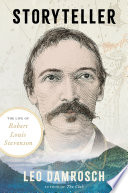
From a critically acclaimed biographer, an engrossing narrative of Robert Louis Stevenson’s life, a story as romantic and adventurous as his fiction “This magnificent biography of Robert Louis Stevenson reveals much about a writer that we think we knew. .
Read more
From a critically acclaimed biographer, an engrossing narrative of Robert Louis Stevenson’s life, a story as romantic and adventurous as his fiction “This magnificent biography of Robert Louis Stevenson reveals much about a writer that we think we knew. . . . Dazzling.”—Kirkus Reviews (starred review) Robert Louis Stevenson (1850–1894) is famed for Treasure Island, Kidnapped, and Strange Case of Dr. Jekyll and Mr. Hyde, but he published many other novels and stories before his death at forty-four. Despite lifelong ill health, he had immense vitality; Mark Twain said his eyes burned with “smoldering rich fire.” Born in Edinburgh to a family of lighthouse engineers, Stevenson set many stories in Scotland but sought travel and adventure in a life as romantic as his novels. “I loved a ship,” he wrote, “as a man loves burgundy or daybreak.” The adventures were shared with his free-spirited American wife, Fanny, with whom he moved to the South Pacific. Samoan friends named Stevenson “Storyteller.” Reading, he said, “should be absorbing and voluptuous; we should gloat over a book, be rapt clean out of ourselves.” His own books have been translated into dozens of languages. Jorge Luis Borges called his stories “one of the forms of happiness,” and other modernist masters as various as Proust, Nabokov, and Calvino have paid tribute to his greatness as a literary artist. In Storyteller, Leo Damrosch brings to life an unforgettable personality, illuminated by many who knew Stevenson well and drawing from thousands of the writer’s letters in his many voices and moods—playful, imaginative, at times tragic.
Triumph, Tragedy, and the Shaping of the American West
2025
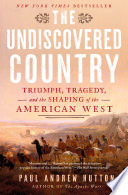
New York Times Bestseller From the author of The Apache Wars, the true story of the American West, revealing how American ambition clashed with the realities of violence and exploitation The epic of the American West became a tale of progress, redemption, and glorious conquest that came to shape the identity of a new nation. Over time a darker story emerged—one of ghastly violence and environmental spoliation that stained this identity.
Read more
New York Times Bestseller From the author of The Apache Wars, the true story of the American West, revealing how American ambition clashed with the realities of violence and exploitation The epic of the American West became a tale of progress, redemption, and glorious conquest that came to shape the identity of a new nation. Over time a darker story emerged—one of ghastly violence and environmental spoliation that stained this identity. The Undiscovered Country strips away the layers of myth to reveal the true story of this first epoch of American history. From the forests of Pennsylvania and Kentucky to the snow-crested California Sierras, and from the harsh deserts of the Southwest to the buffalo range of the Great Plains, Paul Andrew Hutton masterfully chronicles a story that defined America and its people. From Braddock’s 1755 defeat to the 1890 Wounded Knee massacre, he unfolds a grand narrative steeped in romantic impulses and tragic consequences. Hutton uses seven main protagonists—Daniel Boone, Red Eagle, Davy Crockett, Mangas Coloradas, Kit Carson, Sitting Bull, and William “Buffalo Bill” Cody—as the biographical threads by which to weave a tapestry across seven generations, revealing a story of heroic conquest and dark tragedy, of sacrifice and greed, and of man-made wonders and environmental ruin. The American frontier movement has proven eternally fascinating around the world—the subject of countless books, paintings, poems, television shows, and films. The Undiscovered Country reveals the truth behind America’s great creation myth.
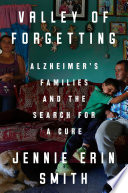
Alzheimer's Families and the Search for a Cure
2025
The riveting account of a community from the remote mountains of Colombia whose rare and fatal genetic mutation is unlocking the secrets of Alzheimer’s disease “Powerful. .
Read more
The riveting account of a community from the remote mountains of Colombia whose rare and fatal genetic mutation is unlocking the secrets of Alzheimer’s disease “Powerful. . . . a poignant depiction of a community in crisis.” —Publishers Weekly In the 1980s, a neurologist named Francisco Lopera traveled on horseback into the mountains seeking families with symptoms of dementia. For centuries, residents of certain villages near Medellín had suffered memory loss as they reached middle age, going on to die in their fifties. Lopera discovered that a unique genetic mutation was causing their rare hereditary form of early onset Alzheimer’s disease. Over the next forty years of working with the “paisa mutation” kindred, he went on to build a world-class research program in a region beset by violence and poverty. In Valley of Forgetting, Jennie Erin Smith brings readers into the clinic, the laboratories, and the Medellín trial center where Lopera’s patients receive an experimental drug to see if Alzheimer’s can be averted. She chronicles the lives of people who care for sick parents, spouses, and siblings, all while struggling to keep their own dreams afloat. These Colombian families have donated hundreds of their loved ones’ brains to science and subjected themselves to invasive testing to help uncover how Alzheimer’s develops and whether it can be stopped. Findings from this unprecedented effort could hold the key to understanding and treating the disease, though it is unclear what, if anything, the families will receive in return. Smith’s immersive storytelling brings this complex drama to life, inviting readers on a scientific journey that is as deeply moving as it is engrossing.
2025
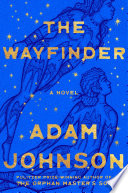
A historical epic about a girl from a remote Tongan island who becomes her people's queen. Talking corpses, poetic parrots, and a fan that wafts the breath of life—this is the world young Kōrero finds herself thrust into when a mysterious visitor lands on her island, a place so remote its inhabitants have forgotten the word for stranger.
Read more
A historical epic about a girl from a remote Tongan island who becomes her people's queen. Talking corpses, poetic parrots, and a fan that wafts the breath of life—this is the world young Kōrero finds herself thrust into when a mysterious visitor lands on her island, a place so remote its inhabitants have forgotten the word for stranger. Her people are desperate and on the brink of starvation, and the wayward stranger offers them an impossible choice: they can remain in the only home they’ve ever known and await the uncertainty to come, or Kōrero can join him and venture into unfamiliar waters, guided by only the night sky and his assurance of a bountiful future in the Kingdom of Tonga. What Kōrero and her people don’t know is that the promised refuge is no utopia—instead, Tonga is an empire at war and on the verge of collapse, a place where brains are regularly liberated from skulls and souls get trapped in coconuts with some frequency. The perils of Tonga are compounded by a royal feud: loyalties are shifting, graves are being opened, and everyone lives in fear of a jellyfish tattoo. Here, survival can rest on a perfectly performed dance or the acceptance of a cup of kava. Together, the stranger and Kōrero embark upon an epic voyage—one that will deliver them either to salvation or to the depths of the Pacific. Evoking the grandeur of Wolf Hall and the splendor of Shōgun, the Pulitzer Prize–winning novelist Adam Johnson conjures oral history, restores the natural world, and locates what’s best in humanity. Toweringly ambitious and breathtakingly immersive, The Wayfinder is an instant, timeless classic.