50 Notable Works of Nonfiction from 2025
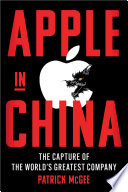
The Capture of the World's Greatest Company
2025
*** THE NEW YORK TIMES BESTSELLER *** ‘Absolutely riveting’ Peter Frankopan, author of The Silk Roads ‘Disturbing and enlightening’ Chris Miller, author of Chip War ‘Hugely important’ Rana Foroohar, author of Makers and Takers ‘A once-in-a-generation read’ Robert D. Kaplan, author of Waste Land As Trump wages a tariff war with China, seeking to boost domestic electronics manufacturing, this book offers an unparalleled insight into why his strategy is embarrassingly naïve.
Read more
*** THE NEW YORK TIMES BESTSELLER *** ‘Absolutely riveting’ Peter Frankopan, author of The Silk Roads ‘Disturbing and enlightening’ Chris Miller, author of Chip War ‘Hugely important’ Rana Foroohar, author of Makers and Takers ‘A once-in-a-generation read’ Robert D. Kaplan, author of Waste Land As Trump wages a tariff war with China, seeking to boost domestic electronics manufacturing, this book offers an unparalleled insight into why his strategy is embarrassingly naïve. Apple isn’t just a brand; it’s the world’s most valuable company and creator of the 21st century’s defining product. The iPhone has revolutionized the way we live, work and connect. But Apple is now a victim of its own success, caught in the middle of a new Cold War between two superpowers. On the brink of bankruptcy in 1996, Apple adopted an outsourcing strategy. By 2003 it was lured to China by the promise of affordable, ubiquitous labour. As the iPod and iPhone transformed Apple’s fortunes, their sophisticated production played a seminal role in financing, training, supervising and supplying Chinese manufacturers – skills Beijing is now weaponizing against the West. Investigative journalist Patrick McGee draws on 200 interviews with former Apple executives and engineers to reveal how Cupertino’s choice to anchor its supply chain in China has increasingly made it vulnerable to the regime’s whims. Both an insider’s historical account and a cautionary tale, Apple in China is the first history of Apple to go beyond the biographies of its top executives and set the iPhone’s global domination within an increasingly fraught geopolitical context.
===
"[A] look at how Apple helped build China's dominance in electronics assembly and manufacturing only to find itself trapped in a relationship with an authoritarian state making ever-increasing demands" --
===
Als Apple seine Produktion nach China verlagerte, um von den billigen Arbeitskräften zu profitieren, saß das Unternehmen am längeren Hebel und diktierte die Bedingungen. Es schickte Tausende von Ingenieuren über den Pazifik, schulte Millionen Arbeiter und gab viele Milliarden Dollar aus, um die fortschrittlichste Lieferkette der Welt aufzubauen. Womit Apple nicht gerechnet hatte: Seine massiven Investitionen verliehen Peking ungewollt eine Macht, die als Waffe eingesetzt werden kann. Ein faszinierender Einblick in die Art und Weise, wie Apple dazu beigetragen hat, Chinas Dominanz in der Elektronikfertigung aufzubauen ... nur um sich dann in einer Beziehung mit einem autoritären Staat wiederzufinden, der immer mehr Forderungen stellt.
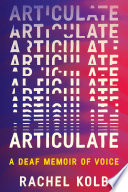
A Deaf Memoir of Voice
2025
A deaf writer’s exploration of language, communication, and what it means to be articulate—and her journey to reclaim her voice Rachel Kolb was born profoundly deaf the same year that the Americans with Disabilities Act was passed, and she grew up as part of the first generation of deaf people with legal rights to accessibility services. Still, from a young age, she contorted herself to expectations set by a world that prioritizes hearing people.
Read more
A deaf writer’s exploration of language, communication, and what it means to be articulate—and her journey to reclaim her voice Rachel Kolb was born profoundly deaf the same year that the Americans with Disabilities Act was passed, and she grew up as part of the first generation of deaf people with legal rights to accessibility services. Still, from a young age, she contorted herself to expectations set by a world that prioritizes hearing people. So even while she found clarity and meaning in American Sign Language (ASL) and written literature, she learned to speak through speech therapy and to piece together missing sounds through lipreading and an eventual cochlear implant. Now, in Articulate, Kolb blends personal narrative with commentary to explore the different layers of deafness, language, and voice. She tells the story of how, over time, she came to realize that clear or articulate self-expression isn’t just a static pinnacle to reach, a set of words to pronounce correctly, but rather a living and breathing process that happens between individual human beings. In chronicling her own voice and the many ways she’s come to understand it, Kolb illuminates the stakes and complexities of finding mutual and reciprocal forms of communication. Part memoir, part cultural exploration, Articulate details a life lived among words in varied sensory forms and considers why and how those words matter. Told through rich storytelling, analysis, and humor, this is a linguistic coming-of-age in both Deaf and hearing worlds, challenging us to consider how language expresses our humanity—and offering more ways we might exist together.
A Love Story
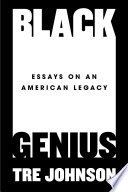
Essays on an American Legacy
2025
A powerful read redefining the meaning of genius while illuminating the ways in which Black Americans have found various ways to thrive despite insurmountable obstacles. Black genius sits at the heart of the American story.
Read more
A powerful read redefining the meaning of genius while illuminating the ways in which Black Americans have found various ways to thrive despite insurmountable obstacles. Black genius sits at the heart of the American story. In his probing essay collection, Black Genius, cultural critic Tre Johnson examines how Black American culture has, against all odds, been the lifeblood of American ingenuity. At times using his own personal and professional stories, Johnson surveys Black cities, communities, and schools with an ever-watchful eye of what transpires around Black mobility. With a passion for complex storytelling and pulling from both pop culture and American history, Johnson weaves past and present making his case for the genius of innovation. As he examined his findings, Johnson couldn’t help but wonder about the brilliance of the every day. Specifically, the creativity of the 90’s graffiti-style airbrush tee, his aunties packed weekend bus trips to Atlantic city, and the razor-tongued, socially-sharp, profanity-laced monologues of comedian Dick Gregory. Again and again, he asks us to ponder—are these not obvious examples of genius? Chatty yet profound, Black Genius subverts expectations from the very first page with a blend of reportage, historical data, and pop culture as Johnson dives into his own family history seeking big answers to complex questions. Johnson’s signature wit and curiosity turns history into an amusing sequence of events.
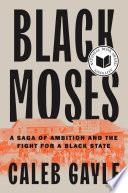
A Saga of Ambition and the Fight for a Black State
2025
Longlisted for the National Book Award for Nonfiction A New York Times Editors' Choice Pick “Powerful… [and] fascinating.” —The Washington Post The remarkable story of Edward McCabe, a Black man who tried to establish a Black state within the United States. In this paradigm-shattering work of American history, Caleb Gayle recounts the extraordinary tale of Edward McCabe, a Black man who championed the audacious idea to create a state within the Union governed by and for Black people — and the racism, politics, and greed that thwarted him.
Read more
Longlisted for the National Book Award for Nonfiction A New York Times Editors' Choice Pick “Powerful… [and] fascinating.” —The Washington Post The remarkable story of Edward McCabe, a Black man who tried to establish a Black state within the United States. In this paradigm-shattering work of American history, Caleb Gayle recounts the extraordinary tale of Edward McCabe, a Black man who championed the audacious idea to create a state within the Union governed by and for Black people — and the racism, politics, and greed that thwarted him. As the sweeping changes and brief glimpses of hope brought by the Civil War and Reconstruction began to wither, anger at the opportunities available to newly freed Black people were on the rise. As a result, both Blacks and whites searched for new places to settle. That was when Edward McCabe, a Black businessman and a rising political star in the American West, set in motion his plans to found a state within the Union for Black people to live in and govern. His chosen site: Oklahoma, a place that the U.S. government had deeded to Indigenous people in the 1830s when it forced thousands of them to leave their homes under Indian Removal, which became known as the Trail of Tears. McCabe lobbied politicians in Washington, D.C., Kansas, and elsewhere as he exhorted Black people to move to Oklahoma to achieve their dreams of self-determination and land ownership. His rising profile as a leader and spokesman for Black people as well as his willingness to confront white politicians led him to become known as Black Moses. And like his biblical counterpart, McCabe nearly made it to the promised land but was ultimately foiled by politics, business interests, and the growing ambitions of white settlers who also wanted the land. In Black Moses, Gayle brings to vivid life the world of Edward McCabe: the Black people who believed in his dream of a Black state, the white politicians who didn't, and the larger challenges of confronting the racism and exclusion that bedeviled Black people's attempts to carve a place in America for themselves. Gayle draws from extraordinary research and reporting to reveal an America that almost was.
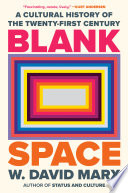
A Cultural History of the Twenty-First Century
2025
An NPR Most Anticipated Book of Fall 2025 A revealing exploration of a quarter century of cultural stagnation, examining the commercial and technological forces that have come to dominate contemporary culture—from music and fashion to art, film, TV, and beyond Over the past twenty-five years, pop culture has suffered from a perplexing lack of reinvention. We’ve entered a cultural “blank space”—an era when reboots, rehashes, and fads flourish, while bold artistic experimentation struggles to gain recognition.
Read more
An NPR Most Anticipated Book of Fall 2025 A revealing exploration of a quarter century of cultural stagnation, examining the commercial and technological forces that have come to dominate contemporary culture—from music and fashion to art, film, TV, and beyond Over the past twenty-five years, pop culture has suffered from a perplexing lack of reinvention. We’ve entered a cultural “blank space”—an era when reboots, rehashes, and fads flourish, while bold artistic experimentation struggles to gain recognition. Why is risk no longer rewarded, and how did playing it safe become the formula for success? Acclaimed cultural historian W. David Marx sets out to uncover the answers. In this ambitious cultural history, Marx guides us through the blur of the twenty-first century so far, from the Obama era to the rise of K-pop, from Paris Hilton to the Marvel cinematic universe, from Beyoncé and Taylor Swift to . . . Beyoncé and Taylor Swift, whose enduring influence highlights both their adaptability and the broader shifts in pop culture. Combining sociological, economic, and political insights with a deep dive into art, street culture, fashion, and technology, Blank Space dissects the rise of profit-driven, formulaic trends and the shifting cultural norms that often prioritize going viral over innovation. He reveals how backlash against indie snobbery and nineties counterculture gave rise to a “counter-counterculture”—one marked by antiliberal sentiment, the celebration of business heroes, and the increasing influence of industry plants and the elite class. In a world of crypto bros, nepo babies, and AI-driven art, Marx offers readers a much-needed dose of clarity and context. Vibrantly narrated and sharply argued, Blank Space is an essential guide for anyone looking to understand the chaos of the twenty-first century, the trends, tastemakers, and icons who shaped it, and how we might push our culture forward over the next quarter century—through renewed emphasis on creativity, community, and the values that transcend mere profit.
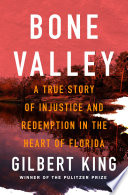
A True Story of Injustice and Redemption in the Heart of Florida
2025
From Pulitzer Prize-winning author Gilbert King comes a chilling exploration of one of America’s most haunting wrongful conviction cases. Based on the hit podcast, Bone Valley dives into the dark heart of rural Florida, where a young man’s life was upended by a tragic miscarriage of justice.
Read more
From Pulitzer Prize-winning author Gilbert King comes a chilling exploration of one of America’s most haunting wrongful conviction cases. Based on the hit podcast, Bone Valley dives into the dark heart of rural Florida, where a young man’s life was upended by a tragic miscarriage of justice. “Captivating, enraging, and all too true.” —Bob Kolker, New York Times bestselling author of Hidden Valley Road “Bone Valley is a work of rare moral clarity and deep compassion.” ―Sister Helen Prejean, author of Dead Man Walking In 1987, Leo Schofield was arrested and charged with the murder of his wife, Michelle. Always insistent on his innocence, he was poorly served by his legal defense: the investigation was sloppy, the case flimsy, and numerous pieces of evidence were ignored. He was sentenced to life in prison. Over thirty years later, Gilbert King is tipped off to Leo’s case and is astonished by what he found: layers of corruption, flawed evidence, and deep-seated errors. He can’t shake the story and starts to get to know Leo and his family. Leo shows an incomprehensible amount of grace and love about his situation, which spurs Gilbert even more to tell his story. Bone Valley is at once a revelatory investigation into a murder, a chilling portrait of the criminal justice system, and a uniquely powerful story of grace and redemption. Gilbert King has written a new classic of narrative nonfiction.
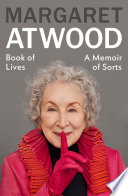
A Memoir of Sorts
2025
How does one of the greatest storytellers of our time write her own life? The long-awaited memoir from one of our most lauded and influential cultural figures. “Every writer is at least two beings: the one who lives, and the one who writes.
Read more
How does one of the greatest storytellers of our time write her own life? The long-awaited memoir from one of our most lauded and influential cultural figures. “Every writer is at least two beings: the one who lives, and the one who writes. Though everything written must have passed through their minds, or mind, they are not the same.” Raised by ruggedly independent, scientifically minded parents—entomologist father, dietician mother—Atwood spent most of each year in the wild forest of northern Quebec. This childhood was unfettered and nomadic, sometimes isolated (on her eighth birthday: “It sounds forlorn. It was forlorn. It gets more forlorn.”), but also thrilling and beautiful. From this unconventional start, Atwood unfolds the story of her life, linking seminal moments to the books that have shaped our literary landscape, from the cruel year that spawned Cat’s Eye to the Orwellian 1980s of East Berlin where she wrote The Handmaid’s Tale. In pages bursting with bohemian gatherings, her magical life with the wildly charismatic writer Graeme Gibson and major political turning points, we meet poets, bears, Hollywood actors and larger-than-life characters straight from the pages of an Atwood novel. As we travel with her along the course of her life, more and more is revealed about her writing, the connections between real life and art—and the workings of one of our greatest imaginations.
===
How does one of the greatest storytellers of our time write her own life? The long-awaited memoir from one of our most lauded and influential cultural figures 'Every writer is at least two beings- the one who lives, and the one who writes. Though everything written must have passed through their minds, or mind, they are not the same.' Raised by ruggedly independent, scientifically minded parents - entomologist father, dietician mother - Atwood spent most of each year in the wild forest of northern Quebec. This childhood was unfettered and nomadic, sometimes isolated (on her eighth birthday- 'It sounds forlorn. It was forlorn. It gets more forlorn.'), but also thrilling and beautiful. From this unconventional start, Atwood unfolds the story of her life, linking seminal moments to the books that have shaped our literary landscape, from the cruel year that spawned Cat's Eye to divided 1980s Berlin where she began The Handmaid's Tale. In pages bursting with bohemian gatherings, her magical life with the wildly charismatic writer Graeme Gibson and major political turning points, we meet poets, bears, Hollywood actors and larger-than-life characters straight from the pages of an Atwood novel. As we travel with her along the course of her life, more and more is revealed about her writing, the connections between real life and art - and the workings of one of our greatest imaginations.
===
'Fat and satisfying' Observer * 'I loved it' Dua Lipa * 'Deliciously naughty' iNews * 'Beautifully told' Woman & Home * 'Spellbinding' FT * Book of the Year Guardian, Financial Times, Observer, Belfast Telegraph Immerse yourself in the creative universe of Margaret Atwood for a riot of life, art and everything in between Raised by scientifically minded parents, Atwood spent most of each year in the wild forest of northern Quebec: a vast playground for her entomologist father and independent, resourceful mother. It was an unfettered and nomadic childhood, sometimes isolated but also thrilling and beautiful. From this unconventional start, Atwood unfolds the story of her life, linking key moments to the books that have shaped our literary landscape, from the cruel school year that would become Cat’s Eye to the unease of 1980s Berlin, where she began The Handmaid’s Tale. In pages alive with the natural world, reading and books, major political turning points and her lifelong love for the charismatic writer Graeme Gibson, we meet poets, bears, Hollywood stars and larger-than-life characters straight from the pages of an Atwood novel. As she explores her past, Atwood reveals more and more about her writing, the connections between real life and art – and the workings of one of our boldest imaginations. *Top ten Sunday Times bestseller week of 22 November 2025*
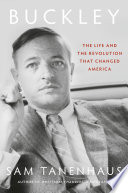
The Life and the Revolution That Changed America
2025
“A magnificent achievement—a long, gripping, and enthralling account of the life of America’s premier conservative polemicist of the twentieth century.”—Max Boot, author of Reagan: His Life and Legend “A rich, immersive biography exposes the roots of the modern conservative movement through the life of the firebrand writer and commentator who shaped it.”—The New York Times Book Review (Editors’ Choice) A BEST BOOK OF THE YEAR: The New York Times Book Review, The Washington Post, The New Yorker, The Economist, The Financial Times, Telegraph (UK), Christian Science Monitor, Air Mail, Prospect Magazine LONGLISTED FOR THE NATIONAL BOOK CRITICS CIRCLE AWARD In 1951, with the publication of God and Man at Yale, a scathing attack on his alma mater, twenty-five-year-old William F. Buckley, Jr., seized the public stage—and commanded it for the next half century as he led a new generation of conservative activists and ideologues to the peak of political power and cultural influence.
Read more
“A magnificent achievement—a long, gripping, and enthralling account of the life of America’s premier conservative polemicist of the twentieth century.”—Max Boot, author of Reagan: His Life and Legend “A rich, immersive biography exposes the roots of the modern conservative movement through the life of the firebrand writer and commentator who shaped it.”—The New York Times Book Review (Editors’ Choice) A BEST BOOK OF THE YEAR: The New York Times Book Review, The Washington Post, The New Yorker, The Economist, The Financial Times, Telegraph (UK), Christian Science Monitor, Air Mail, Prospect Magazine LONGLISTED FOR THE NATIONAL BOOK CRITICS CIRCLE AWARD In 1951, with the publication of God and Man at Yale, a scathing attack on his alma mater, twenty-five-year-old William F. Buckley, Jr., seized the public stage—and commanded it for the next half century as he led a new generation of conservative activists and ideologues to the peak of political power and cultural influence. Ten years before his death in 2008, Buckley chose prize-winning biographer Sam Tanenhaus to tell the full, uncensored story of his life and times, granting him extensive interviews and exclusive access to his most private papers. Thus began a deep investigation into the vast and often hidden universe of Bill Buckley and the modern conservative revolution. Buckley vividly captures its subject in all his facets and phases: founding editor of National Review, the twentieth century’s most influential political journal; syndicated columnist, Emmy-winning TV debater, and bestselling spy novelist; ally of Joseph McCarthy and Barry Goldwater; mentor to Ronald Reagan; game-changing candidate for mayor of New York. Tanenhaus also has uncovered the darker trail of Bill Buckley’s secret exploits, including CIA missions in Latin America, dark collusions with Watergate felon Howard Hunt, and Buckley’s struggle in his last years to hold together a movement coming apart over the AIDS epidemic, culture wars, and the invasion of Iraq—even as his own media empire was unraveling. At a crucial moment in American history, Buckley offers a gripping and powerfully relevant story about the birth of modern politics and those who shaped it.
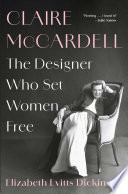
The Designer Who Set Women Free
2025
The riveting hidden history of Claire McCardell, the most influential fashion designer you’ve never heard of. Claire McCardell forever changed fashion—and most importantly, the lives of women.
Read more
The riveting hidden history of Claire McCardell, the most influential fashion designer you’ve never heard of. Claire McCardell forever changed fashion—and most importantly, the lives of women. She shattered cultural norms around women’s clothes, and today much of what we wear traces back to her ingenious, rebellious mind. McCardell invented ballet flats and mix-and-match separates, and she introduced wrap dresses, hoodies, leggings, denim, and more into womenswear. She tossed out corsets in favor of a comfortably elegant look and insisted on pockets, even as male designers didn’t see a need for them. She made zippers easy to reach because a woman “may live alone and like it,” McCardell once wrote, “but you may regret it if you wrench your arm trying to zip a back zipper into place.” After World War II, McCardell fought the severe, hyper-feminized silhouette championed by male designers, like Christian Dior. Dior claimed that he wanted to “save women from nature.” McCardell, by contrast, wanted to set women free. Claire McCardell became, as the young journalist Betty Friedan called her in 1955, “The Gal Who Defied Dior.” Filled with personal drama and industry secrets, this story reveals how Claire McCardell built an empire at a time when women rarely made the upper echelons of business. At its core, hers is a story about our right to choose how we dress—and our right to choose how we live.
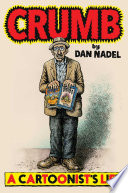
A Cartoonist's Life
2025
"The first biography of Robert Crumb--one of the most profound and influential artists of the 20th century--whose iconic, radically frank and meticulously rendered cartoons and comics inspired generations of readers and cartoonists, from Art Spiegelman to Alison Bechdel"--
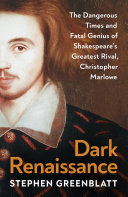
The Dangerous Times and Fatal Genius of Shakespeare's Greatest Rival
2025
Poor boy. Dark star.
Read more
Poor boy. Dark star. Spy. Transgressor. Genius. This is the thrilling and subversive life story of Christopher Marlowe – Shakespeare’s inspiration and rival, who helped to bring England out of the cultural darkness and into the light. ’Sparkling, addictive reading' MAGGIE O'FARRELL 'Brilliant' JAMES SHAPIRO 'As evocative as any novel' PHILIPPA GREGORY 'An unforgettable literary biographical tour de force' INDEPENDENT In brutally repressive Elizabethan England, artists are frightened; foreigners are suspect; popular entertainment largely consists of coarse spectacles, animal fights, and hangings. Into this crude world comes an ambitious cobbler’s son from Canterbury with an uncanny ear for Latin poetry – which to him is a secret portal to beauty, visionary imagination, transgressive desire, and dangerous scepticism. What Christopher Marlowe finds on the other side of that door, and what he does with it, brings about a spectacular explosion of English literature, language, and culture, enabling the success of many others, including his contemporary and collaborator William Shakespeare. By the time of his murder in a Deptford tavern in 1593, the 29-year-old Marlowe will be the most celebrated dramatist of his time. Stephen Greenblatt grippingly reconstructs the involvement with the queen’s spy service that shaped Marlowe’s brief, troubling life and helped fashion his masterpieces. Along the way we discover how the people Marlowe knew, and the transformations they wrought, gave birth to the economic, scientific, and cultural power of the modern world – involving Faustian bargains with which we reckon still. Dark Renaissance is a scintillating life of a writer whose blazing talent catapulted England from cultural backwater to crucible of creativity.
===
The Pulitzer Prize-winning author of Will in the World reveals the daring and subversive life of Christopher Marlowe--Shakespeare's contemporary, inspiration, and rival.
===
Poor boy. Spy. Transgressor. Genius. In repressive Elizabethan England, artists are frightened into dull conventionality; foreigners are suspect; popular entertainment largely consists of coarse spectacles, animal fights, and hangings. Into this crude world of government censorship and religious authoritarianism comes an ambitious cobbler’s son from Canterbury with a daring desire to be known—and an uncanny ear for Latin poetry. A torment for most schoolboys, yet for a few, like Christopher Marlowe, a secret portal to beauty, visionary imagination, transgressive desire, and dangerous skepticism. What Marlowe seizes in his rare opportunity for a classical education, and what he does with it, brings about a spectacular explosion of English literature, language, and culture. His astonishing literary success will, in turn, nourish the talent of a collaborator and rival, William Shakespeare. Dark Renaissance illuminates both Marlowe’s times and the origins and significance of his work—from his erotic translations of Ovid to his portrayal of unfettered ambition in a triumphant Tamburlaine to Doctor Faustus, his unforgettable masterpiece about making a pact with the devil in exchange for knowledge. Introducing us to Marlowe’s transgressive genius in the form of a thrilling page-turner, Stephen Greenblatt brings a penetrating understanding of the literary work to reveal the inner world of the author, bringing to life a homosexual atheist who was tormented by his own compromises, who refused to toe the party line, and who was murdered just when he had found love. Meanwhile, he explores how the people Marlowe knew, and the transformations they wrought, gave birth to the economic, scientific, and cultural power of the modern world including Faustian bargains with which we reckon still.
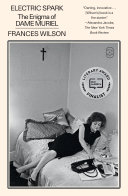
The Enigma of Dame Muriel
2025
Short-listed for the Baillie Gifford Prize for Non-Fiction Long-listed for the PEN/Jacqueline Bograd Weld Award for Biography The award-winning biographer Frances Wilson presents an exhilarating new look at Muriel Spark, a consummate artist of the twentieth century. “Is the story fact? Is it fiction? It is what it is,” said Muriel Spark.
Read more
Short-listed for the Baillie Gifford Prize for Non-Fiction Long-listed for the PEN/Jacqueline Bograd Weld Award for Biography The award-winning biographer Frances Wilson presents an exhilarating new look at Muriel Spark, a consummate artist of the twentieth century. “Is the story fact? Is it fiction? It is what it is,” said Muriel Spark. Muriel Spark was a puzzle, and so too are her books. She dealt in word games, tricks, and ciphers; her life was composed of weird accidents, strange coincidences, and spooky events. Evelyn Waugh thought she was a saint, Bernard Levin said she was a witch, and she described herself as “Muriel the Marvel with her X-ray eyes.” By following the clues, riddles, and instructions Spark planted for posterity in her biographies, fiction, autobiography, and archives, Frances Wilson aims to crack her code. Electric Spark explores not the celebrated Dame Muriel but the apprentice mage discovering her powers. It takes us through her early years, when turmoil reigned: divorce, madness, murder, espionage, poverty, skullduggery, blackmail, love affairs, revenge, and a major religious conversion. If this sounds like a novel by Spark, it is because her experiences in the 1940s and 1950s became, alchemically distilled, the material of her art. “As good a critic as she is a biographer [and] as sharp a stylist as she is a reader” (The Boston Globe), in Electric Spark Frances Wilson brings her enormous, incandescent powers to bear on one of the most formidable writers of the twentieth century.
===
*A 2025 HIGHLIGHT FOR: Telegraph, Financial Times, Guardian, Observer and Scotsman* 'A brilliant, wonderfully shrewd biography' WILLIAM BOYD 'A joyously, brilliantly intelligent work of biography. In Wilson, Spark has met her true match' ANNE ENRIGHT 'A pitch-perfect, electrifying symphony, reconfirming Wilson's pre-eminence as Maestra of British biography' RACHEL HOLMES The word most commonly used to describe Muriel Spark is 'puzzling'. Spark was a puzzle, and so too are her books. She dealt in word games, tricks, and ciphers; her life was composed of weird accidents, strange coincidences and spooky events. Evelyn Waugh thought she was a saint, Bernard Levin said she was a witch, and she described herself as 'Muriel the Marvel with her X-ray eyes'. Following the clues, riddles, and instructions Spark planted for posterity in her biographies, fiction, autobiography and archives, Frances Wilson aims to crack her code. Electric Spark explores not the celebrated Dame Muriel but the apprentice mage discovering her powers. We return to her early years when everything was piled on: divorce, madness, murder, espionage, poverty, skulduggery, blackmail, love affairs, revenge, and a major religious conversion. If this sounds like a novel by Muriel Spark it is because the experiences of the 1940s and 1950s became, alchemically reduced, the material of her art.
===
LONGLISTED FOR THE BAILLIE GIFFORD PRIZE FOR NON-FICTION 2025 'Absolutely mesmerising' SPECTATOR 'Unputdownable' FINANCIAL TIMES 'Brilliant' WILLIAM BOYD From one of our leading biographers and critics comes an exhilarating, landmark new look at Muriel Spark. Muriel Spark was a puzzle, and so too were her books. She dealt in word games, tricks, and ciphers; her life was composed of weird accidents, strange coincidences and spooky events. In Electric Spark, Frances Wilson aims to finally crack her code. We return to Spark's early years when everything was piled on: divorce, madness, murder, espionage, poverty, skulduggery, blackmail, love affairs, revenge and a major religious conversion. If this sounds like a novel by Muriel Spark it is because the experiences of the 1940s and 1950s became, alchemically reduced, the material of her art. 'A revolutionary book . . . Leaves conventional biographical techniques gasping in the dust . . . Deceptively supple, astonishingly rigorous . . . I was possessed by this book in the same way that I suspect its author was possessed by Spark' Lisa Hilton, SPECTATOR 'In Wilson, Spark has met her true match' ANNE ENRIGHT 'Whip-smart . . . I raced through it' Ali Smith, GUARDIAN 'Wilson's books are intense, eclectic and wildly diversionary, her intelligence rising from their pages like steam' Rachel Cooke, OBSERVER *A 2025 HIGHLIGHT FOR: Telegraph, Financial Times, Guardian, Observer and Scotsman*
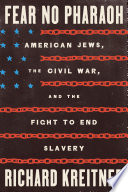
American Jews, the Civil War, and the Fight to End Slavery
2025
A dramatic history of how American Jews reckoned with slavery—and fought the Civil War. Since ancient times, the Jewish people have recalled the story of Exodus and reflected on the implications of having been slaves.
Read more
A dramatic history of how American Jews reckoned with slavery—and fought the Civil War. Since ancient times, the Jewish people have recalled the story of Exodus and reflected on the implications of having been slaves. Did the tradition teach that Jews should speak out against slavery and oppression everywhere, or act cautiously to protect themselves in a hostile world? In Fear No Pharaoh, the journalist and historian Richard Kreitner sets this question at the heart of the Civil War era. Using original sources, he tells the intertwined stories of six American Jews who helped to shape a tumultuous time, including Judah Benjamin, the brilliant, secretive lawyer who became Jefferson Davis’s trusted confidante; Morris Raphall, a Swedish-born rabbi who defended slavery as biblically justified; and Raphall's rival rabbis—the celebrated Isaac Mayer Wise, who urged Jews to stay out of the slavery controversy to avoid attracting attention, and David Einhorn, whose fiery sermons condemning bondage led to a pro-slavery mob threatening his life. We also meet August Bondi, a veteran of Europe’s 1848 revolutions, who fought with John Brown in “Bleeding Kansas” and later in the Union Army, and the Polish émigré Ernestine Rose, a feminist, atheist, and abolitionist who championed “emancipation of all kinds.” As he tracks these characters, Kreitner illuminates the shifting dynamics of Jewish life in America—and the debates about religion, morality, and politics that endure to this day.
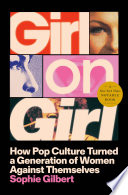
How Pop Culture Turned a Generation of Women Against Themselves
2025
A New York Times and Washington Post Notable Book • Named one of the Best Books of the Year by TIME, NPR, Elle, and The Boston Globe “Searing… rigorously researched but never stuffy… Gilbert has compiled perhaps the first comprehensive examination of turn-of-the-millennium mainstream, cool-kid trends and ephemera, and how they were largely molded by those in power to sell a generation of girls and young women reality-warping lies.” —The New York Times “So clear-eyed that it’s startling." —The Washington Post “Entertaining and even energizing, transforming a dismal history into something like a rallying cry.” —The Boston Globe From Atlantic critic and Pulitzer Prize finalist Sophie Gilbert, a blazing critique of early aughts pop culture What happened to feminism in the twenty-first century? This question feels increasingly urgent in a moment of cultural and legislative backlash, when widespread uncertainty about the movement’s power, focus, and currency threatens decades of progress. Sophie Gilbert identifies an inflection point in the late 1990s and early 2000s, when the energy of third-wave and “riot grrrl” feminism collapsed into a regressive period of hyper-objectification, sexualization, and infantilization.
Read more
A New York Times and Washington Post Notable Book • Named one of the Best Books of the Year by TIME, NPR, Elle, and The Boston Globe “Searing… rigorously researched but never stuffy… Gilbert has compiled perhaps the first comprehensive examination of turn-of-the-millennium mainstream, cool-kid trends and ephemera, and how they were largely molded by those in power to sell a generation of girls and young women reality-warping lies.” —The New York Times “So clear-eyed that it’s startling." —The Washington Post “Entertaining and even energizing, transforming a dismal history into something like a rallying cry.” —The Boston Globe From Atlantic critic and Pulitzer Prize finalist Sophie Gilbert, a blazing critique of early aughts pop culture What happened to feminism in the twenty-first century? This question feels increasingly urgent in a moment of cultural and legislative backlash, when widespread uncertainty about the movement’s power, focus, and currency threatens decades of progress. Sophie Gilbert identifies an inflection point in the late 1990s and early 2000s, when the energy of third-wave and “riot grrrl” feminism collapsed into a regressive period of hyper-objectification, sexualization, and infantilization. Mining the darker side of nostalgia, Gilbert trains her keen analytic eye on the most revealing cultural objects of the era, across music, film, television, fashion, tabloid journalism, and more. What she recounts is harrowing, from the leering gaze of the paparazzi to the gleeful cruelty of early reality TV and a burgeoning internet culture vicious toward women in the spotlight and damaging for those who weren’t. Gilbert tracks many of the period’s dominant themes back to the rise of internet porn, which gained widespread influence as it began to pervade our collective consciousness. The result is a devastating portrait of a time when a distinctly American blend of excess, materialism, and power worship collided with the culture’s reactionary, puritanical, and chauvinistic currents. Amid a collective reconsideration of the way women are treated in public, Girl on Girl is a blistering indictment of the matrix of misogyny that undergirded the cultural production of the early twenty-first century, and continues to shape our world today.
===
'A captivating must-read for anyone who wants to understand how and why misogyny is as powerful a force as ever' KATE MANNE, author of Down Girl 'Riveting, incisive, rousing' MELISSA FEBOS, author of Girlhood Cosmetic surgeries are at an all-time high, Ozempic is bringing back 'heroin chic' and TikTok trad-wives are on the rise - after four waves of feminism, what went wrong? Despite decades of progress, the gains of the feminist movement feel more fragile than ever. But as Atlantic critic and Pulitzer Prize finalist Sophie Gilbert points out, this is not a unique moment. Feminism felt just as fragmented in the early 2000s, when the momentum of third-wave feminists and 'riot grrrl's was squashed by lad culture and the commodification of 'Girl Power'. Casting her eye across pop culture of the past thirty years - from Madonna, the Spice Girls and the Kardashians, to MySpace, #GirlBoss and Real Housewives - Sophie Gilbert reveals a toxic pattern of progress and misogynistic backlash. Girl on Girl shows how every form of media, heavily influenced by the rise of porn, has shaped and warped women's relationships with themselves and other women, and asks what lies ahead. We cannot move forward without fully reckoning with how pop culture has defined us - this book shows us how.
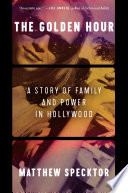
A Story of Family and Power in Hollywood
2025
A personal and cultural exploration of the struggles between art and business at the heart of modern Hollywood, through the eyes of the talent that shaped it Matthew Specktor grew up in the film industry: the son of legendary CAA superagent Fred Specktor, his childhood was one where Beau Bridges came over for dinner, Martin Sheen’s daughter was his close friend, and Marlon Brando left long messages on the family answering machine. He would eventually spend time working in Hollywood himself, first as a reluctant studio executive and later as a screenwriter.
Read more
A personal and cultural exploration of the struggles between art and business at the heart of modern Hollywood, through the eyes of the talent that shaped it Matthew Specktor grew up in the film industry: the son of legendary CAA superagent Fred Specktor, his childhood was one where Beau Bridges came over for dinner, Martin Sheen’s daughter was his close friend, and Marlon Brando left long messages on the family answering machine. He would eventually spend time working in Hollywood himself, first as a reluctant studio executive and later as a screenwriter. Now, with The Golden Hour, Specktor blends memoir, cultural criticism, and narrative history to tell the story of the modern motion picture industry—illuminating the conflict between art and business that has played out over the last seventy-five years in Hollywood. Braiding his own story with that of his father, mother (a talented screenwriter whose career was cut short), and figures ranging from Jack Nicholson to CAA’s Michael Ovitz, Specktor reveals how Hollywood became a laboratory for the eternal struggle between art, labor, and capital. Beginning with the rise of Music Corporation of America in the 1950s, The Golden Hour lays out a series of clashes between fathers and sons, talent agents and studio heads, artists, activists, unions, and corporations. With vivid prose and immersive scenes, Specktor shows how Hollywood grew from the epicenter of American cultural life to a full-fledged multinational concern—and what this shift has meant for the nation’s place in the world. At once a book about the movie business and an intimate family drama, The Golden Hour is a sweeping portrait of the American Century.
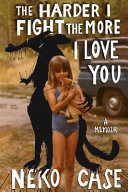
The Harder I Fight the More I Love You
A Memoir
2025
From a beloved Grammy-nominated musician, a "heartbreaking and funny" memoir of a poverty-stricken childhood, obsessive desires, and indispensable friendships that reflects on the way art and music and a deep connection to nature guided her journey towards stardom (Maggie Smith, NYT bestselling author of You Could Make This Place Beautiful). Neko Case has long been revered as one of music’s most influential artists, whose authenticity, lyrical storytelling, and sly wit have endeared her to a legion of critics, musicians, and lifelong fans.
Read more
From a beloved Grammy-nominated musician, a "heartbreaking and funny" memoir of a poverty-stricken childhood, obsessive desires, and indispensable friendships that reflects on the way art and music and a deep connection to nature guided her journey towards stardom (Maggie Smith, NYT bestselling author of You Could Make This Place Beautiful). Neko Case has long been revered as one of music’s most influential artists, whose authenticity, lyrical storytelling, and sly wit have endeared her to a legion of critics, musicians, and lifelong fans. In THE HARDER I FIGHT THE MORE I LOVE YOU, Case brings her trademark candor and precision to a memoir that traces her evolution from an invisible girl “raised by two dogs and a space heater” in rural Washington state to her improbable emergence as an internationally-acclaimed talent. In luminous, sharp-edged prose, Case shows readers what it’s like to be left alone for hours and hours as a child, to take refuge in the woods around her home, and to channel the monotony and loneliness and joy that comes from music, camaraderie, and shared experience into art. THE HARDER I FIGHT THE MORE I LOVE YOU is a rebellious meditation on identity and corruption, and a manifesto on how to make space for ourselves in this world, despite the obstacles we face.
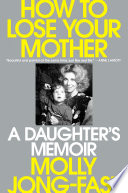
A Daughter's Memoir
2025
NEW YORK TIMES BESTSELLER · A Washington Post Notable Nonfiction Book of 2025 “With propulsive humor and perspective on her annus horribilis, Jong-Fast achieves the memoir’s transformative work of alchemy, arming us all with lines so good you won’t just want to underline them, you will want to cut them out to share.” —The Washington Post “This raw, intimate memoir is a stunning portrait of difficult relationships and how we survive them.” —People “Molly Jong-Fast’s memoir is mesmerizing, intimate, wise, unputdownable, crazily honest, heartbreaking, funny, illuminating—beautiful and painful at the same time, just like real life.” —Anne Lamott From the political writer and podcaster, a ferociously honest and disarmingly funny memoir about her elusive mother’s encroaching dementia and a reckoning with her complicated childhood Molly Jong-Fast is the only child of a famous woman, writer Erica Jong, whose sensational book Fear of Flying launched her into second-wave feminist stardom. She grew up yearning for a connection with her dreamy, glamorous, just out of reach mother, who always seemed to be heading somewhere that wasn’t with Molly.
Read more
NEW YORK TIMES BESTSELLER · A Washington Post Notable Nonfiction Book of 2025 “With propulsive humor and perspective on her annus horribilis, Jong-Fast achieves the memoir’s transformative work of alchemy, arming us all with lines so good you won’t just want to underline them, you will want to cut them out to share.” —The Washington Post “This raw, intimate memoir is a stunning portrait of difficult relationships and how we survive them.” —People “Molly Jong-Fast’s memoir is mesmerizing, intimate, wise, unputdownable, crazily honest, heartbreaking, funny, illuminating—beautiful and painful at the same time, just like real life.” —Anne Lamott From the political writer and podcaster, a ferociously honest and disarmingly funny memoir about her elusive mother’s encroaching dementia and a reckoning with her complicated childhood Molly Jong-Fast is the only child of a famous woman, writer Erica Jong, whose sensational book Fear of Flying launched her into second-wave feminist stardom. She grew up yearning for a connection with her dreamy, glamorous, just out of reach mother, who always seemed to be heading somewhere that wasn’t with Molly. When, in 2023, Erica was diagnosed with dementia just as Molly’s husband discovered he had a rare cancer, Jong-Fast was catapulted into a transformative year. How to Lose Your Mother is a compulsively readable memoir about an intense mother–daughter relationship, a sometimes chaotic upbringing with a fame-hungry parent, and the upheavals that challenge our hard-won adulthood. A pitch-perfect balance of acceptance and rage, humor and heart, How to Lose Your Mother tells a universal story of loss alongside a singular story of a literary life. This is a memoir that will stand alongside the classics of the genre.
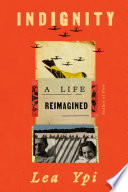
A Life Reimagined
2025
The award-winning author of Free returns with an extraordinary investigation into historical injustice, personal and collective dignity, truth and imagination When Lea Ypi discovers that a photo of her grandmother, Leman, honeymooning in the Italian Alps in 1941 has been posted by a stranger on social media, she is faced with deeply unsettling questions. Growing up, she had been told all records of her grandmother’s youth were destroyed “when the police came and took everything” in the early days of communism in Albania.
Read more
The award-winning author of Free returns with an extraordinary investigation into historical injustice, personal and collective dignity, truth and imagination When Lea Ypi discovers that a photo of her grandmother, Leman, honeymooning in the Italian Alps in 1941 has been posted by a stranger on social media, she is faced with deeply unsettling questions. Growing up, she had been told all records of her grandmother’s youth were destroyed “when the police came and took everything” in the early days of communism in Albania. But there Leman was with her husband, Asllan Ypi: glamorous newlyweds while World War II was raging in the background. What follows is a thrilling reimagining of the past, as we are transported to the vanished world of Ottoman aristocracy in Salonica, the making of modern Greece and Albania, a global financial crisis, the horrors of war and the dawn of communism in the Balkans, through secret police archives and muddied memories. While investigating the truth about her family, Ypi grapples with uncertainty. Who is the real Leman Ypi? If her family lived in the Ottoman Empire, why did she speak French? What made her move to Tirana as a young woman and meet a socialist who sympathized with the Popular Front while his father led a collaborationist government? And, above all, why was she smiling in the winter of 1941? All of these questions were also asked by the Albanian secret police. As much a sweeping story about lost worlds as it is a philosophical inquiry, Indignity shows what it is like to make choices against the tide of history. Through reports of communist spies, court depositions, anecdotes and characters that live on in Ypi’s memory, we move between “now” and ”then”, fact and fiction, what we learn from archives and what we can imagine, to reckon with the injustices of the past. By turns epic and intimate, profound and gripping, Indignity is a meditation on the fragility of truth, both personal and political. Ultimately, Ypi asks, with what moral authority do we judge the acts of previous generations? And what do we really know about the people closest to us?
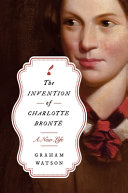
The Invention of Charlotte Brontë
A New Life
2024
A profoundly moving, ground-breaking biography that challenges the established narrative to reveal the Brontë family as they’ve never been seen before. Charlotte Brontë had a life as seemingly dramatic as her heroine Jane Eyre.
Read more
A profoundly moving, ground-breaking biography that challenges the established narrative to reveal the Brontë family as they’ve never been seen before. Charlotte Brontë had a life as seemingly dramatic as her heroine Jane Eyre. Turning her back on her tragic past, Charlotte reinvented herself as an acclaimed author, a mysterious celebrity, and a passionate lover. Doing so meant burning many bridges, but her sudden death left her friends and admirers with more questions than answers. Tasked with telling the truth about Brontë’s life, her friend, the novelist Elizabeth Gaskell, uncovered secrets of illicit love, family discord, and professional rivalries more incredible than any fiction. The result, a tell-all biography, was so scandalous it was banned and rewritten twice in six months—but not before it had given birth to the legend of the Brontës. The Invention of Charlotte Brontë presents a different, darker take on one of the most famous women writers of the nineteenth century, showing Charlotte to be a strong but flawed individual. Through evaluating key events as well as introducing new archival material into the story, this lively biography challenges the established narrative to reveal the Brontë family as they’ve never been seen before.
===
Doomed survivor of a family of geniuses, Charlotte Brontë had a life as dramatic as Jane Eyre. Turning her back on her tragic past, she reinvented herself as an acclaimed writer, a mysterious celebrity and a passionate lover. Doing so meant burning many bridges, but her sudden death left her friends and admirers with more questions than answers. Tasked with telling the truth about Brontë's life, her friend, the novelist Elizabeth Gaskell, uncovered secrets of illicit love, family discord and professional rivalries more incredible than any fiction. The result, a tell-all biography, was so scandalous it was banned and rewritten twice in six months - but not before it had given birth to the legend of the Brontës. The Invention of Charlotte Brontë is a darker take on one of the most famous women writers of the nineteenth century, showing Charlotte to be a strong but flawed individual. Through interrogating known events and introducing new archival material into the story, it challenges the established narrative to reveal the Brontë family as they've never been seen before.
===
A lucid, profoundly moving biography that challenges the established narrative to reveal the Brontë family as they’ve never been seen before. Charlotte Brontë had a life as seemingly dramatic as her heroine Jane Eyre. Turning her back on her tragic past, Charlotte reinvented herself as an acclaimed author, a mysterious celebrity, and a passionate lover. Doing so meant burning many bridges, but her sudden death left her friends and admirers with more questions than answers. Tasked with telling the truth about Brontë’s life, her friend, the novelist Elizabeth Gaskell, uncovered secrets of illicit love, family discord, and professional rivalries more incredible than any fiction. The result, a tell-all biography, was so scandalous it was banned and rewritten twice in six months—but not before it had given birth to the legend of the Brontës. The Invention of Charlotte Brontë presents a different, darker take on one of the most famous women writers of the nineteenth century, showing Charlotte to be a strong but flawed individual. Through evaluating key events as well as introducing new archival material into the story, this lively biography challenges the established narrative to reveal the Brontë family as they’ve never been seen before.
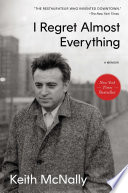
A Memoir
2025
New York Times Bestseller The entertaining, irreverent, and surprisingly moving memoir by the visionary restaurateur behind such iconic New York institutions as Balthazar and Pastis. A memoir by the legendary proprietor of Balthazar, Pastis, Minetta Tavern, and Morandi, taking us from his gritty London childhood in the fifties to his serendipitous arrival in New York, where he founded the era-defining establishments the Odeon, Cafe Luxembourg, and Nell’s.
Read more
New York Times Bestseller The entertaining, irreverent, and surprisingly moving memoir by the visionary restaurateur behind such iconic New York institutions as Balthazar and Pastis. A memoir by the legendary proprietor of Balthazar, Pastis, Minetta Tavern, and Morandi, taking us from his gritty London childhood in the fifties to his serendipitous arrival in New York, where he founded the era-defining establishments the Odeon, Cafe Luxembourg, and Nell’s. Eloquent and opinionated, Keith McNally writes about the angst of being a child actor, his lack of insights from traveling overland to Kathmandu at nineteen, the instability of his two marriages and family relationships, his devastating stroke, and his Instagram notoriety.
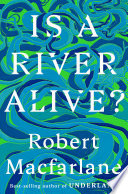
2025
A New York Times Bestseller A #1 Sunday Times (UK) Bestseller Finalist for the 2025 Banff Mountain Book Competition in Environmental Literature A New York Times "New Nonfiction to Read This Spring" Recommendation • A Financial Times "Best Summer Book of 2025" • A Guardian "Nonfiction to Look Forward To in 2025" Pick • A Washington Post "Book to Watch For" in 2025 From the best-selling author of Underland and "the great nature writer…of this generation" (Wall Street Journal), a revelatory book that transforms how we imagine rivers—and life itself. Hailed in the New York Times as “a naturalist who can unfurl a sentence with the breathless ease of a master angler,” Robert Macfarlane brings his glittering style to a profound work of travel writing, reportage, and natural history.
Read more
A New York Times Bestseller A #1 Sunday Times (UK) Bestseller Finalist for the 2025 Banff Mountain Book Competition in Environmental Literature A New York Times "New Nonfiction to Read This Spring" Recommendation • A Financial Times "Best Summer Book of 2025" • A Guardian "Nonfiction to Look Forward To in 2025" Pick • A Washington Post "Book to Watch For" in 2025 From the best-selling author of Underland and "the great nature writer…of this generation" (Wall Street Journal), a revelatory book that transforms how we imagine rivers—and life itself. Hailed in the New York Times as “a naturalist who can unfurl a sentence with the breathless ease of a master angler,” Robert Macfarlane brings his glittering style to a profound work of travel writing, reportage, and natural history. Is a River Alive? is a joyful, mind-expanding exploration of an ancient, urgent idea: that rivers are living beings who should be recognized as such in imagination and law. Macfarlane takes readers on three unforgettable journeys teeming with extraordinary people, stories, and places: to the miraculous cloud-forests and mountain streams of Ecuador, to the wounded creeks and lagoons of India, and to the spectacular wild rivers of Canada—imperiled respectively by mining, pollution, and dams. Braiding these journeys is the life story of the fragile chalk stream a mile from Macfarlane’s house, a stream who flows through his own years and days. Powered by dazzling prose and lit throughout by other minds and voices, Is a River Alive? will open hearts, challenge perspectives, and remind us that our fate flows with that of rivers—and always has.
===
From the celebrated writer, observer and naturalist Robert Macfarlane comes a brilliant, perspective-shifting new book, which answers a resounding "yes" to the question of its title. At the heart of Is a River Alive? is a single, transformative idea: that rivers are not mere matter for human use, but living beings, who should be recognized as such in both imagination and law. Macfarlane takes the reader on a mind-expanding global journey into the history, futures, people and places of the ancient, urgent concept. Around the world, rivers are dying from pollution, drought and damming. But a powerful movement is also underway to recognize the lives and the rights of rivers, and to re-animate our relationships with these vast, mysterious presences whose landscapes we share. The young "rights of nature" movement has lit up activists, artists, law-makers and politicians across six continents—and become the focus for revolutionary thinking about rivers in particular. The book flows like water, from the mountains to the sea, over three major journeys. The first is to northern Ecuador, where a miraculous cloud-forest and its rivers are threatened with destruction by Canadian gold-mining. The second is to the wounded rivers, creeks and lagoons of southern India, where a desperate battle to save the lives of these waterbodies is underway. The third is to northeastern Quebec, where a spectacular wild river—the Mutehekau or Magpie—is being defended from death by damming in a river-rights campaign led by an extraordinary Innu poet and leader called Rita Mestokosho. Is A River Alive? is at once a literary work of art, a rallying cry and a catalyst for change. It is a book that will open hearts, spark debates and challenge perspectives. A clarion call to re-centre rivers in our stories, law and politics, it invites us to radically re-imagine not only rivers but life itself. At the heart of this vital, beautiful book is the recognition that our fate flows with that of rivers—and always has.
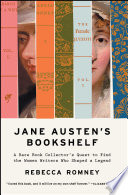
A Rare Book Collector's Quest to Find the Women Writers Who Shaped a Legend
2025
From rare book dealer and guest star of the hit show Pawn Stars, a page-turning literary adventure featuring “your favorite author’s favorite authors” (Today)—the women who inspired Jane Austen—that’s “a meditation on reading and writing, on honesty and self-discovery—and on what books can teach us, if we let them” (The Washington Post). Long before she was a rare book dealer, Rebecca Romney was a devoted reader of Jane Austen.
Read more
From rare book dealer and guest star of the hit show Pawn Stars, a page-turning literary adventure featuring “your favorite author’s favorite authors” (Today)—the women who inspired Jane Austen—that’s “a meditation on reading and writing, on honesty and self-discovery—and on what books can teach us, if we let them” (The Washington Post). Long before she was a rare book dealer, Rebecca Romney was a devoted reader of Jane Austen. She loved that Austen’s books took the lives of women seriously, explored relationships with wit and confidence, and always, allowed for the possibility of a happy ending. She read and reread them, often wishing Austen wrote just one more. But Austen wasn’t a lone genius. She wrote at a time of great experimentation for women writers—and clues about those women, and the exceptional books they wrote, are sprinkled like breadcrumbs throughout Austen’s work. Every character in Northanger Abbey who isn’t a boor sings the praises of Ann Radcliffe. The play that causes such a stir in Mansfield Park is a real one by the playwright Elizabeth Inchbald. In fact, the phrase “pride and prejudice” came from Frances Burney’s second novel Cecilia. The women that populated Jane Austen’s bookshelf profoundly influenced her work; Austen looked up to them, passionately discussed their books with her friends, and used an appreciation of their books as a litmus test for whether someone had good taste. So where had these women gone? Why hadn’t Romney—despite her training—ever read them? Or, in some cases, even heard of them? And why were they no longer embraced as part of the wider literary canon? Jane Austen’s Bookshelf investigates the disappearance of Austen’s heroes—women writers who were erased from the Western canon—to reveal who they were, what they meant to Austen, and how they were forgotten. Each chapter profiles a different writer including Frances Burney, Ann Radcliffe, Charlotte Lennox, Charlotte Smith, Hannah More, Elizabeth Inchbald, Hester Lynch Thrale Piozzi, and Maria Edgeworth—and recounts Romney’s experience reading them, finding rare copies of their works, and drawing on connections between their words and Austen’s. Romney collects the once-famed works of these forgotten writers, physically recreating Austen’s bookshelf and making a convincing case for why these books should be placed back on the to-be-read pile of all book lovers today. Jane Austen’s Bookshelf will encourage you to look beyond assigned reading lists, question who decides what belongs there, and build your very own collection of favorite novels.
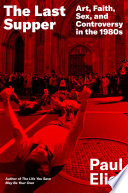
Art, Faith, Sex, and Controversy in the 1980s
2025
This enthralling group portrait brings to life a moment when popular culture became the site of religious strife—strife that set the stage for some of the most salient political and cultural clashes of our day. Circa 1980, tradition and authority are in the ascendant, both in Catholicism (via Pope John Paul II) and in American civic life (through the Moral Majority and the so-called televangelists).
Read more
This enthralling group portrait brings to life a moment when popular culture became the site of religious strife—strife that set the stage for some of the most salient political and cultural clashes of our day. Circa 1980, tradition and authority are in the ascendant, both in Catholicism (via Pope John Paul II) and in American civic life (through the Moral Majority and the so-called televangelists). But the public is deeply divided on issues of body and soul, devotion and desire. Enter the figures Paul Elie calls “cryptoreligious.” Here is Leonard Cohen writing “Hallelujah” on his knees in a Times Square hotel room; Andy Warhol adapting Leonardo’s The Last Supper in response to the AIDS pandemic; Prince making the cross and altar into “signs o’ the times.” Through Toni Morrison, spirits speak from the grave; Patti Smith and Bruce Springsteen deepen the tent-revival intensity of their work; Wim Wenders offers an angel’s-eye view of Berlin; U2, the Neville Brothers, and Sinéad O’Connor reckon with their Christian roots in music of mystic yearning. And Martin Scorsese overcomes fundamentalist ire to make The Last Temptation of Christ—a struggle that anticipates Salman Rushdie’s struggle with Islam in The Satanic Verses. In Elie’s acclaimed first book, The Life You Save May Be Your Own, Catholic writers ventured out into the wilds of postwar America; in this book, creative figures who were raised religious go to the margins of conventional belief, calling forth controversy. Episodes such as the boycott sparked by Madonna’s “Like a Prayer” video and the tearing-up of Andres Serrano’s Piss Christ in Congress are early skirmishes in the culture wars—but here the creators (not the politicians) are the protagonists, and the work they make speaks to conflicts that remain unsettled. The Last Supper explores the bold and unexpected forms an encounter with belief can take. It traces the beginnings of our postsecular age, in which religion is at once surging and in decline. Through a propulsive narrative, it reveals the crypto-religious imagination as complex, credible, daring, and vividly recognizable.
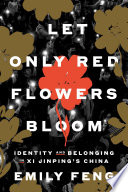
Identity and Belonging in Xi Jinping's China
2025
A “gripping and scrupulously reported” (The Washington Post) investigation into the battle over identity in China, chronicling the state oppression of those who fail to conform to Xi Jinping’s definition of who is “Chinese,” from an award-winning NPR correspondent. “Emily Feng’s focus on ordinary people—bravely determined to shape their own lives—captures the mood of the Xi Jinping era more essentially than reams of statistics ever can.”—Evan Osnos, National Book Award winner, author of Age of Ambition The rise of China and its great power competition with the U.S.
Read more
A “gripping and scrupulously reported” (The Washington Post) investigation into the battle over identity in China, chronicling the state oppression of those who fail to conform to Xi Jinping’s definition of who is “Chinese,” from an award-winning NPR correspondent. “Emily Feng’s focus on ordinary people—bravely determined to shape their own lives—captures the mood of the Xi Jinping era more essentially than reams of statistics ever can.”—Evan Osnos, National Book Award winner, author of Age of Ambition The rise of China and its great power competition with the U.S. will be one of the defining issues of our generation. But to understand modern China, one has to understand the people who live there – and the way the Chinese state is trying to control them along lines of identity and free expression. In vivid, cinematic detail, Let Only Red Flowers Bloom tells the stories of nearly two dozen people who are pushing back. They include a Uyghur family, separated as China detains hundreds of thousands of their fellow Uyghurs in camps; human rights lawyers fighting to defend civil liberties in the face of mammoth odds; a teacher from Inner Mongolia, forced to make hard choices because of his support of his mother tongue; and a Hong Kong fugitive trying to find a new home and live in freedom. Reporting despite the personal risks, journalist Emily Feng reveals dramatic human stories of resistance and survival in a country that is increasingly closing itself off to the world. Feng illustrates what it is like to run against the grain in China, and the myriad ways people are trying to survive, with dignity.
2025
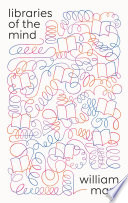
How we build our invisible libraries Erich Auerbach wrote his classic work Mimesis, a history of narrative from Homer to Proust, based largely on his memory of past reading. Having left his physical library behind when he fled to Istanbul to escape the Nazis, he was forced to rely on the invisible library of his mind.
Read more
How we build our invisible libraries Erich Auerbach wrote his classic work Mimesis, a history of narrative from Homer to Proust, based largely on his memory of past reading. Having left his physical library behind when he fled to Istanbul to escape the Nazis, he was forced to rely on the invisible library of his mind. Each of us has such a library—if not as extensive as Auerbach’s—even if we are unaware of it. In this erudite and provocative book, William Marx explores our invisible libraries—how we build them and how we should expand them. Libraries, Marx tells us, are mental realities, and, conversely, our minds are libraries. We never read books apart from other texts. We take them from mental shelves filled with a variety of works that help us understand what we are reading. And yet the libraries in our mind are not always what they should be. The selection on our mental shelves—often referred to as canon, heritage, patrimony, or tradition—needs to be modified and expanded. Our intangible libraries should incorporate what Marx calls the dark matter of literature: the works that have been lost, that exist only in fragments, that have been repurposed by their authors, or were never written in the first place. Marx suggests methods for recovering this missing literature, but he also warns us that adding new titles to our libraries is not enough. We must also adopt a new attitude, one that honors the diversity and otherness of literary works. We must shed our preconceptions and build within ourselves a mental world library.
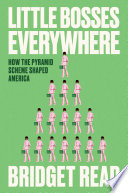
How the Pyramid Scheme Shaped America
2025
A groundbreaking work of history and reportage that unveils the stranger-than-fiction world of multilevel marketing: a massive money-making scam and radical political conspiracy that has remade American society. Companies like Amway, Mary Kay, and Herbalife advertise the world’s greatest opportunity: the chance to be your own boss via an enigmatic business model called multilevel marketing, or MLM.
Read more
A groundbreaking work of history and reportage that unveils the stranger-than-fiction world of multilevel marketing: a massive money-making scam and radical political conspiracy that has remade American society. Companies like Amway, Mary Kay, and Herbalife advertise the world’s greatest opportunity: the chance to be your own boss via an enigmatic business model called multilevel marketing, or MLM. They offer a world of pink Cadillacs, white-columned mansions, tropical vacations, and—most precious of all—financial freedom. If, that is, you’re willing to shell out for expensive products and recruit everyone you know to buy them, and if they recruit everyone they know, too, thus creating the “multiple levels” of MLM. Overwhelming evidence suggests that most people lose money in multilevel marketing, and that many MLM companies are pyramid schemes. Yet the industry’s origins, tied to right-wing ideologues like Ronald Reagan, have escaped public scrutiny. MLM has slithered in the wake of every economic crisis of the last century, from the Depression to the pandemic, ensnaring laid-off workers, stay-at-home moms, and teachers—anyone who has been left behind by rising inequality. In Little Bosses Everywhere, journalist Bridget Read tells the gripping story of multilevel marketing in full for the first time, winding from sunny postwar California, where a failed salesman started a vitamin business, through the devoutly religious suburbs of Michigan, where the industry built its political influence, to stadium-size conventions where today’s top sellers preach to die-hard recruits. MLM has enriched powerful people, like the DeVos and Van Andel families, Warren Buffett, and President Donald Trump, all while eroding public institutions and the social safety net, then profiting from the chaos. Along the way, Read delves into the stories of those devastated by the majority-female industry: a veteran in Florida searching for healing; a young mom in Texas struggling to feed her children; a waitress scraping by in Brooklyn. A wild trip down an endless rabbit hole of greed and exploitation, Little Bosses Everywhere exposes multilevel marketing as American capitalism’s stealthiest PR campaign, a cunning grift that has shaped nearly everything about how we live, and whose ultimate target is democracy itself.
===
A “gripping” (The Washington Post) work of history and reportage that unveils the stranger-than-fiction world of multilevel marketing: a massive money-making scam and radical political conspiracy that has remade American society. “Reads like a thriller . . . masterfully illuminates the tricks and sleights of hand that in multilevel marketing are simply the rules of doing business.”—The New York Times Book Review (Editors’ Choice) Companies like Amway, Mary Kay, and Herbalife advertise the world’s greatest opportunity: the chance to be your own boss via an enigmatic business model called multilevel marketing, or MLM. They offer a world of pink Cadillacs, white-columned mansions, tropical vacations, and—most precious of all—financial freedom. If, that is, you’re willing to shell out for expensive products and recruit everyone you know to buy them, and if they recruit everyone they know, too, thus creating the “multiple levels” of MLM. Overwhelming evidence suggests that most people lose money in multilevel marketing, and that many MLM companies are pyramid schemes. Yet the industry’s origins, tied to right-wing ideologues like Ronald Reagan, have escaped public scrutiny. MLM has slithered in the wake of every economic crisis of the last century, from the Depression to the pandemic, ensnaring laid-off workers, stay-at-home moms, and teachers—anyone who has been left behind by rising inequality. In Little Bosses Everywhere, journalist Bridget Read tells the gripping story of multilevel marketing in full for the first time, winding from sunny postwar California, where a failed salesman started a vitamin business, through the devoutly religious suburbs of Michigan, where the industry built its political influence, to stadium-size conventions where today’s top sellers preach to die-hard recruits. MLM has enriched powerful people, like the DeVos and Van Andel families, Warren Buffett, and President Donald Trump, all while eroding public institutions and the social safety net, then profiting from the chaos. Along the way, Read delves into the stories of those devastated by the majority-female industry: a veteran in Florida searching for healing; a young mom in Texas struggling to feed her children; a waitress scraping by in Brooklyn. A wild trip down an endless rabbit hole of greed and exploitation, Little Bosses Everywhere exposes multilevel marketing as American capitalism’s stealthiest PR campaign, a cunning grift that has shaped nearly everything about how we live, and whose ultimate target is democracy itself.
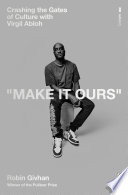
Crashing the Gates of Culture with Virgil Abloh
2025
Virgil Abloh's iconic rise to the top of the fashion industry embodied a groundbreaking transformation of the relationship between who we are and what we wear. Abloh's appointment as head of menswear for Louis Vuitton in 2018 shocked the fashion inudstry, as he became the first Black designer to serve as artistic director in the brand's 164-year history.
Read more
Virgil Abloh's iconic rise to the top of the fashion industry embodied a groundbreaking transformation of the relationship between who we are and what we wear. Abloh's appointment as head of menswear for Louis Vuitton in 2018 shocked the fashion inudstry, as he became the first Black designer to serve as artistic director in the brand's 164-year history. But as Pulitzer Prize–winning culture critic Robin Givhan reveals, Abloh's story encompasses so much more than his own journey. Using Abloh's surprising path to the top of the luxury establishment, Givhan unfolds the larger story of how the cloistered, exclusive fashion world faced a revolution from below in the form of streetwear and designers unafraid to storm the gates—how their notions of what was luxury simultaneously anticipated and upended consumer preferences, and how a simple T-shirt held as much cultural power as a haute couture gown. As Givhan relays, Abloh rose during a time of existential angst for a fashion inudstry trying to make sense of its responsibilities to a diverse audience and the challenges of selling status to a generation of consumers who fetishized sneakers and prioritized comfort. How that moment came to be—how someone like Abloh, who had no formal training in patternmaking or tailoring, could come to symbolize and embody the industry's way forward—is the story at the heart of this book. Make It Ours is at once a remarkable biography of a singular creative force and a powerful meditation on fashion and race, taste and exclusivity, genius and luxury. With access to Abloh's family, friends, collaborators, and contemporaries, and featuring a cast of fascinating characters ranging from visionary Black designers like Ozwald Boateng to Abloh's mercurial but critical employer and mentor Kanye West, Givhan weaves a spellbinding tale of a young man's rise amid a cultural moment that would upend a century's worth of ideas about luxury and taste.
===
In 2018, the fashion world was shocked when Virgil Abloh was appointed as head of menswear for Louis Vuitton. In the brand's 164 year history, he would be the first black designer to serve as Artistic Director. In this brilliant, landmark book about Virgil Abloh, Make It Ours, Robin Givhan charts his surprising path to the top of the fashion world - a story that encompasses so much more than his own journey. This is at once a remarkable biography of the singular, creative force of an icon and a powerful meditation on fashion and race, taste and exclusivity, genius and luxury. With access to Abloh's family, friends, collaborators, contemporaries, and many of the key figures of fashion's present and recent past, Givhan weaves a spellbinding tale of a young man's rise amidst a cultural moment that would upend a century's worth of ideas about luxury and taste. Featuring a cast of fascinating characters ranging from early groundbreaking Black designers like Oswald Boateng to Abloh's mercurial but critical collaborator and mentor, Kanye West, Make It Ours moves seamlessly between high fashion and pop culture in telling the story of how the collision of these worlds irrevocably transformed our desires and beliefs about the essential connections between who we are and what we wear.
2025
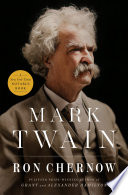
The #1 New York Times Bestseller • One of Barack Obama's Favorite Books of 2025• A Washington Post and New York Times Notable Book • Named a Best Book of 2025 by TIME, The Guardian, Bloomberg, The Christian Science Monitor, and Kirkus Reviews “Comprehensive, enthralling . .
Read more
The #1 New York Times Bestseller • One of Barack Obama's Favorite Books of 2025• A Washington Post and New York Times Notable Book • Named a Best Book of 2025 by TIME, The Guardian, Bloomberg, The Christian Science Monitor, and Kirkus Reviews “Comprehensive, enthralling . . . Mark Twain flows like the Mississippi River, its prose propelled by Mark Twain’s own exuberance.” —The Boston Globe “Chernow writes with such ease and clarity . . . For all its length and detail, [Mark Twain] is deeply absorbing throughout.” — The Washington Post Pulitzer Prize-winning biographer Ron Chernow illuminates the full, fascinating, and complex life of the writer long celebrated as the father of American literature, Mark Twain Before he was Mark Twain, he was Samuel Langhorne Clemens. Born in 1835, the man who would become America’s first, and most influential, literary celebrity spent his childhood dreaming of piloting steamboats on the Mississippi. But when the Civil War interrupted his career on the river, the young Twain went west to the Nevada Territory and accepted a job at a local newspaper, writing dispatches that attracted attention for their brashness and humor. It wasn’t long before the former steamboat pilot from Missouri was recognized across the country for his literary brilliance, writing under a pen name that he would immortalize. In this richly nuanced portrait of Mark Twain, acclaimed biographer Ron Chernow brings his considerable powers to bear on a man who shamelessly sought fame and fortune, and crafted his persona with meticulous care. After establishing himself as a journalist, satirist, and lecturer, he eventually settled in Hartford with his wife and three daughters, where he went on to write The Adventures of Tom Sawyer and Adventures of Huckleberry Finn. He threw himself into the hurly-burly of American culture, and emerged as the nation’s most notable political pundit. At the same time, his madcap business ventures eventually bankrupted him; to economize, Twain and his family spent nine eventful years in exile in Europe. He suffered the death of his wife and two daughters, and the last stage of his life was marked by heartache, political crusades, and eccentric behavior that sometimes obscured darker forces at play. Drawing on Twain’s bountiful archives, including thousands of letters and hundreds of unpublished manuscripts, Chernow masterfully captures the man whose career reflected the country’s westward expansion, industrialization, and foreign wars, and who was the most important white author of his generation to grapple so fully with the legacy of slavery. Today, more than one hundred years after his death, Twain’s writing continues to be read, debated, and quoted. In this brilliant work of scholarship, a moving tribute to the writer’s talent and humanity, Chernow reveals the magnificent and often maddening life of one of the most original characters in American history.
A Memoir
2025
NEW YORK TIMES BESTSELLER · A National Book Critics Circle Award Finalist A New York Times Notable Book of 2025 · A Washington Post Notable Nonfiction Book of 2025 · A Time Best Memoir of 2025 · Named a Best Book of 2025 by NPR, People, Air Mail, Bookreporter, and Publishers Weekly “Brooks tracks the geography of grief with patience and grace as she comes to terms with the ongoing nature of outliving the ones you love most. ...
Read more
NEW YORK TIMES BESTSELLER · A National Book Critics Circle Award Finalist A New York Times Notable Book of 2025 · A Washington Post Notable Nonfiction Book of 2025 · A Time Best Memoir of 2025 · Named a Best Book of 2025 by NPR, People, Air Mail, Bookreporter, and Publishers Weekly “Brooks tracks the geography of grief with patience and grace as she comes to terms with the ongoing nature of outliving the ones you love most. ... Her memoir is certainly a testament to her own unique loss, but it’s moreover a lifeline to others who will find themselves in this familiar, shattered landscape of grief.” —Los Angeles Times “A rich account of marriage and mourning.” —Washington Post A heartrending and beautiful memoir of sudden loss and a journey towards peace, from the bestselling, Pulitzer Prize-winning author of Horse Many cultural and religious traditions expect those who are grieving to step away from the world. In contemporary life, we are more often met with red tape and to-do lists. This is exactly what happened to Geraldine Brooks when her partner of more than three decades, Tony Horwitz – just sixty years old and, to her knowledge, vigorous and healthy – collapsed and died on a Washington, D. C. sidewalk. After spending their early years together in conflict zones as foreign correspondents, Geraldine and Tony settled down to raise two boys on Martha’s Vineyard. The life they built was one of meaningful work, good humor, and tenderness, as they spent their days writing and their evenings cooking family dinners or watching the sun set with friends at the beach. But all of this ended abruptly when, on Memorial Day 2019, Geraldine received the phone call we all dread. The demands were immediate and many. Without space to grieve, the sudden loss became a yawning gulf. Three years later, she booked a flight to a remote island off the coast of Australia with the intention of finally giving herself the time to mourn. In a shack on a pristine, rugged coast she often went days without seeing another person. There, she pondered the various ways in which cultures grieve and what rituals of her own might help to rebuild a life around the void of Tony’s death. A spare and profoundly moving memoir that joins the classics of the genre, Memorial Days is a portrait of a larger-than-life man and a timeless love between souls that exquisitely captures the joy, agony, and mystery of life.
===
A heartrending and beautiful memoir of sudden loss and a journey toward peace, from the bestselling, Pulitzer Prize-winning author of Horse.
A 500-Year History
2025
From acclaimed and prize-winning historian Paul Gillingham, a rich and vibrant history of one of the world’s most diverse, politically ground-breaking, and influential of countries At the beginning of his masterful work of scholarship and narration, Paul Gillingham writes, from its outset “Mexico was more profoundly, globally hybrid than anywhere else in the prior history of the world.” Over the ensuing five centuries, Mexicans have prefigured and shaped the course of human lives across the globe. Gillingham begins in 1511 with the dramatic shipwreck of two Spanish sailors in the far south of Mexico.
Read more
From acclaimed and prize-winning historian Paul Gillingham, a rich and vibrant history of one of the world’s most diverse, politically ground-breaking, and influential of countries At the beginning of his masterful work of scholarship and narration, Paul Gillingham writes, from its outset “Mexico was more profoundly, globally hybrid than anywhere else in the prior history of the world.” Over the ensuing five centuries, Mexicans have prefigured and shaped the course of human lives across the globe. Gillingham begins in 1511 with the dramatic shipwreck of two Spanish sailors in the far south of Mexico. Ten years later Hernán Cortés led an army of European adventurers and indigenous rebels to seize the legendary island city of Tenochtitlán, the center of Montezuma’s empire, the largest in the Americas. The capture of the future Mexico City was, more than an extraordinary military event, the collision of two long-separated worlds, radically different in everything from biota to urban planning. Spaniards discovered tomatoes, chocolate, and a city larger and more sophisticated than anything they had ever seen. Mexicans discovered horses, wheels, and lethal germs, sparking a cataclysmic century of disease that wiped out a majority of the pre-existing population and led to a unique recombination of European and indigenous cultures. The industrial mining of Mexico’s silver transformed the wealth and trade of the world. Mexico’s independence from the Spanish Empire in 1821 led to a calamitous mid-century war with the United States and one of the first great social revolutions that brought peace for Mexicans throughout many of the global horrors of the 20th century, before the country itself collapsed into the violence of the cartels and a refugee crisis in the 2000s. The history of Mexico has been, Gillingham shows, one of suffering empire but also of overcoming. Through it all the country set new standards for inclusivity, for progressive social policies, for artistic expression, for adroitly balancing dictatorship and democracy. While racial divides endured, so too did indigenous peoples, who enjoyed rights unthinkable in the United States. Mexico was among the first countries to abolish slavery in 1829, and Mexicans elected North America’s first Black president, Vicente Guerrero, its only indigenous president, Benito Juárez, and its only woman president, Claudia Sheinbaum. As elegantly written as it is powerful in scope, rich in character and anecdote, Mexico uses the latest research to dazzling effect, showing how often Mexico has been a dynamic and vital shaper of world affairs.
The CIA in the 21st Century
2025
New York Times Bestseller * A New Yorker Best Book of 2025 * A New York Times Editors' Choice "No one has opened up the CIA to us like Weiner has, and The Mission deserves to win Weiner a second Pulitzer." —The Guardian A masterpiece of reporting based on-the-record interviews with six former CIA directors and scores of spies, station chiefs, and top operations officers: The Mission is a gripping and revelatory history of the modern CIA, reaching from 9/11 through its covert operations in Afghanistan and Iraq to today’s secret battles with Russia and China, concluding with the Agency's own fight for survival under the current president of the United States Tim Weiner's epic successor to Legacy of Ashes, his National Book Award–winning classic about the CIA's first sixty years At the turn of the century, the Central Intelligence Agency was in crisis. The end of the Cold War had robbed the agency of its mission.
Read more
New York Times Bestseller * A New Yorker Best Book of 2025 * A New York Times Editors' Choice "No one has opened up the CIA to us like Weiner has, and The Mission deserves to win Weiner a second Pulitzer." —The Guardian A masterpiece of reporting based on-the-record interviews with six former CIA directors and scores of spies, station chiefs, and top operations officers: The Mission is a gripping and revelatory history of the modern CIA, reaching from 9/11 through its covert operations in Afghanistan and Iraq to today’s secret battles with Russia and China, concluding with the Agency's own fight for survival under the current president of the United States Tim Weiner's epic successor to Legacy of Ashes, his National Book Award–winning classic about the CIA's first sixty years At the turn of the century, the Central Intelligence Agency was in crisis. The end of the Cold War had robbed the agency of its mission. More than thirty overseas stations and bases had been shuttered, and scores that remained had been severely cut back. Many countries where surveillance was once deemed crucial went uncovered. Essential intelligence wasn’t being collected. At the dawn of the information age, the CIA’s officers and analysts worked with outmoded technology, struggling to distinguish the clear signals of significant facts from the cacophony of background noise. Then came September 11th, 2001. After the attacks, the CIA transformed itself into a lethal paramilitary force, running secret prisons and brutal interrogations, mounting deadly drone attacks, and all but abandoning its core missions of espionage and counterespionage. The consequences were grave: the deaths of scores of its recruited foreign agents, the theft of its personnel files by Chinese spies, the penetration of its computer networks by Russian intelligence and American hackers, and the tragedies of Afghanistan and Iraq. A new generation of spies now must fight the hardest targets—Moscow, Beijing, Tehran—while confronting a president who has attacked the CIA as a subversive force. From Pulitzer Prize winner Tim Weiner, The Mission tells the gripping, high-stakes story of the CIA through the first quarter of the twenty-first century, revealing how the agency fought to rebuild the espionage powers it lost during the war on terror—and finally succeeded in penetrating the Kremlin. The struggle has life-and-death consequences for America and its allies. The CIA must reclaim its original mission: know thy enemies. The fate of the free world hangs in the balance. A masterpiece of reporting, The Mission includes exclusive on-the-record interviews with six former CIA directors, the top spymaster, thirteen station chiefs, and scores of top operations officers who served undercover for decades and have never spoken to a journalist before.
The Rise of Spotify and the Costs of the Perfect Playlist
2025
Drawing on over a hundred interviews with industry insiders, former Spotify employees, and musicians, music journalist Liz Pelly examines the inner workings of today's highly consolidated record business, showing what has changed as music has become increasingly playlisted, personalized, and autoplayed.
Crime and Bloodlust in the Time of Serial Killers
2025
A National Bestseller “Scorching, seductive . .
Read more
A National Bestseller “Scorching, seductive . . . A superb and disturbing vivisection of our darkest urges.” —Los Angeles Times “This is about as highbrow as true crime gets.” —Vulture “Fraser has outdone herself, and just about everyone else in the true-crime genre, with Murderland.” —Esquire From the Pulitzer Prize–winning author of Prairie Fires comes a terrifying true-crime history of serial killers in the Pacific Northwest and beyond—a gripping investigation of how a new strain of psychopath emerged out of a toxic landscape of deadly industrial violence Caroline Fraser grew up in the shadow of Ted Bundy, the most notorious serial murderer of women in American history, surrounded by his hunting grounds and mountain body dumps, in the brooding landscape of the Pacific Northwest. But in the 1970s and ’80s, Bundy was just one perpetrator amid an uncanny explosion of serial rape and murder across the region. Why so many? Why so weirdly and nightmarishly gruesome? Why the senseless rise and then sudden fall of an epidemic of serial killing? As Murderland indelibly maps the lives and careers of Bundy and his infamous peers in mayhem—the Green River Killer, the I-5 Killer, the Night Stalker, the Hillside Strangler, even Charles Manson—Fraser’s Northwestern death trip begins to uncover a deeper mystery and an overlapping pattern of environmental destruction. At ground zero in Ted Bundy’s Tacoma stood one of the most poisonous lead, copper, and arsenic smelters in the world, but it was hardly unique in the West. As Fraser’s investigation inexorably proceeds, evidence mounts that the plumes of these smelters not only sickened and blighted millions of lives but also warped young minds, including some who grew up to become serial killers. A propulsive nonfiction thriller, Murderland transcends true-crime voyeurism and noir mythology, taking readers on a profound quest into the dark heart of the real American berserk.
One Day, Everyone Will Have Always Been Against This
2025
From award-winning novelist and journalist Omar El Akkad comes a powerful reckoning with what it means to live in the heart of an empire that doesn’t consider you fully human. On October 25th, 2023, after just three weeks of the bombardment of Gaza, Omar El Akkad put out a tweet: “One day, when it's safe, when there's no personal downside to calling a thing what it is, when it's too late to hold anyone accountable, everyone will have always been against this.” This tweet was viewed more than ten million times.
Read more
From award-winning novelist and journalist Omar El Akkad comes a powerful reckoning with what it means to live in the heart of an empire that doesn’t consider you fully human. On October 25th, 2023, after just three weeks of the bombardment of Gaza, Omar El Akkad put out a tweet: “One day, when it's safe, when there's no personal downside to calling a thing what it is, when it's too late to hold anyone accountable, everyone will have always been against this.” This tweet was viewed more than ten million times. One Day Everyone Will Have Always Been Against This chronicles the deep fracture that has occurred for Black, brown, Indigenous Americans, as well as the upcoming generation, many of whom had clung to a thread of faith in Western ideals, in the idea that their countries, or the countries of their adoption, actually attempted to live up to the values they espouse. This book is a reckoning with what it means to live in the West, and what it means to live in a world run by a small group of countries—America, the UK, France, and Germany. It will be The Fire Next Time for a generation that understands we're undergoing a shift in the so-called “rules-based order,” a generation that understands the West can no longer be trusted to police and guide the world, or its own cities and campuses. It draws on intimate details of Omar's own story as an emigrant who grew up believing in the Western project, who was catapulted into journalism by the rupture of 9/11. This book is El Akkad's heartsick breakup letter with the West. It is a breakup we are watching all over the United States, on college campuses, on city streets, and the consequences of this rupture will be felt by all of us. His book is for all the people who want something better than what the West has served up. This is the book for our time.
Ordinary People Don't Carry Machine Guns
Thoughts on War
2025
A reporter and novelist who is also a soldier in the Ukrainian army reconsiders his pacifism and the choices one makes when war is waged against you. "Chapeye represents a modern-day Ukrainian counterpart to classic American writers like Mark Twain or O.
Read more
A reporter and novelist who is also a soldier in the Ukrainian army reconsiders his pacifism and the choices one makes when war is waged against you. "Chapeye represents a modern-day Ukrainian counterpart to classic American writers like Mark Twain or O. Henry, capturing the dignity and respect his characters might not get but nonetheless long for and deserve." —Kate Tsurkan, Los Angeles Review of Books In Ordinary People Don't Carry Machine Guns, Artem Chapeye reveals his war, intimate and senseless, withholding nothing about his motivations, his nightmares, his new relationship with the world. Here one man, a pacifist turned fighter, a story writer turned soldier, a father and husband, considers the reasons for and reactions to war on a very personal level. An avowed pacifist until 2022, Chapeye joined the Ukrainian army in the first days of the Russian invasion. He tries to understand the large-scale decision-making that has a defining impact on both individual citizens and society-at-large: many of his fellow soldiers never considered enlisting before finding themselves at war; others flee the country. He wonders from the front lines what his young children at home are doing and what they’re feeling. The book is written in three parts, offering historical analogies and literary references throughout. “When Darkness Comes” relates the first days of the full-scale invasion in February 2022 when lives and the peace were shattered. “It’s Necessary to Cultivate Your Garden” details the experience of the everyday people of Ukraine, workers and peasants, who look forward to returning to simpler lives. The last section, “People Aren’t Divided into Brands,” critiques the elitism of those who consider themselves above those who “simply” fight. Deeply thought-provoking, intelligent, and heartbreaking, this is an essential book for anyone who wants to understand the ways that war can change everything.
A Wartime Story of Courage, Friendship, and Betrayal
2025
Two women in Nazi-occupied Paris created a daring escape line that rescued dozens of Allied servicemen. With one still in a German prison camp, the other wrote a book about it—a memoir built on fabrications.
Read more
Two women in Nazi-occupied Paris created a daring escape line that rescued dozens of Allied servicemen. With one still in a German prison camp, the other wrote a book about it—a memoir built on fabrications. Now the bestselling author of Eighty Days shares their incredible, never-before-told full story. “Goodman’s gripping account chronicles the events—both courageous and horrifying—and illustrates how loyalty and betrayal can coincide in wartime and its aftermath.”—The Washington Post “A heart-pounding tale that is impossible to put down.”—Lynne Olson, author of Madame Fourcade's Secret War LONGLISTED FOR THE AMERICAN LIBRARY IN PARIS BOOK AWARD • A WASHINGTON POST BEST BOOK OF THE YEAR Etta Shiber and Kate Bonnefous are the unlikeliest of heroines: two seemingly ordinary women, an American widow and an English divorcée, living quietly together in Paris. Yet during the Nazi occupation, these two friends find themselves unexpectedly plunged into the whirlwind of history. With the help of a French country priest and others, they set out to rescue British and French soldiers trapped behind enemy lines—some of whom they daringly smuggle through Nazi checkpoints hidden inside the trunk of their car. Ultimately the Gestapo captures them both. After eighteen months in prison, Etta is returned to the United States in a prisoner exchange. Back home, hoping to bring attention to her friend Kitty’s bravery, she publishes a memoir about their work. Paris-Underground becomes a publishing sensation and Etta a celebrity. Meanwhile Kate spends the rest of the war in a Nazi prison, entirely unaware of the book that has been written about her—and the deeds that have been claimed in her name. In researching this story, Matthew Goodman uncovered military records and personal testimonies that reveal, for the first time, the shocking truth behind Etta’s memoir and the unexpected, far-reaching consequences of its publication. More than just a story of two women’s remarkable courage, Paris Undercover is a vivid, gripping account of deceit, betrayal, and personal redemption.
A Memoir
2024
NEW YORK TIMES NOTABLE BOOK • NEW YORK TIMES BESTSELLER • FINALIST FOR THE 2025 WOMEN'S PRIZE • A fascinating meditation on freedom, trust, loss, and our relationship with the natural world, explored through the story of one woman’s unlikely friendship with a wild hare. A BEST BOOK OF THE YEAR: The Washington Post, The Wall Street Journal, NPR, TIME, The Boston Globe, The Economist, Scientific American, Slate “Moving.
Read more
NEW YORK TIMES NOTABLE BOOK • NEW YORK TIMES BESTSELLER • FINALIST FOR THE 2025 WOMEN'S PRIZE • A fascinating meditation on freedom, trust, loss, and our relationship with the natural world, explored through the story of one woman’s unlikely friendship with a wild hare. A BEST BOOK OF THE YEAR: The Washington Post, The Wall Street Journal, NPR, TIME, The Boston Globe, The Economist, Scientific American, Slate “Moving. . . . Impart[s] valuable lessons about slowing down and the beauty in the unexpected.”—USA Today “A perfect testimony to the transformative power of love.”—Margaret Renkl, author of The Comfort of Crows Imagine you could hold a baby hare and bottle-feed it. Imagine that it lived under your roof and bounded around your bedroom at night, drumming on the duvet cover when it wanted your attention. Imagine that, more than two years later, it still ran in from the fields when you called it and slept in your house for hours on end. For political advisor and speechwriter Chloe Dalton, who spent lockdown deep in the English countryside, far away from her usual busy London life, this became her unexpected reality. In February 2021, Dalton stumbles upon a newborn hare—a leveret—that had been chased by a dog. Fearing for its life, she brings it home, only to discover how difficult it is to rear a wild hare, most of whom perish in captivity from either shock or starvation. Through trial and error, she learns to feed and care for the leveret with every intention of returning it to the wilderness. Instead, it becomes her constant companion, wandering the fields and woods at night and returning to Dalton’s house by day. Though Dalton feared that the hare would be preyed upon by foxes, weasels, feral cats, raptors, or even people, she never tried to restrict it to the house. Each time the hare leaves, Chloe knows she may never see it again. Yet she also understands that to confine it would be its own kind of death. Raising Hare chronicles their journey together while also taking a deep dive into the lives and nature of hares, and the way they have been viewed historically in art, literature, and folklore. We witness firsthand the joy at this extraordinary relationship between human and animal, which serves as a reminder that the best things, and most beautiful experiences, arise when we least expect them.
===
THE INSTANT SUNDAY TIMES AND NEW YORK TIMES BESTSELLER WINNER OF THE WAINWRIGHT PRIZE FOR NATURE WRITING WINNER OF BOOKS ARE MY BAG READERS AWARD SHORTLISTED FOR THE WOMEN'S PRIZE FOR NON-FICTION, HATCHARDS AND BIOGRAPHERS' CLUB FIRST BIOGRAPHY PRIZE A BOOK OF THE YEAR FOR THE HAY FESTIVAL, SUNDAY TIMES, THE TIMES, FINANCIAL TIMES, SPECTATOR, ECONOMIST AND iNEWS 'A beautiful book' - ANGELINA JOLIE 'I will be recommending this to everyone' - MATT HAIG 'Quietly profound, beautifully written, Hare is now lodged in my heart' - TRACY CHEVALIER __ Imagine you could hold a baby hare and bottle-feed it. Imagine that it lived under your roof and lolloped around your bedroom at night, drumming on the duvet cover when it wanted your attention. Imagine that, over two years later, it still ran in from the fields when you called it and snoozed in your house for hours on end. This happened to me. When lockdown led busy professional Chloe to leave the city and return to the countryside of her childhood, she never expected to find herself custodian of a newly born hare. Yet when she finds the creature, endangered, alone and no bigger than her palm, she is compelled to give it a chance at survival. Raising Hare chronicles their journey together and the challenges of caring for the leveret and preparing for its return to the wild. We witness an extraordinary relationship between human and animal, rekindling our sense of awe towards nature and wildlife. This improbable bond of trust serves to remind us that the most remarkable experiences, inspiring the most hope, often arise when we least expect them.
Having a Child in the Digital Age
2025
“Second Life is not only a book for parents; it's for anyone intrigued (and concerned) by the ways in which our digital footprints impact the circle of life itself.” —Elle “Engrossing….With a reporter’s gimlet eye, Hess lenses out from her personal experience…[She] has a (hilariously reluctant) native’s ear for the (awful) millennial marketing sound.” —The New York Times “[Hess probes] both the effect of the internet on maternal guilt and anxiety (a nearly universal condition) and the more specific challenges of her own motherhood journey….Smart, funny, and filled with love.” —The Boston Globe As an internet culture critic for The New York Times, Amanda Hess had built a reputation among readers as a sharp observer of the seductions and manipulations of online life. But when Hess discovered she was pregnant with her first child, she found herself unexpectedly rattled by a digital identity crisis of her own.
Read more
“Second Life is not only a book for parents; it's for anyone intrigued (and concerned) by the ways in which our digital footprints impact the circle of life itself.” —Elle “Engrossing….With a reporter’s gimlet eye, Hess lenses out from her personal experience…[She] has a (hilariously reluctant) native’s ear for the (awful) millennial marketing sound.” —The New York Times “[Hess probes] both the effect of the internet on maternal guilt and anxiety (a nearly universal condition) and the more specific challenges of her own motherhood journey….Smart, funny, and filled with love.” —The Boston Globe As an internet culture critic for The New York Times, Amanda Hess had built a reputation among readers as a sharp observer of the seductions and manipulations of online life. But when Hess discovered she was pregnant with her first child, she found herself unexpectedly rattled by a digital identity crisis of her own. In the summer of 2020, a routine ultrasound detected a mysterious abnormality in Hess’s baby. Without hesitation, she reached for her phone, looking for answers. But rather than allaying her anxieties, her search sucked her into the destabilizing morass of the internet, and she was vulnerable—more than ever—to conspiracy, myth, judgment, commerce, and obsession. As Hess documents her escalating relationship with the digital world, she identifies how technologies act as portals to troubling ideologies, ethical conflicts, and existential questions, and she illuminates how the American traditions of eugenics, surveillance, and hyper-individualism are recycled through these shiny products for a new generation of parents and their children. At once funny, heartbreaking, and surreal, Second Life is a journey that spans a network of fertility apps, prenatal genetic tests, gender reveal videos, rare disease Facebook groups, “freebirth” influencers, and hospital reality shows. Hess confronts technology’s distortions as they follow her through pregnancy and into her son’s early life. The result is a critical record of our digital age that reveals the unspoken ways our lives are being fractured and reconstituted by technology.
The Life of Robert Louis Stevenson
2025
From a critically acclaimed biographer, an engrossing narrative of Robert Louis Stevenson’s life, a story as romantic and adventurous as his fiction “This magnificent biography of Robert Louis Stevenson reveals much about a writer that we think we knew. .
Read more
From a critically acclaimed biographer, an engrossing narrative of Robert Louis Stevenson’s life, a story as romantic and adventurous as his fiction “This magnificent biography of Robert Louis Stevenson reveals much about a writer that we think we knew. . . . Dazzling.”—Kirkus Reviews (starred review) Robert Louis Stevenson (1850–1894) is famed for Treasure Island, Kidnapped, and Strange Case of Dr. Jekyll and Mr. Hyde, but he published many other novels and stories before his death at forty-four. Despite lifelong ill health, he had immense vitality; Mark Twain said his eyes burned with “smoldering rich fire.” Born in Edinburgh to a family of lighthouse engineers, Stevenson set many stories in Scotland but sought travel and adventure in a life as romantic as his novels. “I loved a ship,” he wrote, “as a man loves burgundy or daybreak.” The adventures were shared with his free-spirited American wife, Fanny, with whom he moved to the South Pacific. Samoan friends named Stevenson “Storyteller.” Reading, he said, “should be absorbing and voluptuous; we should gloat over a book, be rapt clean out of ourselves.” His own books have been translated into dozens of languages. Jorge Luis Borges called his stories “one of the forms of happiness,” and other modernist masters as various as Proust, Nabokov, and Calvino have paid tribute to his greatness as a literary artist. In Storyteller, Leo Damrosch brings to life an unforgettable personality, illuminated by many who knew Stevenson well and drawing from thousands of the writer’s letters in his many voices and moods—playful, imaginative, at times tragic.
Exclusion, Belonging, and the Epic Story of the Chinese in America
2025
From New Yorker editor and writer Michael Luo, a vivid, urgent history of two centuries of Chinese exclusion and the birth of anti-Asian feeling in America. In 1889, when the Supreme Court upheld the Chinese Exclusion Act—a measure barring Chinese laborers from entering the United States that remained in effect for more than fifty years—Justice Stephen Johnson Field characterized the Chinese as a people “residing apart by themselves.” They were, Field concluded, “strangers in the land.” Today, there are more than twenty-two million people of Asian descent in the United States, yet this label still hovers over Asian Americans.
Read more
From New Yorker editor and writer Michael Luo, a vivid, urgent history of two centuries of Chinese exclusion and the birth of anti-Asian feeling in America. In 1889, when the Supreme Court upheld the Chinese Exclusion Act—a measure barring Chinese laborers from entering the United States that remained in effect for more than fifty years—Justice Stephen Johnson Field characterized the Chinese as a people “residing apart by themselves.” They were, Field concluded, “strangers in the land.” Today, there are more than twenty-two million people of Asian descent in the United States, yet this label still hovers over Asian Americans. In Strangers in the Land, Luo traces anti-Asian feeling in America to the first wave of immigrants from China in the mid-nineteenth-century: laborers who traveled to California in search of gold and railroad work. Their communities almost immediately faced mobs of white vigilantes who drove them from their workplaces and homes. In his rich, character-driven history, Luo tells stories like that of Denis Kearney, the sandlot demagogue who became the face of the anti-Chinese movement, and of activists who fought back, like Massachusetts Senator George Frisbie Hoar and newspaperman Wong Chin Foo. After the halt on immigration in 1889, the Chinese-American community who remained struggled to survive and thrive on the margins of American life. In 1965, when LBJ's Immigration and Nationality Act forbade discrimination by national origin, America opened its doors wide to families like those of Luo's parents, but he finds that the centuries of exclusion of Chinese-Americans left a legacy: many Asians are still treated, and feel, like outsiders today. Strangers in the Land is a sweeping narrative of a forgotten chapter in American history, and a reminder that America’s present reflects its exclusionary past.
Working and Homeless in America
2026
ONE OF THE NEW YORK TIMES AND THE ATLANTIC’S TEN BEST BOOKS OF THE YEAR • ONE OF BARACK OBAMA’S FAVORITE BOOKS OF THE YEAR • Through the “revelatory and gut-wrenching” (Associated Press) stories of five Atlanta families, this landmark work of journalism exposes a new and troubling trend—the dramatic rise of the working homeless in cities across America. “An exceptional feat of reporting, full of an immediacy that calls to mind Adrian Nicole LeBlanc’s Random Family and Matthew Desmond’s Evicted.”—The New York Times Book Review (Editors’ Choice) FINALIST FOR THE ANDREW CARNEGIE MEDAL • A BEST BOOK OF THE YEAR: NPR, The Washington Post, Atlanta Journal-Constitution, Elle, New America, BookPage, Shelf Awareness The working homeless.
Read more
ONE OF THE NEW YORK TIMES AND THE ATLANTIC’S TEN BEST BOOKS OF THE YEAR • ONE OF BARACK OBAMA’S FAVORITE BOOKS OF THE YEAR • Through the “revelatory and gut-wrenching” (Associated Press) stories of five Atlanta families, this landmark work of journalism exposes a new and troubling trend—the dramatic rise of the working homeless in cities across America. “An exceptional feat of reporting, full of an immediacy that calls to mind Adrian Nicole LeBlanc’s Random Family and Matthew Desmond’s Evicted.”—The New York Times Book Review (Editors’ Choice) FINALIST FOR THE ANDREW CARNEGIE MEDAL • A BEST BOOK OF THE YEAR: NPR, The Washington Post, Atlanta Journal-Constitution, Elle, New America, BookPage, Shelf Awareness The working homeless. In a country where hard work and determination are supposed to lead to success, there is something scandalous about this phrase. But skyrocketing rents, low wages, and a lack of tenant rights have produced a startling phenomenon: People with full-time jobs cannot keep a roof over their head, especially in America’s booming cities, where rapid growth is leading to catastrophic displacement. These families are being forced into homelessness not by a failing economy but a thriving one. In this gripping and deeply reported book, Brian Goldstone plunges readers into the lives of five Atlanta families struggling to remain housed in a gentrifying, increasingly unequal city. Maurice and Natalia make a fresh start in the country’s “Black Mecca” after being priced out of DC. Kara dreams of starting her own cleaning business while mopping floors at a public hospital. Britt scores a coveted housing voucher. Michelle is in school to become a social worker. Celeste toils at her warehouse job while undergoing treatment for ovarian cancer. Each of them aspires to provide a decent life for their children—and each of them, one by one, joins the ranks of the nation’s working homeless. Through intimate, novelistic portraits, Goldstone reveals the human cost of this crisis, following parents and their kids as they go to sleep in cars, or in squalid extended-stay hotel rooms, and head out to their jobs and schools the next morning. These are the nation’s hidden homeless—omitted from official statistics, and proof that overflowing shelters and street encampments are only the most visible manifestation of a far more pervasive problem. By turns heartbreaking and urgent, There Is No Place for Us illuminates the true magnitude, causes, and consequences of the new American homelessness—and shows that it won’t be solved until housing is treated as a fundamental human right.
Life and Death in the Age of Forever Chemicals
2025
A landmark investigation of the chemical industry's decades-long campaign to hide the dangers of forever chemicals, told through the story of a small town on the frontlines of an epic public health crisis In 2014, after losing several friends and relatives to cancer, an unassuming insurance underwriter in Hoosick Falls, New York, began to suspect that the local water supply was polluted. When he tested his tap water, he discovered dangerous levels of forever chemicals.
Read more
A landmark investigation of the chemical industry's decades-long campaign to hide the dangers of forever chemicals, told through the story of a small town on the frontlines of an epic public health crisis In 2014, after losing several friends and relatives to cancer, an unassuming insurance underwriter in Hoosick Falls, New York, began to suspect that the local water supply was polluted. When he tested his tap water, he discovered dangerous levels of forever chemicals. This set off a chain of events that led to 100 million Americans learning their drinking water was tainted. Although the discovery came as a shock to most, the U.S. government and the manufacturers of these toxic chemicals—used in everything from lipstick and cookware to children’s clothing—had known about their hazards for decades. In They Poisoned the World, investigative journalist Mariah Blake tells the astonishing story of this cover-up, tracing its roots back to the Manhattan Project and through the postwar years, as industry scientists discovered that these chemicals refused to break down and were saturating the blood of virtually every human being. By the 1980s, manufacturers were secretly testing their workers and finding links to birth defects, cancer, and other serious diseases. At every step, the industry’s deceptions were aided by our government’s appallingly lax regulatory system—a system that has made us all guinea pigs in a vast, uncontrolled chemistry experiment. Drawing on years of on-the-ground reporting and tens of thousands of documents, Blake interweaves the secret history of forever chemicals with the moving story of how a lone village took on the chemical giants—and won. From the beloved local doctor to the young mother who took her fight all the way to the nation’s capital, citizen activists in Hoosick Falls and beyond have ignited the most powerful grassroots environmental movement since Silent Spring. Humane and revelatory, this book will provoke outrage—and hopefully inspire the change we need to protect the health of every American for generations to come.
2025
Finalist for the National Book Award for Nonfiction Finalist for the PEN/Jean Stein Book Award Short-listed for the Andrew Carnegie Medal for Excellence in Nonfiction Long-listed for the National Book Critics Circle Award for Autobiography One of the New York Times Notable Books of the Year Yiyun Li’s remarkable, defiant work of radical acceptance as she considers the loss of her son James. “There is no good way to say this,” Yiyun Li writes at the beginning of this book.
Read more
Finalist for the National Book Award for Nonfiction Finalist for the PEN/Jean Stein Book Award Short-listed for the Andrew Carnegie Medal for Excellence in Nonfiction Long-listed for the National Book Critics Circle Award for Autobiography One of the New York Times Notable Books of the Year Yiyun Li’s remarkable, defiant work of radical acceptance as she considers the loss of her son James. “There is no good way to say this,” Yiyun Li writes at the beginning of this book. “There is no good way to state these facts, which must be acknowledged . . . My husband and I had two children and lost them both: Vincent in 2017, at sixteen, James in 2024, at nineteen. Both chose suicide, and both died not far from home.” There is no good way to say this—because words fall short. It takes only an instant for death to become fact, “a single point in a time line.” Living now on this single point, Li turns to thinking and reasoning and searching for words that might hold a place for James. Li does what she can: doing “things that work,” including not just writing but gardening, reading Camus and Wittgenstein, learning the piano, and living thinkingly alongside death. This is a book for James, but it is not a book about grieving or mourning. As Li writes, “The verb that does not die is ‘to be.’ Vincent was and is and will always be Vincent. James was and is and will always be James. We were and are and will always be their parents. There is no now and then, now and later; only now and now and now and now.” Things in Nature Merely Grow is a testament to Li’s indomitable spirit.
2025
"Revelatory." --New York Times Book Review "Essential reading. A companion for turbulent times." --Laura van den Berg "Nothing short of a masterpiece.” --The San Francisco Chronicle Named a Must-Read Book of the Summer by The Los Angeles Times, People Magazine, and Town & Country Internationally bestselling author Miriam Toews' memoir of the will to write--a work of disobedient memory, humor, and exquisite craft set against a content-hungry, prose-stuffed society.
Read more
"Revelatory." --New York Times Book Review "Essential reading. A companion for turbulent times." --Laura van den Berg "Nothing short of a masterpiece.” --The San Francisco Chronicle Named a Must-Read Book of the Summer by The Los Angeles Times, People Magazine, and Town & Country Internationally bestselling author Miriam Toews' memoir of the will to write--a work of disobedient memory, humor, and exquisite craft set against a content-hungry, prose-stuffed society.
===
In this breathtaking memoir of stunning emotional force and electrifying honesty, one of Canada's most iconic writers tells her own story for the first time. “Why do you write?” the organizer of a literary event in Mexico City asks Miriam Toews. Each attempt at an answer from Toews—all unsatisfactory to the organizer—surfaces new layers of grief, guilt, and futility connected to her sister’s suicide more than fifteen years ago. She has been keeping up, she realizes, an internal correspondence with her beloved sibling, attempting to fill a silence she can barely comprehend. As Toews turns to face that silence, we come to see that the question “why I write” is as impossible to answer as deciding whether to live life as a comedy or a tragedy. A masterwork of non-fiction, A Truce That Is Not Peace explores the uneasy pact every creative person makes with memory. Wildly original yet intimately, powerfully precise; momentous, hilarious, wrenching, and joyful—this is Miriam Toews at her dazzling best, remaking her personal world and inventing a brilliant literary form to hold it.
The Pilgrimage of Peter Matthiessen
2025
Discover the many lives of Peter Matthiessen - writer, naturalist, activist, CIA agent, Zen master - in this kaleidoscopic biography of an American literary giant. Author of The Snow Leopard, co-founder of the Paris Review and the only writer to have ever won the National Book Award for both fiction and nonfiction, Peter Matthiessen was a towering figure of twentieth-century American literary culture.
Read more
Discover the many lives of Peter Matthiessen - writer, naturalist, activist, CIA agent, Zen master - in this kaleidoscopic biography of an American literary giant. Author of The Snow Leopard, co-founder of the Paris Review and the only writer to have ever won the National Book Award for both fiction and nonfiction, Peter Matthiessen was a towering figure of twentieth-century American literary culture. He was also, briefly, an undercover agent for the fledgling CIA; an environmental activist; an advocate for Native American rights and California farmworkers; friends with the likes of Truman Capote and William Styron; and a daring explorer who visited every continent on Earth, scaling the Himalayas and floating through the Amazon on a balsawood raft. Across these many lives, Matthiessen was always searching for what he called his 'true nature' - an enlightened state of being, without ego - and this spiritual quest ultimately led him, even as he inflicted great pain on three wives and multiple children, to the highest ranks of Zen. Readers and critics have struggled to reconcile Matthiessen's extraordinarily varied achievements and literary output, which included everything from experimental novels to advocacy journalism. Now, for the first time, drawing on rich primary sources and hundreds of interviews, acclaimed biographer Lance Richardson pulls together the seemingly disparate threads of Matthiessen's story. With page-turning immediacy, Richardson illuminates how the writer's uncanny gifts enabled him to sense connections between ecological decline, racism and labour exploitation - to express, eloquently and presciently, that 'in a damaged human habitat, all problems merge'. 'Splendidly readable ... [Richardson] writes with flair and erudition' The Observer on House of Nutter 'Illuminating and vividly drawn' Sunday Telegraph on House of Nutter
===
The first biography of Peter Matthiessen, the novelist, naturalist, and Zen roshi, whose trailblazing work championed Native American rights and helped usher in the modern environmental movement, by award-winning writer Lance Richardson. “A stunning, formidable achievement by a brilliant biographer. Lance Richardson takes his readers on a wild ride with Peter Matthiessen.” —Kai Bird, Pulitzer Prize-winning co-author of American Prometheus “A fair-minded, grippingly paced, and tremendously readable narrative.” —Pico Iyer, Air Mail Peter Matthiessen (1927-2014), a towering figure of twentieth-century American letters, achieved so much during his lifetime, in so many different areas, that people have struggled to pin him down. While ambivalent about his WASP privilege—as a teenager he demanded that his name be removed from the New York Social Register—he attended Yale and cut his teeth in postwar Paris, co-founding The Paris Review as he worked undercover for the CIA. But then, after a rebellious stint as a Long Island fisherman, he escaped into a series of wild expeditions: floating through the Amazon to recover a prehistorical fossil; embedding with a tribe in Netherlands New Guinea; swimming with sharks off the coast of Australia. His novels, inspired by his travels, were unclassifiable meditations about Caymanian turtle hunters and frontier outlaws in the Florida Everglades. Meanwhile, his nonfiction became legendary: nature books like Wildlife in America—“key parts of the canon of emergent environmental writing,” says Bill McKibben—as well as advocacy journalism supporting Cesar Chavez, Leonard Peltier, and Native American land claims. Underlying all Matthiessen’s disparate pursuits was the same existential search—to find a cure for “deep restlessness.” This search was most profoundly articulated in The Snow Leopard, his famous account of a 250-mile wildlife survey across the Himalayas. In True Nature, Lance Richardson reconstructs the full scope of a spiritual quest that ultimately led Matthiessen, even as he inflicted great pain on his family, to the highest ranks of Zen. Drawing on rich primary sources and hundreds of interviews, Richardson depicts Matthiessen’s life with page-turning immediacy, while also illuminating how the writer’s uncanny gifts enabled him to sense connections between ecological decline, racism, and labor exploitation—to express, eloquently and presciently, that “in a damaged human habitat, all problems merge.”
A Memoir
2025
A charming and moving debut memoir about how a man with a mystery illness saves a pigeon, and how the pigeon saves the man.
A History of the U.S. Constitution
2025
ONE OF PRESIDENT BARACK OBAMA'S FAVORITE BOOKS OF 2025 NEW YORK TIMES BESTSELLER A NEW YORK TIMES NOTABLE BOOK OF THE YEAR Named one of the Best Books of the Year by the Washington Post, New Yorker, Smithsonian, Bookpage, and the Chicago Public Library Longlisted for the 2025 Andrew Carnegie Medal for Excellence in Nonfiction "[Lepore's] 15th book, We the People, a history of the U.S. Constitution, may be her best yet, a capacious work that lands at the right moment, like a life buoy, as our ship of state takes on water." —Hamilton Cain, Los Angeles Times From the best-selling author of These Truths comes We the People, a stunning new history of the U.S.
Read more
ONE OF PRESIDENT BARACK OBAMA'S FAVORITE BOOKS OF 2025 NEW YORK TIMES BESTSELLER A NEW YORK TIMES NOTABLE BOOK OF THE YEAR Named one of the Best Books of the Year by the Washington Post, New Yorker, Smithsonian, Bookpage, and the Chicago Public Library Longlisted for the 2025 Andrew Carnegie Medal for Excellence in Nonfiction "[Lepore's] 15th book, We the People, a history of the U.S. Constitution, may be her best yet, a capacious work that lands at the right moment, like a life buoy, as our ship of state takes on water." —Hamilton Cain, Los Angeles Times From the best-selling author of These Truths comes We the People, a stunning new history of the U.S. Constitution, for a troubling new era. The U.S. Constitution is among the oldest constitutions in the world but also one of the most difficult to amend. Jill Lepore, Harvard professor of history and law, explains why in We the People, the most original history of the Constitution in decades—and an essential companion to her landmark history of the United States, These Truths. Published on the occasion of the 250th anniversary of the nation’s founding—the anniversary, too, of the first state constitutions—We the People offers a wholly new history of the Constitution. “One of the Constitution’s founding purposes was to prevent change,” Lepore writes. “Another was to allow for change without violence.” Relying on the extraordinary database she has assembled at the Amendments Project, Lepore recounts centuries of attempts, mostly by ordinary Americans, to realize the promise of the Constitution. Yet nearly all those efforts have failed. Although nearly twelve thousand amendments have been introduced in Congress since 1789, and thousands more have been proposed outside its doors, only twenty-seven have ever been ratified. More troubling, the Constitution has not been meaningfully amended since 1971. Without recourse to amendment, she argues, the risk of political violence rises. So does the risk of constitutional change by presidential or judicial fiat. Challenging both the Supreme Court’s monopoly on constitutional interpretation and the flawed theory of “originalism,” Lepore contends in this “gripping and unfamiliar story of our own past” that the philosophy of amendment is foundational to American constitutionalism. The framers never intended for the Constitution to be preserved, like a butterfly, under glass, Lepore argues, but expected that future generations would be forever tinkering with it, hoping to mend America by amending its Constitution through an orderly deliberative and democratic process. Lepore’s remarkable history seeks, too, to rekindle a sense of constitutional possibility. Congressman Jamie Raskin writes that Lepore “has thrown us a lifeline, a way of seeing the Constitution neither as an authoritarian straitjacket nor a foolproof magic amulet but as the arena of fierce, logical, passionate, and often deadly struggle for a more perfect union.” At a time when the Constitution’s vulnerability is all too evident, and the risk of political violence all too real, We the People, with its shimmering prose and pioneering research, hints at the prospects for a better constitutional future, an amended America.
===
THE INSTANT NEW YORK TIMES BESTSELLER On the 250th anniversary of America's founding - a landmark history of the US Constitution for a troubling new era. The US Constitution is among the oldest constitutions in the world - and one of the most difficult to amend. Although nearly twelve thousand amendments have been proposed since 1789, only twenty-seven have ever been ratified. Tellingly, the Constitution has not been meaningfully amended since 1971. Without amendment, the risk of political violence rises. So does the risk of constitutional change by presidential power. Leading Harvard historian Jill Lepore captures the stories of generations of ordinary people who have attempted everything from abolishing the Electoral College to guaranteeing environmental rights, hoping to mend their nation. Recounting the history of America through centuries of efforts to realize the promise of the Constitution, we witness how nearly all those bids have failed. We the People is the sweeping account of a struggle, arguing that the Constitution was never intended to be preserved, but was expected to be gradually altered. At a time when the risk of political violence is all too real, it hints at the prospects for a better, amended America.
The Life of Zbigniew Brzezinski, America's Great Power Prophet
2025
"An intimate and perceptive biography of Zbigniew Brzezinski--President Carter's National Security Advisor and one of America's greatest geopolitical thinkers and grandest strategists"-- Provided by publisher.