The Best Books of 2025
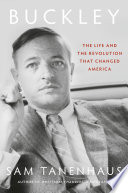
The Life and the Revolution That Changed America
2025
“A magnificent achievement—a long, gripping, and enthralling account of the life of America’s premier conservative polemicist of the twentieth century.”—Max Boot, author of Reagan: His Life and Legend “A rich, immersive biography exposes the roots of the modern conservative movement through the life of the firebrand writer and commentator who shaped it.”—The New York Times Book Review (Editors’ Choice) A BEST BOOK OF THE YEAR: The New York Times Book Review, The Washington Post, The New Yorker, The Economist, The Financial Times, Telegraph (UK), Christian Science Monitor, Air Mail, Prospect Magazine LONGLISTED FOR THE NATIONAL BOOK CRITICS CIRCLE AWARD In 1951, with the publication of God and Man at Yale, a scathing attack on his alma mater, twenty-five-year-old William F. Buckley, Jr., seized the public stage—and commanded it for the next half century as he led a new generation of conservative activists and ideologues to the peak of political power and cultural influence.
Read more
“A magnificent achievement—a long, gripping, and enthralling account of the life of America’s premier conservative polemicist of the twentieth century.”—Max Boot, author of Reagan: His Life and Legend “A rich, immersive biography exposes the roots of the modern conservative movement through the life of the firebrand writer and commentator who shaped it.”—The New York Times Book Review (Editors’ Choice) A BEST BOOK OF THE YEAR: The New York Times Book Review, The Washington Post, The New Yorker, The Economist, The Financial Times, Telegraph (UK), Christian Science Monitor, Air Mail, Prospect Magazine LONGLISTED FOR THE NATIONAL BOOK CRITICS CIRCLE AWARD In 1951, with the publication of God and Man at Yale, a scathing attack on his alma mater, twenty-five-year-old William F. Buckley, Jr., seized the public stage—and commanded it for the next half century as he led a new generation of conservative activists and ideologues to the peak of political power and cultural influence. Ten years before his death in 2008, Buckley chose prize-winning biographer Sam Tanenhaus to tell the full, uncensored story of his life and times, granting him extensive interviews and exclusive access to his most private papers. Thus began a deep investigation into the vast and often hidden universe of Bill Buckley and the modern conservative revolution. Buckley vividly captures its subject in all his facets and phases: founding editor of National Review, the twentieth century’s most influential political journal; syndicated columnist, Emmy-winning TV debater, and bestselling spy novelist; ally of Joseph McCarthy and Barry Goldwater; mentor to Ronald Reagan; game-changing candidate for mayor of New York. Tanenhaus also has uncovered the darker trail of Bill Buckley’s secret exploits, including CIA missions in Latin America, dark collusions with Watergate felon Howard Hunt, and Buckley’s struggle in his last years to hold together a movement coming apart over the AIDS epidemic, culture wars, and the invasion of Iraq—even as his own media empire was unraveling. At a crucial moment in American history, Buckley offers a gripping and powerfully relevant story about the birth of modern politics and those who shaped it.
A Cautionary Tale of Power, Greed, and Lost Idealism
2025
#1 New York Times Bestseller “Careless People is darkly funny and genuinely shocking...Not only does [Sarah Wynn-Williams] have the storytelling chops to unspool a gripping narrative; she also delivers the goods." -Jennifer Szalai, The New York Times “When one of the world’s most powerful media companies tries to snuff out a book — amid other alarming attacks on free speech in America like this — it’s time to pull out all the stops.” –Ron Charles, The Washington Post An explosive memoir charting one woman’s career at the heart of one of the most influential companies on the planet, Careless People gives you a front-row seat to Facebook, the decisions that have shaped world events in recent decades, and the people who made them. From trips on private jets and encounters with world leaders to shocking accounts of misogyny and double standards behind the scenes, this searing memoir exposes both the personal and the political fallout when unfettered power and a rotten company culture take hold.
Read more
#1 New York Times Bestseller “Careless People is darkly funny and genuinely shocking...Not only does [Sarah Wynn-Williams] have the storytelling chops to unspool a gripping narrative; she also delivers the goods." -Jennifer Szalai, The New York Times “When one of the world’s most powerful media companies tries to snuff out a book — amid other alarming attacks on free speech in America like this — it’s time to pull out all the stops.” –Ron Charles, The Washington Post An explosive memoir charting one woman’s career at the heart of one of the most influential companies on the planet, Careless People gives you a front-row seat to Facebook, the decisions that have shaped world events in recent decades, and the people who made them. From trips on private jets and encounters with world leaders to shocking accounts of misogyny and double standards behind the scenes, this searing memoir exposes both the personal and the political fallout when unfettered power and a rotten company culture take hold. In a gripping and often absurd narrative where a few people carelessly hold the world in their hands, this eye-opening memoir reveals what really goes on among the global elite. Sarah Wynn-Williams tells the wrenching but fun story of Facebook, mapping its rise from stumbling encounters with juntas to Mark Zuckerberg’s reaction when he learned of Facebook’s role in Trump’s election. She experiences the challenges and humiliations of working motherhood within a pressure cooker of a workplace, all while Sheryl Sandberg urges her and others to “lean in.” Careless People is a deeply personal account of why and how things have gone so horribly wrong in the past decade—told in a sharp, candid, and utterly disarming voice. A deep, unflinching look at the role that social media has assumed in our lives, Careless People reveals the truth about the leaders of Facebook: how the more power they grasp, the less responsible they become and the consequences this has for all of us.
===
The #1 global bestseller with a new foreword for paperback A Book of the Year for Audible, The Times, Financial Times, The New York Times, Time, Cosmopolitan, The Economist, Spectator and more Shortlisted for the Westminster Book Awards 2025 Shortlisted for the Hatchards First Biography Prize 2025 Winner of the Blueprint Asia-Pacific Whistleblowing Prize 2025 ‘How else to put this? Bloody hell’ – The Guardian ‘Devastating . . . Funny . . . Highly enjoyable’ – The Times ‘Jaw-dropping . . . A tell-all tome’ – Financial Times Sarah Wynn-Williams joined Facebook believing the company could change things for the better. Instead, what she encountered over seven years was so shocking that Meta obtained a legal order to silence her. Now you can read her award-winning story. Candid and entertaining, Wynn-Williams’ account pulls back the curtain on Mark Zuckerberg, Sheryl Sandberg and the global elite. She exposes the true cost of Silicon Valley’s ambition, from outrageous schemes cooked up on private jets to the alarming consequences of Facebook’s aggressive pursuit of global dominance. Careless People is an ordinary woman's gripping and darkly funny memoir that will forever change how you view the technology that runs our lives – and the unchecked power of those who control it. ‘A Bridget Jones’s Diary-style tale of a young woman thrown into a series of improbable situations’ – The Times ‘Amazing: of all the books in all the world Mr Free Speech Zuckerberg wants to ban, it’s the one about him’ – Marina Hyde
===
‘Als een van de machtigste mediabedrijven ter wereld probeert een boek te laten verbieden – terwijl er in Amerika almaar meer alarmerende aanvallen worden gedaan op het vrije woord – is het tijd om alle registers open te trekken.’ The Washington Post ‘Mark Zuckerberg wil niet dat u dit boek leest.’ Financieel Dagblad ‘Oud-medewerker Sarah Wynn Williams doet in Careless People een boekje open over hoe Facebook van onschuldig sociaal medium tot een politiek wapen verwerd.’ Trouw Careless People is het explosieve verhaal van een vrouw in die jarenlang in het hart van een van de invloedrijkste bedrijven ter wereld werkte. Het geeft je een diepgravende inkijk in Facebook, in de beslissingen die de afgelopen decennia gebeurtenissen wereldwijd hebben bepaald en in de mensen die ze hebben genomen. Van privéjets en ontmoetingen met wereldleiders tot schokkende verhalen over vrouwenhaat en het meten met twee maten achter de schermen – Careless People is een bijzonder persoonlijk verhaal over het hoe en waarom dingen in het afgelopen decennium zo vreselijk verkeerd hebben kunnen gaan. Met haar scherpe, gevatte en bijzonder ontwapenende stem biedt Sarah Wynn-Williams niet alleen haar onverschrokken visie op de rol die sociale media in ons leven zijn gaan spelen, maar onthult zij ook de waarheid over de bazen van Facebook – hoe meer macht ze grijpen, des te minder verantwoordelijkheid ze aanvaarden – en de gevolgen die dit voor ieder van ons heeft.
===
«Ero tra i consulenti dei massimi dirigenti dell'azienda, Mark Zuckerberg e Sheryl Sandberg, mentre escogitavano il modo in cui l'organizzazione avrebbe interagito con i governi di tutto il mondo. Alla fine, li ho guardati, senza più speranze, fare la corte a regimi autoritari come quello cinese e, con assoluta noncuranza, ingannare l'opinione pubblica. Ero su un jet privato con Mark il giorno in cui finalmente capì che con ogni probabilità Facebook aveva contribuito a portare Donald Trump alla Casa Bianca, e ne trasse le sue personali e oscure conclusioni. Quasi sempre, però, lavorando alle politiche di Facebook, più che assistere alla messa in scena di un capitolo di Machiavelli, sembrava di guardare un gruppo di quattordicenni a cui sono stati dati dei superpoteri e una quantità spropositata di denaro andare in giro per il mondo per capire cosa possono comprare e ottenere con quel potere. Questa è la storia che intendo raccontare qui.»
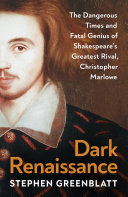
The Dangerous Times and Fatal Genius of Shakespeare's Greatest Rival
2025
Poor boy. Dark star.
Read more
Poor boy. Dark star. Spy. Transgressor. Genius. This is the thrilling and subversive life story of Christopher Marlowe – Shakespeare’s inspiration and rival, who helped to bring England out of the cultural darkness and into the light. ’Sparkling, addictive reading' MAGGIE O'FARRELL 'Brilliant' JAMES SHAPIRO 'As evocative as any novel' PHILIPPA GREGORY 'An unforgettable literary biographical tour de force' INDEPENDENT In brutally repressive Elizabethan England, artists are frightened; foreigners are suspect; popular entertainment largely consists of coarse spectacles, animal fights, and hangings. Into this crude world comes an ambitious cobbler’s son from Canterbury with an uncanny ear for Latin poetry – which to him is a secret portal to beauty, visionary imagination, transgressive desire, and dangerous scepticism. What Christopher Marlowe finds on the other side of that door, and what he does with it, brings about a spectacular explosion of English literature, language, and culture, enabling the success of many others, including his contemporary and collaborator William Shakespeare. By the time of his murder in a Deptford tavern in 1593, the 29-year-old Marlowe will be the most celebrated dramatist of his time. Stephen Greenblatt grippingly reconstructs the involvement with the queen’s spy service that shaped Marlowe’s brief, troubling life and helped fashion his masterpieces. Along the way we discover how the people Marlowe knew, and the transformations they wrought, gave birth to the economic, scientific, and cultural power of the modern world – involving Faustian bargains with which we reckon still. Dark Renaissance is a scintillating life of a writer whose blazing talent catapulted England from cultural backwater to crucible of creativity.
===
The Pulitzer Prize-winning author of Will in the World reveals the daring and subversive life of Christopher Marlowe--Shakespeare's contemporary, inspiration, and rival.
===
Poor boy. Spy. Transgressor. Genius. In repressive Elizabethan England, artists are frightened into dull conventionality; foreigners are suspect; popular entertainment largely consists of coarse spectacles, animal fights, and hangings. Into this crude world of government censorship and religious authoritarianism comes an ambitious cobbler’s son from Canterbury with a daring desire to be known—and an uncanny ear for Latin poetry. A torment for most schoolboys, yet for a few, like Christopher Marlowe, a secret portal to beauty, visionary imagination, transgressive desire, and dangerous skepticism. What Marlowe seizes in his rare opportunity for a classical education, and what he does with it, brings about a spectacular explosion of English literature, language, and culture. His astonishing literary success will, in turn, nourish the talent of a collaborator and rival, William Shakespeare. Dark Renaissance illuminates both Marlowe’s times and the origins and significance of his work—from his erotic translations of Ovid to his portrayal of unfettered ambition in a triumphant Tamburlaine to Doctor Faustus, his unforgettable masterpiece about making a pact with the devil in exchange for knowledge. Introducing us to Marlowe’s transgressive genius in the form of a thrilling page-turner, Stephen Greenblatt brings a penetrating understanding of the literary work to reveal the inner world of the author, bringing to life a homosexual atheist who was tormented by his own compromises, who refused to toe the party line, and who was murdered just when he had found love. Meanwhile, he explores how the people Marlowe knew, and the transformations they wrought, gave birth to the economic, scientific, and cultural power of the modern world including Faustian bargains with which we reckon still.
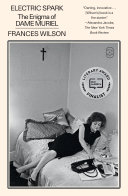
The Enigma of Dame Muriel
2025
Short-listed for the Baillie Gifford Prize for Non-Fiction Long-listed for the PEN/Jacqueline Bograd Weld Award for Biography The award-winning biographer Frances Wilson presents an exhilarating new look at Muriel Spark, a consummate artist of the twentieth century. “Is the story fact? Is it fiction? It is what it is,” said Muriel Spark.
Read more
Short-listed for the Baillie Gifford Prize for Non-Fiction Long-listed for the PEN/Jacqueline Bograd Weld Award for Biography The award-winning biographer Frances Wilson presents an exhilarating new look at Muriel Spark, a consummate artist of the twentieth century. “Is the story fact? Is it fiction? It is what it is,” said Muriel Spark. Muriel Spark was a puzzle, and so too are her books. She dealt in word games, tricks, and ciphers; her life was composed of weird accidents, strange coincidences, and spooky events. Evelyn Waugh thought she was a saint, Bernard Levin said she was a witch, and she described herself as “Muriel the Marvel with her X-ray eyes.” By following the clues, riddles, and instructions Spark planted for posterity in her biographies, fiction, autobiography, and archives, Frances Wilson aims to crack her code. Electric Spark explores not the celebrated Dame Muriel but the apprentice mage discovering her powers. It takes us through her early years, when turmoil reigned: divorce, madness, murder, espionage, poverty, skullduggery, blackmail, love affairs, revenge, and a major religious conversion. If this sounds like a novel by Spark, it is because her experiences in the 1940s and 1950s became, alchemically distilled, the material of her art. “As good a critic as she is a biographer [and] as sharp a stylist as she is a reader” (The Boston Globe), in Electric Spark Frances Wilson brings her enormous, incandescent powers to bear on one of the most formidable writers of the twentieth century.
===
*A 2025 HIGHLIGHT FOR: Telegraph, Financial Times, Guardian, Observer and Scotsman* 'A brilliant, wonderfully shrewd biography' WILLIAM BOYD 'A joyously, brilliantly intelligent work of biography. In Wilson, Spark has met her true match' ANNE ENRIGHT 'A pitch-perfect, electrifying symphony, reconfirming Wilson's pre-eminence as Maestra of British biography' RACHEL HOLMES The word most commonly used to describe Muriel Spark is 'puzzling'. Spark was a puzzle, and so too are her books. She dealt in word games, tricks, and ciphers; her life was composed of weird accidents, strange coincidences and spooky events. Evelyn Waugh thought she was a saint, Bernard Levin said she was a witch, and she described herself as 'Muriel the Marvel with her X-ray eyes'. Following the clues, riddles, and instructions Spark planted for posterity in her biographies, fiction, autobiography and archives, Frances Wilson aims to crack her code. Electric Spark explores not the celebrated Dame Muriel but the apprentice mage discovering her powers. We return to her early years when everything was piled on: divorce, madness, murder, espionage, poverty, skulduggery, blackmail, love affairs, revenge, and a major religious conversion. If this sounds like a novel by Muriel Spark it is because the experiences of the 1940s and 1950s became, alchemically reduced, the material of her art.
===
LONGLISTED FOR THE BAILLIE GIFFORD PRIZE FOR NON-FICTION 2025 'Absolutely mesmerising' SPECTATOR 'Unputdownable' FINANCIAL TIMES 'Brilliant' WILLIAM BOYD From one of our leading biographers and critics comes an exhilarating, landmark new look at Muriel Spark. Muriel Spark was a puzzle, and so too were her books. She dealt in word games, tricks, and ciphers; her life was composed of weird accidents, strange coincidences and spooky events. In Electric Spark, Frances Wilson aims to finally crack her code. We return to Spark's early years when everything was piled on: divorce, madness, murder, espionage, poverty, skulduggery, blackmail, love affairs, revenge and a major religious conversion. If this sounds like a novel by Muriel Spark it is because the experiences of the 1940s and 1950s became, alchemically reduced, the material of her art. 'A revolutionary book . . . Leaves conventional biographical techniques gasping in the dust . . . Deceptively supple, astonishingly rigorous . . . I was possessed by this book in the same way that I suspect its author was possessed by Spark' Lisa Hilton, SPECTATOR 'In Wilson, Spark has met her true match' ANNE ENRIGHT 'Whip-smart . . . I raced through it' Ali Smith, GUARDIAN 'Wilson's books are intense, eclectic and wildly diversionary, her intelligence rising from their pages like steam' Rachel Cooke, OBSERVER *A 2025 HIGHLIGHT FOR: Telegraph, Financial Times, Guardian, Observer and Scotsman*
Collected Diaries
2021
For the first time ever, collected here are all three volumes of the diaries of Helen Garner, inviting readers into the world behind the novels and nonfiction of a literary force. The name Helen Garner commands near-universal acclaim.
Read more
For the first time ever, collected here are all three volumes of the diaries of Helen Garner, inviting readers into the world behind the novels and nonfiction of a literary force. The name Helen Garner commands near-universal acclaim. A master of many literary forms, Garner is best known for her frank, unsparing, and intricate portraits of "ordinary people in difficult times" (New York Times). But the inspiration for it all was her extensive collection of diaries—fastidiously kept, intricately written, and delightfully dishy, unspooling the inner lives of her insular world in bohemian Melbourne. Now, for the first time, all three volumes of Garner's inimitable diaries are collected into one book. Spanning more than two decades, each finely etched volume reveals Garner like never before: a fledgling author publishing her lightning-rod debut novel in the late 70s; in the throes of a consuming affair in the late 80s; and clinging to a disintegrating marriage in the late 90s. And all the while, they bear witness to one of the world's great writers hard at work. Devastatingly honest and disarmingly funny, How to End a Story is a portrait of loss, betrayal, and the sheer force of a woman’s anger—but also of resilience, quotidian moments of joy, the immutable ties of motherhood, and the regenerative power of a room of one’s own.
===
The third instalment of diaries from the inimitable Helen Garner covers four eventful years in the life of one of Australia’s most treasured writers.
===
'There are very few writers that I admire more than Helen Garner' DAVID NICHOLLS 'The greatest, richest journals by a writer since Virginia Woolf's' RACHEL COOKE, OBSERVER 'Marvellous, all eight hundred pages of it' COLM TÓIBÍN 'The great Australian writer's masterpiece' THE TIMES Helen Garner has kept a diary for most of her adult life. Now she is widely recognised as one of the greatest writers of our age. But, of all her books, it is her diaries that she likes best. Collected for the first time into one volume, these inimitable diaries show Garner like never before: as a fledging author in bohemian Melbourne, publishing her lightning-rod debut novel while raising a young daughter in the 1970s; in the throes of an all-consuming love affair in the 1980s; and clinging to a disintegrating marriage in the 1990s. How to End a Story reveals the inner life of a woman in love, a mother, a friend and a formidable writer at work. Told with devastating honesty, steel-sharp wit and an ecstatic attention to the details of everyday life, it offers all the satisfactions of a novel alongside the enthralling intimacy of something written in private and just for pleasure. WITH AN INTRODUCTION BY LESLIE JAMISON 'Acute, rigorous, pitch-perfect' NIGELLA LAWSON 'With sharp eyes and ears, Garner is a recording angel at life's secular apocalypses' JAMES WOOD, NEW YORKER 'Dazzling, fearless greatness. I could not recommend this book more' INDIA KNIGHT 'An acclaimed celebrator of the poetic quotidian' ANNE ENRIGHT
2025
Named One of the New York Times Book Review's Top Ten Books of 2025 Finalist for the Kirkus Prize A raw and deeply moving memoir from the legendary author of The God of Small Things and The Ministry of Utmost Happiness that traces her complex relationship with her mother, Mary Roy, a fierce and formidable force who shaped Arundhati’s life both as a woman and a writer. Mother Mary Comes to Me, Arundhati Roy’s first work of memoir, is a soaring account, both intimate and inspirational, of how the author became the person and the writer she is, shaped by circumstance, but above all by her complex relationship to the extraordinary, singular mother she describes as “my shelter and my storm.” “Heart-smashed” by her mother Mary’s death in September 2022 yet puzzled and “more than a little ashamed” by the intensity of her response, Roy began to write, to make sense of her feelings about the mother she ran from at age eighteen, “not because I didn’t love her, but in order to be able to continue to love her.” And so begins this astonishing, sometimes disturbing, and surprisingly funny memoir of the author’s journey from her childhood in Kerala, India, where her single mother founded a school, to the writing of her prizewinning novels and essays, through today.
Read more
Named One of the New York Times Book Review's Top Ten Books of 2025 Finalist for the Kirkus Prize A raw and deeply moving memoir from the legendary author of The God of Small Things and The Ministry of Utmost Happiness that traces her complex relationship with her mother, Mary Roy, a fierce and formidable force who shaped Arundhati’s life both as a woman and a writer. Mother Mary Comes to Me, Arundhati Roy’s first work of memoir, is a soaring account, both intimate and inspirational, of how the author became the person and the writer she is, shaped by circumstance, but above all by her complex relationship to the extraordinary, singular mother she describes as “my shelter and my storm.” “Heart-smashed” by her mother Mary’s death in September 2022 yet puzzled and “more than a little ashamed” by the intensity of her response, Roy began to write, to make sense of her feelings about the mother she ran from at age eighteen, “not because I didn’t love her, but in order to be able to continue to love her.” And so begins this astonishing, sometimes disturbing, and surprisingly funny memoir of the author’s journey from her childhood in Kerala, India, where her single mother founded a school, to the writing of her prizewinning novels and essays, through today. With the scale, sweep, and depth of her novels, The God of Small Things and The Ministry of Utmost Happiness, and the passion, political clarity, and warmth of her essays, Mother Mary Comes to Me is an ode to freedom, a tribute to thorny love and savage grace—a memoir like no other.
A Memoir
2024
NEW YORK TIMES NOTABLE BOOK • NEW YORK TIMES BESTSELLER • FINALIST FOR THE 2025 WOMEN'S PRIZE • A fascinating meditation on freedom, trust, loss, and our relationship with the natural world, explored through the story of one woman’s unlikely friendship with a wild hare. A BEST BOOK OF THE YEAR: The Washington Post, The Wall Street Journal, NPR, TIME, The Boston Globe, The Economist, Scientific American, Slate “Moving.
Read more
NEW YORK TIMES NOTABLE BOOK • NEW YORK TIMES BESTSELLER • FINALIST FOR THE 2025 WOMEN'S PRIZE • A fascinating meditation on freedom, trust, loss, and our relationship with the natural world, explored through the story of one woman’s unlikely friendship with a wild hare. A BEST BOOK OF THE YEAR: The Washington Post, The Wall Street Journal, NPR, TIME, The Boston Globe, The Economist, Scientific American, Slate “Moving. . . . Impart[s] valuable lessons about slowing down and the beauty in the unexpected.”—USA Today “A perfect testimony to the transformative power of love.”—Margaret Renkl, author of The Comfort of Crows Imagine you could hold a baby hare and bottle-feed it. Imagine that it lived under your roof and bounded around your bedroom at night, drumming on the duvet cover when it wanted your attention. Imagine that, more than two years later, it still ran in from the fields when you called it and slept in your house for hours on end. For political advisor and speechwriter Chloe Dalton, who spent lockdown deep in the English countryside, far away from her usual busy London life, this became her unexpected reality. In February 2021, Dalton stumbles upon a newborn hare—a leveret—that had been chased by a dog. Fearing for its life, she brings it home, only to discover how difficult it is to rear a wild hare, most of whom perish in captivity from either shock or starvation. Through trial and error, she learns to feed and care for the leveret with every intention of returning it to the wilderness. Instead, it becomes her constant companion, wandering the fields and woods at night and returning to Dalton’s house by day. Though Dalton feared that the hare would be preyed upon by foxes, weasels, feral cats, raptors, or even people, she never tried to restrict it to the house. Each time the hare leaves, Chloe knows she may never see it again. Yet she also understands that to confine it would be its own kind of death. Raising Hare chronicles their journey together while also taking a deep dive into the lives and nature of hares, and the way they have been viewed historically in art, literature, and folklore. We witness firsthand the joy at this extraordinary relationship between human and animal, which serves as a reminder that the best things, and most beautiful experiences, arise when we least expect them.
===
THE INSTANT SUNDAY TIMES AND NEW YORK TIMES BESTSELLER WINNER OF THE WAINWRIGHT PRIZE FOR NATURE WRITING WINNER OF BOOKS ARE MY BAG READERS AWARD SHORTLISTED FOR THE WOMEN'S PRIZE FOR NON-FICTION, HATCHARDS AND BIOGRAPHERS' CLUB FIRST BIOGRAPHY PRIZE A BOOK OF THE YEAR FOR THE HAY FESTIVAL, SUNDAY TIMES, THE TIMES, FINANCIAL TIMES, SPECTATOR, ECONOMIST AND iNEWS 'A beautiful book' - ANGELINA JOLIE 'I will be recommending this to everyone' - MATT HAIG 'Quietly profound, beautifully written, Hare is now lodged in my heart' - TRACY CHEVALIER __ Imagine you could hold a baby hare and bottle-feed it. Imagine that it lived under your roof and lolloped around your bedroom at night, drumming on the duvet cover when it wanted your attention. Imagine that, over two years later, it still ran in from the fields when you called it and snoozed in your house for hours on end. This happened to me. When lockdown led busy professional Chloe to leave the city and return to the countryside of her childhood, she never expected to find herself custodian of a newly born hare. Yet when she finds the creature, endangered, alone and no bigger than her palm, she is compelled to give it a chance at survival. Raising Hare chronicles their journey together and the challenges of caring for the leveret and preparing for its return to the wild. We witness an extraordinary relationship between human and animal, rekindling our sense of awe towards nature and wildlife. This improbable bond of trust serves to remind us that the most remarkable experiences, inspiring the most hope, often arise when we least expect them.
The Life of Robert Louis Stevenson
2025
From a critically acclaimed biographer, an engrossing narrative of Robert Louis Stevenson’s life, a story as romantic and adventurous as his fiction “This magnificent biography of Robert Louis Stevenson reveals much about a writer that we think we knew. .
Read more
From a critically acclaimed biographer, an engrossing narrative of Robert Louis Stevenson’s life, a story as romantic and adventurous as his fiction “This magnificent biography of Robert Louis Stevenson reveals much about a writer that we think we knew. . . . Dazzling.”—Kirkus Reviews (starred review) Robert Louis Stevenson (1850–1894) is famed for Treasure Island, Kidnapped, and Strange Case of Dr. Jekyll and Mr. Hyde, but he published many other novels and stories before his death at forty-four. Despite lifelong ill health, he had immense vitality; Mark Twain said his eyes burned with “smoldering rich fire.” Born in Edinburgh to a family of lighthouse engineers, Stevenson set many stories in Scotland but sought travel and adventure in a life as romantic as his novels. “I loved a ship,” he wrote, “as a man loves burgundy or daybreak.” The adventures were shared with his free-spirited American wife, Fanny, with whom he moved to the South Pacific. Samoan friends named Stevenson “Storyteller.” Reading, he said, “should be absorbing and voluptuous; we should gloat over a book, be rapt clean out of ourselves.” His own books have been translated into dozens of languages. Jorge Luis Borges called his stories “one of the forms of happiness,” and other modernist masters as various as Proust, Nabokov, and Calvino have paid tribute to his greatness as a literary artist. In Storyteller, Leo Damrosch brings to life an unforgettable personality, illuminated by many who knew Stevenson well and drawing from thousands of the writer’s letters in his many voices and moods—playful, imaginative, at times tragic.
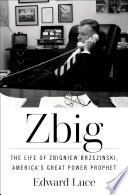
The Life of Zbigniew Brzezinski, America's Great Power Prophet
2025
"An intimate and perceptive biography of Zbigniew Brzezinski--President Carter's National Security Advisor and one of America's greatest geopolitical thinkers and grandest strategists"-- Provided by publisher.
Inside the Greatest Crash in History--and How It Shattered a Nation
2025
#1 NEW YORK TIMES BESTSELLER “It is one of the best narrative histories I’ve read.” —The Wall Street Journal A New York Times Notable Book of 2025 • One of Barack Obama's Favorite Books of 2025 • Named a BEST BOOK OF 2025 by The Washington Post, TIME, The Economist, Air Mail, Bloomberg, Fast Company, Katie Couric Media, and History From the bestselling author of Too Big to Fail, “the definitive history of the 2008 banking crisis,” (The Atlantic) comes a riveting narrative of the most infamous stock market crash in history—one with ripple effects that still shape our society today. In 1929, the world watched in shock as the unstoppable Wall Street bull market went into a freefall, wiping out fortunes and igniting a depression that would reshape a generation.
Read more
#1 NEW YORK TIMES BESTSELLER “It is one of the best narrative histories I’ve read.” —The Wall Street Journal A New York Times Notable Book of 2025 • One of Barack Obama's Favorite Books of 2025 • Named a BEST BOOK OF 2025 by The Washington Post, TIME, The Economist, Air Mail, Bloomberg, Fast Company, Katie Couric Media, and History From the bestselling author of Too Big to Fail, “the definitive history of the 2008 banking crisis,” (The Atlantic) comes a riveting narrative of the most infamous stock market crash in history—one with ripple effects that still shape our society today. In 1929, the world watched in shock as the unstoppable Wall Street bull market went into a freefall, wiping out fortunes and igniting a depression that would reshape a generation. But behind the flashing ticker tapes and panicked traders, another drama unfolded—one of visionaries and fraudsters, titans and dreamers, euphoria and ruin. With unparalleled access to historical records and newly uncovered documents, New York Times bestselling author Andrew Ross Sorkin takes readers inside the chaos of the crash, behind the scenes of a raging battle between Wall Street and Washington and the larger-than-life characters whose ambition and naïveté in an endless boom led to disaster. The dizzying highs and brutal lows of this era eerily mirror today’s world—where markets soar, political tensions mount, and the fight over financial influence plays out once again. This is not just a story about money. 1929 is a tale of power, psychology, and the seductive illusion that this time is different. It’s about disregarded alarm bells, financiers who fell from grace, and skeptics who saw the crash coming—only to be dismissed until it was too late. Hailed as a landmark book, Too Big to Fail reimagined how financial crises are told. Now, with 1929, Sorkin delivers an immersive, electrifying account of the most pivotal market collapse of all time—with lessons that remain as urgent as ever. More than just a history, 1929 is a crucial blueprint for understanding the cycles of speculation, the forces that drive financial upheaval, and the warning signs we ignore at our peril.
American Power in the Age of Economic Warfare
2025
AN INSTANT NEW YORK TIMES BESTSELLER "Deftly written, Chokepoints is a compelling and dramatic narrative about the new shape of geopolitics." — Daniel Yergin, The Wall Street Journal “Remarkable...One of the most important books on economic warfare ever written.” — Paul Kennedy, author of The Rise and Fall of the Great Powers The epic story of how America turned the world economy into a weapon, upending decades of globalization to take on a new authoritarian axis—Russia, China, and Iran. It used to be that ravaging another country’s economy required blockading its ports and laying siege to its cities.
Read more
AN INSTANT NEW YORK TIMES BESTSELLER "Deftly written, Chokepoints is a compelling and dramatic narrative about the new shape of geopolitics." — Daniel Yergin, The Wall Street Journal “Remarkable...One of the most important books on economic warfare ever written.” — Paul Kennedy, author of The Rise and Fall of the Great Powers The epic story of how America turned the world economy into a weapon, upending decades of globalization to take on a new authoritarian axis—Russia, China, and Iran. It used to be that ravaging another country’s economy required blockading its ports and laying siege to its cities. Now all it takes is a statement posted online by the U.S. government. In Chokepoints, Edward Fishman, a former top State Department sanctions official, takes us deep into the back rooms of power to reveal the untold history of the last two decades of U.S. foreign policy, in which America renounced the gospel of globalization and waged a new kind of economic war. As Vladimir Putin, Xi Jinping, and Ayatollah Khamenei wreaked havoc on the world stage, mavericks within the U.S. government built a fearsome new arsenal of economic weapons, exploiting America’s dominance in global finance and technology. Successive U.S. presidents have relied on these unconventional weapons to address the most pressing national-security threats, for good and for ill. Chokepoints provides a thrilling account of one of the most critical geopolitical developments of our time, demystifying the complex strategies the U.S. government uses to harness the power of Wall Street, Silicon Valley, and Big Oil against America’s enemies. At the center of the narrative is an eclectic group of policy innovators: the diplomats, lawyers, and financial whizzes who’ve masterminded America’s escalating economic wars against Russia, China, and Iran. Economic warfare has become the primary way the United States confronts international crises and counters rivals. Sometimes it has achieved spectacular success; other times, bitter failure. The result we live with today is a new world order: an economic arms race among great powers and a fracturing global economy. Chokepoints is the definitive account of how America pioneered this new, hard-hitting style of economic war—and how it’s changing the world.
===
THE INSTANT NEW YORK TIMES BESTSELLER Longlisted for the FT Business Book of the Year Award AN ECONOMIST 'BEST BOOK OF 2025' 'Chokepoints is a masterful narrative of US economic warfare in the 21st century.' Financial Times 'A timely, riveting world tour ... absorbing' The Economist 'Compelling and dramatic' Wall Street Journal 'A gripping, firsthand account. Unparalleled.' Chris Miller, author of Chip War If you want to understand what's happening to the world economy, start right here. It used to take blockades and sieges to ravage a rival's economy. Now, a single statement posted online by the US government can bring a nation to its knees. Chokepointsis a gripping behind-the-scenes account of one of the most pivotal geopolitical shifts of our time. Drawing on extensive research, personal experience and interviews with key players, Edward Fishman, a former top US State Department official, takes us deep into the back rooms of power around the world. He reveals how sanctions, tariffs and control over modern-day chokepoints - such as the US dollar, advanced microchip technology and critical energy supply chains - have become the primary weapons of twenty-first-century geopolitics. This is the epic story of how America turned economics into a weapon - and how China, Europe and Britain are now doing the same. Urgent and brimming with rare insight, Chokepointsis the definitive guide to the Age of Economic Warfare.
The Corporation in the 21st Century
Why (almost) everything we are told about business is wrong
The Secret History of China's Most Powerful Company
2025
“Authoritative… a tale that sits at the heart of the most significant geopolitical relationship today.” – Financial Times “There’s probably no better account of China’s rise to economic dominance as seen through the prism of a single company.” – The Wall Street Journal ABOUT THE BOOK The untold story of the mysterious company that shook the world. On the coast of southern China, an eccentric entrepreneur spent three decades steadily building an obscure telecom company into one of the world’s most powerful technological empires with hardly anyone noticing.
Read more
“Authoritative… a tale that sits at the heart of the most significant geopolitical relationship today.” – Financial Times “There’s probably no better account of China’s rise to economic dominance as seen through the prism of a single company.” – The Wall Street Journal ABOUT THE BOOK The untold story of the mysterious company that shook the world. On the coast of southern China, an eccentric entrepreneur spent three decades steadily building an obscure telecom company into one of the world’s most powerful technological empires with hardly anyone noticing. This all changed in December 2018, when the detention of Meng Wanzhou, Huawei Technologies’ female scion, sparked an international hostage standoff, poured fuel on the US-China trade war, and suddenly thrust the mysterious company into the global spotlight. In House of Huawei, Washington Post technology reporter Eva Dou pieces together a remarkable portrait of Huawei’s reclusive founder, Ren Zhengfei, and how he built a sprawling corporate empire—one whose rise Western policymakers have become increasingly obsessed with halting. Based on wide-ranging interviews and painstaking archival research, House of Huawei dissects the global web of power, money, influence, surveillance, bloodshed, and national glory that Huawei helped to build—and that has also ensnared it.
===
The untold story of the mysterious company that shook the world 'Authoritative... a tale that sits at the heart of the most significant geopolitical relationship today' Financial Times 'Explosive' Sunday Times 'Groundbreaking' Dan Wang 'Riveting, robustly researched' TLS 'Essential reading' Chris Miller, author of Chip War On the coast of southern China, an eccentric entrepreneur spent three decades steadily building an obscure telecom company into one of the world's most powerful technological empires with hardly anyone noticing. This all changed in December 2018, when the detention of Meng Wanzhou, Huawei Technologies' female scion, sparked an international hostage standoff, poured fuel on the U.S.-China trade war, and suddenly thrust the mysterious company into the international spotlight. In House of Huawei, Washington Post technology reporter Eva Dou pieces together a remarkable portrait of Huawei's reclusive founder Ren Zhengfei and how he built a sprawling corporate empire - one whose rise Western policymakers have become increasingly obsessed with halting. The book dissects the global web of power, money, influence, surveillance, bloodshed and national glory that Huawei helped to build - and that has also ensnared it. Based on wide-ranging interviews and painstaking archival research, House of Huawei tells an epic story of familial and political intrigue that presents a fresh window on China's rise from third-world country to U.S. rival, and shines a clarifying light on the security considerations that keep world leaders up at night. House of Huawei holds a mirror up to one of the world's most mysterious companies as never before.
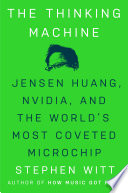
Jensen Huang, Nvidia, and the World's Most Coveted Microchip
2025
“Stephen Witt’s deep reporting shines through every page of The Thinking Machine. The result is a page-turning biography of perhaps the most consequential CEO and company in the world.” —David Epstein, New York Times bestselling author of Range Nvidia is as valuable as Apple and Microsoft.
Read more
“Stephen Witt’s deep reporting shines through every page of The Thinking Machine. The result is a page-turning biography of perhaps the most consequential CEO and company in the world.” —David Epstein, New York Times bestselling author of Range Nvidia is as valuable as Apple and Microsoft. It has shaped the world as we know it. But its story is little known. This is the definitive story of the greatest technology company of our times. In June of 2024, thirty-one years after its founding in a Denny’s restaurant, Nvidia became the most valuable corporation on Earth. The Thinking Machine is the astonishing story of how a designer of video game equipment conquered the market for AI hardware, and in the process re-invented the computer. Essential to Nvidia’s meteoric success is its visionary CEO Jensen Huang, who more than a decade ago, on the basis of a few promising scientific results, bet his entire company on AI. Through unprecedented access to Huang, his friends, his investors, and his employees, Witt documents for the first time the company’s epic rise and its single-minded and ferocious leader, now one of Silicon Valley’s most influential figures. The Thinking Machine is the story of how Nvidia evolved to supplying hundred-million-dollar supercomputers. It is the story of a determined entrepreneur who defied Wall Street to push his radical vision for computing, becoming one of the wealthiest men alive. It is the story of a revolution in computer architecture, and the small group of renegade engineers who made it happen. And it’s the story of our awesome and terrifying AI future, which Huang has billed as the ‘next industrial revolution,’ as a new kind of microchip unlocks hyper-realistic avatars, autonomous robots, self-driving cars, and new movies, art, and books, generated on command. This is the story of the company that is inventing the future.
===
“A lively biography. . . . The story of how Nvidia became the hottest investment on Wall Street and a household name is fascinating.” —Katie Notopoulos, The New York Times Book Review “Framed as a biography of Jensen Huang, the only CEO Nvidia has ever had, the book is also something more interesting and revealing: a window onto the intellectual, cultural, and economic ecosystem that has led to the emergence of superpowerful AI.” —James Surowiecki, The Atlantic “Stephen Witt’s deep reporting shines through every page of The Thinking Machine. The result is a page-turning biography of perhaps the most consequential CEO and company in the world.” —David Epstein, New York Times bestselling author of Range Nvidia is as valuable as Apple and Microsoft. It has shaped the world as we know it. But its story is little known. This is the definitive story of the greatest technology company of our times. In June of 2024, thirty-one years after its founding in a Denny’s restaurant, Nvidia became the most valuable corporation on Earth. The Thinking Machine is the astonishing story of how a designer of video game equipment conquered the market for AI hardware, and in the process re-invented the computer. Essential to Nvidia’s meteoric success is its visionary CEO Jensen Huang, who more than a decade ago, on the basis of a few promising scientific results, bet his entire company on AI. Through unprecedented access to Huang, his friends, his investors, and his employees, Witt documents for the first time the company’s epic rise and its single-minded and ferocious leader, now one of Silicon Valley’s most influential figures. The Thinking Machine is the story of how Nvidia evolved to supplying hundred-million-dollar supercomputers. It is the story of a determined entrepreneur who defied Wall Street to push his radical vision for computing, becoming one of the wealthiest men alive. It is the story of a revolution in computer architecture, and the small group of renegade engineers who made it happen. And it’s the story of our awesome and terrifying AI future, which Huang has billed as the ‘next industrial revolution,’ as a new kind of microchip unlocks hyper-realistic avatars, autonomous robots, self-driving cars, and new movies, art, and books, generated on command. This is the story of the company that is inventing the future.
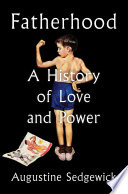
A History of Love and Power
2025
“Superbly intelligent…[a] rewarding Sapiens-style big history.” —The Times (London) A bold and original history of fatherhood, exploring its invention and transformation from the Bronze Age to the present through a collective portrait of emblematic fathers who have helped to define how the world should be ruled and what it means to be a man. Fatherhood is one of the most meaningful aspects of human culture, but we know little about when or where fatherhood first emerged, or even how or why.
Read more
“Superbly intelligent…[a] rewarding Sapiens-style big history.” —The Times (London) A bold and original history of fatherhood, exploring its invention and transformation from the Bronze Age to the present through a collective portrait of emblematic fathers who have helped to define how the world should be ruled and what it means to be a man. Fatherhood is one of the most meaningful aspects of human culture, but we know little about when or where fatherhood first emerged, or even how or why. Despite its enigmatic beginnings, fatherhood has, for centuries, given shape to ideas about the world, defined human experiences, and provided the foundation of patriarchy. The history of fatherhood is not just the story of one of humanity’s great values: caring for those who cannot care for themselves. And it is not merely the story of patriarchy—“the power of fathers”—which is arguably the oldest and most widespread form of social hierarchy and political oppression. It is the story of how these twin strands of history became so entangled that they are often indistinguishable. In Fatherhood, celebrated historian Augustine Sedgewick explains how this style of parenting emerged in the first place, why it has changed over time, and whether it will endure as we know it, despite its extraordinary costs. Told through the lives of emblematic fathers like Aristotle, Saint Augustine, Henry VIII, Thomas Jefferson, Charles Darwin, and Sigmund Freud, this is an ambitious yet intimate look at how masculinity has evolved and how men have come to hold disproportionate power by expanding and reinforcing the power of fathers in times of crisis. Sedgewick, acclaimed for his “literary gifts and prodigious research” (The Atlantic), takes us from the Bronze Age to the present to revolutionize our understanding of fathers and challenge the fictions that have surrounded them for centuries. Fatherhood transforms our understanding of this fundamental idea, experience, and institution, allowing us to better know our past and re-envision our common future.
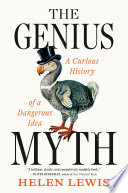
A Curious History of a Dangerous Idea
2025
From acclaimed Atlantic staff writer and host of BBC’s podcast “The New Gurus” Helen Lewis comes a timely and provocative interrogation of the myth of genius, exploring the surprising inventions, inspirations and distortions by which some lives are elevated to 'greatness' - and others are not *A Guardian, Financial Times, New Statesman and GQ Book for 2025* You can tell what a society values by who it labels as a genius. You can also tell who it excludes, who it enables, and what it is prepared to tolerate.
Read more
From acclaimed Atlantic staff writer and host of BBC’s podcast “The New Gurus” Helen Lewis comes a timely and provocative interrogation of the myth of genius, exploring the surprising inventions, inspirations and distortions by which some lives are elevated to 'greatness' - and others are not *A Guardian, Financial Times, New Statesman and GQ Book for 2025* You can tell what a society values by who it labels as a genius. You can also tell who it excludes, who it enables, and what it is prepared to tolerate. In The Genius Myth, Helen Lewis unearths how this one word has shaped (and distorted) our ideas of success and achievement. Ultimately, argues Lewis, the modern idea of genius — a single preternaturally gifted individual, usually white and male, exempt from social niceties and sometimes even the law— has run its course. Braiding deep research with her signature wit and lightness, Lewis dissects past and present models of genius in the West, and reveals a far deeper and more interesting picture of human creativity than conventional wisdom allows. She uncovers a battalion of overlooked wives and collaborators. She asks whether most inventions are inevitable. She wonders if the Beatles would succeed today. And she confronts the vexing puzzle of Elon Musk, the tech disrupter who fancies himself as an ubermensch. Smart, funny, and provocative, The Genius Myth will challenge your assumptions about creativity, productivity, and innovation --- and forever alter your mental image of the so-called “genius.”
===
*A Guardian, Financial Times, New Statesman and GQ Book for 2025 * *From the Sunday Times bestselling author of Difficult Women* 'Brilliant, timely and compulsively readable. Helen Lewis shows how the idea of genius has warped our understanding of human creativity – and why people of vast accomplishment in one domain can prove so destructively clueless in others.' OLIVER BURKEMAN The tortured poet. The rebellious scientist. The monstrous artist. The tech disruptor. You can tell what a society values by who it labels as a genius. You can also tell who it excludes, who it enables, and what it is prepared to tolerate. Taking us from the Renaissance Florence of Leonardo da Vinci to the Floridian rocket launches of Elon Musk’s SpaceX, Helen Lewis unravels a word that we all use — without really questioning what it means. Along the way, she uncovers the secret of the Beatles’ success, asks how biographers should solve the Austen Problem, and reveals why Stephen Hawking thought IQ tests were for losers (before taking one herself). And she asks if the modern idea of genius — a class of special people — is distorting our view of the world. 'Lucid, funny and fascinating' ADAM BUXTON 'An indispensable companion to our times' CAROLINE CRIADO PEREZ
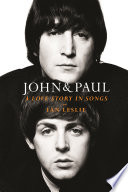
A Love Story in Songs
2025
"A new take on a legendary partnership...Thoroughly delightful...Fans will love this fresh, insightful approach to the band." —Kirkus Reviews (Starred Review) John Lennon and Paul McCartney knew each other for twenty-three years, from 1957 to 1980. This book is the myth-shattering biography of a relationship that changed the cultural history of the world.
Read more
"A new take on a legendary partnership...Thoroughly delightful...Fans will love this fresh, insightful approach to the band." —Kirkus Reviews (Starred Review) John Lennon and Paul McCartney knew each other for twenty-three years, from 1957 to 1980. This book is the myth-shattering biography of a relationship that changed the cultural history of the world. The Beatles shook the world to its core in the 1960’s and, to this day, new generations continue to fall in love with their songs and their story. At the heart of this phenomenon lies the dynamic between John Lennon and Paul McCartney. Few other musical partnerships have been rooted in such a deep, intense and complicated personal relationship. John and Paul’s relationship was defined by its complexity: compulsive, tender and tempestuous; full of longing, riven by jealousy. Like the band, their relationship was always in motion, never in equilibrium for long. John & Paul traces its twists and turns and reveals how these shifts manifested themselves in the music. The two of them shared a private language, rooted in the stories, comedy and songs they both loved as teenagers, and later, in the lyrics of Beatles songs. In John & Paul, acclaimed writer Ian Leslie uses the songs they wrote to trace the shared journey of these two compelling men before, during, and after The Beatles. Drawing on recently released footage and recordings, Leslie offers us an intimate and insightful new look at two of the greatest icons in music history, and rich insights into the nature of creativity, collaboration, and human intimacy.
Walking the Line Between Civilization and Wildness
2025
SHORTLISTED FOR THE BAILLIE GIFFORD PRIZE FOR NON-FICTION ONE OF THE ECONOMIST'S BEST BOOKS OF 2025 ONE OF THE OBSERVER'S BEST BOOKS OF 2025 ONE OF THE TIMES'S BEST SCIENCE AND ENVIRONMENT BOOKS OF 2025 A FINANCIAL TIMES AND SUNDAY TIMES SUMMER READING PICK ‘AN EXCEPTIONAL BOOK.’ Robert Macfarlane, author of Underland ‘A BOLD, BEAUTIFUL, CONFRONTING JOURNEY.’ Isabella Tree, author of Wilding ‘EVERY PAGE SINGS.’ Rachel Clarke, Observer From the winner of the Sunday Times Young Writer of the Year Award comes an epic walk across the Alps in the footsteps of a wolf, throwing unique light on Europe's mountainous hinterlands at a moment of political and environmental change. In 2011, a young wolf named Slavc set out from Slovenia.
Read more
SHORTLISTED FOR THE BAILLIE GIFFORD PRIZE FOR NON-FICTION ONE OF THE ECONOMIST'S BEST BOOKS OF 2025 ONE OF THE OBSERVER'S BEST BOOKS OF 2025 ONE OF THE TIMES'S BEST SCIENCE AND ENVIRONMENT BOOKS OF 2025 A FINANCIAL TIMES AND SUNDAY TIMES SUMMER READING PICK ‘AN EXCEPTIONAL BOOK.’ Robert Macfarlane, author of Underland ‘A BOLD, BEAUTIFUL, CONFRONTING JOURNEY.’ Isabella Tree, author of Wilding ‘EVERY PAGE SINGS.’ Rachel Clarke, Observer From the winner of the Sunday Times Young Writer of the Year Award comes an epic walk across the Alps in the footsteps of a wolf, throwing unique light on Europe's mountainous hinterlands at a moment of political and environmental change. In 2011, a young wolf named Slavc set out from Slovenia. Tracked by GPS, he travelled a thousand miles through the Alps, arriving four months later on the Lessinian plateau, north of Verona. There had been no wolves in northern Italy for a century, but here he crossed paths with a female wolf on a walkabout of her own. A decade later and there are more than a hundred wolves back in the area, the result of their remarkable meeting. In Lone Wolf, Weymouth walks Slavc's path, examining the changes facing these wild corners of Europe. Here, the call to rewild meets the urge to preserve culture; nationalism and globalisation pull apart; climate change is radically changing lives; and migrants, too, are on the move. The result is a multifaceted account of a region caught in a moment of kaleidoscopic flux, from an award-winning writer with a uniquely perceptive eye for detail.
===
An intimate account of an epic walking journey through a tense and shifting Europe in the footsteps of one extraordinary wolf. In the winter of 2011, a young wolf, named Slavc by the scientists who collared him, left his natal pack's territory in Slovenia, embarking on what would become a two thousand kilometre trek to northern Italy. There, he found a mate—named Juliet—and they produced the first pack in the region in a hundred years. A decade later, captivated by Slavc's journey, Adam Weymouth set out to walk the same route. As he made his way through mountainous terrain, villages and farmland, he bore witness to the fears and harsh realities of those living on the margins of rural society at a time of deep political and social flux, for whom the surging wolf population posed an existential threat. In Lone Wolf, Weymouth interrogates how the wolf—loved and loathed, vilified and romanticized throughout history—is re-emerging in wild and cultivated landscapes; how the borders between us and them are slipping away; and what our deep-rooted fear of the mysterious creature really means. Sharply observed, searching, poetic and revealing, Lone Wolf is a story of wildness and of the human desire for order in an ever-evolving world.
===
Shortlisted for the Baillie Gifford Prize for Non-fiction BBC Radio 4 Book of the Week A Financial Times and Sunday Times Summer Reading pick A Financial Times book of the year 'AN EXCEPTIONAL BOOK.' Robert Macfarlane, author of Underland 'A BOLD, BEAUTIFUL, CONFRONTING JOURNEY.' Isabella Tree, author of Wilding 'LOVELY ... FULL OF INCIDENT, COLOUR AND NUGGETY FACTS.' Robbie Millen, The Times From the winner of the Sunday Times Young Writer of the Year Award comes an epic walk across the Alps in the footsteps of a wolf, throwing unique light on Europe's mountainous hinterlands at a moment of political and environmental change. In 2011, a young wolf named Slavc set out from Slovenia. Traced by GPS, he travelled a thousand miles through the Alps, arriving four months later on the Lessinian plateau, north of Verona. There had been no wolves in northern Italy for a century, but here he crossed paths with a female wolf on a walkabout of her own. A decade later and there are more than a hundred wolves back in the area, the result of their remarkable meeting. In Lone Wolf, Weymouth walks Slavc's path, examining the changes facing these wild corners of Europe. Here, the call to rewild meets the urge to preserve culture; nationalism and globalisation pull apart; climate change is radically changing lives; and migrants, too, are on the move. The result is a multifaceted account of a region caught in a moment of kaleidoscopic flux, from an award-winning writer with a uniquely perceptive eye for detail.
===
An illuminating account of a lone wolf journeying across the Alps into Italy, and what the resurgence of wolves says about our connection to nature, immigration, and one another—from an award-winning journalist. “Lone Wolf is a deeply fascinating story, grippingly told.”—Robert Macfarlane, New York Times bestselling author of Underland FINALIST FOR THE BAILLIE GIFFORD PRIZE In 2011, a lone wolf named Slavc set out from his home territory of Slovenia on an epic journey across the Alps. Tracked by a GPS collar, he walked over a thousand miles. In Italy he bumped into a female wolf on a walkabout of her own—the only two wolves for hundreds of square miles—and when they mated, they formed the first pack to call these mountains home in over a century. Today there are more than a hundred wolves in the area, the result of their remarkable meeting. In Lone Wolf, writer Adam Weymouth walks the same path through the mountains of Central Europe, interrogating the fears and realities of those living on land that is being repopulated by wolves and exploring the economic, political, and climate upheavals that are seeing a centuries-old way of life being upended. Weymouth endeavors to understand how wolves—vilified throughout history and folklore—are recolonizing lands where they have been unknown for centuries and how, as the wolf has returned, the fear and hatred have come back, too. Slavc is one more outsider in a region now wrestling with an influx of immigration and a resurgence of the far right, alongside impacts of climate change that are already very real. It is here that questions of how we see the other and treat the Earth cannot be ignored. Examining the political dimensions brought to light by this individual animal’s trek, Lone Wolf tells a newly resonant story—one about the courage required to seek out a new life and the challenge of accepting the changing world around us. Sharply observed, searching, and written in precise, poetic prose, Lone Wolf explores the thorny connection between humans and nature, and indeed between borders themselves, and presses us to consider this much-discussed creature anew.
2025
'An excellent read.' Susie Dent 'You'll never look at a keyboard the same way after reading Danny Bate's fascinating linguistic history.' Sunday Times 'A breath-taking adventure through the alphabet... An absolutely delightful read, filled with jewels of lightly worn scholarship and dazzling insight.
Read more
'An excellent read.' Susie Dent 'You'll never look at a keyboard the same way after reading Danny Bate's fascinating linguistic history.' Sunday Times 'A breath-taking adventure through the alphabet... An absolutely delightful read, filled with jewels of lightly worn scholarship and dazzling insight. I just couldn't recommend it more highly.' Stephen Fry 'Charming' The Economist Why does 'W' sounds like 'double U'? What has the letter 'Q' got to do with monkeys? Why are the 'C's in circus pronounced differently? What's the point of the second 'N' in the author's first name, 'Danny'? And why does 'Q' need to be followed by 'U'? Every letter you're reading right now has a fascinating story to tell, having been on a long linguistic, historical, political and social journey. In Why Q Needs U, linguistic expert Danny Bate takes readers on a fascinating odyssey through the English alphabet, diving into history, archaeology, politics and linguistics to discover where we get our writing from. Sharing fun facts and revealing the alphabet's hidden mechanisms, he explains where we get our letters from and why the English language uses them so strangely, including: - why a silent final 'E' turns 'hop' into 'hope' - how five English letters come from a single graphic grandparent - why there is an 'L' in 'salmon' and a 'K' in 'know' - how we may know the specific person who invented the letter 'G' - why 'Z' is the sixth letter for the Greeks, yet the last letter for us Explaining - and defending - the peculiar way English today uses our ancient letters, Bate's witty and entertaining book will help readers spot connections in languages across the world and inspire a newfound sense of wonder for the letters we use every day. *We are aware of previous formatting issues in the eBook edition when downloading on Kindle but these have been rectified*
2025
In the concluding volume of her enormously popular, mind-expanding, and cheerfully dystopian trilogy, Yoko Tawada’s intrepid young band of friends strike out in search of the lost Land of Sushi The Archipelago of the Sun finds Hiruko still searching for her lost country, traveling around the Baltic on a mail boat. With her are Knut, a Danish linguist; Akash, an Indian in the process of moving to the opposite sex; Nanook, a Greenlander who once worked as a sushi chef; Nora, the German woman who loves Nanook but is equally concerned with social justice and the environment; and Susanoo, a former sushi chef who believes he is responsible for the entire group.
Read more
In the concluding volume of her enormously popular, mind-expanding, and cheerfully dystopian trilogy, Yoko Tawada’s intrepid young band of friends strike out in search of the lost Land of Sushi The Archipelago of the Sun finds Hiruko still searching for her lost country, traveling around the Baltic on a mail boat. With her are Knut, a Danish linguist; Akash, an Indian in the process of moving to the opposite sex; Nanook, a Greenlander who once worked as a sushi chef; Nora, the German woman who loves Nanook but is equally concerned with social justice and the environment; and Susanoo, a former sushi chef who believes he is responsible for the entire group. But weren’t they originally supposed to sail to Cape Town, and then on to India? Puzzled by this sudden change in route, which no one seems to remember anything about, they encounter long dead writers (Witold Gombrowicz, Hella Wuolijoki) on board, plus a cast of characters from literature, art, and myth. As the very existence of Hiruko and Susanoo’s homeland is called into question, Susanoo meets the mythical princess he will marry, and Hiruko tells the others that she herself will be a house in which everyone can live. Though the trilogy comes to its end, their journey seems likely to continue.
A Quintet of Stories
2025
NATIONAL BESTSELLER • From internationally renowned, award-winning author Salman Rushdie, a spellbinding exploration of life, death, and what comes into focus at the proverbial eleventh hour of life “An inventive and engrossing collection of stories which, though death-tinged, are never doom-laden. With luck this master writer has more tales to tell.”—Los Angeles Times A NEW YORKER BEST BOOK OF THE YEAR Rushdie turns his extraordinary imagination to life’s final act with a quintet of stories that span the three countries in which he has made his work—India, England, and America—and feature an unforgettable cast of characters.
Read more
NATIONAL BESTSELLER • From internationally renowned, award-winning author Salman Rushdie, a spellbinding exploration of life, death, and what comes into focus at the proverbial eleventh hour of life “An inventive and engrossing collection of stories which, though death-tinged, are never doom-laden. With luck this master writer has more tales to tell.”—Los Angeles Times A NEW YORKER BEST BOOK OF THE YEAR Rushdie turns his extraordinary imagination to life’s final act with a quintet of stories that span the three countries in which he has made his work—India, England, and America—and feature an unforgettable cast of characters. “In the South” introduces a pair of quarrelsome old men—Junior and Senior—and their private tragedy at a moment of national calamity. In “The Musician of Kahani,” a musical prodigy from the Mumbai neighborhood featured in Midnight’s Children uses her magical gifts to wreak devastation on the wealthy family she marries into. In “Late,” the ghost of a Cambridge don enlists the help of a lonely student to enact revenge upon the tormentor of his lifetime. “Oklahoma” plunges a young writer into a web of deceit and lies as he tries to figure out whether his mentor killed himself or faked his own death. And “The Old Man in the Piazza” is a powerful parable for our times about freedom of speech. Do we accommodate ourselves to death, or rail against it? Do we spend our “eleventh hour” in serenity or in rage? And how do we achieve fulfillment with our lives if we don’t know the end of our own stories? The Eleventh Hour ponders life and death, legacy and identity with the penetrating insight and boundless imagination that have made Salman Rushdie one of the most celebrated writers of our time.
===
If old age was thought of as an evening, ending in midnight oblivion, they were well into the eleventh hour. Two quarrelsome old men in Chennai, India, experience private tragedy against the backdrop of national calamity. Revisiting the Bombay neighbourhood of Midnight's Children, a magical musician is unhappily married to a multibillionaire. In an English college, an undead academic can't rest until he avenges his former tormentor. Following Knife: Meditations After an Attempted Murder, Salman Rushdie's new fiction moves between the places he has grown up in, inhabited, explored, and left. In doing so, he asks fundamental questions we all one day face. How does one deal with, accommodate, or rail against entering the eleventh hour, the final stage of your life? How can you bid farewell to the places you have made home? The Eleventh Hour is the magisterial new work from one of our greatest living writers. It speaks deeply to what Salman Rushdie has come from and through, and strikes into the heart of our fractious times.
===
Rushdie turns his extraordinary imagination to lifes final act with a quintet of stories that span the three countries in which he has made his workIndia, England, and Americaand feature an unforgettable cast of characters. In the South introduces a pair of quarrelsome old menJunior and Seniorand their private tragedy at a moment of national calamity. In The Musician of Kahani, a musical prodigy from the Mumbai neighborhood featured in Midnights Children uses her magical gifts to wreak devastation on the wealthy family she marries into. In Late, the ghost of a Cambridge don enlists the help of a lonely student to enact revenge upon the tormentor of his lifetime. Oklahoma plunges a young writer into a web of deceit and lies as he tries to figure out whether his mentor killed himself or faked his own death. And The Old Man in the Piazza is a powerful parable for our times about freedom of speech. Do we accommodate ourselves to death, or rail against it? Do we spend our eleventh hour in serenity or in rage? And how do we achieve fulfillment with our lives if we dont know the end of our own stories? The Eleventh Hour probes life and death, legacy and identity, with wit, creativity, and keen insight.[Bokinfo].
===
If old age was thought of as an evening, ending in midnight oblivion, they were well into the eleventh hour. ‘Salman Rushdie is a genius’ A.M. Homes Two quarrelsome old men in Chennai, India, experience private tragedy during national calamity. Revisiting the Bombay neighbourhood of Midnight's Children, a magical musician is unhappily married to a multibillionaire. In an English university college, an undead academic asks a lonely student to avenge his former tormentor. These five dazzling works of fiction move between the three countries that Salman Rushdie has called home – India, England and America – and explore what it means to approach the eleventh hour of life. Do we accommodate ourselves to death, or rail against it? How can we bid farewell to the places that we have made home? The Eleventh Hour ponders life and death, legacy and identity with the penetrating insight and boundless imagination that have made Salman Rushdie one of the most celebrated writers of our time. ‘More than 40 years after Midnight's Children, there is still nobody who spins a yarn quite like Salman Rushdie’ Spectator ‘Rushdie has not just enlarged literature’s capacities, he has expanded the world’s imaginative possibilities’ The Times
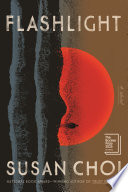
2025
Short-listed for the Booker Prize Long-listed for the National Book Award “The first major American novel to be published this year.” —Sam Sacks, The Wall Street Journal “Gorgeous . .
Read more
Short-listed for the Booker Prize Long-listed for the National Book Award “The first major American novel to be published this year.” —Sam Sacks, The Wall Street Journal “Gorgeous . . . Almost impossibly heartbreaking.” —Sam Worley, New York Magazine A Must-Read: The New York Times, New York Magazine, Time, The Washington Post, Los Angeles Times, The Boston Globe, Entertainment Weekly, USA Today, The Chicago Review of Books, Forbes, Literary Hub, and Town & Country “A major world writer . . . Choi is in thrilling command.” ―Dwight Garner, The New York Times “Devastating.” —Ron Charles, The Washington Post “Ranks among her best work.” —Hamilton Cain, Los Angeles Times A Dakota Johnson x TeaTime Book Club Pick A novel tracing a father’s disappearance across time, nations, and memory, from the author of Trust Exercise. One summer night, Louisa and her father take a walk on the breakwater. Her father is carrying a flashlight. He cannot swim. Later, Louisa is found on the beach, soaked to the skin, barely alive. Her father is gone. She is ten years old. Louisa is an only child of parents who have severed themselves from the past. Her father, Serk, is Korean, but was born and raised in Japan; he lost touch with his family when they bought into the promises of postwar Pyongyang and relocated to North Korea. Her American mother, Anne, is estranged from her Midwestern family after a reckless adventure in her youth. And then there is Tobias, Anne’s illegitimate son, whose reappearance in their lives will have astonishing consequences. But now it is just Anne and Louisa, Louisa and Anne, adrift and facing the challenges of ordinary life in the wake of great loss. United, separated, and also repelled by their mutual grief, they attempt to move on. But they cannot escape the echoes of that night. What really happened to Louisa’s father? Shifting perspectives across time and character and turning back again and again to that night by the sea, Flashlight chases the shock waves of one family’s catastrophe, even as they are swept up in the invisible currents of history. A monumental new novel from the National Book Award winner Susan Choi, Flashlight spans decades and continents in a spellbinding, heart-gripping investigation of family, loss, memory, and the ways in which we are shaped by what we cannot see.
===
**SHORTLISTED FOR THE BOOKER PRIZE 2025** 'Ferociously smart and full of surprises' Eleanor Catton 'Instantly bewitching' Jennifer Egan 'A rich generational saga that teems with intelligence' Financial Times The astonishing story of one family swept up in the tides of the twentieth century, ranging from post-war Japan to suburban America and the North Korean regime One evening, ten-year-old Louisa and her father take a walk out on the breakwater. They are spending the summer in a coastal Japanese town while her father Serk, a Korean émigré, completes an academic secondment from his American university. When Louisa wakes hours later, she has washed up on the beach and her father is missing, probably drowned. The disappearance of Louisa’s father shatters their small family unit. As Louisa and her American mother Anne return to the US, this traumatic event reverberates across time and space, and the mystery of what really happened to Serk slowly unravels. 'Big, bold and surprising' Guardian ‘Engrossing... Choi is an astute, convincing writer’ Sunday Telegraph 'Susan Choi is a master of rendering relationships with utter particularity' Raven Leilani, author of Luster 'I couldn’t put it down, and once I finished, I couldn’t stop thinking about it' Barbara Demick, author of Nothing to Envy
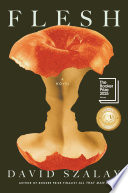
2025
"Teenaged Istvâan lives with his mother in a quiet apartment complex in Hungary. Shy and new in town, he is a stranger to the social rituals practiced by his classmates and soon becomes isolated, with his neighbor--a married woman close to his mother's age, whom he begrudgingly helps with errands--as his only companion.
Read more
"Teenaged Istvâan lives with his mother in a quiet apartment complex in Hungary. Shy and new in town, he is a stranger to the social rituals practiced by his classmates and soon becomes isolated, with his neighbor--a married woman close to his mother's age, whom he begrudgingly helps with errands--as his only companion. But as these periodical encounters shift into a clandestine relationship that Istvâan himself can barely understand, his life soon spirals out of control, ending in a violent accident thatleaves a man dead. What follows is a rocky trajectory that sees Istvâan emigrate from Hungary to London, where he moves from job to job before finding steady work as a driver for London's billionaire class. At each juncture, his life is affected by the goodwill or self-interest of strangers. Through it all, Istvâan is a calm, detached observer of his own life, and through his eyes we experience a tragic twist on an immigrant "success story," brightened by moments of sensitivity, softness, and Szalay's keen observation"--
===
**WINNER OF THE BOOKER PRIZE 2025** 'A masterpiece, told with virtuosic economy... Pure brilliance from the first to the (devastating) last sentence’ India Knight 'Brilliance on every page' Samantha Harvey 'Spare, visceral, urgent, compelling. This book doesn't f**k around' Gary Stevenson ‘So brilliant and wise on chance, love, sex, money' David Nicholls Through chance, luck and choice, one man’s life takes him from a modest apartment in Hungary to the elite society of London – in this captivating new novel about the forces that make and break our lives Fifteen-year-old István lives with his mother in a quiet apartment complex in Hungary. New to the town and shy, he is unfamiliar with the social rituals at school and soon becomes isolated, with his neighbour – a married woman close to his mother’s age – as his only companion. As these encounters shift into a clandestine relationship, István’s life spirals out of control. Years later, rising through the ranks from the army to the elite circles of London's super-rich, he navigates the twenty-first century's tides of money and power. Torn between love, intimacy, status, and wealth, his newfound riches threaten to undo him completely. ‘How do I get out of a reading slump? This is the book to do that’ Rhianna Dhillon, BBC Radio 4 'A revelatory novel' Sunday Times 'So much searing insight into the way we live now' Observer ‘Refreshing, illuminating and true’ Financial Times 'Compelling and elegant, merciless and poignant' Tessa Hadley 'One of the year’s best novels to date' Daily Mail ‘Utterly engrossing and I read it all in a day’ 5* reader review ‘I was hooked and tried to read this book with any spare moment that I had' 5* reader review A ‘Best Book of 2025’ in the Guardian, Observer, Financial Times, Daily Telegraph and Daily Mail
===
From Booker Prize-winning author David Szalay, comes a propulsive, hypnotic novel about a man who is unravelled by a series of events beyond his grasp. Fifteen-year-old István lives with his mother in a quiet apartment complex in Hungary. New to the town and shy, he is unfamiliar with the social rituals at school and soon becomes isolated, with his neighbour—a married woman close to his mother’s age—as his only companion. These encounters shift into a clandestine relationship that István himself can barely understand, and his life soon spirals out of control. As the years pass, he is carried gradually upwards on the currents of the twenty-first century’s tides of money and power, moving from the army to the company of London’s super-rich, with his own competing impulses for love, intimacy, status and wealth winning him unimaginable riches, until they threaten to undo him completely. Spare and penetrating, Flesh is the finest novel yet by a master of realism, asking profound questions about what drives a life: what makes it worth living, and what breaks it.
A Novel of Georgia
2025
A PEOPLE MAGAZINE BOOK OF THE WEEK “Catnip for Ferrante fans.” —Boston Globe “Readers will find [The Lack of Light] irresistible.” —Publishers Weekly (starred review) "A thrilling, heartbreaking, unforgettable story. Not a page too long."—Kirkus Reviews (starred review) A page-turning epic of loss and redemption in the vein of Rebecca Makkai’s The Great Believers and Elena Ferrante’s Neapolitan novels, about a group of four women who formed a deep friendship in the turbulent years leading up to and after Georgia’s independence from the Soviet Union.
Read more
A PEOPLE MAGAZINE BOOK OF THE WEEK “Catnip for Ferrante fans.” —Boston Globe “Readers will find [The Lack of Light] irresistible.” —Publishers Weekly (starred review) "A thrilling, heartbreaking, unforgettable story. Not a page too long."—Kirkus Reviews (starred review) A page-turning epic of loss and redemption in the vein of Rebecca Makkai’s The Great Believers and Elena Ferrante’s Neapolitan novels, about a group of four women who formed a deep friendship in the turbulent years leading up to and after Georgia’s independence from the Soviet Union. They are four, as different as can be: the romantic Nene, the clever outsider Ira, the idealistic Dina, and the sensitive Keto. Inseparable since childhood, they grow up together in an old Tiblisi courtyard, in Georgia, at a time when the Soviet Union is crumbling and the future of their country is in question. Each in her own way experiences love, hope, and disappointment as local mob wars, romance, and civil war threaten to swallow up their worlds. Rising to challenges both personal and political —a first love that can only blossom in secret, violent street skirmishes, a ravaging drug epidemic—the four women’s friendship seems indestructible, until an unforgivable act of betrayal and a tragic death shatter their bond. Decades later, the three survivors reunite at a major retrospective of their late friend’s photography. The pictures on display tell the story not only of their country but also of their friendship, and, confronted by them, Nene, Ira, and Keto relive their staggering loss. Then, unexpectedly, something new is glimpsed, and forgiveness seems within reach. Like the International Booker Prize nominated The Eighth Life before it, Nino Haratischwili’s The Lack of Light is an emotionally bold, decades-spanning epic in which to lose yourself, brought to life by the vibrant colors of Georgia's culture and its people. It is a glorious book readers will return to again and again. Translated by Charlotte Collins and Ruth Martin
The Loneliness of Sonia and Sunny
2025
BOOKER PRIZE SHORTLIST • KIRKUS PRIZE FINALIST A spellbinding story of two young people whose fates intersect and diverge across continents and years—an epic of love and family, India and America, tradition and modernity, by the Booker Prize–winning author of The Inheritance of Loss “A transcendent triumph . .
Read more
BOOKER PRIZE SHORTLIST • KIRKUS PRIZE FINALIST A spellbinding story of two young people whose fates intersect and diverge across continents and years—an epic of love and family, India and America, tradition and modernity, by the Booker Prize–winning author of The Inheritance of Loss “A transcendent triumph . . . not so much a novel as a marvel.”—The New York Times Book Review “A spectacular literary achievement. I wanted to pack a little suitcase and stay inside this book forever.”—Ann Patchett “Devastating, lyrical, and deeply romantic . . . an unmitigated joy to read.”—Khaled Hosseini One of the Most Anticipated Books of the Fall: The New York Times, Oprah Daily, Time, The Boston Globe, The Washington Post, The Associated Press, Book Riot, Publishers Weekly, and more When Sonia and Sunny first glimpse each other on an overnight train, they are immediately captivated yet also embarrassed by the fact that their grandparents had once tried to matchmake them, a clumsy meddling that served only to drive Sonia and Sunny apart. Sonia, an aspiring novelist who recently completed her studies in the snowy mountains of Vermont, has returned to her family in India. She fears that she is haunted by a dark spell cast by an artist to whom she had once turned for intimacy and inspiration. Sunny, a struggling journalist resettled in New York City, is attempting to flee his imperious mother and the violence of his warring clan. Uncertain of their future, Sonia and Sunny embark on a search for happiness together as they confront the many alienations of our modern world. The Loneliness of Sonia and Sunny is the sweeping tale of two young people navigating the many forces that shape their lives: country, class, race, history, and the complicated bonds that link one generation to the next. A love story, a family saga, and a rich novel of ideas, it is the most ambitious and accomplished work yet by one of our greatest novelists.
===
Shortlisted for the Booker Prize 2025 A spellbinding story of two young people whose fates intersect and diverge across continents and years—an epic of love and family, India and America, tradition and modernity, by the Booker Prize-winning author of The Inheritance of Loss When Sonia and Sunny first glimpse each other on an overnight train, they are immediately captivated, yet also embarrassed by the fact that their grandparents had once tried to matchmake them, a clumsy meddling that only served to drive Sonia and Sunny apart. Sonia, an aspiring novelist who recently completed her studies in the snowy mountains of Vermont, has returned to her family in India, fearing she is haunted by a dark spell cast by an artist to whom she had once turned for intimacy and inspiration. Sunny, a struggling journalist resettled in New York City, is attempting to flee his imperious mother and the violence of his warring clan. Uncertain of their future, Sonia and Sunny embark on a search for happiness together as they confront the many alienations of our modern world. The Loneliness of Sonia and Sunny is the sweeping tale of two young people navigating the many forces that shape their lives: country, class, race, history, and the complicated bonds that link one generation to the next. A love story, a family saga, and a rich novel of ideas, it is the most ambitious and accomplished work yet by one of our greatest novelists. ‘I wanted to pack a little suitcase and stay inside this book forever’ Ann Patchett Profound, sparkling, funny, exquisitely written, [The Loneliness of Sonia and Sunny] teaches us how to live in full-throated exultation for the astonishments of this world’ Lauren Groff
===
ONE OF BARACK OBAMA’S FAVORITE BOOKS OF THE YEAR ONE OF THE NEW YORK TIMES BOOK REVIEW’S 10 BEST BOOKS OF THE YEAR ONE OF PEOPLE’S TOP 5 BOOKS OF THE YEAR BOOKER PRIZE SHORTLIST KIRKUS PRIZE FINALIST NEW YORK TIMES BESTSELLER A BEST BOOK OF THE YEAR: The New Yorker, The Washington Post, NPR, Time, Oprah Daily, The Guardian, The Financial Times, The Economist, Harper’s Bazaar, The Globe and Mail, BBC, New York Post, Kirkus Reviews, Elle, Library Journal, Libby, Chicago Public Library, Lit Hub ONE OF BOOKPAGE’S 10 BEST BOOKS OF THE YEAR A spellbinding story of two young people whose fates intersect and diverge across continents and years—an epic of love and family, India and America, tradition and modernity, by the Booker Prize–winning author of The Inheritance of Loss “A transcendent triumph . . . not so much a novel as a marvel.”—The New York Times Book Review (Editors’ Choice) “A magnificent saga.”—Washington Post “Lavish, funny, smart, and wise, this is a novel that will last.”—The Boston Globe “A spectacular literary achievement. I wanted to pack a little suitcase and stay inside this book forever.”—Ann Patchett “A novel so wonderful, when I got to the last page, I turned to the first and began again.”—Sandra Cisneros “Devastating, lyrical, and deeply romantic . . . an unmitigated joy to read.”—Khaled Hosseini “A masterpiece.”—Kirkus Reviews, starred review “A sweeping page-turner, The Loneliness of Sonia and Sunny is a kind of Romeo and Juliet story for a modern, globalized age.”—Publishers Weekly (Top 10 New Fall Books) When Sonia and Sunny first glimpse each other on an overnight train, they are immediately captivated yet also embarrassed by the fact that their grandparents had once tried to matchmake them, a clumsy meddling that served only to drive Sonia and Sunny apart. Sonia, an aspiring novelist who recently completed her studies in the snowy mountains of Vermont, has returned to her family in India. She fears that she is haunted by a dark spell cast by an artist to whom she had once turned for intimacy and inspiration. Sunny, a struggling journalist resettled in New York City, is attempting to flee his imperious mother and the violence of his warring clan. Uncertain of their future, Sonia and Sunny embark on a search for happiness together as they confront the many alienations of our modern world. The Loneliness of Sonia and Sunny is the sweeping tale of two young people navigating the many forces that shape their lives: country, class, race, history, and the complicated bonds that link one generation to the next. A love story, a family saga, and a rich novel of ideas, it is the most ambitious and accomplished work yet by one of our greatest novelists.
2025
A New York Times Notable Book of 2025 A 2025 International Booker Prize Shortlist Nominee Longlisted for the 2025 National Book Award for Translated Literature Winner of AIRMAIL's Inaugural Tom Wolfe Literary Prize for Fiction A scathing, provocative novel about contemporary existence by a rising star in Italian literature. Anna and Tom, an expat couple, have fashioned a dream life for themselves in Berlin.
Read more
A New York Times Notable Book of 2025 A 2025 International Booker Prize Shortlist Nominee Longlisted for the 2025 National Book Award for Translated Literature Winner of AIRMAIL's Inaugural Tom Wolfe Literary Prize for Fiction A scathing, provocative novel about contemporary existence by a rising star in Italian literature. Anna and Tom, an expat couple, have fashioned a dream life for themselves in Berlin. They are young digital "creatives" exploring the excitements of the city, freelancers without too many constraints, who spend their free time cultivating house plants and their images online. At first, they reasonably deduce that they've turned their passion for aesthetics into a viable, even enviable career, but the years go by, and Anna and Tom grow bored. As their friends move back home or move on, so their own work and sex life—and the life of Berlin itself—begin to lose their luster. An attempt to put their politics into action fizzles in embarrassed self-doubt. Edging closer to forty, they try living as digital nomads only to discover that, wherever they go, "the brand of oat milk in their flat whites was the same." Perfection—Vincenzo Latronico's first book to be translated into English—is a scathing novel about contemporary existence, a tale of two people gradually waking up to find themselves in various traps, wondering how it all came to be. Was it a lack of foresight, or were they just born too late?
2025
A darkly funny, heart-wrenching satire that tears through the guts of the war news industry
2025
NEW YORK TIMES BESTSELLER FINALIST FOR THE ANDREW CARNEGIE MEDAL FOR EXCELLENCE IN FICTION LONGLISTED FOR THE NATIONAL BOOK AWARD “[Han Kang’s] intense poetic prose . .
Read more
NEW YORK TIMES BESTSELLER FINALIST FOR THE ANDREW CARNEGIE MEDAL FOR EXCELLENCE IN FICTION LONGLISTED FOR THE NATIONAL BOOK AWARD “[Han Kang’s] intense poetic prose . . . confronts historical traumas and exposes the fragility of human life.”—The Nobel Committee for Literature, in the citation for the Nobel Prize Han Kang’s most revelatory book since The Vegetarian—and her first published in English since winning the Nobel Prize—We Do Not Part tells the story of a friendship between two women while powerfully reckoning with a hidden chapter in Korean history. A BEST BOOK OF THE YEAR: TIME, KIRKUS REVIEWS, BOOK RIOT, CHICAGO PUBLIC LIBRARY • ONE OF BOOKPAGE’S TEN BEST BOOKS OF THE YEAR “[A] masterpiece.”—The Boston Globe “A haunting exploration of friendship amid historical trauma.”—Time “A novel that is both disquieting and entrancing.”—The Economist One winter morning in Seoul, Kyungha receives an urgent message from her friend Inseon to visit her at the hospital. Inseon has injured herself in an accident, and she begs Kyungha to return to Jeju Island, where she lives, to save her beloved pet—a white bird called Ama. A snowstorm hits the island when Kyungha arrives. She must reach Inseon’s house at all costs, but the icy wind and squalls slow her down as night begins to fall. She wonders if she will arrive in time to save the animal—or even survive the terrible cold that envelops her with every step. Lost in a world of snow, she doesn’t yet suspect the vertiginous plunge into darkness that awaits her at her friend’s house. Blurring the boundaries between dream and reality, We Do Not Part powerfully brings to light the lost voices of the past to save them from oblivion. Both a hymn to an enduring friendship and an argument for remembering, it is the story of profound love in the face of unspeakable pain—and a celebration of life, however fragile it might be.
2025
LONGLISTED FOR THE 2026 ANDREW CARNEGIE MEDAL FOR EXCELLENCE IN FICTION • Named a Best Book of 2025 by The Globe and Mail • New York Times • The New Yorker • The Washington Post • NPR • Barnes & Noble • Kirkus • Audible From the Booker prize–winning, bestselling author of Atonement and Saturday, a genre-bending new novel full of secrets and surprises; an immersive exploration, across time and history, of what can ever be truly known. 2014: At a dinner for close friends and colleagues, renowned poet Francis Blundy honors his wife’s birthday by reading aloud a new poem dedicated to her, ‘A Corona for Vivien’.
Read more
LONGLISTED FOR THE 2026 ANDREW CARNEGIE MEDAL FOR EXCELLENCE IN FICTION • Named a Best Book of 2025 by The Globe and Mail • New York Times • The New Yorker • The Washington Post • NPR • Barnes & Noble • Kirkus • Audible From the Booker prize–winning, bestselling author of Atonement and Saturday, a genre-bending new novel full of secrets and surprises; an immersive exploration, across time and history, of what can ever be truly known. 2014: At a dinner for close friends and colleagues, renowned poet Francis Blundy honors his wife’s birthday by reading aloud a new poem dedicated to her, ‘A Corona for Vivien’. Much wine is drunk as the guests listen, and a delicious meal consumed. Little does anyone gathered around the candlelit table know that for generations to come people will speculate about the message of this poem, a copy of which has never been found, and which remains an enduring mystery. 2119: Just over one hundred years in the future, much of the western world has been submerged by rising seas following a catastrophic nuclear accident. Those who survive are haunted by the richness of the world that has been lost. In the water-logged south of what used to be England, Thomas Metcalfe, a lonely scholar and researcher, longs for the early twenty-first century as he chases the ghost of one poem, ‘A Corona for Vivian’. How wild and full of risk their lives were, thinks Thomas, as he pores over the archives of that distant era, captivated by the freedoms and possibilities of human life at its zenith. When he stumbles across a clue that may lead to the elusive poem’s discovery, a story is revealed of entangled loves and a brutal crime that destroy his assumptions about people he thought he knew intimately well. What We Can Know is a masterpiece, a fictional tour de force, a love story about both people and the words they leave behind, a literary detective story which reclaims the present from our sense of looming catastrophe and imagines a future world where all is not quite lost.
===
'One of the finest writers alive' Sunday Times 2014- A great poem is read aloud and never heard again. For generations, people speculate about its message, but no copy has yet been found. 2119- The lowlands of the UK have been submerged by rising seas. Those who survive are haunted by the richness of the world that has been lost. Tom Metcalfe, a scholar at the University of the South Downs, part of Britain's remaining archipelagos, pores over the archives of the early twenty-first century, captivated by the freedoms and possibilities of human life at its zenith. When he stumbles across a clue that may lead to the great lost poem, revelations of entangled love and a brutal crime emerge, destroying his assumptions about a story he thought he knew intimately. A quest, a literary thriller and a love story, What We Can Know is a masterpiece that reclaims the present from our sense of looming catastrophe, and imagines a future world where all is not quite lost. 'A true master' Daily Telegraph 'McEwan is one of the most accomplished craftsmen of plot and prose' New York Times
2025
REESE'S BOOK CLUB PICK • INSTANT NEW YORK TIMES BESTSELLER • #1 AMAZON BEST BOOK OF THE YEAR SO FAR 2025 "A breathtaking novel of ROMANCE, MYSTERY, AND TWISTS that will shock you...I love this book so much." —Reese Witherspoon "A WILDLY TALENTED writer." ―Emily St. John Mandel “SPELLBINDING...Exceptionally imagined, thoroughly humane.” —Washington Post “Abounds with EVOCATIVE nature writing.” —The New York Times Book Review An ENTHRALLING new novel from the NEW YORK TIMES BESTSELLING author of Migrations and Once There Were Wolves A family on a remote island.
Read more
REESE'S BOOK CLUB PICK • INSTANT NEW YORK TIMES BESTSELLER • #1 AMAZON BEST BOOK OF THE YEAR SO FAR 2025 "A breathtaking novel of ROMANCE, MYSTERY, AND TWISTS that will shock you...I love this book so much." —Reese Witherspoon "A WILDLY TALENTED writer." ―Emily St. John Mandel “SPELLBINDING...Exceptionally imagined, thoroughly humane.” —Washington Post “Abounds with EVOCATIVE nature writing.” —The New York Times Book Review An ENTHRALLING new novel from the NEW YORK TIMES BESTSELLING author of Migrations and Once There Were Wolves A family on a remote island. A mysterious woman washed ashore. A rising storm on the horizon. Dominic Salt and his three children are caretakers of Shearwater, a tiny island not far from Antarctica. Home to the world’s largest seed bank, Shearwater was once full of researchers, but with sea levels rising, the Salts are now its final inhabitants. Until, during the worst storm the island has ever seen, a woman mysteriously washes ashore. Isolation has taken its toll on the Salts, but as they nurse the woman, Rowan, back to strength, it begins to feel like she might just be what they need. Rowan, long accustomed to protecting herself, starts imagining a future where she could belong to someone again. But Rowan isn’t telling the whole truth about why she set out for Shearwater. And when she discovers sabotaged radios and a freshly dug grave, she realizes Dominic is keeping his own secrets. As the storms on Shearwater gather force, they all must decide if they can trust each other enough to protect the precious seeds in their care before it’s too late—and if they can finally put the tragedies of the past behind them to create something new, together. A novel of breathtaking twists, dizzying beauty, and ferocious love, Wild Dark Shore is about the impossible choices we make to protect the people we love, even as the world around us disappears.
===
'At once a gripping mystery, an exquisitely written ode to the natural world, and a taut, psychological thriller, Wild Dark Shore is a triumph. Charlotte McConaghy is masterful in her ability to show the intricate connections between place and the human heart, and Wild Dark Shore shows her at the height of her powers. Breathtaking.' HANNAH KENT Dominic Salt and his three children are caretakers of Shearwater, a tiny island not far from Antarctica. Home to the world's largest seed bank, Shearwater was once full of researchers. But with sea levels rising, the Salts are now its final inhabitants, packing up the seeds before they are transported to safer ground. Despite the wild beauty of life here, isolation has taken its toll on the Salts. Raff, 18 and suffering his first heartbreak, can only find relief at his punching bag; Fen, 17, has started spending her nights on the beach among the seals; 9-year-old Orly, obsessed with botany, fears the loss of his beloved natural world; and Dominic can't stop turning back towards the past, and the loss that drove the family to Shearwater in the first place. Then, during the worst storm the island has ever seen, a woman washes up on shore. As the Salts nurse the woman, Rowan, back to life, their suspicion gives way to affection, and they finally begin to feel like a family again. Rowan, long accustomed to protecting her heart, begins to fall for the Salts, too. But Rowan isn't telling the whole truth about why she set out for Shearwater. And when she discovers the sabotaged radios and a freshly dug grave, she realises Dominic is keeping his own dark secrets. As the storms on Shearwater gather force, the characters must decide if they can trust each other enough to protect the precious seeds in their care before it's too late-and if they can finally put the tragedies of the past behind them to create something new, together. A novel of heartstopping twists, dizzying beauty and ferocious love, Wild Dark Shore is a story about the impossible choices we make to protect the people we love, even as the world around us is ending.
A Caribbean Cookbook with History
2025
‘In Caribe, Sakarah has lovingly created a book to cook from, to learn from, and to savour.’ - DR JESSICA B. HARRIS, historian and author of High on the Hog (now a Netflix docuseries) ‘A rich and traversal tapestry of food, culture, a people, and their past.
Read more
‘In Caribe, Sakarah has lovingly created a book to cook from, to learn from, and to savour.’ - DR JESSICA B. HARRIS, historian and author of High on the Hog (now a Netflix docuseries) ‘A rich and traversal tapestry of food, culture, a people, and their past. Caribe is remarkable. Keshia Sakarah isn’t just a chef, she’s an archivist.’ - CANDICE CARTY-WILLIAMS, showrunner and author of Queenie ‘An instant classic; a rich deep dive into the history of food across the Caribbean islands with beautiful, transportive photography and mouth watering recipes.’ - IXTA BELFRAGE, chef and author of MEZCLA An incredible journey through the social and culinary history of the Caribbean, with recipes from every nation. Caribe is the first cookbook to explore Caribbean food culture of the entire region: Antigua and Barbuda, Bahamas, Barbados, Cuba, Dominica, Dominican Republic, Grenada, Petite Martinique and the Carriacou, Guyana, Haiti, Jamaica, Puerto Rico, Saint Kitts and Nevis, Saint Lucia, Saint Vincent and the Grenadines, The French Caribbean, The Dutch West Indies and Trinidad and Tobago. Through years-long research including collaborations with historians and extensive travel to the islands, food writer and chef Keshia Sakarah explores the complicated and varied stories of each nation through its beloved dishes, addressing difficult truths while at the same time creating a joyful collection of the most celebrated recipes in the region to pay homage to those who created them, from Haitian Independence – Soup Joumou and Dominican Saltfish Accra Fritters, to Guyanese Pepperpot and Montserratian Fish Broth, passed on through generations. Including stunning location photography, essays and recipes for breakfast, lunch, dinner and everything in between, Caribe is the ultimate tome of Caribbean cooking.
The Complete Illustrated Guide to Japanese Cooking
Techniques, Ingredients & Recipes
2025
A highly illustrated tome with 100 recipes for the most iconic Japanese dishes, with step-by-step photography, ingredient breakdowns, and practical tips.
Untraditional Recipes Inspired by Brasil
145 Recipes to Shock Your Nonna
2025
“An incredible gem! A pearl!” —Yvette van Boven, author of Home Made Italopunk is not just a cookbook but a culinary manifesto that challenges the conventional boundaries of Italian cuisine through 145 recipes from Italy’s Neo-Trattorias. Through a lens of creativity and daring experimentation, Italopunk offers a fresh perspective on beloved Italian classics, infusing them with unexpected flavors and modern twists, all while paying homage to the rich culinary heritage of Italy.
Read more
“An incredible gem! A pearl!” —Yvette van Boven, author of Home Made Italopunk is not just a cookbook but a culinary manifesto that challenges the conventional boundaries of Italian cuisine through 145 recipes from Italy’s Neo-Trattorias. Through a lens of creativity and daring experimentation, Italopunk offers a fresh perspective on beloved Italian classics, infusing them with unexpected flavors and modern twists, all while paying homage to the rich culinary heritage of Italy. From black garlic butter to blasphemous carbonara, each recipe is a celebration of Italy's gastronomic diversity, inviting readers to catch a glimpse into the evolving landscape of Italian cuisine. Accompanied by insightful interviews, vivid imagery, and engaging storytelling, Italopunk promises to inspire, delight, and revolutionize the way you experience Italian cuisine.
A Cookbook
On Impunity, Pinochet in England, and a Nazi in Patagonia
2025
In this intimate legal and historical detective story, the world-renowned lawyer and acclaimed author of East West Street traces the footsteps of two of the twentieth century’s most merciless criminals—accused of genocide and crimes against humanity—testing the limits of immunity and impunity after Nuremberg. “Though nearly a decade in the making, this book could not arrive at a better time, because its subject is one of the most pressing themes of our era: impunity.
Read more
In this intimate legal and historical detective story, the world-renowned lawyer and acclaimed author of East West Street traces the footsteps of two of the twentieth century’s most merciless criminals—accused of genocide and crimes against humanity—testing the limits of immunity and impunity after Nuremberg. “Though nearly a decade in the making, this book could not arrive at a better time, because its subject is one of the most pressing themes of our era: impunity. . . . Sands has created an indelible and enthralling work of moral witness.” —Patrick Radden Keefe, author of Say Nothing On the evening of October 16, 1998, Chilean dictator Augusto Pinochet was arrested at a medical clinic in London. After a brutal, seventeen-year reign marked by assassinations, disappearances, and torture—frequently tied to the infamous detention center at the heart of Santiago, Londres 38—Pinochet was being indicted for international crimes and extradition to Spain, opening the door to criminal charges that would follow him to the grave, in 2006. Three decades earlier, on the evening of December 3, 1962, SS-Commander Walter Rauff was arrested in his home in Punta Arenas, at the southern tip of Chile. As the overseer of the development and use of gas vans in World War II, he was indicted for the mass murder of tens of thousands of Jews and faced extradition to West Germany. Would these uncommon criminals be held accountable? Were their stories connected? The Nuremberg Trials—where Rauff’s crimes had first been read into the record, in 1945—opened the door to universal jurisdiction, and Pinochet's case would be the first effort to ensnare a former head of state. In this unique blend of memoir, courtroom drama, and travelogue, Philippe Sands gives us a front row seat to the Pinochet trial—where he acted as a barrister for Human Rights Watch—and teases out the dictator’s unexpected connection to a leading Nazi who ended up managing a king crab cannery in Patagonia. A decade-long journey exposes the chilling truth behind the lives of two men and their intertwined destinies on 38 Londres Street.
===
THE NEW YORK TIMES BOOK REVIEW EDITORS' CHOICE • A KIRKUS BEST NONFICTION BOOK OF THE YEAR • In this intimate legal and historical detective story, the world-renowned lawyer and acclaimed author of East West Street traces the footsteps of two of the twentieth century’s most merciless criminals—accused of genocide and crimes against humanity—testing the limits of immunity and impunity after Nuremberg. “Though nearly a decade in the making, this book could not arrive at a better time, because its subject is one of the most pressing themes of our era: impunity. . . . Sands has created an indelible and enthralling work of moral witness.” —Patrick Radden Keefe, author of Say Nothing On the evening of October 16, 1998, Chilean dictator Augusto Pinochet was arrested at a medical clinic in London. After a brutal, seventeen-year reign marked by assassinations, disappearances, and torture—frequently tied to the infamous detention center at the heart of Santiago, Londres 38—Pinochet was being indicted for international crimes and extradition to Spain, opening the door to criminal charges that would follow him to the grave, in 2006. Three decades earlier, on the evening of December 3, 1962, SS-Commander Walter Rauff was arrested in his home in Punta Arenas, at the southern tip of Chile. As the overseer of the development and use of gas vans in World War II, he was indicted for the mass murder of tens of thousands of Jews and faced extradition to West Germany. Would these uncommon criminals be held accountable? Were their stories connected? The Nuremberg Trials—where Rauff’s crimes had first been read into the record, in 1945—opened the door to universal jurisdiction, and Pinochet's case would be the first effort to ensnare a former head of state. In this unique blend of memoir, courtroom drama, and travelogue, Philippe Sands gives us a front row seat to the Pinochet trial—where he acted as a barrister for Human Rights Watch—and teases out the dictator’s unexpected connection to a leading Nazi who ended up managing a king crab cannery in Patagonia. A decade-long journey exposes the chilling truth behind the lives of two men and their intertwined destinies on 38 Londres Street.
How the Struggles Between the Allied Powers Shaped the War and the World
2025
A landmark history of the alliance that won the war and made the peace by the Sunday Times-bestselling author of Appeasing Hitler After the fall of France in June 1940, only Britain stood between Hitler and total victory. Desperate for allies, Winston Churchill did everything he could to bring the United States into the conflict, drive the Soviet Union and Nazi Germany apart and persuade neutral countries to resist German domination.
Read more
A landmark history of the alliance that won the war and made the peace by the Sunday Times-bestselling author of Appeasing Hitler After the fall of France in June 1940, only Britain stood between Hitler and total victory. Desperate for allies, Winston Churchill did everything he could to bring the United States into the conflict, drive the Soviet Union and Nazi Germany apart and persuade neutral countries to resist German domination. By 1942, after the German invasion of Russia and the Japanese attack on Pearl Harbor, the British-Soviet-American alliance was in place. Yet it was an improbable and incongruous coalition, divided by ideology and politics and riven with mistrust and deceit. Churchill, Roosevelt and Stalin were partners in the fight to defeat Hitler, yet they were also rivals who disagreed on strategy, imperialism and the future of liberated Europe. Only by looking at their points of conflict, as well as of co-operation, are we able to understand the course of the war and world that developed in its aftermath. Allies at War is a fast-paced, narrative history, based on material drawn from over a hundred archives. Using vivid, first-hand accounts and unpublished diaries, we enter the rooms where the critical decisions were made while going beyond the confines of the Grand Alliance to examine, among other themes, the doomed Anglo-French alliance, fractious relations with General de Gaulle and the Free French, and interactions with Poland, Greece and Nationalist China. Ambitious and compelling, revealing the political drama behind the military events, Allies at War offers a fresh perspective on the Second World War and the origins of the Cold War.
===
An “enthralling and authoritative” (The Wall Street Journal) political history of World War II that opens a window onto the difficulties of holding together the coalition that ultimately defeated Hitler—by the acclaimed author of Appeasement “A fine reassessment of Allied politics and diplomacy during the Second World War: impeccably researched, elegantly written and compellingly argued.”—The Times (UK) After the fall of France in June 1940, all that stood between Adolf Hitler and total victory was a narrow stretch of water and the defiance of the British people. Desperate for allies, Winston Churchill did everything he could to bring the United States into the conflict, drive the Soviet Union and Nazi Germany apart, and persuade neutral countries to resist German domination. By early 1942, after the German invasion of Russia and the Japanese attack on Pearl Harbor, the British-Soviet-American alliance was in place. Yet it was an improbable and incongruous coalition, divided by ideology and politics and riven with mistrust and deceit. Churchill, Franklin D. Roosevelt, and Joseph Stalin were partners in the fight to defeat Hitler, but they were also rivals who disagreed on strategy, imperialism, and the future of liberated Europe. Only by looking at their areas of conflict, as well as cooperation, are we able to understand the course of the war and world that developed in its aftermath. Allies at War is a fast-paced, narrative history, based on material drawn from more than a hundred archives. Using vivid, firsthand accounts and unpublished diaries, Bouverie invites readers into the rooms where the critical decisions were made and goes beyond the confines of the Grand Alliance to examine, among other topics, the doomed Anglo-French partnership and fractious relations with General Charles de Gaulle and the Free French, and interactions with Poland, Greece, Francoist Spain and neutral Ireland, Yugoslavia, and Nationalist China. Ambitious and compelling, revealing the political drama behind the military events, Allies at War offers a fresh perspective on the Second World War and the origins of the Cold War.
The Secret Mission to Win the Cold War with Forbidden Literature
2025
“An intriguing and little-known Cold War moment” (The Observer): the astonishing true story of the CIA’s secret program to smuggle millions of books through the Iron Curtain “A fascinating account of a world-changing covert operation and a first-rate contribution to the history of the CIA.”—Tim Weiner, Pulitzer Prize–winning journalist and author of Legacy of Ashes For nearly five decades after the Second World War, the Iron Curtain divided Europe, forming the longest and most heavily guarded border on earth. No physical combat would take place along this frontier: the risk of nuclear annihilation was too high for that.
Read more
“An intriguing and little-known Cold War moment” (The Observer): the astonishing true story of the CIA’s secret program to smuggle millions of books through the Iron Curtain “A fascinating account of a world-changing covert operation and a first-rate contribution to the history of the CIA.”—Tim Weiner, Pulitzer Prize–winning journalist and author of Legacy of Ashes For nearly five decades after the Second World War, the Iron Curtain divided Europe, forming the longest and most heavily guarded border on earth. No physical combat would take place along this frontier: the risk of nuclear annihilation was too high for that. Instead, the war was fought psychologically. It was a battle for hearts, minds, and intellects. Few understood this more clearly than George Minden, head of a covert intelligence operation known as the “CIA book program,” which aimed to undermine Soviet censorship and inspire revolt by offering different visions of thought and culture. From its Manhattan headquarters, Minden’s “book club” secretly sent ten million banned titles into the East. Volumes were smuggled aboard trucks and yachts, dropped from balloons, hidden aboard trains, and stowed in travelers’ luggage. Nowhere were the books welcomed more warmly than in Poland, where the texts would circulate covertly among circles of like-minded readers, quietly making the case against Soviet communism. Such was the demand for Minden’s books that dissidents began to reproduce these works in the underground. By the late 1980s, illicit literature was so pervasive in Poland that censorship broke down: the Iron Curtain soon followed. Charlie English narrates this tale of Cold War spycraft, smuggling, and secret printing operations for the first time, highlighting the work of a handful of extraordinary people who fought for intellectual freedom—people like Mirosław Chojecki, who suffered beatings, imprisonment, and exile in pursuit of his clandestine mission. The CIA Book Club is a story about the power of the printed word as a means of resistance and liberation. Books, it shows, can set you free.
Egotists, Idealists, Opportunists, and the Birth of the Modern City, 1986-1990
2025
A sweeping chronicle of four tumultuous years in 1980s New York that changed the city forever—and anticipated the forces that would soon divide the nation—from the bestselling author of Ladies and Gentlemen, the Bronx Is Burning “A rip-roaring, sweeping, essential work of history . .
Read more
A sweeping chronicle of four tumultuous years in 1980s New York that changed the city forever—and anticipated the forces that would soon divide the nation—from the bestselling author of Ladies and Gentlemen, the Bronx Is Burning “A rip-roaring, sweeping, essential work of history . . . a deeply reported and brilliantly observed account of how the modern city was born and why all of us continue to live with the results.”—Jonathan Eig, Pulitzer Prize–winning author of King: A Life New York entered 1986 as a city reborn. Record profits on Wall Street sent waves of money splashing across Manhattan, bringing a battered city roaring back to life. But it also entered 1986 as a city whose foundation was beginning to crack. Thousands of New Yorkers were sleeping in the streets, addicted to drugs, dying of AIDS, or suffering from mental illnesses. Nearly one-third of the city’s Black and Hispanic residents were living below the federal poverty line. Long-simmering racial tensions threatened to boil over. The events of the next four years would split the city open. Howard Beach. Black Monday. Tawana Brawley. The crack epidemic. The birth of ACT UP. The Central Park jogger. The release of Do the Right Thing. And a cast of outsized characters—Ed Koch, Donald Trump, Al Sharpton, Spike Lee, Rudy Giuliani, Larry Kramer—would compete to shape the city’s future while building their own mythologies. The Gods of New York is a kaleidoscopic and deeply immersive portrait of a city whose identity was suddenly up for grabs: Could it be both the great working-class city that lifted up immigrants from around the world and the money-soaked capital of global finance? Could it retain a civic culture—a common idea of what it meant to be a New Yorker—when the rich were building a city of their own and vast swaths of its citizens were losing faith in the systems meant to protect them? New York City was one thing at the dawn of 1986; it would be something very different as 1989 came to a close. This is the story of how that happened.
===
New York City entered 1986 as a city reborn, with record profits on Wall Street sending waves of money splashing across Manhattan and bringing a once-bankrupt and reeling city back to life. But it also entered 1986 as a city divided. Nearly one-third of the city's Black and Hispanic residents were living below the poverty line. Thousands of New Yorkers were sleeping in the streets - and in many cases addicted to drugs, dying of AIDS, or suffering from mental illness. The manufacturing jobs that had once sustained a thriving middle class had vanished. Long-simmering racial tensions were boiling over. Over the next four years, a singular confluence of events - involving a cast of outsized, unforgettable characters - would widen those divisions into chasms. Ed Koch. Donald Trump. Al Sharpton. The Central Park Five. Larry Kramer. Spike Lee. Rudy Giuliani. Howard Beach. Tawana Brawley. The Preppy Murder. The Tompkins Square Riots. Jimmy Breslin. Ivan Boesky. Do the Right Thing, Wall Street, crack, the AIDS epidemic, Black Monday and, of course, ready to pour gasoline on every fire - the tabloids. In The Gods of New York, bestselling author Jonathan Mahler tells the story of these outsized characters and of these convulsive, defining years. It's an exuberant, kaleidoscopic, and deeply immersive portrait of a city in transformation, one whose long-held identity was suddenly up for grabs: Could it be both the great working-class city, drawing in and lifting up immigrants from around the world and the money-soaked capital of global finance? Could it retain a civic culture -- a common idea of what it meant to be a New Yorker -- when the rich were building a city of their own and vast swaths of its citizens were losing faith in the systems that were intended to protect them? New York was one thing at the dawn of 1986; it would be something very different as 1989 came to a close. This book is the story of how that happened.
===
NEW YORK TIMES BOOK REVIEW EDITORS’ CHOICE • A sweeping chronicle of four tumultuous years in 1980s New York that changed the city forever—and anticipated the forces that would soon divide the nation—from the bestselling author of Ladies and Gentlemen, the Bronx Is Burning “A rip-roaring, sweeping, essential work of history . . . a deeply reported and brilliantly observed account of how the modern city was born and why all of us continue to live with the results.”—Jonathan Eig, Pulitzer Prize–winning author of King: A Life A BEST BOOK OF THE YEAR: The New York Times Book Review, The Economist, The New Yorker, Town & Country New York entered 1986 as a city reborn. Record profits on Wall Street sent waves of money splashing across Manhattan, bringing a battered city roaring back to life. But it also entered 1986 as a city whose foundation was beginning to crack. Thousands of New Yorkers were sleeping in the streets, addicted to drugs, dying of AIDS, or suffering from mental illnesses. Nearly one-third of the city’s Black and Hispanic residents were living below the federal poverty line. Long-simmering racial tensions threatened to boil over. The events of the next four years would split the city open. Howard Beach. Black Monday. Tawana Brawley. The crack epidemic. The birth of ACT UP. The Central Park jogger. The release of Do the Right Thing. And a cast of outsized characters—Ed Koch, Donald Trump, Al Sharpton, Spike Lee, Rudy Giuliani, Larry Kramer—would compete to shape the city’s future while building their own mythologies. The Gods of New York is a kaleidoscopic and deeply immersive portrait of a city whose identity was suddenly up for grabs: Could it be both the great working-class city that lifted up immigrants from around the world and the money-soaked capital of global finance? Could it retain a civic culture—a common idea of what it meant to be a New Yorker—when the rich were building a city of their own and vast swaths of its citizens were losing faith in the systems meant to protect them? New York City was one thing at the dawn of 1986; it would be something very different as 1989 came to a close. This is the story of how that happened.
Russia's Most Audacious Spies and Their Century-Long Mission to Infiltrate the West
2025
Shaun Walker skilfully shows how Russia's modern-day election meddling is rooted in the subterfuge and trickery of the bad old days. This is a fascinating read.' Oliver Bullough'Sinister, clandestine and deadly - this is essential history, and it is happening now.' Simon Sebag Montefiore'A riveting spy thriller that doubles up as a secret history of Russia.' Peter PomerantsevIn 2010, two decades after the Cold War had ended, ten Russian spies were arrested in America, having hidden their true identities from their friends, neighbours and even their children.
Read more
Shaun Walker skilfully shows how Russia's modern-day election meddling is rooted in the subterfuge and trickery of the bad old days. This is a fascinating read.' Oliver Bullough'Sinister, clandestine and deadly - this is essential history, and it is happening now.' Simon Sebag Montefiore'A riveting spy thriller that doubles up as a secret history of Russia.' Peter PomerantsevIn 2010, two decades after the Cold War had ended, ten Russian spies were arrested in America, having hidden their true identities from their friends, neighbours and even their children. They were part of a spy programme that had begun nearly a century earlier, when the revolutionary Bolshevik government began sending Soviet citizens abroad to pose as foreign aristocrats, merchants and students. These deep-cover missions - some remarkable feats of espionage, others high-profile failures - could last for decades.Drawing on hundreds of hours of interviews, as well as newly discovered archival material, Shaun Walker brings this history to life in a page-turning tour de force that goes to the heart of what became the most ambitious espionage programme in history. As Moscow continues to infiltrate illegals across the globe, The Illegals shines new light on the long arc of the Soviet experiment and its messy aftermath - and on how that hidden history shaped Russia and the West.
===
ONE OF THE ECONOMIST'S BEST BOOKS OF 2025 • The definitive history of Russia’s most secret spy program, from the earliest days of the Soviet Union to Putin’s invasion of Ukraine, and a revelatory examination of how that hidden history shaped both Russia and the West. More than a century ago, the new Bolshevik government began sending Soviet citizens abroad as deep-cover spies, training them to pose as foreign aristocrats, merchants, and students. Over time, this grew into the most ambitious espionage program in history. Many intelligence agencies use undercover operatives, but the KGB was the only one to go to such lengths, spending years training its spies in language and etiquette, and sending them abroad on missions that could last for decades. These spies were known as “illegals.” During the Second World War, illegals were dispatched behind enemy lines to assassinate high-ranking Nazis. Later, in the Cold War, they were sent to assimilate and lie low as sleepers in the West. The greatest among them performed remarkable feats, while many others failed in their missions or cracked under the strain of living a double life. Drawing on hundreds of hours of interviews, as well as archival research in more than a dozen countries, Shaun Walker brings this history to life in a page-turning tour de force that takes us into the heart of the KGB’s most secretive program. A riveting spy drama peopled with richly drawn characters, The Illegals also uncovers a hidden thread in the story of Russia itself. As Putin extols Soviet achievements and the KGB’s espionage prowess, and Moscow continues to infiltrate illegals across the globe, this timely narrative shines new light on the long arc of the Soviet experiment, its messy aftermath, and its influence on our world at large.
The Destruction of Europeâs Most Cosmopolitan Capital in World War II
2025
In 1945, Budapest, once one of the cultured twin capitals of the Austro-Hungarian empire, became the site of the last great, brutal city siege of WWII--now brilliantly recreated in this new history. Although Hungary was a German ally in 1941, two years into World War II, it was still possible for Allied prisoners of war, French and Polish refugees, spies of every kind, and the city's large Jewish population to live freely and openly, enjoying the cafes and boulevards that made Budapest one of the great European capitals.
Read more
In 1945, Budapest, once one of the cultured twin capitals of the Austro-Hungarian empire, became the site of the last great, brutal city siege of WWII--now brilliantly recreated in this new history. Although Hungary was a German ally in 1941, two years into World War II, it was still possible for Allied prisoners of war, French and Polish refugees, spies of every kind, and the city's large Jewish population to live freely and openly, enjoying the cafes and boulevards that made Budapest one of the great European capitals. While the other multicultural centers of Europe had fallen to the almost all-consuming conflict, Budapest remained intact, a shining reminder of what middle European high culture could be. In September 1944, three months after D-Day, life in the city seemed idyllic. But under the guise of peace existed an undercurrent of tension and anxiety: British and American troops advanced from the west and Soviet troops from the east. Who would reach the capital first? By mid-October 1944, Budapest had collapsed into anarchy: death squads roamed the streets, the city's remaining Jews were funneled into ghettos, Russian shells destroyed city blocks, and everyone struggled to find food and survive the winter. Using newly uncovered diaries and archives, Adam Lebor brilliantly recreates the increasingly desperate efforts of Hungary's leaders to avoid being drawn into the cataclysm of war, the moral and tactical ambiguity they deployed in the attempt, and the ultimate tragedy that befell Hungary and, in particular, its Jewish population. Told through the lives of a glamorous aristocrats, SS Officers, a rebellious teenage Jewish school student, Hungary's most popular singer and actress, and a housewife trying desperately to keep her family alive, the story of how Budapest is threatened from all sides as the war tightens its noose is highly dramatic and utterly compelling.
===
Budapest, autumn 1943. Four years into the war, Hungary is allied with Nazi Germany and the Hungarian capital is the Casablanca of central Europe. The city swirls with intrigue and betrayal, home to spies and agents of every kind. But Budapest remains at peace, an oasis in the midst of war where Allied POWs, and Polish and Jewish refugees find sanctuary. The riverside cafes are crowded and the city's famed cultural life still thrives. All that comes to an end in March 1944 when the Nazis invade. By the summer, Allied bombers are pounding its grand boulevards and historic squares. Budapest's surviving Jewish population has been forcibly relocated to cramped, overcrowded Yellow Star houses. By late December, the city is surrounded and under siege from the Red Army. Tens of thousands of soldiers and civilians die in the savage siege as Budapest collapses into anarchy. Hungarian death squads roam the streets as the city's Jews are forced into ghettos. Russian artillery pounds the city into smoking rubble as starving residents hack chunks of meat from dead, frozen horses. Using newly uncovered diaries, documents, archival material and interviews with the last survivors, Adam LeBor brilliantly recreates life and death in the wartime city, the catastrophic fate of half of its Jewish population and the destruction of the siege. Told through the lives of a cast of vivid, gripping characters, including glamorous aristocrats, spies, smugglers and SS Officers, a rebellious teenage Jewish schoolboy, Hungary's most popular actress and her spy chief lover, a Jewish businesswoman who negotiated with Adolf Eichmann, a Christian doctor hiding her Jewish neighbours and a teenage Hungarian soldier, the story of how Budapest slowly dies as the war destroys the city is utterly compelling.
===
The Last Days of Budapest tells the powerful story of one of the least-known but most important episodes of the Second World War: life and death in the Hungarian capital from autumn 1940 to early 1945, a gripping story of spies, fanaticism, genocide and military disaster.
===
"The Last Days of Budapest is a masterpiece. Immaculately researched, it is packed with large-than-life characters and revelations about the unknown espionage history of the Second World War…. This is history as it should be written: utterly engrossing." -Malcolm Brabant, author of the New York Times bestseller The Daughter of Auschwitz An Economist Best Book of the Year Budapest, autumn 1943. After four years of war, Hungary was firmly allied with Nazi Germany. Budapest swirled with intrigue and betrayal, home to spies and agents of every kind. But the city remained an oasis in the midst of conflict where Allied POWs and Polish and Jewish refugees found sanctuary. All that came to an end in March 1944 when the Nazis invaded. By the summer Allied bombers were pounding Budapest’s grand boulevards and historic squares. By late December the city was surrounded and under siege from the advancing Red Army. Tens of thousands of soldiers and civilians died in the savage fighting as Budapest collapsed into anarchy. Hungarian death squads roamed the streets as the city’s Jews were forced into ghettos or were shot into the Danube. Russian artillery hammered the city into smoking rubble as starving residents struggled to survive the winter. Using newly uncovered diaries, documents, archival material and interviews with the last survivors, Adam LeBor has brilliantly recreated life and death in wartime Budapest.
What We Can Learn from the Rise and Fall of Golden Ages
2025
All golden ages are marked by periods of spectacular cultural flourishing, scientific exploration, technological achievement and economic growth; yet no two are the same. Their beliefs, societies and place in the wider world all vary.
Read more
All golden ages are marked by periods of spectacular cultural flourishing, scientific exploration, technological achievement and economic growth; yet no two are the same. Their beliefs, societies and place in the wider world all vary. Despite this, all previous golden ages have ended, whether it be because of external pressures or internal fracturing; too much hubris or too little wariness. Looking at seven of humanity's greatest civilizations - ancient Athens, the Roman Republic, Abbasid Baghdad, Song China, Renaissance Italy, the Dutch Republic and the Anglosphere - historian and commentator Johan Norberg seeks to distil their strengths and shortcomings in answering the question: how do we ensure that our current golden age doesn't end? As insightful as it is riveting, Peak Human is at once a paean to our incredible progress and a warning that we cannot afford to be complacent.
===
All golden ages share periods of remarkable cultural flourishing, scientific discovery, technological innovation, and economic growth—yet no two are alike. Each is shaped by its own beliefs, institutions, and place in the wider world. Still, every past golden age has eventually come to an end, undone by external threats, internal divisions, overconfidence, or complacency. In Peak Human, historian and commentator Johan Norberg examines seven of humanity's greatest civilizations—ancient Athens, the Roman Republic, Abbasid Baghdad, Song China, Renaissance Italy, the Dutch Republic, and the modern Anglosphere—to uncover what made them thrive and why they ultimately fell. As thought-provoking as it is urgent, Peak Human is both a celebration of our extraordinary progress and a timely warning that even the most brilliant eras can fade if we fail to learn from the past.
The Story of the Extremists Who Hijacked the 1970s
2026
SHORTLISTED FOR THE BAILLIE GIFFORD PRIZE • An epic, authoritative, gripping account of the years when a new wave of revolutionaries seized the skies and the streets to hold the world for ransom In the 1970s, an unprecedented wave of international terrorism broke out around the world. More ambitious, networked and far-reaching than ever before, new armed groups terrorized the West with intricately planned plane hijackings and hostage missions, leaving governments scrambling to cope.
Read more
SHORTLISTED FOR THE BAILLIE GIFFORD PRIZE • An epic, authoritative, gripping account of the years when a new wave of revolutionaries seized the skies and the streets to hold the world for ransom In the 1970s, an unprecedented wave of international terrorism broke out around the world. More ambitious, networked and far-reaching than ever before, new armed groups terrorized the West with intricately planned plane hijackings and hostage missions, leaving governments scrambling to cope. Their motives were as diverse as their methods. Some sought to champion Palestinian liberation, others to topple Western imperialism or battle capitalism; a few simply sought adventure or power. Among them were the unflappable young Leila Khaled, sporting jewelry made from AK-47 ammunition; the maverick Carlos the Jackal with his taste for cigars, fine dining, and designer suits; and the radical leftists of the Baader-Meinhof Gang or the Japanese Red Army. Their attacks forged a lawless new battlefield thirty thousand feet in the air, evading the reach of security agencies, policymakers, and spies alike. Their operations rallied activist and networks in places where few had suspected their existence, leaving a trail of chaos from Bangkok to Paris to London to Washington, D.C. Veteran foreign correspondent Jason Burke provides a thrilling account of this era of spectacular violence. Drawing on decades of research, recently declassified government files, still secret documents, and original interviews with hijackers, double agents, and victims still grieving their loved ones, The Revolutionists provides an unprecedented account of a period which definitively shaped today’s world and probes the complex relationship between violence, terrorism, and revolution. From the deserts of Jordan and the Munich Olympics to the Iranian Embassy Siege in London and the Beirut bombings of the early 1980s, Burke invites us into the lives and minds of the perpetrators of these attacks, as well as the government agents and top officials who sought to foil them. Charting, too, such shattering events as the Iranian Revolution and the Lebanese civil war, he shows how, by the early 1980s, a campaign for radical change led by secular, leftist revolutionaries had given way to a far more lethal movement of conservative religious fanaticism that would dominate the decades to come. Driven by an indelible cast of characters moving at a breakneck pace, full of detail and drama, The Revolutionists is the definitive account of a dark and seismic decade.
The Rise and Fall of Private Life
2025
A brilliantly readable history of privacy which argues that a private life is a precious and sustaining resource that must be defended. === What does it mean to have a private life? From ancient times to our digital present, Strangers and Intimates traces the dramatic emergence of private life, uncovering how it became a protected domain, cherished as a space for intimacy, self-discovery and freedom.
Read more
A brilliantly readable history of privacy which argues that a private life is a precious and sustaining resource that must be defended.
===
What does it mean to have a private life? From ancient times to our digital present, Strangers and Intimates traces the dramatic emergence of private life, uncovering how it became a protected domain, cherished as a space for intimacy, self-discovery and freedom. In this sweeping history, Tiffany Jenkins, an acclaimed cultural historian, takes readers on an epic journey, from the strict separations of public and private in ancient Athens to the moral rigidity of the Victorian home, and from the feminists of the 1970s who declared that ‘the personal is political’ to the boundary-blurring demands of our digital age. Strangers and Intimates is both a celebration of the private realm and a warning: as social media, surveillance and the expectations of constant openness reshape our lives, are we in danger of losing a part of ourselves? Jenkins reveals how privacy shaped the modern world and why it remains crucial for our personal and collective freedom – and why this freedom is now in mortal danger. Today, as we share more than ever before and digital surveillance watches our every move, Jenkins asks a timely question: can private life survive the demands of the twenty-first century?
===
As heard on BBC Radio 4's 'Start the Week' 'Brilliantly original . . . endlessly fascinating' – Alice Loxton, author of Eighteen 'An intricate cultural history . . . thought-provoking' - The Sunday Times 'A nuanced, thoughtful history' – Kate Fox, author of Watching the English A Financial Times 'What to Read in 2025' Book From ancient times to our digital present, Strangers and Intimates traces the dramatic emergence of private life, and argues that it is now in mortal danger. In this sweeping history, acclaimed cultural historian Tiffany Jenkins takes readers on an epic journey, from the strict separations of public and private in ancient Athens to the moral rigidity of the Victorian home, and from the feminists of the 1970s who declared that ‘the personal is political’ to the boundary-blurring demands of our digital age. Strangers and Intimates is both a celebration of the private realm and a warning: as social media, surveillance and the expectations of constant openness reshape our lives, Jenkins asks a timely question: can private life survive the demands of the twenty-first century?
The Nightmares of a Nation 1933-1939
1968
The hidden history of a nation sleepwalking its way into evil Charlotte Beradt began having unsettling dreams after Adolf Hitler took power in 1933. She envisioned herself being shot at, tortured and scalped, surrounded by Nazis in disguise, and breathlessly fleeing across fields with storm troopers at her heels.
Read more
The hidden history of a nation sleepwalking its way into evil Charlotte Beradt began having unsettling dreams after Adolf Hitler took power in 1933. She envisioned herself being shot at, tortured and scalped, surrounded by Nazis in disguise, and breathlessly fleeing across fields with storm troopers at her heels. Shaken by these nightmares and banned as a Jew from working, she began secretly collecting dreams from her friends and neighbors, both Jewish and non-Jewish. Disguising these “diaries of the night” in code and concealing them in the spines of books from her extensive library, she smuggled them out of the country one by one. Available again for the first time since its publication in the 1960s, this sensational book brings together this uniquely powerful dream record, offering a visceral understanding of how terror is internalized and how propaganda colonizes the imagination. After Beradt herself fled Germany for New York, she collected these dream accounts and began to trace the common symbols and themes that appeared in the collective unconscious of a traumatized nation. The fear of dictatorship was ever-present. Dreams of thought control, even the prohibition of dreaming itself, bore witness to the collapse of outer and inner worlds. Now in a haunting new translation by Damion Searls and with an incisive foreword by Dunya Mikhail, The Third Reich of Dreams provides a raw, unfiltered, and prophetic look inside the experience of living through Hitler’s terror.
A Day in the Life of a Roman Gladiator
2025
See ancient Rome, and peer into the Roman mind, through the eyes of a gladiator—from the evening before the Games at the Colosseum to the evening after What did a gladiator feel when he stepped out onto the sand of the Colosseum, his life in the balance? What ran through the minds of the masses there to witness his likely execution? And how did this bloodthirsty ritual come to exist in the first place? In Those Who Are About to Die, Harry Sidebottom—an internationally bestselling novelist and professor of classical history at Oxford—pulls us into the arena, and into the homes and forums of ancient Rome, taking the reader on an eye-opening, twenty-four-hour tour through Roman life at the height of the gladiatorial games, from the first century BC to the second century AD. We follow the gladiators through the schools (ludi) where they trained, watch in awe as the massive event unfolds—from the gambling at the pre-festival dinner to the dawn rush to get a seat at the arena to the resounding music, the elaborate stage sets, and, yes, the public executions that served as lunch-break entertainment—and we unlearn all the bogus movie tropes (no, alas, gladiators did not have ripped bods, they were kept fleshy so they’d bleed more).
Read more
See ancient Rome, and peer into the Roman mind, through the eyes of a gladiator—from the evening before the Games at the Colosseum to the evening after What did a gladiator feel when he stepped out onto the sand of the Colosseum, his life in the balance? What ran through the minds of the masses there to witness his likely execution? And how did this bloodthirsty ritual come to exist in the first place? In Those Who Are About to Die, Harry Sidebottom—an internationally bestselling novelist and professor of classical history at Oxford—pulls us into the arena, and into the homes and forums of ancient Rome, taking the reader on an eye-opening, twenty-four-hour tour through Roman life at the height of the gladiatorial games, from the first century BC to the second century AD. We follow the gladiators through the schools (ludi) where they trained, watch in awe as the massive event unfolds—from the gambling at the pre-festival dinner to the dawn rush to get a seat at the arena to the resounding music, the elaborate stage sets, and, yes, the public executions that served as lunch-break entertainment—and we unlearn all the bogus movie tropes (no, alas, gladiators did not have ripped bods, they were kept fleshy so they’d bleed more). Broken down by time of day—Vesper, Prima Vigilia, Secunda Vigilia, up through the following sunset (Solis Occasus)—Those Who Are About to Die offers illuminating insights into every aspect of the life and mind of ancient Romans, their social mores and hierarchies, their thoughts on death and sex and violence, and the myths and dreams that fueled the spectacle. With wit and authority, Those Who Are About to Die gives us the truth behind a figure we can’t stop imagining.
===
Bestselling author Harry Sidebottom takes readers on a thrilling journey through a day in the life of the most iconic figure of the ancient world: the Roman gladiator ‘Magnificent... Was I not entertained? I absolutely was’ Dominic Sandbrook, Times Books of the Year 'Wonderfully panoramic ... endlessly informative, rich with unexpected detail but never heavy to read' Literary Review 'Grippingly original' Tom Holland 'Blends extensive research with a talent for vivid storytelling to distil 700 years of gladiator history into the 24 hours around match day' The Times *A TIMES AND ECONOMIST BOOK OF THE YEAR* Dressed in armour and clutching a bloody sword, the Roman gladiator is the most iconic figure of the ancient world. Both fascinating and repulsive to us now, he was in his own time a deeply controversial character, by turns hated and idealized – and always at the heart of Roman culture. But what did he really mean to the Romans? What did they see in the gladiator and the spectacle of the games? And what does he reveal to us today about the Roman way of life? Brilliantly written and meticulously researched, this book tells the stories of the gladiators and those who observed them – from grand emperors to lowly slaves – illuminating and analysing the all-consuming passion of the Roman Empire for the spectacle of mortal combat. In doing so, it reveals Roman ideas about everything from freedom and servitude to sex and desire, from courage and cowardice to death and the afterlife. Taking readers on an unforgettable twenty-four-hour adventure – beginning the night before the games and ending the evening after – Those Who Are About To Die gives a blow-by-blow account of what life was really like in the brutally unforgiving arena of the ancient world.
===
Bestselling author Harry Sidebottom takes readers on a thrilling journey through a day in the life of the most iconic figure of the ancient world: the Roman gladiator 'Wonderfully panoramic ... endlessly informative, rich with unexpected detail but never heavy to read' Literary Review 'Blends extensive research with a talent for vivid storytelling to distil 700 years of gladiator history into the 24 hours around match day, from eve-of-fight rituals to stripping the corpses' The Times 'Grippingly original' Tom Holland, Sunday Times bestselling author of Dominion 'Thrilling... every page sizzles' Alice Loxton, Sunday Times bestselling author of Eighteen 'Fascinating' Matthew Kneale, Sunday Times bestselling author of Rome Dressed in armour and clutching a bloody sword, the Roman gladiator is the most iconic figure of the ancient world. Both fascinating and repulsive to us now, he was in his own time a deeply controversial character, by turns hated and idealized - and always at the heart of Roman culture. But what did he really mean to the Romans? What did they see in the gladiator and the spectacle of the games? And what does he reveal to us today about the Roman way of life? Brilliantly written and meticulously researched, this book tells the stories of the gladiators and those who observed them - from grand emperors to lowly slaves - illuminating and analysing the all-consuming passion of the Roman Empire for the spectacle of mortal combat. In doing so, it reveals Roman ideas about everything from freedom and servitude to sex and desire, from courage and cowardice to death and the afterlife. Taking readers on an unforgettable twenty-four-hour adventure - beginning the night before the games and ending the evening after - Those Who Are About To Die gives a blow-by-blow account of what life was really like in the brutally unforgiving arena of the ancient world.
The True Story of a Secret Resistance Network in Nazi Germanyâand the Spy Who Betrayed Them
2025
"An astonishing true story of courage, love, and betrayal, told with the verve of a thriller. Freedland is a master at weaving spellbinding entertainments drawn from forgotten corners of history."—Mick Herron, bestselling author of Slow Horses From the New York Times bestselling author of The Escape Artist, an extraordinary true story of resistance, heroism and betrayal.
Read more
"An astonishing true story of courage, love, and betrayal, told with the verve of a thriller. Freedland is a master at weaving spellbinding entertainments drawn from forgotten corners of history."—Mick Herron, bestselling author of Slow Horses From the New York Times bestselling author of The Escape Artist, an extraordinary true story of resistance, heroism and betrayal. When the whole world is lying, someone must tell the truth. Berlin, 1943: A group of high society anti-Nazi dissenters meet for a tea party one late summer’s afternoon. They do not know that, sitting around the table, is someone poised to betray them all to the Gestapo. They form a circle of unlikely rebels, drawn from the German elite: two countesses, a diplomat, an intelligence officer, an ambassador’s widow and a pioneering head mistress. What unites every one of them is a shared loathing of the Nazis, a refusal to bow to Hitler and the courage to perform perilous acts of resistance: meeting in the shadows, rescuing Jews or plotting for a future Germany freed from the Führer's rule. Or so they believe. How did a group of brave, principled rebels, who had successfully defied Adolf Hitler for more than a decade, come to fall into such a lethal trap? Undone from within and pursued to near-destruction by one of the Reich’s cruelest men, they showed a heroism in the face of the most vengeful regime in history that raises the question: what kind of person does it take to risk everything and stand up to tyranny?
===
FROM THE SUNDAY TIMES BESTSELLING AUTHOR OF THE ESCAPE ARTIST 'Magnificent . . . Important and impressive' DAILY TELEGRAPH 'Astonishing . . . Freedland is a master' MICK HERRON 'Remarkable . . . This is how the best history books will be written in the future' ANDREW ROBERTS 'Excellent . . . Perfect reading for this moment' ANNE APPLEBAUM 'Utterly gripping, brilliantly researched and written' ANTHONY HOROWITZ 'Compelling' MAX HASTINGS, SUNDAY TIMES 'Thrilling, humane, and deeply moving . . . Not to be missed' DAVID McCLOSKEY 'Totally gripping and timely' JONATHAN DIMBLEBY When the whole world is lying, someone must tell the truth. Berlin, 1943. A group of high-society anti-Nazi dissenters meet for a tea party one late summer afternoon. They do not know that, sitting around the table, is someone poised to betray them all to the Gestapo - revealing their secret to the Nazis' most ruthless detective. They form a circle of unlikely rebels, drawn from the German elite: two countesses, a diplomat, an intelligence officer, an ambassador's widow and a pioneering headmistress. Meeting in the shadows, rescuing Jews or plotting for a future Germany freed from the Führer's rule, what unites them is a shared loathing of the Nazis, a refusal to bow to Hitler and the courage to perform perilous acts of resistance. Or so they believe. How did a group of brave, principled rebels, who had successfully defied Adolf Hitler for more than a decade, come to fall into such a lethal trap? And who betrayed them? Undone from within and pursued to near-destruction by one of the Reich's cruellest men, they showed a heroism that raises a question with new urgency for our time: what kind of person does it take to risk everything and stand up to tyranny?
===
A thrilling true story of courage, resistance and ultimately betrayal in the Third Reich captured by internationally bestselling author and prize-winning journalist Jonathan Freedland. The Traitors Circle tells the true, but scarcely known, story of a group of secret rebels against Hitler. Drawn from Berlin high society, they include army officers, government officials, two countesses, an ambassador's widow and a former model - meeting in the shadows, whether hiding and rescuing Jews or plotting for a Germany freed from Nazi rule. One day in September 1943 they gather for a tea party - unaware that one among them is about to betray them all to the Gestapo. But who is the betrayer of a circle themselves branded 'traitors' by the cruellest regime in history? In another page-turning work of nonfiction that reads like a thriller, Jonathan Freedland, acclaimed author of The Escape Artist, sheds light on one of the most dramatic episodes of the second world war, telling a story of courage, resistance and ultimate betrayal that has deep moral resonance for our own time, and asks what kind of person it takes to risk everything and stand up to tyranny. PRAISE FOR THE ESCAPE ARTIST: 'Thrilling' Daily Mail 'Gripping' Guardian 'Heartwrenching' Yuval Noah Harari 'Magnificent' Philip Pullman 'Excellent' Sunday Times 'Inspiring' Daily Mail 'An immediate classic' Antony Beevor 'Awe inspiring' Simon Sebag Montefiore 'Shattering' Simon Schama 'Utterly compelling' Philippe Sands 'A must-read' Emily Maitlis 'Indispensable' Howard Jacobson
Ice, Exploration, and the Battle for Power at the Top of the World
2025
Almost two centuries after British explorer Sir John Franklin and his men died amid paralyzing cold and ice in pursuit of the mythical Northwest Passage, the Arctic—in response to temperatures greater than at any time in the last ten thousand years—is melting at an alarming pace. Instead of heeding this clear sign that the world must reduce greenhouse gas emissions to prevent runaway warming, countries such as the United States, Russia, China, and Canada are instead racing to control newly ice-free waters and the riches in the seabed below.
Read more
Almost two centuries after British explorer Sir John Franklin and his men died amid paralyzing cold and ice in pursuit of the mythical Northwest Passage, the Arctic—in response to temperatures greater than at any time in the last ten thousand years—is melting at an alarming pace. Instead of heeding this clear sign that the world must reduce greenhouse gas emissions to prevent runaway warming, countries such as the United States, Russia, China, and Canada are instead racing to control newly ice-free waters and the riches in the seabed below. But by choosing short-term self-interest over cooperative action, they may be condemning the world to an uninhabitable future. Uniquely among books on climate change and the Arctic, Arctic Passages ties together past, present, and future, showing how historical fancies of a navigable Arctic are becoming future realities. In fast-paced storytelling packed with surprising revelations, journalist Kieran Mulvaney argues that today’s emerging geopolitical rivalries have roots in earlier waves of exploration and that the future prospect of a developed Arctic, with navigable passages to equal the Suez and Panama Canals, is drowning out the real impacts of warming on Arctic peoples, wildlife, and ecosystems. Mulvaney reminds us that while we go about our lives, climate change is unspooling slowly but insidiously, spawning extreme weather events that will be increasingly difficult to ignore. He asks: if governments shrug their shoulders at the five-alarm fire at the top of the world, what is the likelihood they’ll respond to the emerging climate crises across the rest of the planet? Arctic Passages speaks to those fascinated by the potent intertwining of environmental and geopolitical issues. Ultimately, the fate of the Arctic will not be decided in the Arctic, but by the rest of the world and how it decides to take action—if it’s not too late.
===
Almost two centuries after British explorer Sir John Franklin and his men died amid paralyzing cold and ice in pursuit of the mythical Northwest Passage, the Arctic is melting at an alarming pace. Instead of working together to reduce greenhouse gas emissions, countries are racing to control newly ice-free waters and the riches in the seabed below. But by choosing self-interest over cooperative action, they may be condemning the world to an uninhabitable future. Arctic Passages reminds us that while we go about our lives, climate change is unspooling slowly but insidiously, spawning extreme weather events that will be increasingly difficult to ignore. Ultimately, the fate of the Arctic will be decided by the developed world and how it decides to take action--if it's not too late.
From China to America, a True Story of Abduction, Adoption, and Separated Twins
2025
NEW YORK TIMES BOOK REVIEW EDITORS’ CHOICE • The heartrending story of twin sisters torn apart by China’s one-child policy and the rise of international adoption—from the author of the National Book Award finalist Nothing to Envy “Remarkable . .
Read more
NEW YORK TIMES BOOK REVIEW EDITORS’ CHOICE • The heartrending story of twin sisters torn apart by China’s one-child policy and the rise of international adoption—from the author of the National Book Award finalist Nothing to Envy “Remarkable . . . Barbara Demick movingly traces this history of overseas Chinese adoptions and their ripple effects on both sides of the Pacific.”—The Wall Street Journal WINNER OF THE CHRISTOPHER J. WELLES MEMORIAL PRIZE • FINALIST FOR THE NATIONAL BOOK CRITICS CIRCLE AWARD • A BEST BOOK OF THE YEAR: The New York Times Book Review, NPR, The New Yorker, The Economist On a warm day in September 2000, a woman named Zanhua gave birth to twin girls in a small hut behind her brother’s home in China’s Hunan province. The twins, Fangfang and Shuangjie, were welcome additions to her family but also not her first children. Living under the shadow of China’s notorious one-child policy, Zanhua and her husband decided to leave one twin in the care of relatives, hoping each toddler on their own might stay under the radar. But, in 2002, Fangfang was violently snatched away. The family worried they would never see her again, but they didn’t imagine she could be sent as far as the United States. She might as well have been sent to another world. Following stories she wrote as the Beijing bureau chief for the Los Angeles Times, Barbara Demick embarks on a journey that encompasses the origins, shocking cruelty, and long-term impact of China’s one-child rule; the rise of international adoption and the religious currents that buoyed it; and the exceedingly rare phenomenon of twin separation. Today, Esther—formerly Fangfang—lives in Texas, and Demick brings to vivid life the Christian family that felt called to adopt her, unaware that she had been kidnapped. Through Demick’s indefatigable reporting, will the long-lost sisters finally reunite—and will they feel whole again? A remarkable window into the volatile, constantly changing China of the last half century and the long-reaching legacy of the country’s most infamous law, Daughters of the Bamboo Grove is also the moving story of two sisters torn apart by the forces of history and brought together again by their families’ determination and one reporter’s dogged work. “Excellent . . . entrancing and disturbing . . . [Demick] is one of our finest chroniclers of East Asia. . . . [Her] characters are richly drawn, and her stories, often reported over a span of years, deliver a rare emotional wallop.”—The New York Times
===
In 2000, a Chinese woman gave birth to twins in a bamboo grove, trying to avoid detection by the government because she already had two daughters. Two years later, an American couple travelled to Shaoyang to adopt a Chinese toddler they thought had been abandoned. Their understanding had been that China's brutal one-child policy was leading to hundreds of abandoned girls, desperate for the care of adopted parents. What they didn't know - and what award-winning journalist Barbara Demick uncovered in 2007, while working as a correspondent in Beijing - was that their daughter had been snatched from her beloved family and her identical twin. Under China's one-child policy hundreds of poor Chinese were giving up their children due to soaring fines and threats of violence. More sinister still, international demand for adoptees was sky-rocketing, and local officials were forcibly seizing children and trafficking them to orphanages, who were selling them abroad. Daughters of the Bamboo Grove tells the gripping story of separated twins, their respective fates in China and the USA, and Barbara Demick's role in reuniting them against huge odds. Painting a rich portrait of China's history and culture, it asks questions about the roots, impact and consequences of China's one-child policy, the ethics of international adoption, and, ultimately, the assumptions and narratives we hold about the quality of lives lived in the East and the West.
How the Gaokao Shapes China
2025
The Highest Exam provides a detailed, research-driven survey of the gaokao, China's high-stakes college entrance exam. Ruixue Jia and Hongbin Li--past test-takers themselves--show how the exam system shapes schooling, serves state interests, inspires individualistic attitudes, and has lately become a touchstone in US education debates.
A People's History of Afghanistan
2025
INSTANT SUNDAY TIMES BESTSELLER The story of a hotel. The story of a nation.
Read more
INSTANT SUNDAY TIMES BESTSELLER The story of a hotel. The story of a nation. When the Inter-Continental Kabul opened in 1969, Afghanistan’s first luxury hotel symbolised a dream of a modernising country connected to the world. More than fifty years on, the Inter-Continental is still standing. It has endured Soviet occupation, multiple coups, a grievous civil war, a US invasion and the rise, fall and rise of the Taliban. History lives within its scarred windows and walls. Lyse Doucet, the BBC’s Chief International Correspondent, has been checking into the Inter-Continental since 1988. And here, she uses its story to craft a richly immersive history of modern Afghanistan. It is the story of Hazrat, the septuagenarian housekeeper who still holds fast to his Inter-Continental training from the hotel’s 1970s glory days—an era of haute cuisine and high fashion, when Afghanistan was a kingdom and Kabul was the ‘Paris of Asia’. It is the story of Abida, who became the first female chef to cook in the Inter-Con’s famous kitchen after the fall of the Taliban in 2001. And it is the story of Malalai and Sadeq, the twenty-something staff who seized every opportunity offered by two decades of fragile democracy—only to witness the Taliban roaring back in 2021. The result is a remarkably vivid history of how Afghans have survived a half century of destruction and disruption. It is the story of a hotel but also the story of a people.
===
Top 3 Sunday Times Bestseller BBC Radio 4 Book of the Week Longlisted for the Baillie Gifford Prize for Non-Fiction A sweeping and immersive history of modern Afghanistan – the first book from one of the world’s leading war correspondents. 'Simply unforgettable' ELIF SHAFAK 'Terrific' THE TIMES 'Incredible' PETER FRANKOPAN 'Powerful and charming' FINANCIAL TIMES 'Utterly compelling' PHILIPPE SANDS 'Masterly' TELEGRAPH 'Ingenious' KAMILA SHAMSIE 'A must-read' SUNDAY TIMES 'Beautiful' RORY STEWART In 1969, the luxury Hotel Inter-Continental Kabul opened its doors: a glistening white box, high on a hill, that reflected Afghanistan’s hopes of becoming a modern country, connected to the world. Lyse Doucet first checked into the Inter-Continental on Christmas Eve 1988. In the decades since, she has witnessed a Soviet evacuation, a devastating civil war, the US invasion, and the rise, fall and rise of the Taliban, all from within its increasingly battered walls. The Inter-Con has never closed its doors. Now, she weaves together the experiences of the Afghans who have kept the hotel running to craft a richly immersive history of their country. It is the story of Hazrat, the septuagenarian housekeeper who still holds fast to his Inter-Continental training from the hotel’s 1970s glory days – an era of haute cuisine and high fashion, when Afghanistan was a kingdom and Kabul was the ‘Paris of Central Asia’. Of Abida, who became the first female chef after the fall of the Taliban in 2001. And of Malalai and Sadeq, the twenty-somethings who seized every opportunity offered by two decades of fragile democracy – only to see the Taliban come roaring back in 2021. Through these intimate portraits of Afghan life, the story of a hotel becomes the story of a people. 'Fabulous . . . A cross between the novel A Gentleman in Moscow and Wes Anderson’s The Grand Budapest Hotel.' THE TIMES 'The Finest Hotel in Kabul plays to all Lyse Doucet’s strengths. Clarity, empathy, depth of knowledge and innate grasp of fine detail . . . a most readable account of joy, despair and resilience in one of the world’s most fascinating countries.' MICHAEL PALIN 'A deeply humane story of Afghanistan revealing the impact of decades of upheaval on everyday lives.' JUDGES OF THE BAILLIE GIFFORD PRIZE FOR NON-FICTION 'Full of warmth, wit, and a lovely eye for the human stories that make the hotel not just a monument to tragedy, but also love and resilience . . . This is the book about an Afghanistan I never knew that I always wanted to read.' FINANCIAL TIMES
Encounters with the Autocrats and Tech Billionaires Taking Over the World
2025
A CHILLING ASSESSMENT OF THE DISINTEGRATING WORLD ORDER: the rise of autocratic regimes, erosion of traditional diplomacy, and growing influence of tech billionaires and unregulated AI "The one book you absolutely need to read in order to understand current politics" — Anne Applebaum, author of the New York Times bestseller Autocracy, Inc. Blending the internationally bestselling author’s personal insight with startling historical comparisons to the days of Machiavelli and the Spanish conquest of Mexico, Giuliano Da Empoli’s The Hour of the Predator is a timely and incisive examination of the shifting power dynamics in global politics, where traditional government institutions find themselves increasingly outmatched by technology tycoons and autocratic strongmen: geopolitical predators who shape the world through brute force, ceaseless deception, and chaotic disruption.
Read more
A CHILLING ASSESSMENT OF THE DISINTEGRATING WORLD ORDER: the rise of autocratic regimes, erosion of traditional diplomacy, and growing influence of tech billionaires and unregulated AI "The one book you absolutely need to read in order to understand current politics" — Anne Applebaum, author of the New York Times bestseller Autocracy, Inc. Blending the internationally bestselling author’s personal insight with startling historical comparisons to the days of Machiavelli and the Spanish conquest of Mexico, Giuliano Da Empoli’s The Hour of the Predator is a timely and incisive examination of the shifting power dynamics in global politics, where traditional government institutions find themselves increasingly outmatched by technology tycoons and autocratic strongmen: geopolitical predators who shape the world through brute force, ceaseless deception, and chaotic disruption. Drawing on his experience as a political advisor to a former Italian Prime Minister, Da Empoli takes the reader on an eye-opening journey around the international political circuit—from New York to Riyadh, and from the United Nations to Mohammed bin Salman’s Ritz-Carlton— and through the looking glass to a world of ruthless power struggles, where the tech lords already seem to inhabit another world and AI is already out of control. The Hour of the Predator is the latest book from the internationally bestselling author of The Wizard of the Kremlin, which has been translated into thirty-five languages and is now being adapted for a major movie by Olivier Assayas starring Jude Law as Vladimir Putin.
2025
"Hu Anyan’s I Deliver Parcels in Beijing, translated by Jack Hargreaves, offers an unvarnished dispatch from the front lines of the gig economy, written by a guy who’s held nearly every low-wage, low-reward job on the market (delivery driver, security guard, convenience store clerk, bicycle salesman). The Cinderella bit of it is that now he can add a new title: internationally best-selling author." —Leah Greenblatt, The New York Times Book Review A runaway bestseller in China, sold in 17+ countries, this delightfully honest and humorous account gives a face and voice to the future of work—as if Nomadland met Nickel and Dimed.
Read more
"Hu Anyan’s I Deliver Parcels in Beijing, translated by Jack Hargreaves, offers an unvarnished dispatch from the front lines of the gig economy, written by a guy who’s held nearly every low-wage, low-reward job on the market (delivery driver, security guard, convenience store clerk, bicycle salesman). The Cinderella bit of it is that now he can add a new title: internationally best-selling author." —Leah Greenblatt, The New York Times Book Review A runaway bestseller in China, sold in 17+ countries, this delightfully honest and humorous account gives a face and voice to the future of work—as if Nomadland met Nickel and Dimed. In 2023, I Deliver Parcels in Beijing became the literary sensation of the year in China. Hu Anyan’s story, about short-term jobs in various anonymous megacities, hit a nerve with a generation of young people who feel at odds with an ever-growing pressure to perform and succeed. Hu started posting essays about his experiences online during COVID lockdowns. His recollection of night shifts in a huge logistics center in the south of China went viral: his nights were so hot that he could drink three liters of water without taking a toilet break; his days were spent searching for affordable rooms with proper air-conditioning; and his few moments of leisure were consumed by calculations of the amount of alcohol needed to sleep but not feel drowsy a few hours later. Hu Anyan tells us about brutal work, where there is no real future in sight. But Hu is armed with deadpan humor and a strong idea of self. He moves on when he feels stuck—from logistics in the south, to parcel delivery in Beijing, to other impossible jobs. Along the way, he turns to reading and writing for strength and companionship. I Deliver Parcels in Beijing is an honest and startling first-person portrait of Hu Anyan's struggle against the dehumanizing nature of our contemporary global work system—and his discovery of the power of sharing a story.
How Our Politics Failed Us
2025
"An examination of the ways in which Covid policies, and the scientific debate which surrounded it, were politicized. In response to the Covid pandemic, public and private resources were expended on a vast scale-truly the equivalent of wartime.
Read more
"An examination of the ways in which Covid policies, and the scientific debate which surrounded it, were politicized. In response to the Covid pandemic, public and private resources were expended on a vast scale-truly the equivalent of wartime. 2020 saw the greatest mobilization of emergency powers in human history: people around the world were confined to their homes, not allowed to attend religious services, see family living outside their households, or even take extended solitary walks outdoors. A few weeks after the first society-wide lockdowns in China and Italy, 3.9 billion people were living under some form of quarantine-half the world's population. In the aftermath of the pandemic, political theorist Stephen Macedo and political scientist Frances Lee argue in this book that there is an urgent need to ask hard questions about the effectiveness and impact of these policies, especially as new studies about them emerge. Was it worth it? Did we do the right thing? Did we debate and deliberate adequately? Did scientists, public health officials, and others sometimes mislead the public or "economize" on the truth in presenting "the science"? Insofar as complexities were simplified, was this just effective public health messaging? If truths were trimmed, could this be justified as "noble lies" in the public interest? Can what seemed expedient in the short run be justified in the long run? And what should we learn about our successes and failures for the next pandemic or, for that matter, any other policy crisis in which it is necessary to rely upon scientific expertise? The book examines how public deliberation fared under Covid, providing a retrospective assessment of policy responses to the pandemic. Macedo and Lee evaluate the performance under pressure of the central truth-seeking institutions of liberal democracy: science, journalism, and universities broadly"--
The Party's Interests Come First
The Life of Xi Zhongxun, Father of Xi Jinping
2025
China's leader, Xi Jinping, is one of the most powerful individuals in the world--and one of the least understood. Much can be learned, however, about both Xi Jinping and the nature of the party he leads from the memory and legacy of his father, the revolutionary Xi Zhongxun (1913-2002).
Read more
China's leader, Xi Jinping, is one of the most powerful individuals in the world--and one of the least understood. Much can be learned, however, about both Xi Jinping and the nature of the party he leads from the memory and legacy of his father, the revolutionary Xi Zhongxun (1913-2002). The elder Xi served the Chinese Communist Party (CCP) for more than seven decades. He worked at the right-hand of prominent leaders Zhou Enlai and Hu Yaobang. He helped build the Communist base area that saved Mao Zedong in 1935, and he initiated the Special Economic Zones that launched China into the reform era after Mao's death. He led the Party's United Front efforts toward Tibetans, Uyghurs, and Taiwanese. And though in 1989 he initially sought to avoid violence, he ultimately supported the Party's crackdown on the Tiananmen protesters. The Party's Interests Come First is the first biography of Xi Zhongxun written in English. This biography is at once a sweeping story of the Chinese revolution and the first several decades of the People's Republic of China, and a deeply personal story about making sense of one's own identity within a larger political context. Drawing on an array of new documents, interviews, diaries, and periodicals, Joseph Torigian vividly tells the life story of Xi Zhongxun, a man who spent his entire life struggling to balance his own feelings with the Party's demands. Through the eyes of Xi Jinping's father, Torigian reveals the extraordinary organizational, ideological, and coercive power of the CCP--and the terrible cost in human suffering that comes with it.
===
China's leader, Xi Jinping, is one of the most powerful individuals in the world—and one of the least understood. Much can be learned, however, about both Xi Jinping and the nature of the party he leads from the memory and legacy of his father, the revolutionary Xi Zhongxun (1913–2002). The elder Xi served the Chinese Communist Party (CCP) for more than seven decades. He worked at the right hand of prominent leaders Zhou Enlai and Hu Yaobang. He helped build the Communist base area that saved Mao Zedong in 1935, and he initiated the Special Economic Zones that launched China into the reform era after Mao's death. He led the Party's United Front efforts toward Tibetans, Uyghurs, and Taiwanese. And though in 1989 he initially sought to avoid violence, he ultimately supported the Party's crackdown on the Tiananmen protesters. The Party's Interests Come First is the first biography of Xi Zhongxun written in English. This biography is at once a sweeping story of the Chinese revolution and the first several decades of the People's Republic of China and a deeply personal story about making sense of one's own identity within a larger political context. Drawing on an array of new documents, interviews, diaries, and periodicals, Joseph Torigian vividly tells the life story of Xi Zhongxun, a man who spent his entire life struggling to balance his own feelings with the Party's demands. Through the eyes of Xi Jinping's father, Torigian reveals the extraordinary organizational, ideological, and coercive power of the CCP—and the terrible cost in human suffering that comes with it.
Three Decades on the Front Lines Battling Abusive Governments
2025
From the long-time head of Human Rights Watch, the fascinating and inspiring story of taking on the biggest villains and toughest autocrats around the world In three decades under the leadership of Kenneth Roth, Human Rights Watch grew to a staff of more than 500, conducting investigations in 100 countries to uncover abuses—and pressuring offending governments to stop them. Roth has grappled with the worst of humanity, taken on the biggest villains of our time, and persuaded leaders from around the globe to stand up to their repressive counterparts.
Read more
From the long-time head of Human Rights Watch, the fascinating and inspiring story of taking on the biggest villains and toughest autocrats around the world In three decades under the leadership of Kenneth Roth, Human Rights Watch grew to a staff of more than 500, conducting investigations in 100 countries to uncover abuses—and pressuring offending governments to stop them. Roth has grappled with the worst of humanity, taken on the biggest villains of our time, and persuaded leaders from around the globe to stand up to their repressive counterparts. The son of a Jew who fled Nazi Germany just before the war began, Roth grew up knowing full well how inhumane governments could be. He has traveled the world to meet cruelty and injustice on its home turf: he arrived in Rwanda shortly after the Genocide; scrutinized the impact of Saddam’s invasion of Kuwait; investigated and condemned Israel’s mistreatment of Palestinians. He directed efforts to curtail the Chinese government’s persecution of Uyghur Muslims, to bring Myanmar’s officials to justice after the ethnic cleansing of Rohingya Muslims, to halt Russian war crimes in Ukraine, even to reign in the U.S. government. Roth’s many innovations and strategies included the deployment of a concept as old as mankind—the powerful tool of “shaming”—and here he illustrates its surprising effectiveness against evildoers. This is a story of wins, losses, and ongoing battles in the ceaseless fight to rend the moral arc from the hands of injustice and bend it toward good.
The Extraordinary Viktor Bout
2025
An intrepid reporter's fast-paced investigation into the extraordinary life of Viktor Bout, the much-mythologized Russian fixer known as the "Merchant of Death."
A History of the U.S. Constitution
2025
ONE OF PRESIDENT BARACK OBAMA'S FAVORITE BOOKS OF 2025 NEW YORK TIMES BESTSELLER A NEW YORK TIMES NOTABLE BOOK OF THE YEAR Named one of the Best Books of the Year by the Washington Post, New Yorker, Smithsonian, Bookpage, and the Chicago Public Library Longlisted for the 2025 Andrew Carnegie Medal for Excellence in Nonfiction "[Lepore's] 15th book, We the People, a history of the U.S. Constitution, may be her best yet, a capacious work that lands at the right moment, like a life buoy, as our ship of state takes on water." —Hamilton Cain, Los Angeles Times From the best-selling author of These Truths comes We the People, a stunning new history of the U.S.
Read more
ONE OF PRESIDENT BARACK OBAMA'S FAVORITE BOOKS OF 2025 NEW YORK TIMES BESTSELLER A NEW YORK TIMES NOTABLE BOOK OF THE YEAR Named one of the Best Books of the Year by the Washington Post, New Yorker, Smithsonian, Bookpage, and the Chicago Public Library Longlisted for the 2025 Andrew Carnegie Medal for Excellence in Nonfiction "[Lepore's] 15th book, We the People, a history of the U.S. Constitution, may be her best yet, a capacious work that lands at the right moment, like a life buoy, as our ship of state takes on water." —Hamilton Cain, Los Angeles Times From the best-selling author of These Truths comes We the People, a stunning new history of the U.S. Constitution, for a troubling new era. The U.S. Constitution is among the oldest constitutions in the world but also one of the most difficult to amend. Jill Lepore, Harvard professor of history and law, explains why in We the People, the most original history of the Constitution in decades—and an essential companion to her landmark history of the United States, These Truths. Published on the occasion of the 250th anniversary of the nation’s founding—the anniversary, too, of the first state constitutions—We the People offers a wholly new history of the Constitution. “One of the Constitution’s founding purposes was to prevent change,” Lepore writes. “Another was to allow for change without violence.” Relying on the extraordinary database she has assembled at the Amendments Project, Lepore recounts centuries of attempts, mostly by ordinary Americans, to realize the promise of the Constitution. Yet nearly all those efforts have failed. Although nearly twelve thousand amendments have been introduced in Congress since 1789, and thousands more have been proposed outside its doors, only twenty-seven have ever been ratified. More troubling, the Constitution has not been meaningfully amended since 1971. Without recourse to amendment, she argues, the risk of political violence rises. So does the risk of constitutional change by presidential or judicial fiat. Challenging both the Supreme Court’s monopoly on constitutional interpretation and the flawed theory of “originalism,” Lepore contends in this “gripping and unfamiliar story of our own past” that the philosophy of amendment is foundational to American constitutionalism. The framers never intended for the Constitution to be preserved, like a butterfly, under glass, Lepore argues, but expected that future generations would be forever tinkering with it, hoping to mend America by amending its Constitution through an orderly deliberative and democratic process. Lepore’s remarkable history seeks, too, to rekindle a sense of constitutional possibility. Congressman Jamie Raskin writes that Lepore “has thrown us a lifeline, a way of seeing the Constitution neither as an authoritarian straitjacket nor a foolproof magic amulet but as the arena of fierce, logical, passionate, and often deadly struggle for a more perfect union.” At a time when the Constitution’s vulnerability is all too evident, and the risk of political violence all too real, We the People, with its shimmering prose and pioneering research, hints at the prospects for a better constitutional future, an amended America.
===
THE INSTANT NEW YORK TIMES BESTSELLER On the 250th anniversary of America's founding - a landmark history of the US Constitution for a troubling new era. The US Constitution is among the oldest constitutions in the world - and one of the most difficult to amend. Although nearly twelve thousand amendments have been proposed since 1789, only twenty-seven have ever been ratified. Tellingly, the Constitution has not been meaningfully amended since 1971. Without amendment, the risk of political violence rises. So does the risk of constitutional change by presidential power. Leading Harvard historian Jill Lepore captures the stories of generations of ordinary people who have attempted everything from abolishing the Electoral College to guaranteeing environmental rights, hoping to mend their nation. Recounting the history of America through centuries of efforts to realize the promise of the Constitution, we witness how nearly all those bids have failed. We the People is the sweeping account of a struggle, arguing that the Constitution was never intended to be preserved, but was expected to be gradually altered. At a time when the risk of political violence is all too real, it hints at the prospects for a better, amended America.
When Everyone Knows That Everyone Knows...
Common Knowledge and the Mysteries of Money, Power, and Everyday Life
2025
"From one of the world's most celebrated intellectuals, a brilliantly insightful work that explains how we think about each other's thoughts about each other's thoughts, ad infinitum. It sounds impossible, but Steven Pinker shows that we do it all the time.
Read more
"From one of the world's most celebrated intellectuals, a brilliantly insightful work that explains how we think about each other's thoughts about each other's thoughts, ad infinitum. It sounds impossible, but Steven Pinker shows that we do it all the time. This awareness, which we experience as something that is public or "out there," is called common knowledge, and it has a momentous impact on our social, political, and economic lives"--
===
**Selected by Bill Gates as One of Five Books to Read This Winter** From one of the world’s most celebrated intellectuals, a brilliantly insightful work that explains how we think about each other’s thoughts about each other’s thoughts, ad infinitum. It sounds impossible, but Steven Pinker shows that we do it all the time. This awareness, which we experience as something that is public or “out there,” is called common knowledge, and it has a momentous impact on our social, political, and economic lives. Common knowledge is necessary for coordination, for making arbitrary but complementary choices like driving on the right, using paper currency, and coalescing behind a political leader or movement. It’s also necessary for social coordination: everything from rendezvousing at a time and place to speaking the same language to forming enduring relationships of friendship, romance, or authority. Humans have a sixth sense for common knowledge, and we create it with signals like laughter, tears, blushing, eye contact, and blunt speech. But people also go to great lengths to avoid common knowledge—to ensure that even if everyone knows something, they can’t know that everyone else knows they know it. And so we get rituals like benign hypocrisy, veiled bribes and threats, sexual innuendo, and pretending not to see the elephant in the room. Pinker shows how the hidden logic of common knowledge can make sense of many of life’s enigmas: financial bubbles and crashes, revolutions that come out of nowhere, the posturing and pretense of diplomacy, the eruption of social media shaming mobs and academic cancel culture, the awkwardness of a first date. Artists and humorists have long mined the intrigues of common knowledge, and Pinker liberally uses their novels, jokes, cartoons, films, and sitcom dialogues to illuminate social life’s tragedies and comedies. Along the way he answers questions like: Why do people hoard toilet paper at the first sign of an emergency? Why are Super Bowl ads filled with ads for crypto? Why, in American presidential primary voting, do citizens typically select the candidate they believe is preferred by others rather than their favorite? Why did Russian authorities arrest a protester who carried a blank sign? Why is it so hard for nervous lovers to say goodbye at the end of a phone call? Why does everyone agree that if we were completely honest all the time, life would be unbearable? Consistently riveting in explaining the paradoxes of human behavior, When Everyone Knows That Everyone Knows… invites us to understand the ways we try to get into each other’s heads and the harmonies, hypocrisies, and outrages that result.
Who Killed Progressâand How to Bring It Back
2025
A provocative exploration about the architecture of power, the forces that stifle us from getting things done, and how we can restore confidence in democratically elected government—“the best book to date on the biggest political issue that nobody is talking about” (Matthew Yglesias) America was once a country that did big things—we built the world’s greatest rail network, a vast electrical grid, interstate highways, abundant housing, the Social Security system, the Tennessee Valley Authority, and more. But today, even while facing a host of pressing challenges—a housing shortage, a climate crisis, a dilapidated infrastructure—we feel stuck, unable to move the needle.
Read more
A provocative exploration about the architecture of power, the forces that stifle us from getting things done, and how we can restore confidence in democratically elected government—“the best book to date on the biggest political issue that nobody is talking about” (Matthew Yglesias) America was once a country that did big things—we built the world’s greatest rail network, a vast electrical grid, interstate highways, abundant housing, the Social Security system, the Tennessee Valley Authority, and more. But today, even while facing a host of pressing challenges—a housing shortage, a climate crisis, a dilapidated infrastructure—we feel stuck, unable to move the needle. Why? America is today the victim of a vetocracy that allows nearly anyone to stifle progress. While conservatives deserve some blame, progressives have overlooked an unlikely culprit: their own fears of “The Establishment.” A half-century ago, progressivism’s designs on getting stuff done were eclipsed by a desire to box in government. Reformers put speaking truth to power ahead of exercising that power for good. The ensuing gridlock has pummeled faith in public institutions of all sorts, stifled the movement’s ability to deliver on its promises, and, most perversely, opened the door for MAGA-style populism. A century ago, Americans were similarly frustrated—and progressivism pointed the way out. The same can happen again. Marc J. Dunkelman vividly illustrates what progressives must do if they are going to break through today’s paralysis and restore, once again, confidence in democratically elected government. To get there, reformers will need to acknowledge where they’ve gone wrong. Progressivism’s success moving forward hinges on the movement’s willingness to rediscover its roots.
How Our Obsession with Medical Labels Is Making Us Sicker
2025
From a neurologist and award-winning author of The Sleeping Beauties, a meticulous and compassionate exploration of how our culture of medical diagnosis can harm, rather than help, patients I'm a neurologist. Diagnosis is my bread and butter.
Read more
From a neurologist and award-winning author of The Sleeping Beauties, a meticulous and compassionate exploration of how our culture of medical diagnosis can harm, rather than help, patients I'm a neurologist. Diagnosis is my bread and butter. So why then would I, an experienced medical doctor, be very careful about which diagnosis I would pursue for myself or would be willing to accept if foisted upon me? We live in an age of diagnosis. The advance of sophisticated genetic sequencing techniques means that we may all soon be screened for potential abnormalities. The internet provides a vast array of information that helps us speculate about our symptoms. Conditions like ADHD and Autism are on the rapid rise, while other new categories like Long Covid are driven by patients themselves. When we are suffering, it feels natural to seek a diagnosis. We want a clear label, understanding, and, of course, treatment. But is diagnosis an unqualified good thing? Could it sometimes even make us worse instead of better? Through the moving stories of real people, neurologist Suzanne O'Sullivan explores the complex world of modern diagnosis, comparing the impact of a medical label to the pain of not knowing. With scientific authority and compassionate storytelling, she opens up new possibilities for how we might approach our health and our suffering.
===
From autism to allergies, ADHD to long Covid, more people are being labelled with medical conditions than ever before. But can a diagnosis do us more harm than good? The boundaries between sickness and health are being redrawn. Mental health categories are shifting and expanding all the time, radically altering what we consider to be 'normal'. Genetic tests can now detect pathologies decades before people experience symptoms, and sometimes before they're even born. And increased health screening draws more and more people into believing they are unwell. An accurate diagnosis can bring greater understanding and of course improved treatment. But many diagnoses aren't as definitive as we think. And in some cases they risk turning healthy people into patients. Drawing on the stories of real people, as well as decades of clinical practice and the latest medical research, Dr Suzanne O'Sullivan overturns long held assumptions and reframes how we think about illness and health.
A Physicist's Journey from Hiroshima to the Death of the Dinosaurs
2025
From the acclaimed biographer of Buckminster Fuller, a riveting biography of the Nobel Prize–winning physicist who became the greatest scientific detective of the twentieth century. To his admirers, Luis W.
Read more
From the acclaimed biographer of Buckminster Fuller, a riveting biography of the Nobel Prize–winning physicist who became the greatest scientific detective of the twentieth century. To his admirers, Luis W. Alvarez was the most accomplished, inventive, and versatile experimental physicist of his generation. During World War II, he achieved major breakthroughs in radar, played a key role in the Manhattan Project, and served as the lead scientific observer at the bombing of Hiroshima. In the decades that followed, he revolutionized particle physics with the hydrogen bubble chamber, developed an innovative X-ray method to search for hidden chambers in the Pyramid of Chephren, and shot melons at a rifle range to test his controversial theory about the Kennedy assassination. At the very end of his life, he collaborated with his son to demonstrate that an asteroid impact was responsible for the extinction of the dinosaurs, igniting a furious debate that raged for years after his death. Alvarez was also a combative and relentlessly ambitious figure—widely feared by his students and associates—who testified as a government witness at the security hearing that destroyed the public career of his friend and colleague J. Robert Oppenheimer. In the first comprehensive biography of Alvarez, Alec Nevala-Lee vividly recounts one of the most compelling untold stories in modern science, a narrative overflowing with ideas, lessons, and anecdotes that will fascinate anyone with an interest in how genius and creativity collide with the problems of an increasingly challenging world.
A Mind in Motion â from DNA to the Brain
2025
A major new biography of Francis Crick, co-discoverer of the structure of DNA, pioneering neuroscientist, and twentieth-century genius "Vivid and authoritative... [an] intriguing portrait of a gifted, self-absorbed, exuberant, and intuitive man." —The New York Times An Economist Best Book of the Year What are the moments that make a life? In Francis Crick’s, the decisive moment came in 1951, when he first met James Watson.
Read more
A major new biography of Francis Crick, co-discoverer of the structure of DNA, pioneering neuroscientist, and twentieth-century genius "Vivid and authoritative... [an] intriguing portrait of a gifted, self-absorbed, exuberant, and intuitive man." —The New York Times An Economist Best Book of the Year What are the moments that make a life? In Francis Crick’s, the decisive moment came in 1951, when he first met James Watson. Their ensuing discovery of the structure of DNA made Crick world-famous. But neither that chance meeting nor that discovery made Crick who he was. As Matthew Cobb shows in Crick, it is another chance encounter, with a line from the writing of Beat poet Michael McClure, that reveals Crick’s character: “THIS IS THE POWERFUL KNOWLEDGE,” it shouted. Crick, having read it, would keep it with him for the rest of his life, a token of his desire to solve the riddles of existence. John Keats once accused scientists of merely wanting to “unweave a rainbow,” but it was an irrepressible, Romantic urge to wonder that defined Crick, as much as a desire to find the basis of life in DNA and the workings of our minds. For the first time ever, Cobb presents the full portrait of Crick, a scientist and a man: his triumphs and failings, insights and oversights. Crick set out to find the powerful knowledge. Almost miraculously, he did.
Dreams and Nightmares in Sam Altman's OpenAI
2025
An eye-opening account of the tech arms race shaping out planet, from an award-winning journalist and AI insider to the world of Sam Altman and OpenAI When longtime AI expert Karen Hao first began covering OpenAI, five years ago, she thought they were the good guys. Founded as a nonprofit with safety enshrined as its core mission, it was meant, its leader Sam Altman told us, to act as a check against more purely mercantile forces.
Read more
An eye-opening account of the tech arms race shaping out planet, from an award-winning journalist and AI insider to the world of Sam Altman and OpenAI When longtime AI expert Karen Hao first began covering OpenAI, five years ago, she thought they were the good guys. Founded as a nonprofit with safety enshrined as its core mission, it was meant, its leader Sam Altman told us, to act as a check against more purely mercantile forces. But the core truth of this massively disruptive sector is that breakthrough success requires an almost unprecedented amount of proprietary resources: the "compute" power of scarce high-end chips, the sheer volume of data that needs to be amassed at scale, the humans on the ground "cleaning up" the data for sweatshop wages throughout the global South, and a truly alarming spike in the need for energy and water underlying everything. We have entered a new, ominous age of empire with OpenAI setting a breakneck pace as a small group of the most valuable companies in human history try to chase them down. With unparalleled access to Open AI, Hao tells the full story that shocked the entire tech industry--Altman's sudden firing by the Open AI board just as he seemed at the top of the world, and then the board's ignominious retreat and Altman's triumphant return. But this isn't just a tale of a single company and its team. An astonishing eyewitness view from both up in the command capsule of the new economy and down on the darkling plain where the real suffering happens at impact, Empire of AI is the book we need to pierce the veil and bring the stakes into sharp focus.
===
A New York Times Notable Book • Finalist for the National Book Critics Circle Award • An Instant New York Times Bestseller • Named a Best Book of the Year by Smithsonian, Scientific American, and Elle “A bestselling page-turner that has made waves not just in Silicon Valley but around the world . . . With Empire of AI, Hao is fundamentally shaping many people’s perceptions and understanding of the company at the center of the AI revolution.” —TIME Magazine, “TIME100 AI 2025” “Excellent and deeply reported.” —Tim Wu, The New York Times “Startling and intensely researched . . . an essential account of how OpenAI and ChatGPT came to be and the catastrophic places they will likely take us.” —Vulture From a brilliant longtime AI insider with intimate access to the world of Sam Altman's OpenAI from the beginning, an eye-opening account of arguably the most fateful tech arms race in history, reshaping the planet in real time, from the cockpit of the company that is driving the frenzy When AI expert and investigative journalist Karen Hao first began covering OpenAI in 2019, she thought they were the good guys. Founded as a nonprofit with safety enshrined as its core mission, the organization was meant, its leader Sam Altman told us, to act as a check against more purely mercantile, and potentially dangerous, forces. What could go wrong? Over time, Hao began to wrestle ever more deeply with that question. Increasingly, she realized that the core truth of this massively disruptive sector is that its vision of success requires an almost unprecedented amount of resources: the “compute” power of high-end chips and the processing capacity to create massive large language models, the sheer volume of data that needs to be amassed at scale, the humans “cleaning up” that data for sweatshop wages throughout the Global South, and a truly alarming spike in the usage of energy and water underlying it all. The truth is that we have entered a new and ominous age of empire: only a small handful of globally scaled companies can even enter the field of play. At the head of the pack with its ChatGPT breakthrough, how would OpenAI resist such temptations? Spoiler alert: it didn’t. Armed with Microsoft’s billions, OpenAI is setting a breakneck pace, chased by a small group of the most valuable companies in human history—toward what end, not even they can define. All this time, Hao has maintained her deep sourcing within the company and the industry, and so she was in intimate contact with the story that shocked the entire tech industry—Altman’s sudden firing and triumphant return. The behind-the-scenes story of what happened, told here in full for the first time, is revelatory of who the people controlling this technology really are. But this isn’t just the story of a single company, however fascinating it is. The g forces pressing down on the people of OpenAI are deforming the judgment of everyone else too—as such forces do. Naked power finds the ideology to cloak itself; no one thinks they’re the bad guy. But in the meantime, as Hao shows through intrepid reporting on the ground around the world, the enormous wheels of extraction grind on. By drawing on the viewpoints of Silicon Valley engineers, Kenyan data laborers, and Chilean water activists, Hao presents the fullest picture of AI and its impact we’ve seen to date, alongside a trenchant analysis of where things are headed. An astonishing eyewitness view from both up in the command capsule of the new economy and down where the real suffering happens, Empire of AI pierces the veil of the industry defining our era.
===
A NEW YORK TIMES BESTSELLER An eye-opening account of the tech arms race shaping out planet, from an award-winning journalist and AI insider to the world of Sam Altman and OpenAI When longtime AI expert and journalist Karen Hao first began covering OpenAI in 2019, she thought they were the good guys. Founded as a nonprofit with safety enshrined as its core mission, it was meant, its leader Sam Altman told us, to act as a check against more purely market forces. But the core truth of this massively disruptive sector is that it requires an unprecedented amount of proprietary resources: the ‘compute’ power of scarce high-end chips, the sheer volume of data that needs to be amassed at scale, the humans on the ground ‘cleaning it up’ for sweatshop wages throughout the Global South, and a truly alarming spike in the need for energy and water underlying everything. We have entered a new, ominous age of empire with OpenAI setting a breakneck pace, as a small group of the most valuable companies in human history try to chase it down. In exhilarating prose and with unparalleled access to those closest to Sam Altman, Hao recounts the meteoric rise of OpenAI and shows us the sinister impact that this industry is having on society.
Journeys to the Polar Regions in Search of Life, the Cosmos, and Our Future
2025
Frigid, remote and inhospitable – the polar regions seem far removed from our everyday lives. But these seemingly isolated ice realms shape life on our planet far more than we realise, influencing everything from the climate to ocean health.
Read more
Frigid, remote and inhospitable – the polar regions seem far removed from our everyday lives. But these seemingly isolated ice realms shape life on our planet far more than we realise, influencing everything from the climate to ocean health. They may even hold the secrets to the origins of the Earth. Taking an epic journey of discovery from pole-to-pole, ferrying between penguins and polar bears, Ends of the Earth reveals the polar regions as never before. Meeting with the leading physicists, climatologists, geologists, biologists and palaeontologists working in these extremes – often as eccentric as they are intrepid – Neil Shubin presents the compelling new science of the Arctic and Antarctic with characteristic verve and expertise.
===
The bestselling author of Your Inner Fish takes readers on an epic adventure to the North and South Poles to reveal the secrets locked in the ice about life, the cosmos, and our planet’s future. Renowned scientist Neil Shubin has made extraordinary discoveries by leading scientific expeditions to the sweeping ice landscapes of the Arctic and Antarctic. He’s survived polar storms, traveled in temperatures that can freeze flesh in seconds, and worked hundreds of miles from the nearest humans, all to deepen our understanding of our world. Written with infectious enthusiasm and irresistible curiosity, Ends of the Earth blends travel writing, science, and history in a book brimming with surprising and wonderful discoveries. Shubin retraces his steps on a “dinosaur dance floor,” showing us where these beasts had populated the once tropical lands at the poles. He takes readers meteor hunting, as meteorites preserved in the ice can be older than our planet and can tell us about our galaxy’s formation. Readers also encounter insects and fish that develop their own anti-freeze, and aquatic life in ancient lakes hidden miles under the ice that haven’t seen the surface in centuries. It turns out that explorers and scientists have found these extreme environments as prime ground for making scientific breakthroughs across a vast range of knowledge. Shubin shares unforgettable moments from centuries of expeditions to reveal just how far scientists will go to understand polar regions. In the end, what happens at the poles does not stay in the poles—the ends of the earth offer profound stories that will forever change our view of life and the entire planet.
An Insider's Story of the Pandemic and the Global Fight for Vaccine Equity
2025
How vaccines became the world's most powerful and widely distributed health intervention, and the inside story of the challenging race to deliver COVID-19 vaccines globally. Fair Doses is a story of vaccines: how they came about, why they are important, and how they have been made globally available—although our quest for vaccine equity is still ongoing.
Read more
How vaccines became the world's most powerful and widely distributed health intervention, and the inside story of the challenging race to deliver COVID-19 vaccines globally. Fair Doses is a story of vaccines: how they came about, why they are important, and how they have been made globally available—although our quest for vaccine equity is still ongoing. In this fascinating deep dive into vaccines, Dr. Seth Berkley, an internationally recognized infectious disease epidemiologist and public health leader, offers an inside view of the challenges of developing and disseminating vaccines for a broad swath of illnesses, from Ebola to AIDS to malaria and beyond. COVID-19 was a lesson about the devastation a novel virus can bring on our world. When the first signs of this new infection appeared, Dr. Berkley co-created COVAX, a global initiative aimed at ensuring equitable vaccine distribution. The COVAX team had to navigate vaccine nationalism, vaccine diplomacy, intentional disinformation, political forces, and the conflicting incentives of vaccine companies in its race against the virus. In record time, the group organized 193 countries, raised more than $12 billion, built the world's largest portfolio of COVID-19 vaccines, and delivered two billion doses to 146 countries. Future pandemics are an evolutionary inevitability, and future global response needs to be much faster and more equitable. Drawing from his personal experience, Dr. Berkley lays out a bold vision of preparedness that will help the global community take advantage of rapid advancements in science to make our world safer from infectious diseases.
The Science of How Food Both Nourishes and Harms Us
2025
'This is not just one of the best science books I have read, but one of the best books full stop' - Chris van Tulleken, author of the Sunday Times bestseller ULTRA-PROCESSED PEOPLE 'A must-read . .
Read more
'This is not just one of the best science books I have read, but one of the best books full stop' - Chris van Tulleken, author of the Sunday Times bestseller ULTRA-PROCESSED PEOPLE 'A must-read . . . written with great expertise' - David Kessler, author of the New York Times bestseller DIET, DRUGS, AND DOPAMINE 'If you are going to read one book about nutrition and health, then make it this one' - Deborah Blum, Pulitzer-Prize winning author of THE POISON SQUAD 'FOOD INTELLIGENCE will make us all smarter about what we eat' - Eric Topol, MD, author of New York Times bestseller SUPER AGERS Nutrition isn't rocket science; it's harder. There are new diet fads, bold claims about superfoods and articles promising the secrets to lasting weight-loss and longevity. The more 'expert' advice we hear about diet, the less clarity we have about what to eat. In Food Intelligence, award-winning health journalist, Julia Belluz, and internationally renowned nutrition and metabolism scientist, Kevin Hall, cut through the myths about nutrition to deliver the definitive book on food, diet, metabolism and healthy eating. Breaking food down into its constituent parts, they reveal the science behind how protein, fat, carbs and vitamins impact our bodies. They shine a light on the wonders of metabolism, and debunk the latest 'theories' about blood sugar trackers and ultra-processed foods. They reveal the ways that the world around us - our food environment - shapes our eating behaviors and the food choices we make every day. Diseases like obesity and type 2 diabetes are not a result of a failure of will power; they are consequences of food systems working as designed. Humane and deeply reported, this journey into the science of what we eat will equip you with the food intelligence you need to better understand what's on your dinner plate, how it got there, and why you eat it.
2025
A New York Times Bestseller A #1 Sunday Times (UK) Bestseller Finalist for the 2025 Banff Mountain Book Competition in Environmental Literature A New York Times "New Nonfiction to Read This Spring" Recommendation • A Financial Times "Best Summer Book of 2025" • A Guardian "Nonfiction to Look Forward To in 2025" Pick • A Washington Post "Book to Watch For" in 2025 From the best-selling author of Underland and "the great nature writer…of this generation" (Wall Street Journal), a revelatory book that transforms how we imagine rivers—and life itself. Hailed in the New York Times as “a naturalist who can unfurl a sentence with the breathless ease of a master angler,” Robert Macfarlane brings his glittering style to a profound work of travel writing, reportage, and natural history.
Read more
A New York Times Bestseller A #1 Sunday Times (UK) Bestseller Finalist for the 2025 Banff Mountain Book Competition in Environmental Literature A New York Times "New Nonfiction to Read This Spring" Recommendation • A Financial Times "Best Summer Book of 2025" • A Guardian "Nonfiction to Look Forward To in 2025" Pick • A Washington Post "Book to Watch For" in 2025 From the best-selling author of Underland and "the great nature writer…of this generation" (Wall Street Journal), a revelatory book that transforms how we imagine rivers—and life itself. Hailed in the New York Times as “a naturalist who can unfurl a sentence with the breathless ease of a master angler,” Robert Macfarlane brings his glittering style to a profound work of travel writing, reportage, and natural history. Is a River Alive? is a joyful, mind-expanding exploration of an ancient, urgent idea: that rivers are living beings who should be recognized as such in imagination and law. Macfarlane takes readers on three unforgettable journeys teeming with extraordinary people, stories, and places: to the miraculous cloud-forests and mountain streams of Ecuador, to the wounded creeks and lagoons of India, and to the spectacular wild rivers of Canada—imperiled respectively by mining, pollution, and dams. Braiding these journeys is the life story of the fragile chalk stream a mile from Macfarlane’s house, a stream who flows through his own years and days. Powered by dazzling prose and lit throughout by other minds and voices, Is a River Alive? will open hearts, challenge perspectives, and remind us that our fate flows with that of rivers—and always has.
===
From the celebrated writer, observer and naturalist Robert Macfarlane comes a brilliant, perspective-shifting new book, which answers a resounding "yes" to the question of its title. At the heart of Is a River Alive? is a single, transformative idea: that rivers are not mere matter for human use, but living beings, who should be recognized as such in both imagination and law. Macfarlane takes the reader on a mind-expanding global journey into the history, futures, people and places of the ancient, urgent concept. Around the world, rivers are dying from pollution, drought and damming. But a powerful movement is also underway to recognize the lives and the rights of rivers, and to re-animate our relationships with these vast, mysterious presences whose landscapes we share. The young "rights of nature" movement has lit up activists, artists, law-makers and politicians across six continents—and become the focus for revolutionary thinking about rivers in particular. The book flows like water, from the mountains to the sea, over three major journeys. The first is to northern Ecuador, where a miraculous cloud-forest and its rivers are threatened with destruction by Canadian gold-mining. The second is to the wounded rivers, creeks and lagoons of southern India, where a desperate battle to save the lives of these waterbodies is underway. The third is to northeastern Quebec, where a spectacular wild river—the Mutehekau or Magpie—is being defended from death by damming in a river-rights campaign led by an extraordinary Innu poet and leader called Rita Mestokosho. Is A River Alive? is at once a literary work of art, a rallying cry and a catalyst for change. It is a book that will open hearts, spark debates and challenge perspectives. A clarion call to re-centre rivers in our stories, law and politics, it invites us to radically re-imagine not only rivers but life itself. At the heart of this vital, beautiful book is the recognition that our fate flows with that of rivers—and always has.
A Story of Victorian Plunder and Obsession
2025
The forgotten story of a decades-long international quest for a rare and coveted orchid, chronicling the botanists, plant hunters, and collectors who relentlessly pursued it at great human and environmental cost. In 1818, a curious root arrived in a small English village, tucked--seemingly by accident--in a packing case mailed from Brazil.
Read more
The forgotten story of a decades-long international quest for a rare and coveted orchid, chronicling the botanists, plant hunters, and collectors who relentlessly pursued it at great human and environmental cost. In 1818, a curious root arrived in a small English village, tucked--seemingly by accident--in a packing case mailed from Brazil. The amateur botanist who cultivated it soon realized that he had something remarkable on his hands: an exceptionally rare orchid never before seen on British shores. It arrived just as "orchid mania" was sweeping across Europe and North America, driving a vast plant trade that catered to wealthy private patrons as well as the fast-growing middle classes eager to display exotic flowers at home. Dubbed Cattleya labiata, the striking purple-and-crimson bloom quickly became one of the most coveted flowers on both continents. As tales of the flower's beauty spread through scientific journals and the popular press, orchid dealers and enthusiasts initiated a massive search to recover it in its natural habitat. Sarah Bilston illuminates the story of this international quest, introducing the collectors and nurserymen who funded expeditions, the working-class plant hunters who set out to find the flower, the South American laborers and specialists with whom they contracted, the botanists who used the latest science to study orchids in all their varieties, and the writers and artists who established the near-mythic status of the "lost orchid." The dark side of this global frenzy was the social and environmental harm it wrought, damaging fragile ecologies on which both humans and plants depended. Following the human ambitions and dramas that drove an international obsession, The Lost Orchid is a story of consumer desire, scientific curiosity, and the devastating power of colonial overreach.
The Fragile Cables that Connect our World
2025
A century and a half after the first telegraph line was laid under the Atlantic, we still rely on submarine cables to communicate, but now, increasingly, the cables are being laid by Google and Facebook. One of the most ambitious ongoing projects is a Google cable running from Portugal to South Africa, so the grand vision to "bring Africa online"--to establish greater connectivity in the continent--is essentially in the hands of two private corporations.
Read more
A century and a half after the first telegraph line was laid under the Atlantic, we still rely on submarine cables to communicate, but now, increasingly, the cables are being laid by Google and Facebook. One of the most ambitious ongoing projects is a Google cable running from Portugal to South Africa, so the grand vision to "bring Africa online"--to establish greater connectivity in the continent--is essentially in the hands of two private corporations. Today, cables make heavy landfall in Guam, where a cottage industry of landing stations has emerged. For The Web Beneath the Waves, journalist Samanth Subramanian visits some of the essential nodes of this huge system, including Guam, Tonga, and New Caledonia, where an undersea cable repair company is based; aboard cable-laying and repair vessels out at sea; and the Google and Facebook engineers who work on cable-laying projects, providing a vivid and compelling snapshot of the internet's--and, by extension, the world's--most essential and yet most invisible infrastructure. The Web Beneath The Waves reveals the recent history of humankind's ambition to communicate across huge distances for next to nothing and in next to no time, and also explores the consequences of that ambition--some of which have yet to play out.